
Camiguin’s Tourism Explosion Begins as Philippine Island Plans for 824,000 Visitors by 2028
Camiguin’s Tourism Explosion Begins as Philippine Island Plans for 824,000 Visitors by 2028

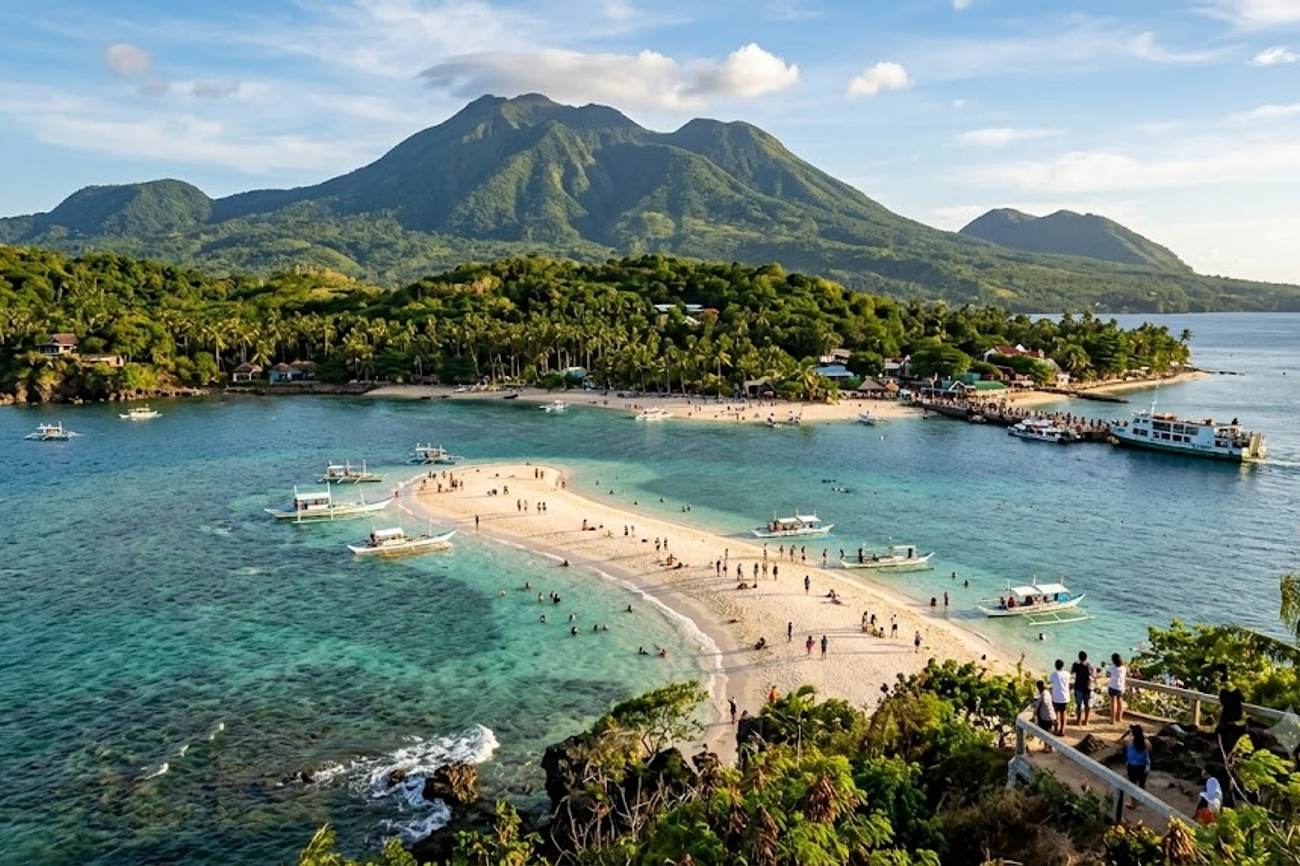
Image generated by AI
[Camiguin, Philippines] — The provincial government of Camiguin is launching an aggressive expansion strategy to more than double its annual visitor count to 824,000 by 2028. This target follows a period of rapid acceleration in arrivals, with the island recording 397,818 visitors in 2025, a 23.32 per cent jump from the 288,558 guests who visited in 2024.
The growth initiative, codified in the Camiguin Tourism Action Plan 2025–2028, seeks to shift the island's economic profile by increasing the share of international tourists from the current 6 per cent to 15 per cent within the next three years. While domestic travel remains the primary engine of growth—with 376,322 Filipino travelers visiting in 2025—provincial officials are now aggressively targeting high-value markets in the United States, Spain, Germany, and France to diversify the visitor base and encourage longer average stays.
The Infrastructure Gap
The surge in arrivals is placing immediate pressure on the island's existing utility and hospitality frameworks. Governor Xavier Jesus Romualdo has identified five critical sectors requiring urgent upgrades to prevent service degradation as volume increases: transport, water supply, public services, tourism sites, and accommodation.
Current data reveals a significant disparity between total establishments and high-standard lodging. Camiguin currently operates 170 tourism establishments providing a total of 1,312 rooms. However, only 127 of these establishments have received accreditation from the Department of Tourism (DOT), and a mere 581 rooms are officially classified as DOT quality-assured. This indicates that nearly half of the current room inventory does not meet the national quality-assurance benchmarks, posing a challenge for the province's goal of attracting more affluent international travelers.
Affected Travelers, Airlines and Logistics
The scale of this expansion impacts various sectors of the local economy and different tiers of travelers. The following table outlines the specific groups and metrics tied to the 2028 target:
| Stakeholder/Metric | 2024/2025 Status | 2028 Target/Goal | Impact Area |
|---|---|---|---|
| Total Annual Visitors | 397,818 (2025) | 824,000+ | Infrastructure Load |
| International Share | ~6% | 15% | Marketing & Language |
| Domestic Arrivals | 288,558 (2024) | Primary Market | Mass Transit/Ports |
| Room Inventory | 1,312 Total Rooms | Expanded Capacity | Real Estate/Hospitality |
| DOT Quality Rooms | 581 Rooms | Increased Accreditation | Service Standards |
| Local Workforce | Hospitality Centric | Multi-sectoral | Agri/Fisheries/Arts |
Practical Traveler Advisory and Strategic Insights
For passengers currently booking trips to Camiguin or planning future visits, the provincial shift toward "value over volume" will result in several tangible changes:
1. Higher Standards, Higher Prices: As the province pushes for DOT quality assurance and targets European and American markets, travelers can expect a rise in luxury and boutique accommodation options. This likely means a shift away from budget-only lodging toward higher-priced, accredited resorts.
2. Expanded Access Points: The government is prioritizing runway development and port improvements. Travelers should expect more reliable flight schedules and streamlined ferry arrivals, though construction phases may cause temporary disruptions at transit hubs.
3. Diversified Itineraries: The push for "longer stays" means the province is developing new tourism products beyond the primary landmarks. Travelers will see more curated packages involving local farms, artisanal workshops, and remote coastal areas, moving away from the traditional "day-trip" model.
4. Digital Integration: Under the "Smart Tourism" pillar of the Action Plan, visitors will likely encounter more digitized booking systems, electronic visitor permits, and integrated digital guides, reducing the reliance on physical kiosks and manual registrations.
The 2025–2028 Strategic Roadmap
To manage the projected 107% increase in visitor volume between 2025 and 2028, the provincial government is implementing a five-pillar framework. This strategy is designed to ensure that the island does not succumb to the pitfalls of over-tourism seen in other Philippine destinations.
The first pillar, Sustainability and Resilience, focuses on protecting the natural assets that drive the island's appeal. This is paired with the Infrastructure and Accessibility pillar, which focuses on the physical capacity of the island to move and house people. The third pillar, Smart Tourism and Digitalisation, aims to modernize the visitor experience through technology.
To accommodate the projected surge in arrivals, the provincial government is prioritizing the expansion of local infrastructure and sustainable management. These initiatives align with the broader strategic goals of the Department of Tourism, which aims to balance rapid growth with environmental preservation.
The final two pillars—Governance, Community and Culture, and Marketing, Events and Economic Growth—are designed to ensure the wealth generated by tourism does not remain trapped within the hotel sector. The provincial government is explicitly targeting the integration of farmers, fishers, and local artisans into the tourism supply chain. By encouraging visitors to spend more time on the island, the government intends to distribute revenue across a wider array of local retailers and transport operators.
Connectivity remains the linchpin of this plan. While the Civil Aviation Authority of the Philippines (CAAP) and port authorities oversee the technical side of runway and harbor upgrades, the provincial government is focusing on the "ecosystem" surrounding these ports. This includes ensuring that once a passenger lands or docks, there is a reliable network of accredited transport and information services to move them into the interior of the island.
FAQ: Camiguin Tourism 2028
Will it be harder to find budget accommodation in Camiguin by 2028? The province is prioritizing DOT-accredited, quality-assured rooms to attract international visitors. While budget options will likely remain, there is a clear strategic shift toward higher-standard lodging, which may reduce the availability of unaccredited, low-cost guesthouses.
How is the province handling the environmental impact of 824,000 visitors? The Camiguin Tourism Action Plan 2025–2028 includes a specific pillar for "Sustainability and Resilience." This framework is designed to balance visitor growth with the protection of the island's natural and cultural assets to prevent ecological degradation.
What are the primary target markets for new international flights? The provincial government has identified Spain, the United States, France, and Germany as key source markets. Travelers from these regions can expect more tailored marketing and potentially more direct or streamlined travel connections in the coming years.
Does the increase in tourists mean more crowds at major sites? The province is actively trying to avoid this by promoting "longer stays" and diversifying itineraries. By creating new attractions and encouraging visitors to explore different parts of the island, they aim to spread the crowd density across a wider geographic area.
Camiguin is betting that a shift toward high-value, sustainable growth can double its visitor numbers without losing its soul.
Related Travel Guides
- North Dakota and North Carolina 2025-26 Tourism Surge: Outdoor Adventures Compete for America’s Holiday Makers
- Cuba Protects Coastal Travel Economies And Fragile Marine Reefs In Varadero And Cayo Coco Against Ocean Threats, Find Out Now
- Saudi Arabia Positions Jazan for Red Sea Tourism Growth as Farasan Expands Low-Impact Eco Experiences
Disclaimer
This article is for informational and educational purposes only. It does not constitute legal, financial, or professional advice. While we strive to provide accurate and up-to-date information, travel policies, regulations, and conditions change rapidly. Always verify information with official sources before making travel decisions. Nomad Lawyer makes no representations about the accuracy, reliability, completeness, or suitability of the information provided. Readers should consult qualified professionals for advice specific to their circumstances. The views expressed in this article are those of the author and do not necessarily reflect the views of Nomad Lawyer.
Raushan Kumar
Founder & Lead Developer
Full-stack developer with 11+ years of experience and a passionate traveller. Raushan built Nomad Lawyer from the ground up with a vision to create the best travel and law experience on the web.
Learn more about our team →