
SITA Bag Radar: AI Game Changer for Baggage Mishandling
SITA launches Bag Radar at PTE World 2026, a cloud-based tool using AI and predictive analytics to spot baggage risks like missed connections and mishandled bags early. Airlines and airports gain real-time insights to cut disruptions and costs without major infrastructure changes.

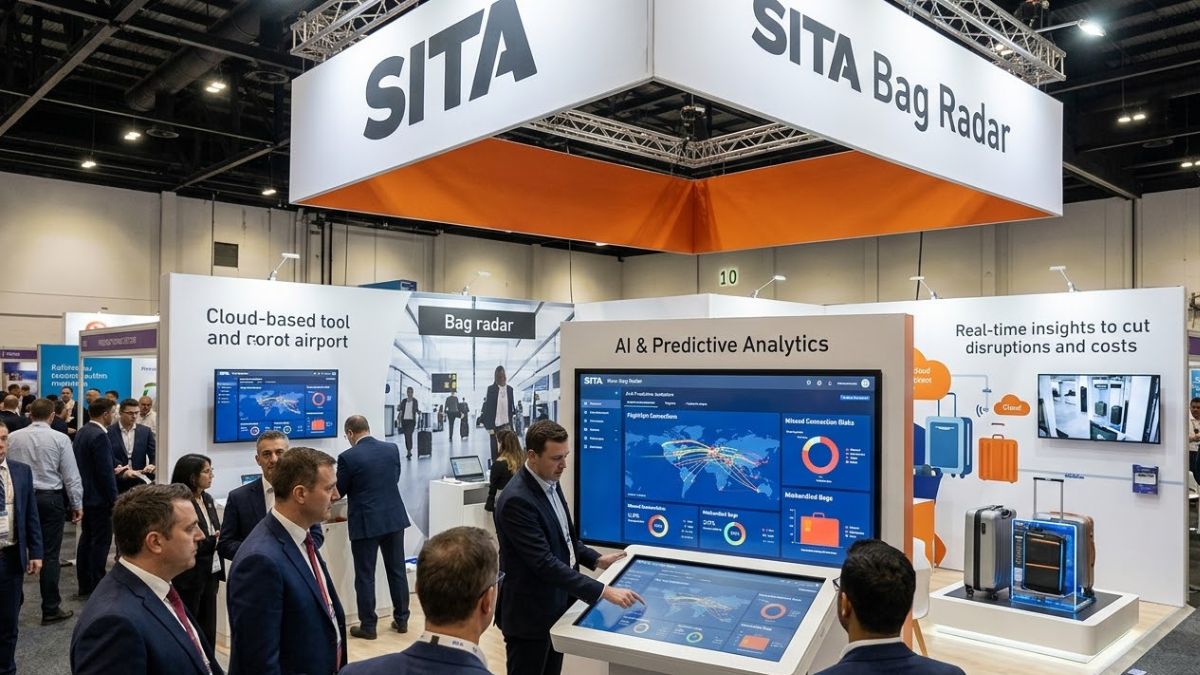
Image for illustrative purposes
Quick Summary
- SITA Bag Radar: Cloud-based analytics tool launched at PTE World 2026 in London to predict baggage disruptions.
- Key Features: AI-driven insights on missed connections, mishandled bags, and bottlenecks using real-time and historical data.
- Traveler Impact: Enables airlines and airports to intervene early, reducing mishandling rates and improving bag recovery.
- What's Next: Integrates with SITA WorldTracer and third-party systems for seamless deployment across networks.
SITA has unveiled Bag Radar, a groundbreaking cloud-based analytics platform set to transform baggage handling in aviation. Launched at PTE World 2026 in London, the tool empowers airlines, airports, and ground handlers with predictive insights to detect risks like missed connections, mishandled luggage, and operational bottlenecks before they escalate.
This innovation arrives as passenger volumes surge, demanding smarter operations. By shifting from reactive fixes to proactive management, Bag Radar promises lower costs, higher efficiency, and better passenger experiences.
Why Bag Radar Changes Baggage Management
Baggage mishandling remains a persistent challenge despite industry progress. According to SITA's 2025 Baggage IT Insights report, global mishandling rates have dropped 67% over two decades even as passenger numbers doubled, thanks to tech advancements like better data sharing.
Bag Radar builds on this momentum. It analyzes operational data in real time, combining historical trends, live monitoring, and AI to flag emerging issues early. Operations teams gain visibility across the entire baggage journey, allowing timely interventions.
The platform's cloud design ensures scalability. Organizations can start with historical reviews and scale to predictive features, supporting single sites or global networks without heavy investments.
SITA Bag Radar: Core Features and Integration
SITA Bag Radar pulls data from multiple sources for a unified view. It connects seamlessly with SITA's WorldTracer baggage messaging system, baggage reconciliation tools, departure control systems, and select third-party platforms.
Web-based dashboards deliver actionable insights. Teams see performance trends, risk alerts, and predictive forecasts, enabling faster decisions that curb disruptions.
Nicole Hogg, Portfolio Director for Baggage at SITA, emphasized the tool's value: “As passenger demand grows, operations teams need earlier visibility of risks so they can act before missed connections or bottlenecks turn into mishandled bags. By combining global baggage data with analytics and AI-driven predictive insights, SITA Bag Radar helps teams anticipate disruption and intervene sooner across the baggage journey.”
This integration aligns with SITA's broader ecosystem. WorldTracer, used by over 500 airlines and ground handlers at 2,800 airports, already powers much of global baggage recovery.
Key Facts at a Glance
- Launch Event: PTE World 2026, London (March 18-19, 2026)
- Technology Stack: AI, real-time monitoring, historical data analytics
- Integrations: SITA WorldTracer, BRS, DCS, third-party systems
- Deployment: Cloud-based, no major capex; scalable from local to network-wide
- Industry Stats: Mishandling down 67% in 20 years; 6.3 bags per 1,000 passengers
- SITA Reach: 2,500 customers, 1,000+ airports, 19,600 aircraft, 200+ countries
What This Means for Travelers
Passengers stand to benefit most from fewer lost bags and quicker resolutions. Predictive tools like Bag Radar mean airlines can prevent issues, reducing delays in bag returns.
With mishandling at just 6.3 bags per thousand passengers—and 66% reunited within 48 hours—tech like this pushes reliability higher. Integrations with consumer trackers, such as Google Find Hub in WorldTracer or Apple AirTag, further speed recovery by 90% for truly lost bags.
Travelers gain peace of mind as operations become more transparent and efficient. Expect smoother journeys with less baggage stress, especially during peak seasons.
Challenges and Risks Ahead
While promising, adoption hinges on data integration. Airlines must ensure compatibility with legacy systems, though SITA stresses minimal disruption.
AI predictions rely on quality data; incomplete inputs could limit accuracy. Scaling globally requires consistent standards across 2,800 airports.
Costs remain a factor, even if capex is low. Smaller operators may hesitate without proven ROI, and privacy concerns around baggage data need addressing.
Despite hurdles, SITA's industry-owned model—serving 45-50% of aviation data exchange—positions Bag Radar for wide uptake. Learn more at SITA's booth C240 or via FAA resources on aviation tech.
Broader SITA Innovations in Baggage
SITA leads baggage tech evolution. Recent Google Find Hub integration into WorldTracer lets passengers share locations securely, adding precision to recovery.
Apple AirTag partnerships cut permanently lost bags by 90%, linking consumer devices to aviation systems. These complement Bag Radar's predictive focus, creating a proactive ecosystem.
WorldTracer's scale—covering 500+ airlines—amplifies impact. As SITA eyes net-zero by 2050, baggage efficiency aids sustainability by cutting waste.
Frequently Asked Questions
What is SITA Bag Radar and how does it work? SITA Bag Radar is a cloud-based tool launched at PTE World 2026 that uses AI, real-time data, and historical analytics to predict baggage risks like missed connections and mishandling. It integrates with WorldTracer and dashboards for early interventions, reducing disruptions without major infrastructure changes.
How does Bag Radar reduce baggage mishandling rates? By providing predictive insights, teams act before issues escalate, lowering mishandling tied to bottlenecks. SITA notes a 67% industry drop over 20 years; Bag Radar accelerates this via unified data views, potentially cutting costs and improving 66% first-48-hour recovery rates.
Which airlines and airports can use SITA Bag Radar? It's designed for airlines, airports, and ground handlers integrating with SITA systems like WorldTracer, used by 500+ airlines at 2,800 airports. Deployment starts locally and scales network-wide with minimal investment.
What other SITA tools complement Bag Radar for passengers? WorldTracer with Google Find Hub and Apple AirTag integrations allows secure location sharing, reducing truly lost bags by 90%. These enhance Bag Radar's predictions for faster, more transparent recovery.
Related Travel Guides
Top Airports Upgrading Baggage Tech in 2026 How AI is Revolutionizing Airline Operations Best Practices for Tracking Lost Luggage
Disclaimer
This article is for informational and educational purposes only. It does not constitute legal, financial, or professional advice. While we strive to provide accurate and up-to-date information, travel policies, regulations, and conditions change rapidly. Always verify information with official sources before making travel decisions. Nomad Lawyer makes no representations about the accuracy, reliability, completeness, or suitability of the information provided. Readers should consult qualified professionals for advice specific to their circumstances. The views expressed in this article are those of the author and do not necessarily reflect the views of Nomad Lawyer.
Raushan Kumar
Founder & Lead Developer
Full-stack developer with 11+ years of experience and a passionate traveller. Raushan built Nomad Lawyer from the ground up with a vision to create the best travel and law experience on the web.
Learn more about our team →