
Singapore Travel Wonder Merlion Park Showcases Powerful Waterfront Symbol Shaping City’s Global Identity
Singapore Travel Wonder Merlion Park Showcases Powerful Waterfront Symbol Shaping City’s Global Identity

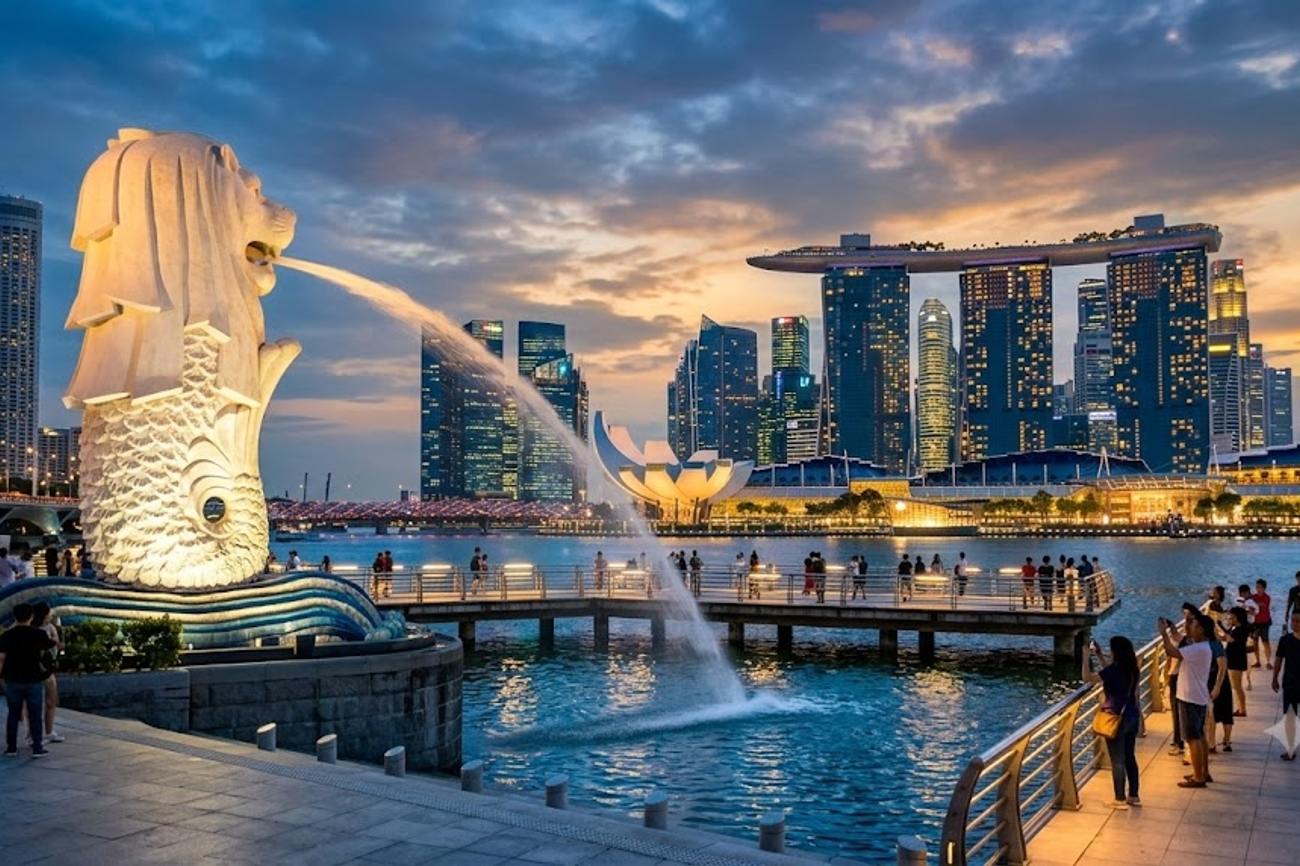
Image generated by AI
[Singapore, May 2024] — The Merlion Park continues to serve as the primary visual anchor for Singapore’s national identity, blending the city-state's maritime origins with its status as a global financial hub. The landmark, featuring the iconic hybrid creature with a lion's head and fish body, remains a critical driver of tourism traffic within the Marina Bay district.
The site integrates the historical narrative of "Singapura" (Lion City) with the island's beginnings as a fishing village. By positioning a mythical symbol against a backdrop of futuristic skyscrapers, the Singapore Tourism Board leverages the park to showcase a seamless transition from a colonial trading post to a modern metropolis. The park is currently situated at One Fullerton, where it overlooks the confluence of the Singapore River and Marina Bay.
The Symbolism of the Merlion
The Merlion is not a biological entity but a calculated piece of national branding developed in the 1960s. The design is split into two distinct symbolic halves:
- The Lion Head: Represents the legendary founding of the city and the name "Singapura."
- The Fish Body: A direct reference to the city's humble beginnings as a maritime settlement and its enduring reliance on the sea for trade and survival.
This duality is intended to project an image of strength and ambition while acknowledging the aquatic roots that allowed the city to become a pivotal node in global shipping lanes. The statue functions as a bridge between the land-based power of the state and the fluid nature of international commerce.
Physical Specifications and Assets
The park is anchored by two primary sculptures that differ in scale but share the same design language:
| Feature | Main Merlion Statue | Merlion Cub |
|---|---|---|
| Height | 8.6 Metres | Smaller Scale |
| Weight | Approximately 70 Tonnes | Not Specified |
| Material | Concrete over Steel Frame | Concrete/Steel |
| Key Feature | Continuous water spout | Companion figure |
| Location | One Fullerton Waterfront | Adjacent to Main Statue |
The main statue is engineered as a functional fountain, with water constantly flowing from the lion's mouth into the bay. This movement is a central element of the site's appeal, making it one of the most photographed locations in Southeast Asia.
The 2002 Strategic Relocation
The current layout of Merlion Park is the result of a major urban planning shift. Originally, the statue was positioned at the mouth of the Singapore River. However, the construction of the Esplanade Bridge created a physical and visual barrier, obstructing the view of the statue from the waterfront and diminishing its impact as a landmark.
In 2002, authorities moved the 70-tonne sculpture to its current position at One Fullerton. This relocation was a strategic move to:
- Restore the unobstructed sightlines between the statue and the water.
- Align the landmark with the developing Marina Bay skyline.
- Integrate the statue into a more pedestrian-friendly waterfront promenade.
This move ensured that the Merlion remained relevant amidst the rapid vertical growth of the central business district, allowing it to stand as a historical counterpoint to the surrounding glass-and-steel architecture.
What This Means for Travelers
For those planning a visit to Singapore, Merlion Park is a high-density tourist zone that requires specific timing to avoid crowds. Because it is located in the heart of the city, it is easily accessible via public transit and is often the first stop for arrivals staying in the downtown core.
Practical Logistics:
- Timing: The site is most visually striking during sunrise and sunset. Evening visits are recommended to see the city lights reflected in Marina Bay, though this is when crowd density peaks.
- Accessibility: The park is a public open-air space located at One Fullerton. There is no admission fee to view the statues.
- Photography: The area is designed for panoramic views; the open waterfront provides a clear line of sight to the skyscrapers of the financial district.
- Navigation: Visitors should be aware that the park is adjacent to the central business district, meaning heavy pedestrian traffic during weekday lunch hours.
Travelers should coordinate their visit with other Marina Bay attractions, such as the Gardens by the Bay or the Marina Bay Sands complex, as these are within walking distance or a short transit ride.
Singapore’s Maritime Evolution
The existence of Merlion Park is a testament to the city's obsession with its waterfront. The transition from a fishing village to a global port is mirrored in the park's own history—from a simple tourism emblem in the 1960s to a national symbol completed in 1972.
The park serves as a physical manifestation of Singapore's "Global City" strategy. By preserving a symbol of its maritime past while surrounding it with the architecture of the future, the city-state communicates a message of stability and growth. The water flowing from the statue into the bay is a metaphor for the continuous flow of capital and people that sustains the economy.
For the international visitor, the park is more than a photo opportunity; it is an introduction to the Singaporean ethos of blending heritage with hyper-modernity. The proximity to the Singapore River—the original artery of the city's trade—reminds visitors that despite the skyscrapers, the water remains the source of the nation's wealth.
FAQ: Visiting Merlion Park 2024
Is there an entry fee for Merlion Park? No. Merlion Park is a public waterfront area, and viewing the main statue and the Merlion Cub is free for all visitors.
What is the best time to visit to avoid crowds? Early morning during sunrise is the quietest period. While evenings offer the best lighting for the skyline, they are the most crowded times of the day.
Where exactly is the park located? The park is situated at One Fullerton, positioned between the Singapore River and Marina Bay, within the central business district.
What currency and languages are used in the area? The official currency is the Singapore Dollar (SGD). While English is the primary language for tourism and business, Malay, Mandarin, and Tamil are also official languages.
A statutory blend of myth and masonry, the Merlion remains the definitive gateway to the Singaporean experience.
#SingaporeTourism #MerlionPark #MarinaBay #VisitSingapore #SingaporeWaterfront #OneFullerton
Related Travel Guides
Disclaimer
This article is for informational and educational purposes only. It does not constitute legal, financial, or professional advice. While we strive to provide accurate and up-to-date information, travel policies, regulations, and conditions change rapidly. Always verify information with official sources before making travel decisions. Nomad Lawyer makes no representations about the accuracy, reliability, completeness, or suitability of the information provided. Readers should consult qualified professionals for advice specific to their circumstances. The views expressed in this article are those of the author and do not necessarily reflect the views of Nomad Lawyer.
Preeti Gunjan
Contributor & Community Manager
A passionate traveller and community builder. Preeti helps grow the Nomad Lawyer community, fostering engagement and bringing the reader experience to life.
Learn more about our team →