Europe’s Day-Trip Boom Takes Travellers Beyond Paris and Rome

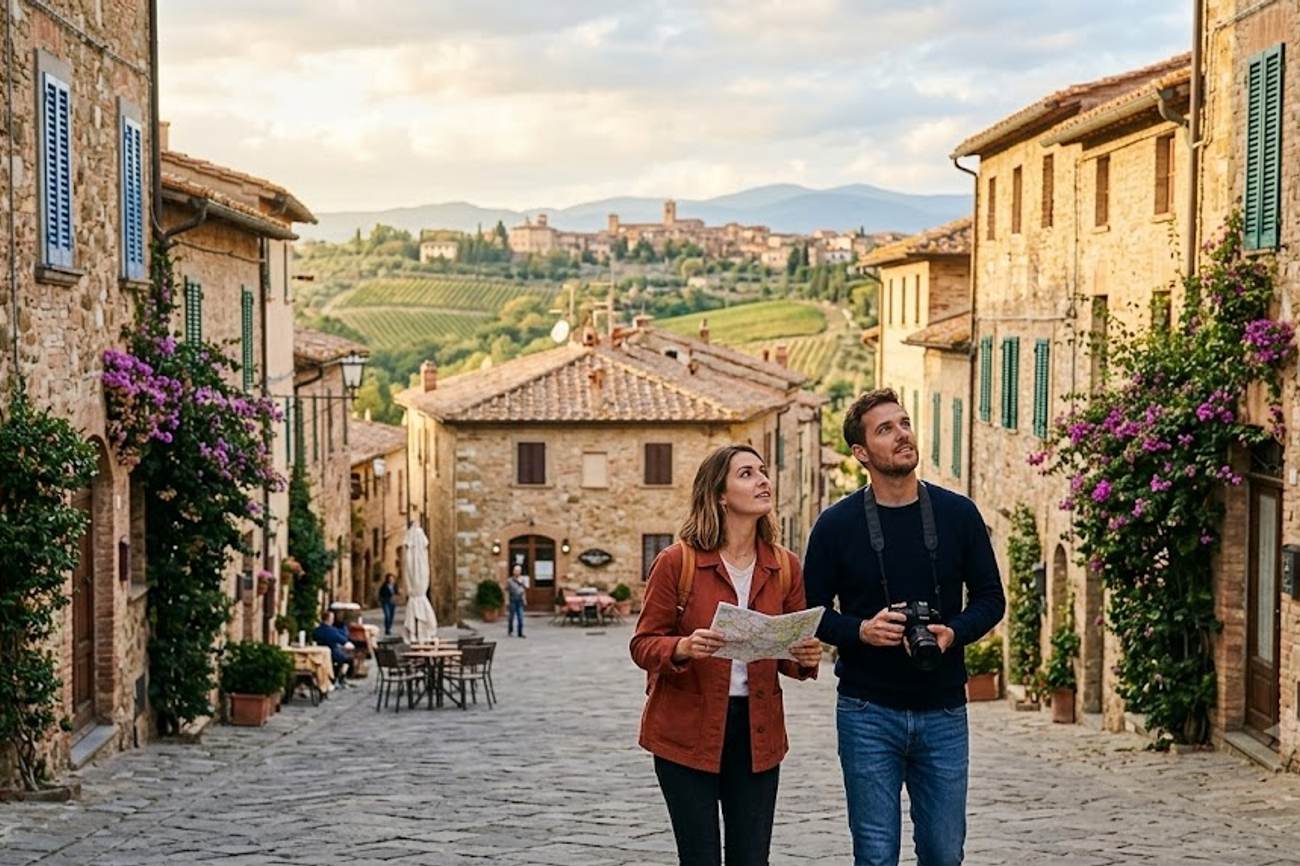
Image generated by AI
A 110.7% year-over-year surge in day-trip bookings through September 15, 2026, signals a fundamental pivot in how international visitors consume European tourism. This data, provided by destination marketplace The Tour Guy, reveals that the traditional "city break" is evolving into a "hub-and-spoke" model. Rather than treating capitals like Paris or Rome as the primary destination, travelers are increasingly utilizing these urban centers as logistical gateways to the surrounding periphery.
The Rise of Decentralized Tourism
The shift toward "decentralized tourism" represents a strategic move by travelers to escape the saturation of urban centers. While the magnetic pull of major European cities remains strong, the objective of the visit has changed. The city is no longer the end goal; it is the entry point.
According to research conducted between September 7 and 14, 2026, 85.4% of travelers who visited Europe in the preceding year integrated day trips into their itineraries. This suggests that the vast majority of visitors now view the urban core as a base of operations rather than the sole focus of their journey. The demand is no longer for general sightseeing, but for specific, high-intent excursions that provide a reprieve from the congestion of the city center.
This movement is supported by a growing appetite for specialized environments. Data indicates that 64.9% of travelers are actively seeking seaside areas, natural landscapes, and countryside vistas located beyond city limits. Furthermore, 53.4% of these visitors enter their trip with a pre-determined attraction outside the city already on their checklist, indicating a move toward planned, intentional exploration rather than spontaneous city-center wandering.
Mapping the Shift: From Generalist to Specialist
The industry is responding to this data by dismantling broad, generic tour packages in favor of niche, thematic experiences. The "general Tuscany tour" is being replaced by hyper-focused itineraries centered on specific disciplines such as viticulture, archaeology, or gastronomy.
| Destination | Traditional Model | Specialized 2026 Model | Primary Driver |
|---|---|---|---|
| Pompeii | General archaeological walk | Combined Volcanology & Archaeology | Educational Depth |
| Chianti | General Tuscany excursion | Immersive Winery-focused itineraries | Regional Immersion |
| Mont-Saint-Michel | Standard landmark visit | Contrast-based Normandy excursion | Landscape Diversity |
In Italy, the evolution is most evident. The UNESCO World Heritage site of Pompeii is no longer just a checklist item for those based in Naples or Rome. New offerings now pair the ruins with the geology of Mount Vesuvius, employing both a volcanologist and an archaeologist. This transformation shifts the experience from passive sightseeing to a specialized educational seminar.
Similarly, in the Chianti region, the focus has shifted from "tasting wine" as a stopover to "wine as the destination." This allows operators to target the premium market, offering private tastings and small-group interactions with producers, which commands a higher price point than a standard bus tour.
Europe's day-trip boom is taking travellers beyond traditional destinations like Paris and Rome, with many opting for shorter, more frequent trips to explore hidden gems. According to the European Travel Commission, this shift is driven by increasing demand for unique experiences and the ease of travel within the continent. As a result, smaller cities and towns are experiencing a surge in tourism, with visitors flocking to discover their charm and character.
In France, the draw of Mont-Saint-Michel serves as a critical counterbalance to the urban density of Paris. By packaging transport and abbey access into a single-day departure from central Paris, operators are providing a "landscape shock"—replacing boulevards and museums with medieval architecture and the coastal dynamics of the Normandy bay.
Expert Analysis: The Economics of the Hub-and-Spoke Model
For the modern traveler, the direct consequence of this trend is a reduction in "hotel hopping." By utilizing a single gateway city as a hub, travelers eliminate the logistical friction of packing and unpacking across multiple hotels, while still achieving the diversity of a multi-city tour.
From a market perspective, this represents a "deepening" of mature tourism markets. The Tour Guy reported that 25% of day trips sold in 2026 were products that did not exist on their platform in 2025. Crucially, these were not new destinations, but new ways of experiencing old destinations. This indicates that the growth in European tourism is no longer coming from discovering new places, but from re-engineering the delivery of existing ones.
The timing of this shift is amplified by the "shoulder season" effect. Data from GetYourGuide shows a 210% year-on-year increase in experience bookings for the Northern Hemisphere from late September through October. The combination of milder weather and lower pricing makes the day-trip model particularly attractive. Travelers can maintain their urban residence while leveraging the autumn climate to explore rural regions.
The rise of day-trip travel has also led to improvements in passenger logistics, with airlines and airports investing in streamlined services to cater to the growing demand. For example, Airports Council International Europe reports that many airports are introducing new technologies and processes to reduce wait times and enhance the overall travel experience. Additionally, national tourism boards, such as the Italian National Tourism Board, are launching initiatives to promote lesser-known destinations and encourage sustainable tourism practices.
The pricing pressure this creates is significant. As demand shifts toward specialized, expert-led tours (such as those involving volcanologists or master winemakers), the value proposition moves from "access" to "insight." This allows the industry to move away from the volume-based model of mass tourism and toward a value-based model of experiential tourism.
Key Takeaways
- Logistical Pivot: European capitals are transitioning from primary destinations to logistical hubs for "decentralized" regional exploration.
- Demand for Specialization: Over half of travelers (53.4%) now target specific attractions outside the city, moving away from generic "sightseeing" packages.
- Product Innovation: 25% of 2026 day-trip offerings are specialized iterations of existing sites rather than entirely new locations.
- Seasonal Surge: Shoulder season bookings (late September to October) have spiked by 210%, driven by a desire for fewer crowds and better weather.
- Economic Shift: The rise of expert-led tours (e.g., combining archaeology with volcanology) allows operators to capture higher-value, premium spending.
FAQ: European Day Trips 2026
Is it better to stay in one city and take day trips or move between cities? Current trends favor the "hub" model. Staying in one major city (like Paris or Florence) and taking specialized day trips reduces luggage logistics and hotel costs while still allowing you to see diverse landscapes and rural sites.
What is the best time of year for decentralized tourism in Europe? The "shoulder season" from late September through October is currently seeing a 210% increase in bookings due to milder weather, lower prices, and significantly fewer crowds at major attractions.
Are day trips to places like Pompeii or Mont-Saint-Michel too exhausting? While these are long days, 2026 tour models focus on "thematic immersion" rather than rushing. By using packaged transport and guided access, the logistical stress is minimized, making the travel time part of the experience.
How do I find specialized tours instead of generic ones? Look for itineraries that mention specific experts—such as volcanologists for Vesuvius or regional producers for Chianti—rather than broad "region tours." These typically offer smaller groups and deeper insights.
The era of the city-centric vacation is ending; the era of the regional experience has arrived.
Tags: #Pompeii2026 #ChiantiWineTours #MontSaintMichel #EuropeanDecentralizedTourism #TheTourGuyData #ShoulderSeasonEurope
Related Travel Guides
- Dominican Republic Aligns with Jamaica and More Places as Caribbean Tourism Surges Over 4% in Just Six Months Through New a World of Opportunity Initiatives
- Portugal Opens Spectacular Nature Destinations Through Protected Parks, Reserves And Outdoor Adventures
- Limpopo Aligns With Cape Town And More Places In South Africa As Falling Oil Prices Bring New Tourism Opportunities And Relief
This article is for informational purposes. Flight routes, passenger regulations, visa rules, and transit advisories are subject to change by airlines and aviation authorities. Readers are advised to verify schedules and travel documentation with relevant carriers and border agencies before departure.
Related Stories
Zen Awakening Festival 2026: Florida's Transformational Music, Mindfulness, and Arts Gathering in Fruitland Park

Thailand Tourism Slowdown Tests Small Businesses as Kingdom Pivots to High-Yield Travel and Secondary Provinces