Indonesia Travel Transforms As AI And Big Data Power Next Generation MICE Tourism Growth

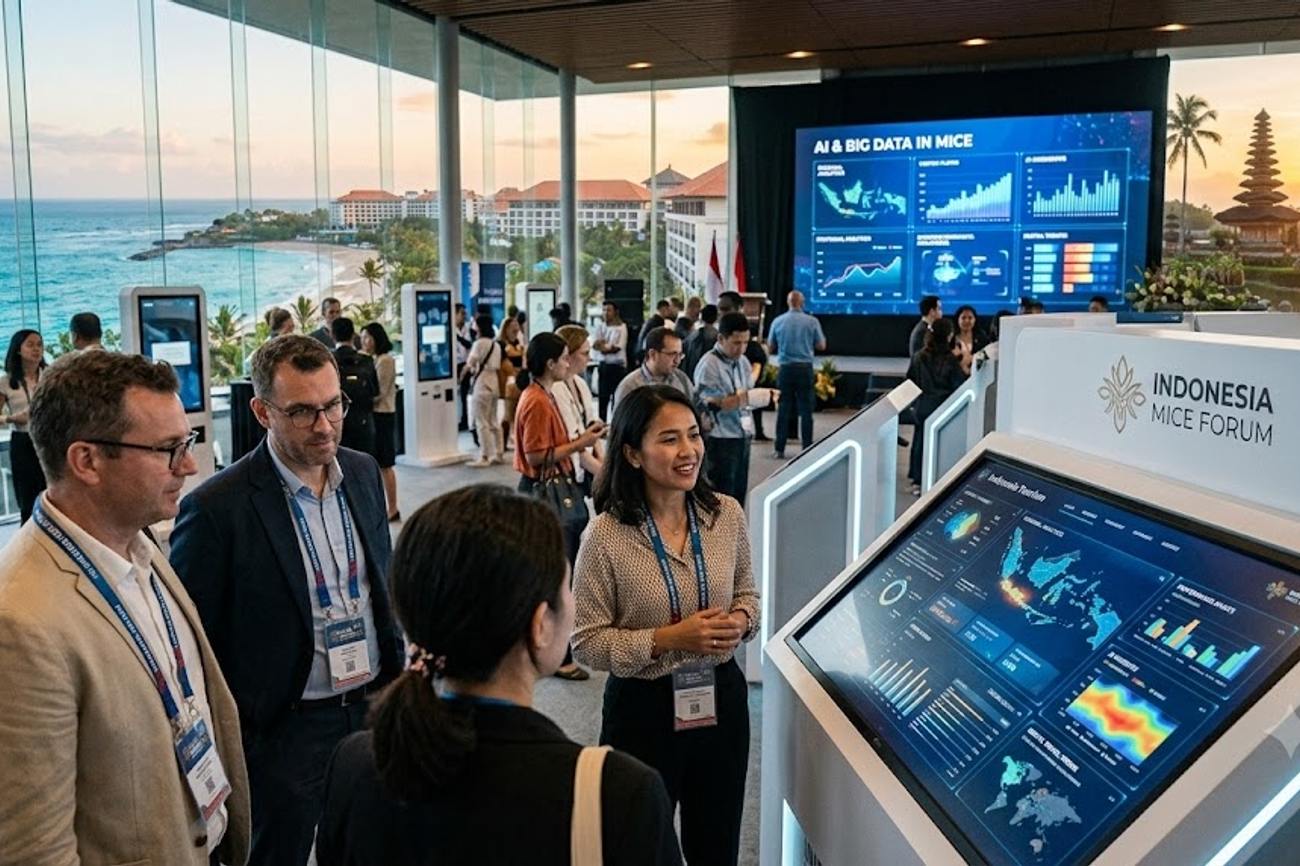
Image generated by AI
[Jakarta, October 2024] — Indonesia is deploying a comprehensive "Tourism 5.0" framework, integrating artificial intelligence (AI), big data analytics, and the Internet of Things (IoT) to aggressively scale its Meetings, Incentives, Conventions, and Exhibitions (MICE) sector. The initiative marks a strategic pivot from volume-based tourism to a high-value model designed to attract corporate delegates who generate higher per-capita spending and longer stays.
The Indonesian government is restructuring its tourism ecosystem to prioritize "bleisure" travel—the blending of business and leisure—by leveraging AI to create hyper-personalized itineraries for international corporate visitors. By shifting the focus from raw arrival numbers to economic yield, Jakarta aims to climb global rankings in the business events market while diversifying the economic benefits of tourism beyond primary hubs.
The Shift to Tourism 5.0
The transition to Tourism 5.0 represents a fundamental change in how Indonesia manages its visitor pipeline. Rather than relying on generic marketing, the state is implementing AI-powered systems to analyze traveler behavior and preferences in real-time. This allows event organizers and hospitality providers to offer customized recommendations and streamlined registration processes, reducing the friction typically associated with large-scale international conferences.
Central to this strategy is the use of big data to identify high-growth industrial sectors. By analyzing global trends, Indonesia is now targeting specific niches—including renewable energy, medical sciences, and advanced technology—to create tailored proposals for international association meetings. This data-driven approach is designed to make the country more competitive against other regional hubs by offering precision-targeted infrastructure and digital services.
MICE Market Performance and Targets
Indonesia is leveraging a strong existing baseline to fuel this digital expansion. According to the International Congress and Convention Association (ICCA) GlobalWatch Business Analytics for 2025, Indonesia’s current standing in the global MICE landscape is as follows:
- International Association Meetings Hosted: 110
- Global Ranking: 37th
- Asia-Pacific Ranking: 10th
- ASEAN Ranking: 4th
The government intends to use these rankings as a springboard, utilizing AI to move further up the global leaderboard. By integrating digital platforms with the Ministry of Tourism and Creative Economy, the state aims to connect business venues more efficiently with local cultural and nature-based tourism products, ensuring that corporate spending leaks into local community economies.
Practical Traveler Advisory and Strategic Insights
For the corporate traveler or event planner, the rollout of Tourism 5.0 translates into a significant change in the on-the-ground experience. The "standard" business trip is being replaced by a managed, intelligent journey.
Passenger and Delegate Impact:
- Hyper-Personalization: Travelers will encounter AI-driven recommendations for dining, sightseeing, and transport based on their specific professional profile and personal interests.
- Reduced Administrative Friction: AI-powered registration and event management tools will streamline the entry and navigation process for large-scale conventions.
- Seamless Bleisure Integration: Enhanced connectivity between business districts in Jakarta and leisure hubs like Bali will make it easier to extend professional trips into vacations.
- Improved Local Discovery: Digital tools will actively push delegates toward emerging destinations outside the primary cities, offering a broader view of the archipelago.
Regional Integration and Workforce Evolution
Indonesia is not operating in a vacuum; this digital shift is part of a broader Southeast Asian trend toward AI-integrated tourism. Collaborative efforts within the ASEAN bloc are focusing on increasing service quality and operational efficiency to ensure the region remains competitive against Western and East Asian business hubs.
However, the adoption of Tourism 5.0 necessitates a massive upskilling of the local workforce. The Indonesian government is emphasizing the need for tourism professionals to transition from routine administrative roles—which are being automated by AI—to high-touch, creative, and personalized service roles. This human-centric approach is intended to complement the technology, ensuring that while the logistics are handled by AI, the "hospitality" remains authentically human.
Indonesia's tourism industry is experiencing a significant transformation with the integration of AI and big data, particularly in the MICE (Meetings, Incentives, Conferences, and Exhibitions) sector, as reported by the Indonesian Ministry of Tourism in their latest tourism development strategy. This growth is expected to attract more international visitors, with many arriving through major airports such as Soekarno-Hatta International Airport, which provides detailed information on passenger logistics and airport facilities on its official website, Angkasa Pura II. The use of AI and big data is enhancing the overall tourist experience, from personalized travel recommendations to streamlined immigration processes.
The long-term goal is a resilient, sustainable ecosystem where integrated tourism platforms link hotels, transport providers, and regional authorities. By optimizing the flow of high-value travelers, Indonesia expects to see a multiplier effect where a single corporate event benefits a wide array of local SMEs and cultural sites.
FAQ: Indonesia MICE AI Integration 2025
What is "Tourism 5.0" in Indonesia? It is a digital-first strategy that combines AI, big data, and IoT to move away from mass tourism toward high-value, personalized experiences, specifically targeting the corporate and MICE sectors to increase economic yield per visitor.
How will AI affect business travelers visiting Jakarta or Bali? Travelers will experience more streamlined event registrations and receive AI-generated, personalized recommendations for leisure activities, making it easier to combine business meetings with tourism (bleisure).
Which industries is Indonesia targeting for international conferences? Using big data analytics, Indonesia is specifically courting global events in the fields of renewable energy, medical sciences, and technology to attract high-spending professional delegates.
Will AI replace tourism workers in Indonesia? No. The strategy aims to automate routine administrative tasks, allowing tourism professionals to focus on high-value human interactions, creative problem-solving, and personalized guest services.
The era of the generic business trip is ending as Jakarta bets on algorithms to drive high-value growth.
#IndonesiaMICE2025 #Tourism5.0 #JakartaBusinessTravel #ICCA2025 #ASEANTourismAI #BleisureIndonesia
Related Travel Guides
- Europe’s Day-Trip Boom Takes Travellers Beyond Paris and Rome
- Dominican Republic Aligns with Jamaica and More Places as Caribbean Tourism Surges Over 4% in Just Six Months Through New a World of Opportunity Initiatives
- Portugal Opens Spectacular Nature Destinations Through Protected Parks, Reserves And Outdoor Adventures
This article is for informational purposes. Flight routes, passenger regulations, visa rules, and transit advisories are subject to change by airlines and aviation authorities. Readers are advised to verify schedules and travel documentation with relevant carriers and border agencies before departure.
Related Stories

Zen Awakening Festival 2026: Florida's Transformational Music, Mindfulness, and Arts Gathering in Fruitland Park

Indonesia Boosts Wellness Tourism as Yogyakarta Hosts 2026 Cultural Wellness Festival