
Singapore Modernizes North-South and East-West MRT Lines With Delivery of 106 New Alstom Movia Trains
Alstom completes delivery of 106 six-carriage Movia trains (636 total railcars) for Singapore's North-South and East-West MRT lines, introducing automatic track monitoring and regenerative braking.

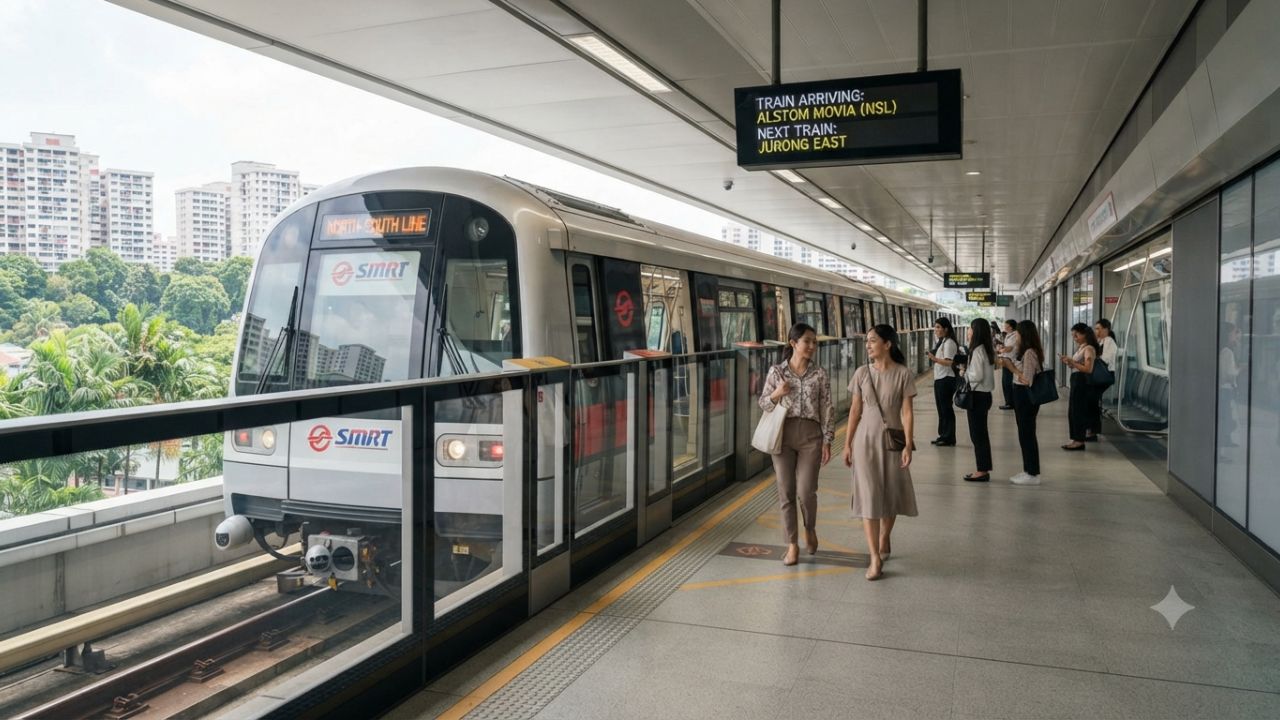
Official Alstom Press Image
Singapore has completed a major overhaul of its urban rail network following the final delivery of 106 new six-carriage Alstom Movia trains—totaling 636 railcars—for the North-South and East-West Mass Rapid Transit lines.
[Singapore, Oct 6, 2026] — Passenger throughput and system reliability across Singapore's busiest commuter arteries received a substantial upgrade today following the full delivery of 106 new Movia metro trains. Operating on the North-South Line (NSL) and East-West Line (EWL), the 636-railcar fleet replaces older rolling stock with units featuring regenerative braking systems, longitudinal seating layouts, and automated track-inspection cameras that gather real-time infrastructure data during active revenue service.
Dual Procurement Orders and Global Manufacturing Framework
The delivery marks the conclusion of a multi-stage fleet replacement program initiated across two separate procurement contracts:
- Initial 2018 Order: 66 six-carriage Movia train sets.
- Option Exercise in 2019: 40 additional six-carriage Movia train sets, bringing the total fleet size to 106 units (636 railcars).
Primary vehicle assembly was conducted at Alstom's manufacturing facility in Changchun, China, while project management, systems integration, and engineering oversight involved specialized Alstom teams based across Singapore, China, Germany, and Sweden.
Technical Specifications and Rolling Stock Performance Parameters
| Parameter / Feature | Operational Specification |
|---|---|
| Total Fleet Size | 106 train sets (636 total carriages) |
| Target Network Lines | North-South Line (NSL) and East-West Line (EWL) |
| Base Rolling Stock Platform | Alstom Movia high-capacity metro platform |
| Train Configuration | 6 carriages per train set |
| Maximum Operating Speed | 90 km/h |
| Seating Capacity | 220 seats per 6-carriage train set |
| Seating Layout | Longitudinal seating for optimized standing room and aisle flow |
| Bogie System | Alstom Flexx Urban bogies |
| Propulsion System | Alstom Mitrac propulsion technology |
| Braking Technology | Regenerative braking system (recovers kinetic deceleration energy) |
| Infrastructure Monitoring | Integrated on-train cameras for real-time track inspections |
| Material Recyclability | 95% recyclable materials; >96% material recovery rate at end of service |
Passenger Capacity, Interior Layout, and Accessibility Features
Designed specifically for heavy-volume metropolitan operations, each six-carriage train accommodates 220 seated passengers alongside expanded standing space. The interior layout prioritizes rapid passenger circulation at busy exchange stations such as Raffles Place, City Hall, and Jurong East:
- Longitudinal Seating: Benches run parallel to carriage walls, expanding center-aisle width and preventing passenger bottlenecks near doorway vestibules during morning and evening peak hours.
- Step-Free Accessibility: Carriages incorporate level, step-free boarding thresholds aligning with station platform doors, streamlining access for wheelchair users, families with strollers, and passengers with reduced mobility.
- Multi-Purpose Zones: Flexible open areas provide dedicated space for mobility devices, luggage, and standing passengers without obstructing internal carriage pathways.
Advanced Propulsion, Regenerative Braking, and Energy Efficiency
Mechanical operations are driven by Alstom Flexx Urban bogies paired with Mitrac propulsion systems, engineered to maintain smooth acceleration up to the fleet's 90 km/h operational ceiling while minimizing wheel-rail wear.
To optimize power consumption across high-frequency urban schedules, the fleet employs regenerative braking systems. During deceleration at station approaches, the electric motors operate as generators, capturing kinetic energy and converting it back into electrical power. This recovered energy is redirected into the third-rail power grid to supply adjacent accelerating trains or station auxiliary systems, lowering overall grid power draw.
Real-Time Autonomous Track Inspection and Predictive Maintenance
A primary technological advancement of the Movia fleet is its active infrastructure-monitoring capability. Specially positioned digital cameras and optical sensors mounted underneath train carriages continuously monitor rail geometry, third-rail contact lines, and trackbed conditions while operating in standard passenger service.
By gathering high-resolution imagery and telemetry data during regular commercial runs, the system identifies minor track anomalies, rail wear, or alignment shifts without requiring dedicated engineering trains or service suspensions. The collected data feeds directly into Singapore's rail maintenance systems, enabling predictive repairs before infrastructure defects cause service delays.
Material Recyclability and Life-Cycle Sustainability Standards
Environmental considerations for the new fleet extend beyond operational power savings into vehicle life-cycle management. Approximately 95 per cent of the structural and mechanical materials used in manufacturing the Movia carriages are recyclable.
Furthermore, overall material recovery rates exceed 96 per cent when the trains reach the end of their multi-decade service life. High recovery standards minimize long-term industrial waste, supporting Singapore's broader circular economy and sustainable urban transit goals.
Practical Experience & Logistical Reality for Singapore Commuters
For daily commuters and international visitors navigating Singapore's Mass Rapid Transit (MRT) network, the deployment of 106 new Movia trains delivers noticeable transit improvements:
- Reduced Peak-Hour Congestion: The combination of wider longitudinal aisles and 636 total new railcars increases network passenger capacity, reducing platform dwell times and easing crowding on major interchange corridors.
- Smoother, Quieter Rides: Advanced Flexx Urban bogies and updated suspension systems dampen vibration and rail noise, improving interior acoustic comfort along elevated outer tracks and underground tunnels.
- Enhanced System Reliability: Continuous automated track monitoring reduces unexpected signal or track failures, ensuring more consistent train arrival frequencies across the North-South and East-West lines.
Frequently Asked Questions About Singapore's New MRT Fleet
How many new trains were delivered for Singapore's North-South and East-West lines?
Alstom delivered 106 new six-carriage Movia trains, representing a total of 636 railcars for the North-South and East-West MRT lines.
What is the maximum speed of the new Alstom Movia MRT trains?
The new trains have a maximum operating speed of 90 kilometres per hour.
How do the new trains monitor rail track conditions?
Camera systems mounted under the carriages collect real-time track and infrastructure data during regular passenger journeys, enabling predictive maintenance without service interruptions.
What features make the new trains energy efficient?
The fleet utilizes Alstom Flexx Urban bogies, Mitrac propulsion, and regenerative braking systems that recover kinetic braking energy and feed it back into the power grid.
Related Travel Guides
Singapore and Malaysia RTS Link Targets February 2027 Operation to Relieve Cross-Border Traffic
Indonesia, Malaysia, Vietnam, and Thailand Tourism Dominance Guide 2026
Disclaimer
This article is for informational and educational purposes only. It does not constitute legal, financial, or professional advice. While we strive to provide accurate and up-to-date information, travel policies, regulations, and conditions change rapidly. Always verify information with official sources before making travel decisions. Nomad Lawyer makes no representations about the accuracy, reliability, completeness, or suitability of the information provided. Readers should consult qualified professionals for advice specific to their circumstances. The views expressed in this article are those of the author and do not necessarily reflect the views of Nomad Lawyer.
Raushan Kumar
Founder & Lead Developer
Full-stack developer with 11+ years of experience and a passionate traveller. Raushan built Nomad Lawyer from the ground up with a vision to create the best travel and law experience on the web.
Learn more about our team →