
Singapore Restructures Urban Spaces to Blend Ancient Trade Relics with 2040 Eco-Engineering Landmarks
Singapore protects over 7,000 historic structures while expanding eco-monuments like Gardens by the Bay under its Tourism 2040 development framework.

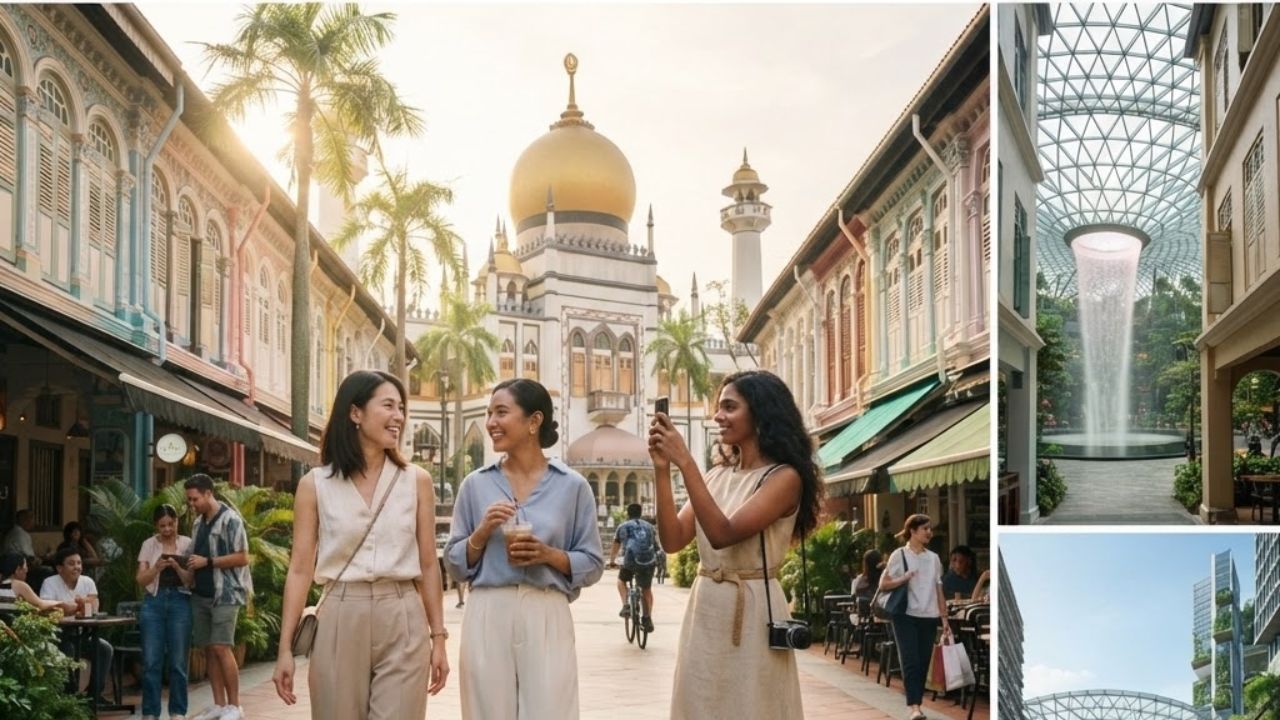
Image generated by AI
Singapore is integrating its pre-colonial historical foundations with hyper-modern bio-engineering systems to establish a sustainable tourism benchmark. Under frameworks like Tourism 2040 and the Greater Sentosa Master Plan, the city has officially protected over 7,000 structures across 100 conservation districts.
Following a nationwide urban design update, Singapore sustainable tourism expands as the city successfully integrates its 14th-century archaeological sites with futuristic bio-engineering marvels. Statutory bodies have officially protected over 7,000 historic structures, ensuring traditional five-foot covered walkways and shophouse facades remain fully preserved alongside eco-friendly attractions like Gardens by the Bay and Jewel Changi Airport. By encouraging adaptive reuse in its municipal center, the enclave allows international visitors to access both pre-colonial heritage and cutting-edge transit infrastructure within a single, highly integrated urban journey.
Ancient Foundations: Uncovering Pre-Colonial Archaeological Sites in Fort Canning Hill
Historical reports confirm that Singapore's heritage extends far beyond its 1819 colonial establishment under Sir Thomas Stamford Raffles. Archaeological excavations show that the region, historically known as Temasek, operated as a key maritime trade hub between the 10th and 14th centuries.
Excavations on the elevated slopes of Fort Canning Hill—formerly named Bukit Larangan, or the Forbidden Hill—indicate the site once served as a residential palace area for Malay royalty. During construction work in 1928, teams recovered solid gold jewelry dating to the 14th century, decorated with Javanese Majapahit motifs. The site also contains the Keramat Iskandar Shah shrine, which local traditions associate with the final ruler of ancient Singapura, Sri Sultan Iskandar Shah.
District Preservation: Safeguarding Cultural Enclaves in Kampong Gelam and Katong
The Urban Redevelopment Authority enforces strict conservation guidelines to preserve the architectural character of historic ethnic neighborhoods. These programs protect:
- Kampong Gelam: Centered around the Istana Kampong Gelam palace and the Sultan Mosque, this enclave retains traditional Islamic architecture and historic perfume shops.
- Chinatown (Niu Che Shui): Home to the Sri Mariamman Temple, built in 1827 as the island's oldest Hindu place of worship, alongside historic clan associations and the Buddha Tooth Relic Temple.
- Katong / Joo Chiat: Showcases two-story Peranakan shophouses characterized by decorative tilework and traditional pintu pagar timber half-doors.
Bio-Engineering Innovation: Examining Eco-Friendly Systems at Jewel Changi Airport
Alongside historic preservation, the city is developing a biophilic urban model through advanced environmental engineering. At Gardens by the Bay, 18 Supertrees standing between 25 and 50 meters tall collect solar energy via photovoltaic cells, store rainwater, and clear heat exhaust for the adjacent climate-controlled Flower Dome and Cloud Forest conservatories.
Aviation analysts note that Changi Airport's Jewel complex serves as a green transit hub, featuring a toroidal glass-and-steel canopy enclosing the 40-meter HSBC Rain Vortex—the world's tallest indoor waterfall. The structure is surrounded by over 2,000 botanical plants, creating an indoor forest environment. On Sentosa Island, the 350-meter Sentosa Sensoryscape biophilic path integrates multi-sensory light displays with artificial intelligence traveler guides, while the AirMesh Pavilion features a 3D-printed space-frame structure constructed from 216 lightweight metal bars and custom connectors.
Adaptive Reuse: Transforming Neoclassical Monuments into Luxury Hospitality Venues
Municipal guidelines incentivize adaptive architectural reuse, permitting heritage properties to operate as commercial spaces while maintaining their structural integrity. Under this framework, several key neoclassical structures have been restored:
- The Fullerton Hotel: The 1928 neoclassical building that served as the General Post Office was converted into a luxury hotel adjacent to Clifford Pier and the historic Customs House.
- St. James Power Station: The 1926 industrial plant was converted from a coal-fired facility into a corporate innovation office, retaining its red brick chimneys while adding floating interior decks.
- CHIJMES & Armenian Church: The former Convent of the Holy Infant Jesus and the 1835 Armenian Church of Saint Gregory serve as anchor landmarks in the Bras Basah.Bugis Arts District.
Masterplanning Frameworks: Directing the Sustainable Tourism 2040 Strategy
Looking toward future development, Singapore's long-term planning frameworks combine historic preservation with sustainability. The city-state has placed over 7,000 buildings within its 100 designated conservation districts under statutory protection, ensuring that original timber window frames and structural facades are preserved.
These environmental and heritage programs have secured Singapore's high ranking on the Global Destination Sustainability Index (GDS-I) within the Asia-Pacific region. Guided by the Tourism 2040 framework and the Greater Sentosa Master Plan, municipal planners are demonstrating to the global travel sector how modern urban hubs can expand transit and leisure options while protecting their historic cultural roots.
Why This Matters (Information Gain & Experience)
For the traveler, Singapore's dual approach means they do not have to choose between historical depth and modern convenience. Within a single afternoon, a visitor can explore 14th-century Javanese ruins at Fort Canning Hill, walk through conserved Peranakan streets in Joo Chiat, and check in at an eco-engineered transit terminal surrounded by an indoor waterfall.
From a planning perspective, travelers should check local neighborhood maps to utilize walking paths that connect historic districts like Kampong Gelam with nearby subway stations. When booking heritage accommodations, visitors should choose hotels that employ certified adaptive reuse practices, directly supporting the city's structural preservation efforts.
Data Table
| Singapore Attraction & Landmark | Historical Period / Engineering Metric | Primary Functional & Heritage Purpose |
|---|---|---|
| Fort Canning Hill | 10th–14th Century Royal Domain | Bukit Larangan site displaying Majapahit gold relics |
| Sultan Mosque & Kampong Gelam | Enforced conservation district | Islamic architecture and traditional perfume houses |
| Sri Mariamman Temple | Established in 1827 | Singapore's oldest Hindu place of worship |
| Gardens by the Bay Supertrees | 18 structures (25m to 50m high) | Solar power collection and climate dissipation systems |
| HSBC Rain Vortex (Jewel) | 40-meter indoor waterfall | Toroidal glass-and-steel green transit nexus |
| Sentosa Sensoryscape | 350-meter biophilic pathway | Multi-sensory light walks using artificial intelligence |
| The Fullerton Hotel | Neoclassical landmark built in 1928 | Restored General Post Office adaptive reuse project |
| St. James Power Station | Coal-fired plant built in 1926 | Innovation center featuring floating interior levels |
Key Takeaways
- Pre-Colonial Roots: Fort Canning Hill excavations reveal 14th-century Majapahit gold jewelry, establishing Singapore's pre-colonial trade role.
- Heritage Preservation: More than 7,000 structures across 100 districts are protected, safeguarding historic Chinatown and Joo Chiat shophouses.
- Eco-Engineering: Jewel Changi Airport features a 40-meter indoor waterfall surrounded by over 2,000 plants, serving as a green hub.
- Adaptive Reuse: Major neoclassical landmarks like the 1928 General Post Office have been successfully restored into high-end hotels.
- Sustainability Index: Singapore leads regional indices through frameworks like Tourism 2040 and the Greater Sentosa Master Plan.
FAQ
When was the gold jewelry on Fort Canning Hill discovered?
The 14th-century Majapahit-style solid gold jewelry was uncovered by construction crews in 1928.
What is the height of the HSBC Rain Vortex at Jewel Changi Airport?
The indoor waterfall stands 40 meters high, making it the tallest indoor waterfall in the world.
How many structures are protected under Singapore's conservation rules?
Statutory bodies have officially protected more than 7,000 historic structures across 100 conservation districts.
What was the original purpose of The Fullerton Hotel building?
The neoclassical building was constructed in 1928 and originally served as the island's General Post Office.
Which index recognizes Singapore's sustainability programs?
Singapore's green initiatives place it at the top of the Global Destination Sustainability Index (GDS-I) in the Asia-Pacific region.
Related Travel Updates and Regional Guides
- Related: Porto Santo Complements Funchal With Luxair Luxembourg Flights, New Airport Terminal Tender and Integrated Buses to Support Sustainable Tourism
- Related: Ireland Tourism Growth Gathers Momentum as Spain, United States and Germany Drive Inbound Leisure Travel Across Five Months in 2026
- Related: Five Affordable Winter Sun Destinations Offering Competitive Travel Packages Outside of Europe for the 2026-2027 Season
Disclaimer
This article is for informational and educational purposes only. It does not constitute legal, financial, or professional advice. While we strive to provide accurate and up-to-date information, travel policies, regulations, and conditions change rapidly. Always verify information with official sources before making travel decisions. Nomad Lawyer makes no representations about the accuracy, reliability, completeness, or suitability of the information provided. Readers should consult qualified professionals for advice specific to their circumstances. The views expressed in this article are those of the author and do not necessarily reflect the views of Nomad Lawyer.
Kunal K Choudhary
Co-Founder & Contributor
A passionate traveller and tech enthusiast. Kunal contributes to the vision and growth of Nomad Lawyer, bringing fresh perspectives and driving the community forward.
Learn more about our team →