
United Airlines Expands Global Reach: San Francisco to Sapporo Nonstop Headlines Major 2026 International Push

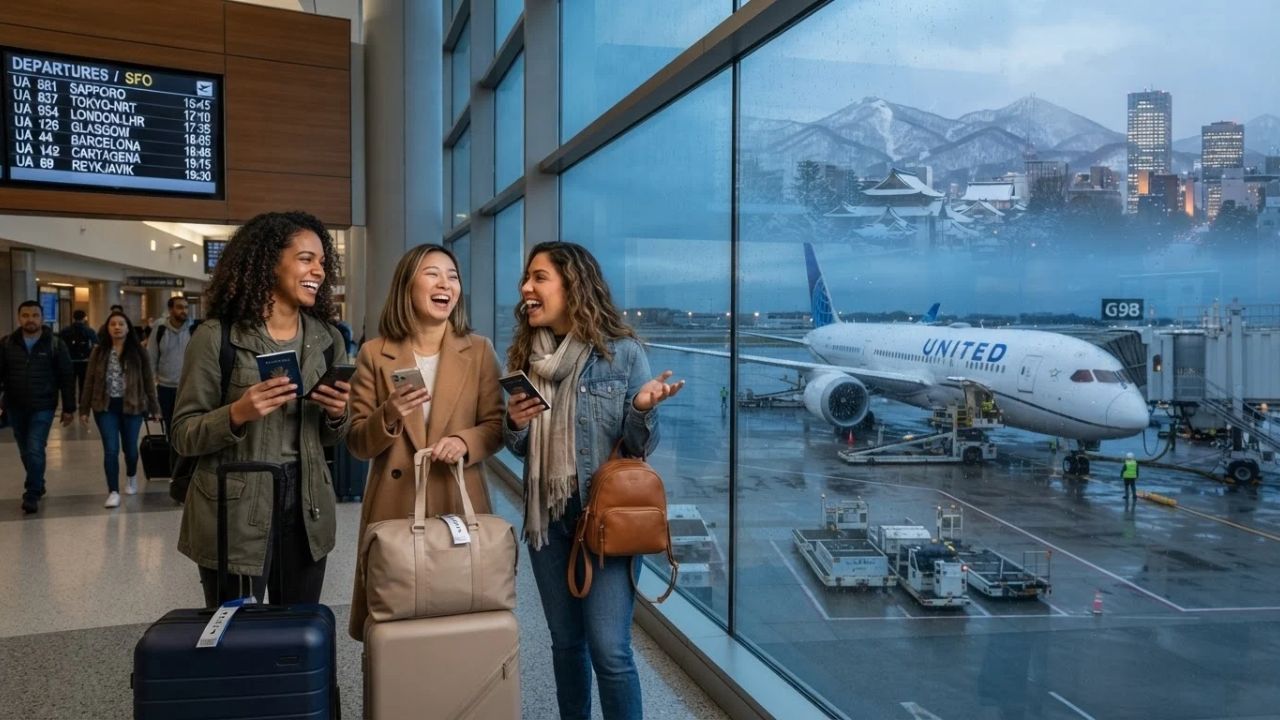
United Airlines will inaugurate the only nonstop air service connecting the United States mainland with Hokkaido on 12 December 2026, launching thrice-weekly seasonal flights between San Francisco and Sapporo’s New Chitose Airport through 27 March 2027. The transpacific link headlines an expansive international network growth that adds secondary gateways across Asia, Latin America, the Caribbean, and Southern Europe, allowing long-haul travelers to bypass congested mega-hubs in favor of direct access to world-renowned powder skiing, coastal heritage cities, and emerging cultural capitals.
The San Francisco–Sapporo route (operating as flight UA234 departing San Francisco at 10:30 on Wednesdays, Fridays, and Sundays, arriving in Hokkaido at 14:15 the following day; and UA235 departing New Chitose at 16:15 on Mondays, Thursdays, and Saturdays, landing in California at 08:20) eliminates the traditional layover at Tokyo Narita or Haneda. Operating alongside an newly announced Chicago O’Hare–Tokyo Narita service and fresh long-haul transatlantic links, the expansion reinforces United’s footprint of more than 370 destinations across six continents and 5,000 daily departures powered by its seven American hubs: Chicago, Denver, Houston, Los Angeles, Newark/New York, San Francisco, and Washington Dulles.
The Local Trend Revealed: Point-to-Point Long-Haul Travel to Regional Gateways
Historically, transpacific and transatlantic travel required international passengers to funnel through primary gateway capitals—transferring through Tokyo, London, or Frankfurt before boarding regional commuter flights or bullet trains. That hub-and-spoke concentration created severe transit friction, elevated baggage transfer risks, and added hours to international itineraries.
United's 2026 strategy reflects a decisive structural shift in aviation: the deployment of long-range, fuel-efficient twin-engine aircraft to connect primary American hubs directly with secondary cultural, adventure, and regional economic centers.
This strategy unfolds across four international corridors:
- Northern Japan Gateway: San Francisco to Sapporo (New Chitose Airport - CTS) connects California directly to Hokkaido during peak winter sports season, complementing United’s existing Tokyo Narita, Tokyo Haneda, and Osaka Kansai services.
- Deepening Japanese Connectivity: A newly announced Chicago O’Hare to Tokyo Narita route expands Midwestern capacity to Japan, augmenting United’s existing daily Chicago–Tokyo Haneda service operated by Boeing 787-10 aircraft.
- Caribbean and Latin American Reach: Planned destination additions later in 2026 include Caracas (Venezuela), Cartagena (Colombia), St. Croix (US Virgin Islands), and Tuxtla Gutiérrez (Mexico), alongside announced point-to-point leisure routes linking Washington Dulles to Los Cabos, Denver to Providenciales, and Houston to Santo Domingo.
- European Secondary Market Penetration: Building on services launched during the second quarter of 2026 from Newark to Bari (Italy), Split (Croatia), Santiago de Compostela (Spain), and Glasgow (Scotland), plus Washington Dulles to Reykjavik (Iceland), United is serving 46 transatlantic cities in 2026.
Cultural & Environmental Value: Tourism Dispersion and Fleet Efficiency
The wider impact of direct long-haul connectivity to secondary destinations goes well beyond airline schedules; it directly supports sustainable tourism dispersion and environmental efficiency:
Alleviating Urban Over-Tourism in Japan and Europe
Major international destinations face unprecedented visitor concentration. In Japan, the golden triangle of Tokyo, Kyoto, and Osaka contends with overcrowded trains and strained municipal infrastructure. By funneling American winter travelers directly into Hokkaido, United diverts foot traffic toward northern communities, spreading economic benefits across family-owned ski lodges, regional rail operators, and rural artisans.
Similarly, launching direct flights to Bari in Puglia, Split along the Dalmatian Coast, and the historic pilgrimage destination of Santiago de Compostela in Galicia directs North American visitors into Mediterranean and Atlantic regions where seasonal tourism balances the heavy footprint experienced by Rome, Venice, and Barcelona.
Modern Fleet Architecture and Emission Reductions
Operating direct, point-to-point international routes eliminates the fuel-burn penalty of multi-leg domestic connections. United is pairing this network strategy with significant fleet and premium product investments:
- Polaris Studio Upgrades on Boeing 787-9: The carrier has begun flying newly reconfigured Boeing 787-9 Dreamliners on flagship routes from San Francisco to Singapore and London. The premium layout features 99 premium seats, including eight ultra-private Polaris Studio suites and 56 Polaris business-class lie-flat seats, catering to long-haul travelers seeking elevated comfort.
- Entry of the Airbus A321XLR: United’s first Airbus A321XLR (Extra Long Range) aircraft enters domestic line operations in autumn 2026 before inaugurating transatlantic thin-route flying in early 2027. With its extended range and 30% reduction in fuel burn per seat compared with previous-generation single-aisle jets, the aircraft enables point-to-point operations to secondary European and Latin American destinations that cannot economically support wide-body aircraft.
Visitor Insider Tips: Maximizing Hokkaido’s Winter Season via Sapporo
For winter adventure seekers boarding UA234 to Sapporo, experiencing Hokkaido's legendary cold-weather season requires local insider knowledge:
Snow Travel and Ski Resort Transfers
- The "Japow" Powder Capital: Hokkaido is famed for some of the world's lightest, driest powder snow, generated by freezing Siberian winds absorbing moisture over the Sea of Japan before encountering Hokkaido's volcanic peaks.
- Seamless Airport-to-Resort Transit: Upon landing at New Chitose Airport, avoid private car rentals during blizzard conditions. Board the Hokkaido Resort Liner coach or the JR Chitose Line rapid train. Direct resort buses depart New Chitose terminal doors directly to Niseko United, Rusutsu Resort, and Kiroro Grand, transporting skiers to slopeside hotels in approximately two to three hours.
- Sapporo Snow Festival Timing: If visiting in early February, secure accommodations in downtown Sapporo months in advance. The annual festival transforms Odori Park and Susukino into vast outdoor galleries of towering, illuminated ice sculptures.
Japanese Onsen Etiquette for International Visitors
- Traditional Pre-Soak Cleansing: Hokkaido is renowned for natural geothermal hot springs, particularly in the mountain village of Jozankei Onsen, situated just an hour outside Sapporo. Always shower and wash thoroughly with provided soap at the seated washing stalls before entering the communal thermal bath.
- Tattoo Etiquette: While modern international resorts around Niseko increasingly accommodate inked guests, traditional ryokans and public baths across Sapporo often request that guests cover small tattoos with waterproof patches or reserve private family baths (kashikiri onsen).
Under-the-Radar Gems Around Hokkaido
- Otaru Canal at Twilight: Take a 35-minute train ride northwest of Sapporo to the historic port town of Otaru. Walk along the historic stone warehouse canal illuminated by gas lamps, visit century-old hand-blown glass workshops, and sample fresh sea urchin (uni) at the Sankaku Fish Market.
- Moerenuma Park Winter Art Scenery: Designed by master sculptor Isamu Noguchi, this municipal park on Sapporo’s outskirts becomes a quiet minimalist wonderland in winter. Rent snowshoes on-site to hike up Mount Moere or admire the soaring Glass Pyramid "Hidamari" reflecting crisp northern light.
Northern Flavors: Indulging in Hokkaido's Legendary Cuisine
Hokkaido produces more than 20% of Japan’s total agricultural yield, and its chilly northern seas yield some of the planet’s richest seafood. Sapporo dining represents a distinct departure from Tokyo style:
- Authentic Sapporo Miso Ramen: Invented in Sapporo during the 1950s, this hearty winter ramen features a rich, complex broth made from fermented soybean paste (miso) and pork bone stock. Served with thick, wavy egg noodles, tender slices of roasted pork (chashu), bamboo shoots, and a signature dollop of sweet Hokkaido sweet corn and creamy farm butter that melts into the broth. Head to Ganso Ramen Yokocho (Original Ramen Alley) in Susukino to sample steaming bowls from veteran master chefs.
- Fragrant Hokkaido Soup Curry: Born in Sapporo during the 1970s, soup curry features an aromatic, spiced medicinal broth infused with turmeric, cumin, and coriander, served with tender slow-cooked chicken drumsticks and flash-fried regional vegetables, including lotus root, kabocha pumpkin, and sweet bell peppers, eaten with separate bowls of turmeric rice.
- Jingisukan (Genghis Khan BBQ): Named after the Mongolian conqueror, this social dining experience centers around a domed, helmet-shaped iron grill set into the table. Diners sear thinly sliced lamb or mutton over charcoal, letting the flavorful meat drippings caramelize mounds of fresh sweet onions, bean sprouts, and cabbage ringing the perimeter, dipped in garlic-soy sauce.
- Hokkaido Dairy and Seafood Sweets: Sample ultra-fresh soft-serve ice cream crafted from milk produced by pasture-fed dairy herds in Biei and Tokachi, alongside grilled scallops (hotate) and sweet red king crab (tarabagani) roasted over open coals at Sapporo’s historic Nijo Market.
Tourism Outlook: Building High-Value Connectivity Across Six Continents
United Airlines’ ambitious 2026 expansion underscores how the world's largest carrier by available seat miles is rewiring global travel patterns. By utilizing advanced aircraft technology and opening non-traditional secondary gateways, the airline provides its 175 million annual customers with direct bridges to unique cultural, culinary, and adventure destinations.
For northern Japan, direct transpacific flights from San Francisco reposition Hokkaido from an exotic domestic holiday island into an easily accessible winter sports and alpine hub for North American outdoor enthusiasts. For secondary European, Latin American, and Caribbean communities, direct American hub access unlocks vital regional economic stimulus, creating jobs in local transport, boutique hospitality, and cultural tourism.
As modern travelers increasingly bypass uniform tourist corridors in search of distinctive local character, United’s growing point-to-point network sets an inspiring precedent for global aviation: connecting people not merely to airports, but directly into the heart of regional life.
Related Travel Guides
- Air India AI1886 Diversion Technical Alert: How Delhi Air Traffic and Bhopal Technical Diverts Affect Flights
- Frontier Airlines Launches First-Ever South America Flights: Nonstop Orlando Routes to Bogotá, Medellín, and Cartagena
- Asia Flight Disruptions: Delhi, Tokyo, and Shenzhen Weather Delays Test Passenger Rights
Disclaimer
This article is for informational and educational purposes only. It does not constitute legal, financial, or professional advice. While we strive to provide accurate and up-to-date information, travel policies, regulations, and conditions change rapidly. Always verify information with official sources before making travel decisions. Nomad Lawyer makes no representations about the accuracy, reliability, completeness, or suitability of the information provided. Readers should consult qualified professionals for advice specific to their circumstances. The views expressed in this article are those of the author and do not necessarily reflect the views of Nomad Lawyer.
Raushan Kumar
Founder & Lead Developer
Full-stack developer with 11+ years of experience and a passionate traveller. Raushan built Nomad Lawyer from the ground up with a vision to create the best travel and law experience on the web.
Learn more about our team →