
Shanghai Cruise Tourism Surges as China Links South Korea, Japan and Thousands of Foreign Travellers
Shanghai Cruise Tourism Surges as China Links South Korea, Japan and Thousands of Foreign Travellers

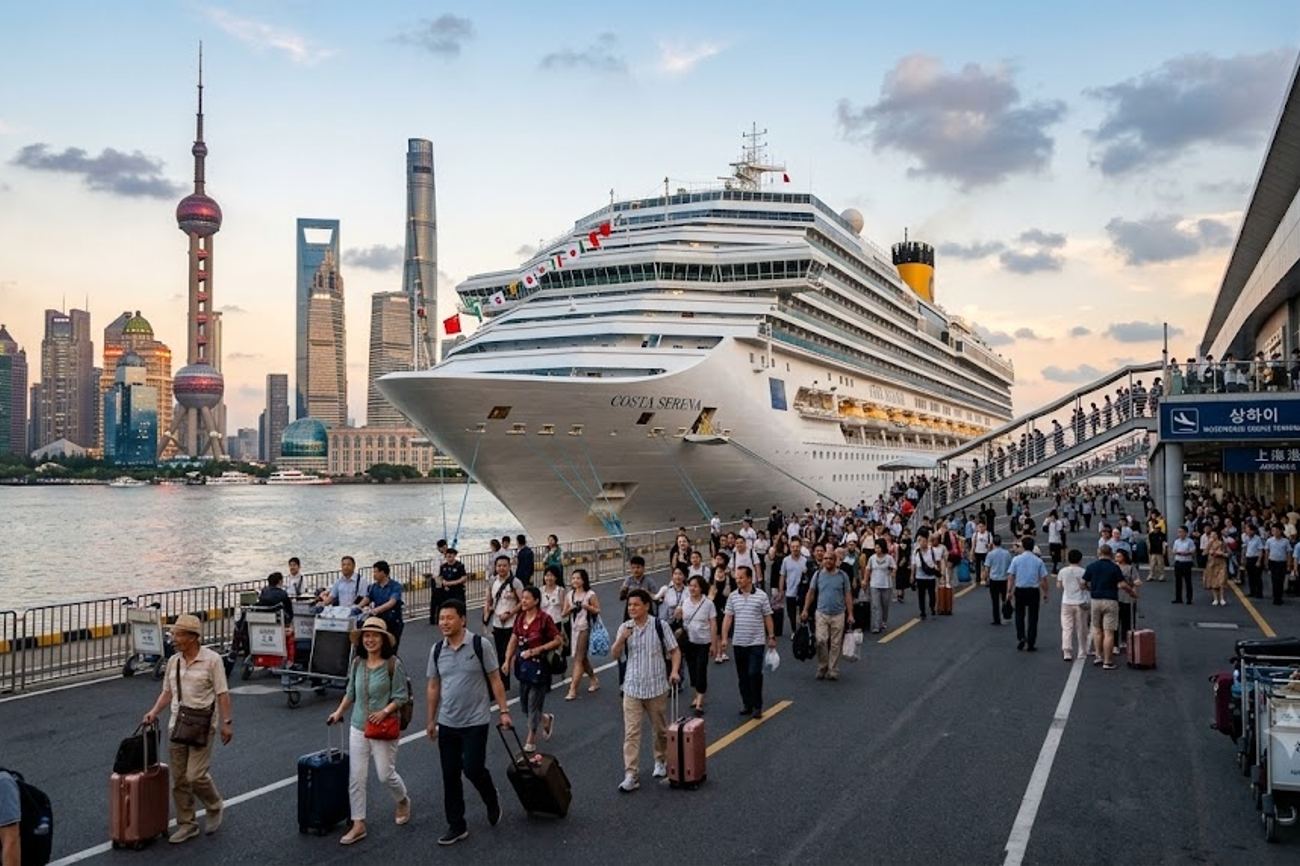
Image generated by AI
[Shanghai, September 2026] — Shanghai is aggressively expanding its role as Northeast Asia’s primary maritime gateway, leveraging a new "dual-homeport" model with Busan to funnel thousands of international tourists into the city. The strategy shifts the port's function from a mere departure point for Chinese nationals to a bidirectional hub that captures high-spending foreign visitors boarding in South Korea.
The surge is anchored by a dense September schedule featuring ten major sailings between September 16 and September 30. These voyages connect Shanghai with key ports in South Korea—specifically Jeju and Busan—and Japan, including Sasebo, Fukuoka, and Okinawa. This operational push is supported by the Shanghai Municipal Government and the port's strategic alignment with visa-free entry policies to lower barriers for non-Chinese nationals.
The Dual-Homeport Catalyst
The primary driver of this growth is the introduction of the Shanghai–Busan dual-homeport model, pioneered by MSC Cruises. Unlike traditional itineraries where ships originate in one city and terminate in another, or perform simple round-trips, this model allows for seamless boarding and disembarkation in both cities.
The MSC Cruises summer-autumn program specifically utilizes this framework for 11 of its 15 selected voyages, with an additional two voyages operating as Busan transfer-port sailings. By establishing Busan as a secondary homeport, Shanghai is effectively tapping into the South Korean market to import international cruise passengers who may not have previously considered China as a primary destination.
This structural shift transforms the passenger flow. Rather than simply exporting tourists from Shanghai to overseas ports, the city is now importing international travelers who embark in South Korea and use Shanghai as a critical node in their broader Asian itinerary.
Regional Connectivity and Affected Markets
The September schedule demonstrates a heavy reliance on South Korean ports, though Japanese destinations provide essential variety for the luxury and leisure segments.
September Sailing Schedule & Route Distribution:
| Departure Date | Vessel | Route |
|---|---|---|
| 16 Sep | MSC Bellissima | Shanghai $\rightarrow$ Jeju $\rightarrow$ Busan $\rightarrow$ Shanghai |
| 19 Sep | Spectrum of the Seas | Shanghai $\rightarrow$ Jeju $\rightarrow$ Shanghai |
| 20 Sep | MSC Bellissima | Shanghai $\rightarrow$ Jeju $\rightarrow$ Sasebo $\rightarrow$ Busan $\rightarrow$ Shanghai |
| 20 Sep | Adora Magic City | Shanghai $\rightarrow$ Busan $\rightarrow$ Jeju $\rightarrow$ Shanghai |
| 23 Sep | Spectrum of the Seas | Shanghai $\rightarrow$ Busan $\rightarrow$ Shanghai |
| 24 Sep | Adora Magic City | Shanghai $\rightarrow$ Busan $\rightarrow$ Jeju $\rightarrow$ Shanghai |
| 25 Sep | MSC Bellissima | Shanghai $\rightarrow$ Fukuoka $\rightarrow$ Busan $\rightarrow$ Shanghai |
| 27 Sep | Spectrum of the Seas | Shanghai $\rightarrow$ Jeju $\rightarrow$ Shanghai |
| 28 Sep | Adora Magic City | Shanghai $\rightarrow$ Jeju $\rightarrow$ Shanghai |
| 30 Sep | MSC Bellissima | Shanghai $\rightarrow$ Okinawa $\rightarrow$ Shanghai |
Market Impact Breakdown:
- South Korea: Jeju and Busan serve as the most frequent stops, acting as the primary conduits for the dual-homeport traffic.
- Japan: Three distinct ports (Sasebo, Fukuoka, and Okinawa) are integrated to offer diverse experiences, ranging from urban gastronomy in Fukuoka to tropical tourism in Okinawa.
- Vessel Operators: The current surge is driven by three primary ships: the MSC Bellissima, Spectrum of the Seas, and the Adora Magic City.
- Seasonal Peak: Sailings on September 25, 27, and 28 are specifically timed to coincide with the Mid-Autumn Festival, targeting family-oriented leisure travel.
What This Means for Travelers
For the modern nomad or luxury traveler, this expansion means significantly easier access to mainland China via the sea. The "dual-homeport" logic removes the need to arrange complex one-way flights between China and South Korea, as the cruise ship serves as both the transport and the hotel.
Passenger Impact Assessment:
- Visa Simplification: The most critical takeaway is the reliance on visa-free policies. With 81.2% of foreign arrivals currently utilizing these arrangements, eligible passport holders can bypass lengthy embassy applications for short-term shore excursions.
- Shore Excursion Integration: International passengers boarding in South Korea are being funneled into curated one-day sightseeing programs. Nearly 10,000 international visitors are expected to participate in these tours, focusing on high-traffic landmarks:
- The Bund (Waterfront architecture)
- Yuyuan Garden (Traditional landscaping)
- Xintiandi (Upscale shopping and dining)
- Jade Buddha Temple (Cultural heritage)
- Spending Ecosystem: Travelers should expect a highly integrated experience around the Wusongkou terminal. The city is actively linking port arrivals to local taxis, public transport, and hotels, meaning the "last mile" from ship to city center is becoming more streamlined.
- Booking Flexibility: The variety of short-haul routes (some as short as a few days) allows travelers to add a "China stopover" to a larger Japan or Korea trip without committing to a full two-week voyage.
Shanghai's Market Dominance in 2026
The September surge is not an isolated event but part of a broader trend of market consolidation. Data from the first half (H1) of 2026 confirms that Shanghai has effectively monopolized the Chinese cruise sector.
According to official figures, Shanghai Port handled 126 cruise calls and 744,000 passenger movements in the first six months of 2026. To put this in perspective, Shanghai now accounts for 59.7% of all cruise calls in China and a staggering 74.2% of all national cruise passenger movements.
The international segment is where the most aggressive growth is occurring. Foreign cruise arrivals exceeded 51,000 in H1 2026, representing a 37.8% increase year-on-year. This growth is directly correlated with the visa-free policies mentioned above, proving that administrative ease is the primary driver of passenger volume.
The Economic Ripple Effect
The strategy employed by Shanghai authorities is to ensure that cruise passengers do not remain isolated within the terminal. By converting "port users" into "city consumers," the city is spreading the economic benefit of the cruise industry across multiple sectors.
The influx of nearly 10,000 international excursionists from the South Korea-originating cruises is designed to stimulate:
- Gastronomy: Increased demand for local restaurants and high-end dining in the Xintiandi district.
- Retail: Higher foot traffic in luxury shopping malls and traditional markets.
- Hospitality: Increased demand for pre- and post-cruise hotel stays, particularly for those extending their visit beyond the one-day shore excursion.
- Infrastructure: Higher utilization of the Shanghai Metro and ride-hailing services for transit between the port and the city center.
FAQ: Shanghai Cruise Tourism 2026
Do I need a visa to visit Shanghai on a cruise? Many international travelers do not. In H1 2026, 81.2% of foreign cruise passengers utilized visa-free policies. Eligibility depends on your nationality; check current China Immigration guidelines for the most recent list of visa-exempt countries.
What is the "dual-homeport" model? It is a system where a ship operates as if it has two primary bases—in this case, Shanghai and Busan. Passengers can start and end their journey in either city, making it easier to plan multi-country Asian itineraries.
Which ships are currently operating these routes? The primary vessels for the September 2026 surge are the MSC Bellissima, Spectrum of the Seas, and Adora Magic City.
How long are the typical shore excursions in Shanghai? Most international passengers arriving via the South Korea-Shanghai route participate in one-day sightseeing programs covering major landmarks like The Bund and Yuyuan Garden before returning to their ship.
Shanghai is no longer just a stop on the map; it is the engine driving Northeast Asian maritime tourism.
#ShanghaiPort #MSC Cruises #BusanPort #NortheastAsiaTravel2026 #VisaFreeChina #CruiseTourism
Related Travel Guides
- Arizona Travel Alert: Tucson Weather Challenges Desert Tourism With Heat and Storm Risks
- US Tourism Slump Now at Peak as Overseas Visitor Numbers Vanish, While UK Sees Liquid American Travellers Demand: A Comparative Analysis
- Europe Travel Enters Luxury River Era as Celebrity Compass Reaches Major Water Milestone
Disclaimer
This article is for informational and educational purposes only. It does not constitute legal, financial, or professional advice. While we strive to provide accurate and up-to-date information, travel policies, regulations, and conditions change rapidly. Always verify information with official sources before making travel decisions. Nomad Lawyer makes no representations about the accuracy, reliability, completeness, or suitability of the information provided. Readers should consult qualified professionals for advice specific to their circumstances. The views expressed in this article are those of the author and do not necessarily reflect the views of Nomad Lawyer.
Kunal K Choudhary
Co-Founder & Contributor
A passionate traveller and tech enthusiast. Kunal contributes to the vision and growth of Nomad Lawyer, bringing fresh perspectives and driving the community forward.
Learn more about our team →