
Saudi Arabia Riyadh Airport Travel Operations Disrupted After Fuel Tank Fire Near Capital Amid Rising Yemen Tensions
Saudi Arabia Riyadh Airport Travel Operations Disrupted After Fuel Tank Fire Near Capital Amid Rising Yemen Tensions

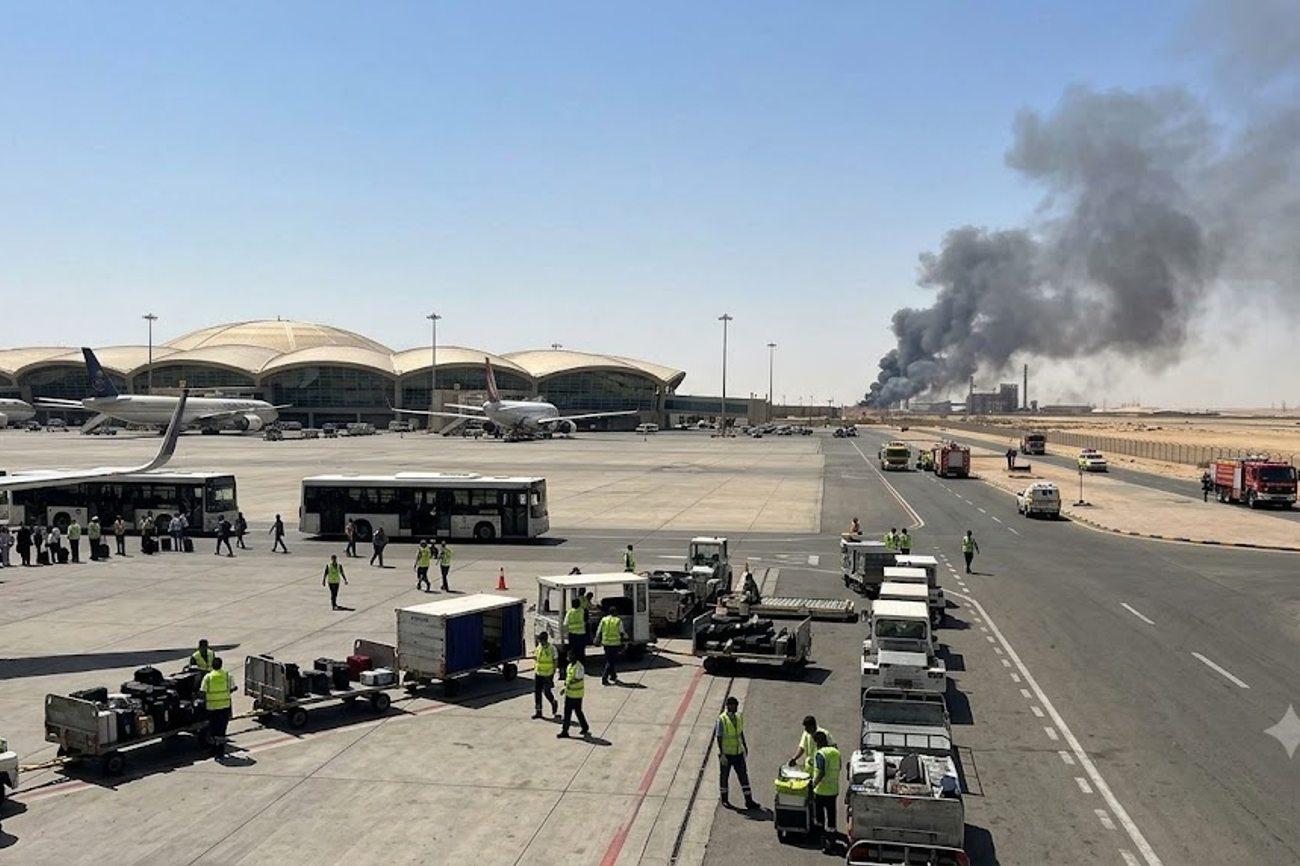
Image generated by AI
[Riyadh, September 19, 2026] — A fuel tank fire near King Khalid International Airport (RUH) has triggered widespread aviation chaos in Saudi Arabia, resulting in over 200 flight delays and multiple cancellations. The blaze, which produced plumes of heavy black smoke visible from the airport perimeter, occurred shortly after Saudi authorities issued an overnight air raid alert—the first such warning in the capital since the escalation of conflict in neighboring Yemen earlier this month.
Emergency firefighting crews were deployed immediately to contain the fire, but the proximity of the incident to the runway and terminal infrastructure forced a comprehensive review of airport operations. While the General Authority of Civil Aviation (GACA) and airport officials have not yet confirmed the exact cause of the ignition, the event has coincided with a period of extreme regional volatility, putting immediate pressure on one of the Middle East's most critical transit hubs.
The Trigger: Security Alerts and Infrastructure Fire
The operational collapse began on Saturday, September 19, following a high-alert security status triggered by regional tensions. The subsequent fuel tank fire created an immediate hazard zone, necessitating a slowdown in ground operations and a reassessment of safety protocols for departing and arriving aircraft.
The timing of the fire is particularly sensitive. The air raid alert issued prior to the blaze marks a significant shift in the security environment in Riyadh, mirroring the intensified fighting observed in Yemen. Although the airport remains open, the combination of a physical fire and a heightened security posture has created a bottleneck in passenger processing and aircraft rotations.
Who Is Affected: Flight Data and Route Disruptions
The operational fallout is severe, with data indicating a systemic failure to maintain scheduled timings across both domestic and international corridors. King Khalid International Airport (RUH) recorded a total of 205 flight delays and 5 cancellations within a single 24-hour window.
Primary Impact Zones
The disruption is split between outbound and inbound traffic, with arrival delays slightly outpacing departures:
| Metric | Departures from RUH | Arrivals at RUH | Total |
|---|---|---|---|
| Delays | 95 (23% of total) | 110 | 205 |
| Cancellations | 2 | 3 | 5 |
Domestic Network Contagion
Because Riyadh serves as the primary spoke for the Saudi domestic network, the delays have cascaded to other major cities. The following airports reported significant schedule shifts:
- Jeddah (JED): 16 delayed departures and 22 delayed arrivals at King Abdulaziz International Airport.
- Abha: 11 delayed departures and 7 delayed arrivals.
- Dammam (DMM): 9 delayed departures and 4 delayed arrivals at King Fahd International Airport.
- Medina (MED): 6 delayed departures and 7 delayed arrivals at Prince Mohammad Bin Abdulaziz International Airport.
International and Regional Fallout
The disruption extends far beyond Saudi borders, impacting key hubs in the Gulf and long-haul routes to Asia and Europe.
Gulf Cooperation Council (GCC) Impact:
- Dubai (DXB): 7 delayed departures and 4 delayed arrivals.
- Doha (DOH): 3 delayed departures and 5 delayed arrivals at Hamad International Airport.
- Abu Dhabi (AUH): 2 delayed arrivals.
- Muscat (MCT) & Sharjah (SHJ): Widespread delays reported on all Riyadh-connected services.
Global Reach: Significant schedule instability has been reported for flights connecting Riyadh to:
- Egypt: Cairo International Airport (8 delayed departures, 7 delayed arrivals).
- India: Indira Gandhi International (Delhi), Cochin, Calicut, and Rajiv Gandhi International (Hyderabad).
- Pakistan: Islamabad International Airport.
- Syria: Damascus International Airport.
- Germany: Frankfurt International Airport.
What This Means for Travelers
For passengers currently booked on flights to, from, or through Riyadh, the "operational review" mentioned by authorities translates to tangible instability. This is not a localized delay but a systemic disruption affecting aircraft rotations. If a plane is delayed leaving Riyadh, it will be late arriving at its next destination, creating a domino effect.
Immediate Passenger Impacts:
- Connection Failures: Passengers with tight layovers in Riyadh are at high risk of missing connecting flights. The 110 delayed arrivals mean that onward journeys to Europe and Asia are likely compromised.
- Ground Congestion: With over 200 delays, terminal congestion is expected to rise. Passengers should anticipate longer queues for security and boarding.
- Booking Uncertainty: While only 5 flights were officially cancelled, the high volume of delays suggests that further cancellations may occur if the security situation worsens or if fuel supplies are restricted.
- Documentation Stress: Travelers are urged to keep all digital and physical booking references ready, as re-routing and re-booking will likely be handled on a case-by-case basis at the airport.
The Road Ahead: Security and Stability
The aviation industry is now watching the border between Saudi Arabia and Yemen closely. The fact that an air raid alert preceded the fuel tank fire suggests that the disruption may not be an isolated industrial accident but part of a broader security challenge.
Saudi Arabia is currently investing billions into transforming Riyadh into a global tourism and business epicenter. This incident exposes the vulnerability of that ambition to regional geopolitical instability. Aviation analysts expect that security screenings and passenger handling measures at RUH will remain stringent in the coming days.
Airlines are currently adjusting their "aircraft rotation" plans—essentially shuffling which planes fly which routes—to mitigate the backlog of 205 delayed flights. However, until a formal cause for the fire is released and the air raid alerts subside, the schedule remains volatile.
FAQ: Riyadh Airport Disruptions 2026
Is King Khalid International Airport (RUH) currently closed? No, the airport remains operational. However, it is experiencing significant disruptions, including over 200 delays and several cancellations due to a nearby fuel tank fire and security alerts.
How do I know if my flight is delayed or cancelled? Passengers must check their status directly through their airline's official app or website. Avoid relying solely on third-party tracking apps, as official airline data is the only authoritative source for re-booking.
What should I do if I miss my connection in Riyadh? Contact your airline immediately. Due to the volume of delays (110 arriving flights), airport staff will be overwhelmed. Use digital channels to request alternative flights or hotel vouchers if you are stranded.
Are there travel restrictions in place due to the air raid alert? There are no official travel bans, but security procedures have been heightened. Travelers should arrive at the airport earlier than usual to account for additional screening and operational delays.
Regional volatility continues to test the resilience of Saudi Arabia's aviation ambitions.
#RUH #KingKhalidInternational #SaudiAviation #RiyadhTravel2026 #GACA #GulfAirTraffic
Related Travel Guides
- Kenya Aligns With Rwanda and Others as Uganda Boosts Mbale Tourism With Digital Innovation Drive
- Germany Beats UK in Malaga Rural Tourism Boom as Autumn Holiday Demand Surges Across Spain
- Middle East Tourism Spending Set for Massive Growth as Travel Economy could Reach $408 Billion by 2030: All You Need to Know
Disclaimer
This article is for informational and educational purposes only. It does not constitute legal, financial, or professional advice. While we strive to provide accurate and up-to-date information, travel policies, regulations, and conditions change rapidly. Always verify information with official sources before making travel decisions. Nomad Lawyer makes no representations about the accuracy, reliability, completeness, or suitability of the information provided. Readers should consult qualified professionals for advice specific to their circumstances. The views expressed in this article are those of the author and do not necessarily reflect the views of Nomad Lawyer.
Kunal K Choudhary
Co-Founder & Contributor
A passionate traveller and tech enthusiast. Kunal contributes to the vision and growth of Nomad Lawyer, bringing fresh perspectives and driving the community forward.
Learn more about our team →