
Germany Beats UK in Malaga Rural Tourism Boom as Autumn Holiday Demand Surges Across Spain
Germany Beats UK in Malaga Rural Tourism Boom as Autumn Holiday Demand Surges Across Spain

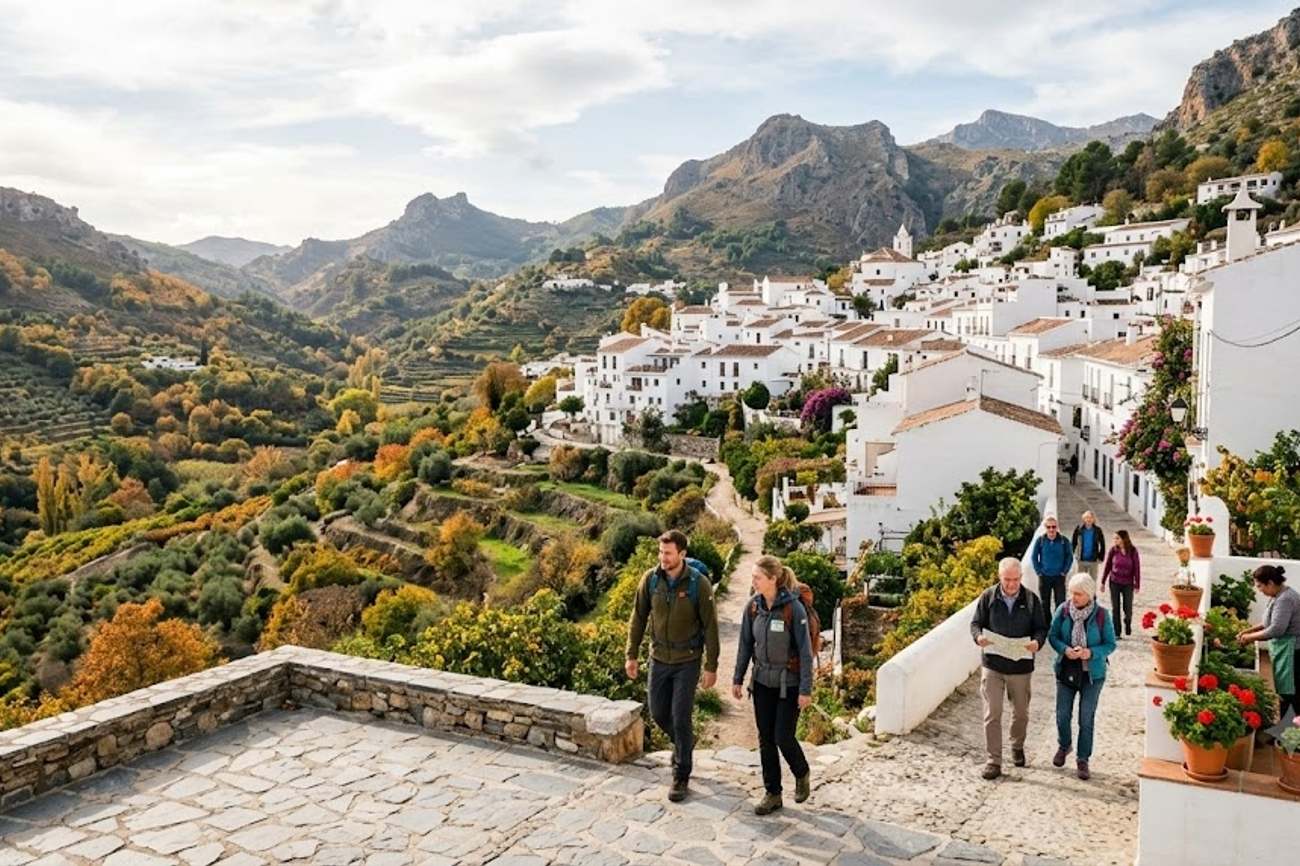
Image generated by AI
Malaga Rural Tourism Analysis 2026
3,016,153 passengers passed through Málaga-Costa del Sol Airport in the first two months of 2026 alone, signaling a structural shift in how international travelers access the Andalusian interior. This surge in early-year traffic is not merely a recovery of volume but a redirection of intent, as the gateway to the Costa del Sol increasingly serves as a launchpad for inland exploration rather than just coastal lounging.
The Pivot Toward the Andalusian Interior
The traditional Spanish tourism model—heavily reliant on the "sun and beach" archetype—is undergoing a forced evolution. Data from 2026 indicates that the gravitational pull of Malaga is shifting away from the shoreline and toward the rugged hinterlands. This transition is being fueled by a specific demographic of European travelers who are prioritizing "slow travel" and authentic cultural immersion over the standardized luxury of coastal resorts.
The infrastructure supporting this shift is anchored by the Málaga-Costa del Sol Airport, which has evolved into a year-round hub. By recording a 4.3% increase in passenger traffic during January and February compared to the previous year, the airport has demonstrated that the "off-season" is effectively disappearing. Of the total early-year traffic, 2,432,308 passengers were international arrivals, providing the necessary liquidity of visitors to sustain rural businesses that previously struggled during the winter months.
This diversification is a strategic necessity for the region. By distributing tourist traffic into the mountains and traditional villages, the province reduces the environmental and social strain on the coast while injecting capital into underdeveloped inland economies. The result is a more resilient tourism ecosystem that is less susceptible to the volatility of summer-only demand.
Market Share and Occupancy Metrics
The most striking revelation in the 2026 data is the realignment of source markets. For decades, the United Kingdom has been the dominant force in Andalusian tourism. However, in the rural sector, a new hierarchy has emerged during the autumn window (September through November).
| Market | Share of Autumn Rural Bookings |
|---|---|
| Germany | 26.95% |
| United Kingdom | 21.14% |
| Spain (Domestic) | 13% |
The ascent of the German market to a 26.95% share suggests a preference for the specific types of nature-based and cultural offerings found in rural Malaga. This shift is mirrored in the occupancy rates for rural accommodations, which have seen a marked increase. September occupancy hit 75%, a significant 10 percentage point jump over 2025 figures. October followed suit with a 64% booking rate, marking a 3 percentage point increase year-on-year.
These figures indicate that the "shoulder season" is becoming a primary revenue driver. The decline of the domestic Spanish market to just 13% of autumn bookings further emphasizes that rural Malaga is no longer a local getaway but a global destination.
Expert Analysis: The Economics of Authentic Escapism
For travelers booking routes into Andalusia, the direct consequence of this trend is a tightening of availability and a rise in costs for non-coastal stays. The data shows a 3.87% increase in pricing for rural stays compared to 2025, with the average cost now sitting at €42.25 per person per day.
The pricing pressure created by the German market's dominance suggests a higher "willingness to pay" for authenticity. When a market shifts from domestic (13%) to high-spending international segments (nearly 48% combined between Germany and the UK), the pricing floor for rural villas and boutique village hotels naturally rises. This creates a positive feedback loop: higher revenues allow rural operators to invest in better infrastructure, which in turn attracts more high-value international travelers.
From a regulatory and logistical perspective, this shift requires a pivot in how Spain's Official Tourism Board manages flow. The concentration of 3 million passengers in a two-month window at the airport creates a logistical bottleneck if the transport links to the interior—such as regional roads and rail—are not scaled accordingly. The "rural boom" is essentially a stress test for Andalusia's inland infrastructure. If the region cannot move these passengers efficiently from the terminal to the village, the growth will hit a ceiling.
Furthermore, the average stay duration of five nights indicates that rural tourism is not a "day trip" phenomenon. It is a residential shift. This means the economic impact is deeper, affecting local grocery stores, artisans, and guides, rather than just the hotel industry. The movement toward the interior is a hedge against the "overtourism" currently plaguing cities like Barcelona and Madrid.
Key Takeaways
- German Market Dominance: Germany has overtaken the UK as the primary driver of rural tourism in Malaga, capturing 26.95% of autumn bookings.
- Airport Scalability: Málaga-Costa del Sol Airport is now a year-round engine, processing over 3 million passengers in the first 60 days of 2026.
- Pricing Inflation: Rural accommodation costs have risen by 3.87%, averaging €42.25 per person per day.
- Seasonal Extension: September occupancy (75%) and October occupancy (64%) prove that the Andalusian travel season now extends well into the fourth quarter.
- Internationalization: The domestic Spanish market has shrunk to 13% of autumn rural bookings, leaving the sector heavily dependent on European arrivals.
FAQ: Malaga Rural Tourism 2026
Is it more expensive to stay in rural Malaga than on the coast? Not necessarily, but prices are rising. The average rural stay is €42.25 per person per day, a 3.87% increase over last year. Coastal resorts often command higher premiums, but rural boutique stays are seeing rapid price growth due to high demand.
When is the best time to visit rural Malaga to avoid crowds? While September is peaking at 75% occupancy, October (64%) offers a balance of favorable weather and slightly lower crowds. The data suggests that the autumn window is now a primary travel period for international visitors.
How do I get from Malaga Airport to the rural inland villages? With over 3 million passengers using the airport in early 2026, rental cars and regional transfers are the primary methods. Travelers are increasingly bypassing the coast to head directly toward the mountains and traditional villages.
Why are German travelers choosing rural Malaga over beach resorts? Current trends show a preference for nature-based holidays, hiking, and authentic Spanish culture. The 26.95% market share indicates a strong German preference for immersive, slower-paced experiences over traditional coastal tourism.
The shift from the shoreline to the sierra is no longer a trend; it is the new economic blueprint for Andalusia.
Tags: Malaga-Costa del Sol Airport, Andalusia Rural Tourism 2026, Ruralidays Data, Spanish Inland Tourism, German Travel Trends 2026
Related Travel Guides
Disclaimer
This article is for informational and educational purposes only. It does not constitute legal, financial, or professional advice. While we strive to provide accurate and up-to-date information, travel policies, regulations, and conditions change rapidly. Always verify information with official sources before making travel decisions. Nomad Lawyer makes no representations about the accuracy, reliability, completeness, or suitability of the information provided. Readers should consult qualified professionals for advice specific to their circumstances. The views expressed in this article are those of the author and do not necessarily reflect the views of Nomad Lawyer.
Preeti Gunjan
Contributor & Community Manager
A passionate traveller and community builder. Preeti helps grow the Nomad Lawyer community, fostering engagement and bringing the reader experience to life.
Learn more about our team →