
Saudi Arabia Creates 4,310 Sq Km Nature Reserve Near Riyadh To Transform Desert Tourism And Protect Biodiversity
Saudi Arabia Creates 4,310 Sq Km Nature Reserve Near Riyadh To Transform Desert Tourism And Protect Biodiversity

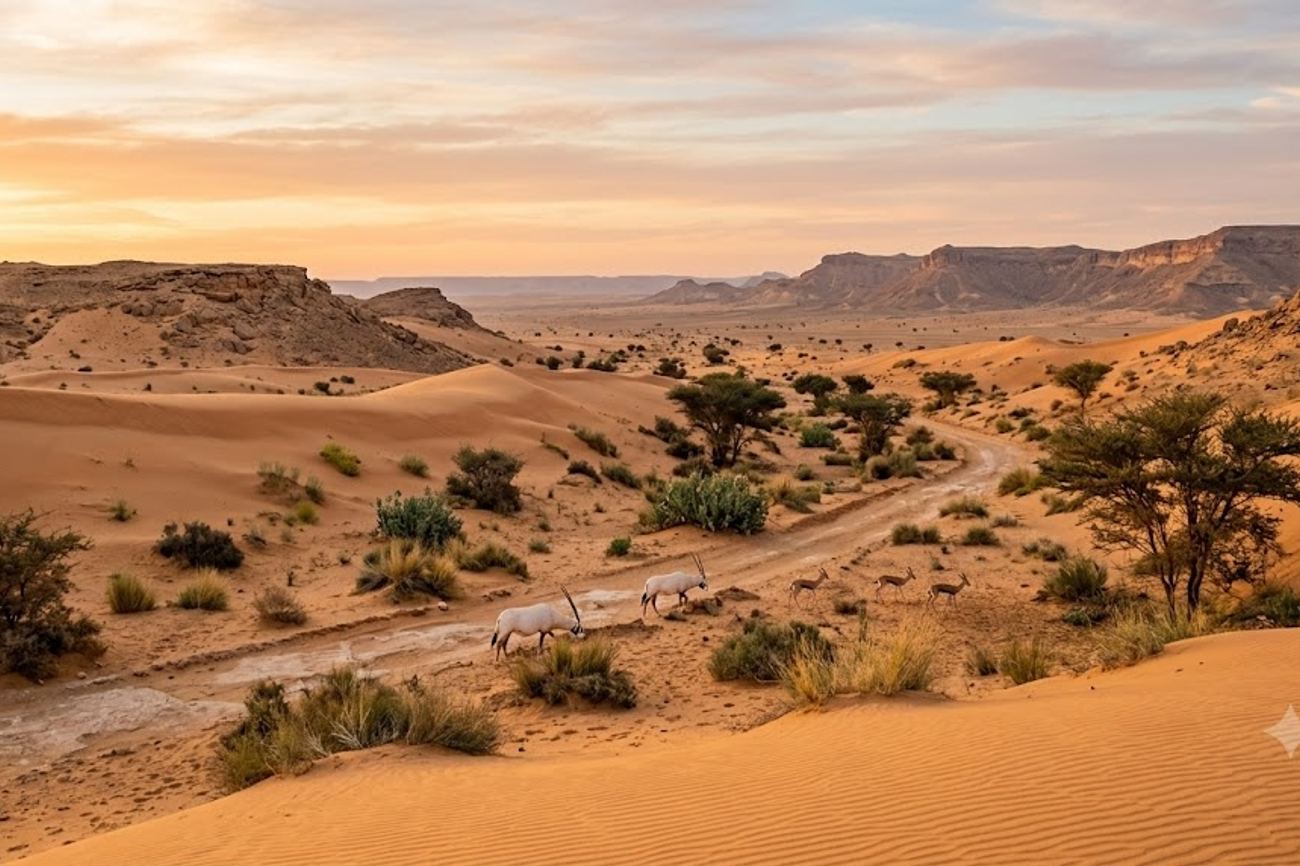
Image generated by AI
title: Saudi Arabia Establishes Imam Abdulrahman bin Faisal Nature Reserve Near Riyadh date: 2026-09-13 category: Travel Advisory tags: [Imam Abdulrahman bin Faisal Nature Reserve, RUH, Riyadh Tourism, Saudi Vision 2030, Eco-Tourism Regulation]
A business traveler landing at King Khalid International Airport in Riyadh now has a reason to extend their stay beyond the boardroom, as the Saudi government officially opens a massive 4,310 square kilometer wilderness sanctuary just outside the city limits. For those previously confined to the urban sprawl of the capital, the newly approved Imam Abdulrahman bin Faisal Nature Reserve transforms the outskirts of Riyadh into a primary destination for biodiversity and sustainable exploration.
The Establishment of the Imam Abdulrahman bin Faisal Nature Reserve
Following formal Cabinet approval, Saudi Arabia has designated 4,310 square kilometers of land as the Imam Abdulrahman bin Faisal Nature Reserve. This strategic move is a direct component of the Vision 2030 framework, aimed at diversifying the national economy and shifting the Kingdom's image from a purely oil-dependent state to a global hub for sustainable tourism.
The reserve is strategically positioned to the north of Riyadh, specifically encompassing the areas of Muzahimiyah and Dhurma. By integrating these regions into a protected status, the government aims to safeguard indigenous plant and animal species while creating a structured environment for regional conservation planning. This is not merely a land-grab for tourism; it is a calculated effort to balance the rapid urban expansion of Riyadh with the preservation of the Arabian Peninsula's fragile desert ecosystems.
Historically, Riyadh has functioned as the administrative, political, and financial heartbeat of the country. While it has successfully attracted visitors via large-scale entertainment projects and government institutions, it lacked a significant "green" or "wild" draw within immediate proximity. The introduction of this reserve changes the logistical calculus for travelers, allowing them to transition from high-density urban environments to protected natural landscapes within a short driving distance.
Affected Routes and Tourism Zones
While this development is an expansion rather than a disruption, it fundamentally alters the travel patterns for those visiting the Riyadh region. Travelers should note the following specific geographic impacts:
- Primary Access Point: Riyadh (RUH) – King Khalid International Airport serves as the main gateway.
- Key Impact Zones: The Muzahimiyah and Dhurma regions north of the capital.
- Comparative Scale: At 4,310 square kilometers, this reserve is a significant addition to the national network, though smaller than the King Salman bin Abdulaziz Royal Natural Reserve (approximately 130,700 square kilometers) and larger than the Sharaan Nature Reserve in AlUla (around 1,500 square kilometers).
- Activity Hubs: New zones for photography, wildlife observation, and guided nature walks are being established within the reserve boundaries.
Your Rights as a Passenger and Visitor
When traveling to Saudi Arabia to visit new sites like the Imam Abdulrahman bin Faisal Nature Reserve, your rights are governed by both the airline's contract of carriage and the regulations of the departing and arriving jurisdictions. Because many visitors to Riyadh arrive via international carriers, understanding the intersection of Saudi law and international aviation standards is vital.
Flight Disruptions and Compensation If your journey to Riyadh is delayed or cancelled, your rights depend on the airline and the airport of departure. For those flying from the EU or UK on carriers like Saudia or British Airways, EU261/2004 or the UK equivalent applies. Under these rules, if a flight is cancelled with less than 14 days' notice, you may be entitled to compensation of up to €600 (or £520), depending on the flight distance.
US DOT Protections For passengers departing from the United States, the US Department of Transportation mandates that if a flight is cancelled or significantly changed, you are entitled to a full refund of the ticket price if you choose not to travel on the alternative offered, regardless of whether the ticket was "non-refundable."
Local Tourism Regulations Within the nature reserve, visitors are subject to the environmental laws of the Kingdom. Entering protected areas typically requires adherence to strict "Leave No Trace" policies. Violations of conservation rules in royal or national reserves can lead to significant fines under Saudi environmental law. Always check the latest entry requirements and permit needs on the official Visit Saudi or government portals before departing the city center.
Rebooking Strategy and Alternatives
For travelers planning a trip to the new reserve who encounter flight disruptions, a proactive rebooking strategy is essential to avoid missing limited-entry permits or guided tours.
Alternative Flight Paths If flights directly into Riyadh (RUH) are unavailable or heavily delayed, consider flying into Jeddah (JED) or Dammam (DMM) and utilizing the domestic network or the growing rail infrastructure to reach the capital. Monitoring real-time aircraft movements via FlightRadar24 can help you identify if a disruption is systemic or isolated to a specific aircraft model.
Refund vs. Rebooking Trade-offs If your airline offers a voucher for a cancelled flight to Riyadh, calculate the value against a cash refund. Given the rapid development of Saudi tourism, prices for luxury eco-lodges and guided tours in the Imam Abdulrahman bin Faisal Nature Reserve may fluctuate. A cash refund allows you to book a more flexible fare on a competitor airline that might offer better timing for your nature excursion.
Logistical Alternatives in Riyadh If you cannot reach the reserve due to transport issues, Riyadh offers several alternative heritage sites. However, for those specifically seeking the eco-tourism experience, the Sharaan Nature Reserve in AlUla remains the gold standard for managed visitor experiences, though it requires a domestic flight from Riyadh.
FAQ: Riyadh Nature Reserve 2026
Am I entitled to compensation if my flight to Riyadh is cancelled? Yes, if you are departing from an EU/UK airport or flying an EU/UK carrier, you may be entitled to compensation under EU261/UK261. For US departures, you are entitled to a full refund if you decline the alternative flight offered.
How do I access the Imam Abdulrahman bin Faisal Nature Reserve? The reserve is located north of Riyadh in the Muzahimiyah and Dhurma areas. It is accessible via a reasonable driving distance from the city center, making it suitable for weekend trips or short breaks.
What activities are available in the new reserve? Visitors can engage in desert sightseeing, guided nature tours, wildlife and bird observation, hiking, photography, and educational environmental programs.
Is this reserve different from the AlUla sites? Yes. While AlUla's Sharaan reserve (1,500 sq km) focuses on specific desert ecosystems and heritage, the Imam Abdulrahman bin Faisal reserve (4,310 sq km) provides a massive protected natural area specifically designed to augment the tourism appeal of the capital city, Riyadh.
The transformation of the Riyadh periphery into a conservation powerhouse marks a new era for the Arabian desert traveler.
Related Travel Guides
- Philippines Advances Batanes Destination Growth With Basco Travel Deals Sabtang Glamping and Smart Registration
- Croatia and Other European Countries Travel Price Surge Was Supposed to Empty Their Beaches—Instead, It Set New Records
- New York Catskills Travel Revolution Unlocks A Breathtaking Rural Paradise Near America’s Biggest City
Disclaimer
This article is for informational and educational purposes only. It does not constitute legal, financial, or professional advice. While we strive to provide accurate and up-to-date information, travel policies, regulations, and conditions change rapidly. Always verify information with official sources before making travel decisions. Nomad Lawyer makes no representations about the accuracy, reliability, completeness, or suitability of the information provided. Readers should consult qualified professionals for advice specific to their circumstances. The views expressed in this article are those of the author and do not necessarily reflect the views of Nomad Lawyer.
Kunal K Choudhary
Co-Founder & Contributor
A passionate traveller and tech enthusiast. Kunal contributes to the vision and growth of Nomad Lawyer, bringing fresh perspectives and driving the community forward.
Learn more about our team →