
Croatia and Other European Countries Travel Price Surge Was Supposed to Empty Their Beaches—Instead, It Set New Records
Croatia and Other European Countries Travel Price Surge Was Supposed to Empty Their Beaches—Instead, It Set New Records

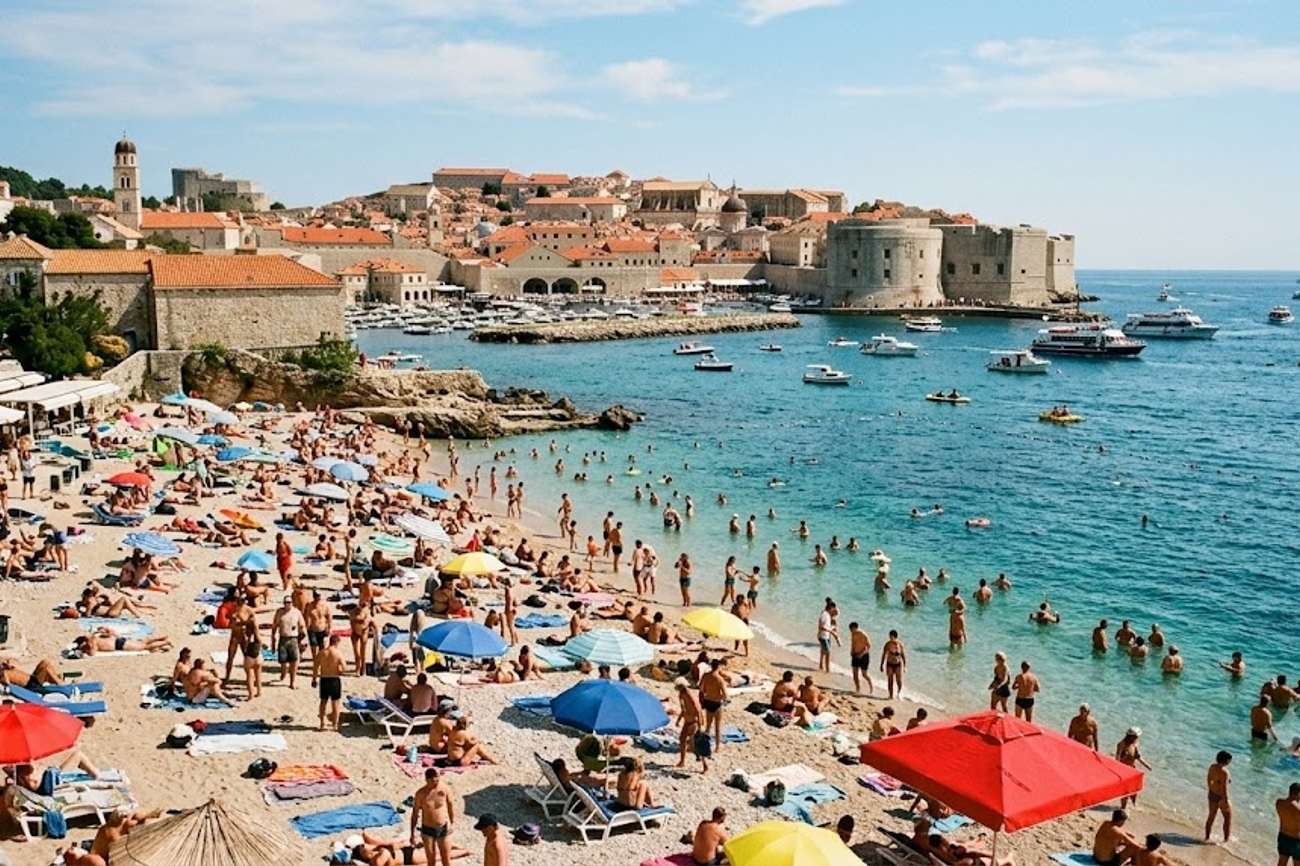
Image generated by AI
Tourist arrivals in Croatia climbed from 21.3 million in 2024 to 21.8 million in 2025, a 2.2% increase that contradicts traditional economic theories regarding price elasticity in the travel sector. This growth persists despite a systemic surge in costs across European accommodation, dining, and transport, signaling a fundamental shift in how high-value travelers perceive destination worth. Rather than pivoting to budget-friendly alternatives in the Balkans or North Africa, international visitors are demonstrating a willingness to absorb higher premiums for "irreplaceable" cultural and coastal assets.
The Adriatic Value Paradox in Numbers
The current data trajectory suggests that the European travel market has entered a phase of "experience-driven resilience." While policymakers feared that the rising cost of beach services and hotel stays would lead to a mass exodus toward cheaper markets like Albania or Montenegro, the numbers indicate the opposite. Croatia, specifically, has transitioned from being viewed as a "budget alternative" to Italy or France to becoming a primary high-value destination in its own right.
According to the Croatian Bureau of Statistics (DZS), the growth is not merely sustaining but accelerating in specific segments. The first quarter of 2026 has shown a sharp upward trajectory, with arrivals increasing by 9% and overnight stays rising by 8% compared to the same period in 2025. This suggests that the "price ceiling" for Mediterranean travel is significantly higher than previously estimated by industry analysts.
The resilience is most evident in the March 2026 data, where foreign arrivals surged by 19% year-on-year and foreign overnight stays jumped by 21.4%. This specific spike indicates a successful strategic pivot toward shoulder-season tourism, reducing the volatility associated with the peak summer rush while maintaining high revenue per visitor.
Comparative Market Resilience and Regional Benchmarks
When comparing the performance of Croatia against broader European trends, a pattern emerges: destination brand equity now outweighs nominal price increases. The Adriatic region remains the dominant engine of this growth, accounting for 89.4 million overnight stays in 2025.
The following table illustrates the year-over-year progression of Croatia's tourism metrics, highlighting the steady climb despite the inflationary environment.
| Metric | 2024 Performance | 2025 Performance | Q1 2026 Performance | YoY Growth (Q1 '25 to Q1 '26) |
|---|---|---|---|---|
| Tourist Arrivals | 21.3 Million | 21.8 Million | 1.2 Million | +9% |
| Overnight Stays | 108.7 Million | 110.1 Million | 3 Million | +8% |
| Arrival Growth Rate | +4% (vs 2023) | +2.2% (vs 2024) | N/A | N/A |
| Overnight Stay Growth | Recovery Phase | +1.2% (vs 2024) | N/A | N/A |
This data aligns with global shifts reported by the World Tourism Organization (UNWTO), which suggests a global trend toward "quality over quantity" in tourism. Travelers are increasingly prioritizing UNESCO heritage sites and unique Mediterranean ecosystems over purely cost-driven decisions. In Croatia, this is evidenced by the concentrated demand in Istria County, which recorded 5 million arrivals and 28.3 million nights in 2025, and the sustained popularity of Dubrovnik and Rovinj, both of which recorded 4.2 million overnight stays.
What This Means for Travelers
For the individual traveler, the "Price Surge Paradox" means that the era of finding "hidden gems" based on low cost in the Adriatic is effectively over. Croatia has successfully repositioned itself as a premium destination.
If you are planning a visit to the Adriatic coast, the data suggests the following actionable strategies:
- Shift Your Calendar to Q1 or Q4: The 19% jump in March 2026 arrivals proves that the "shoulder season" is becoming the new prime window for savvy travelers. You can avoid the peak summer price spikes while still benefiting from the high service quality that is currently driving record revenues.
- Budget for "Experience Premiums": Because demand is no longer price-sensitive, hotels and restaurants in hubs like Split and Hvar are unlikely to offer significant discounts. Expect higher-than-average costs for beach services and local transport.
- Book High-Demand Hubs Early: With Rovinj and Dubrovnik maintaining steady millions of overnight stays despite price hikes, the inventory for premium coastal properties is tightening. Booking 4-6 months in advance is now a requirement rather than a suggestion to secure value.
For a deeper look at how these trends compare to global aviation capacity and airport throughput, OAG data provides critical context on whether flight availability is keeping pace with this record-breaking demand.
Forward Projection: The Ceiling of Resilience
The current trajectory suggests that Croatia and similar European destinations will continue to see growth as long as the "perceived value" of the experience exceeds the inflation rate of the travel costs. However, the industry is moving toward a saturation point. The shift from 21.3 million to 21.8 million arrivals shows a slowing growth rate (from 4% in 2024 to 2.2% in 2025), even as total numbers hit records.
The next phase of growth will likely not come from increasing the number of tourists—which could lead to overtourism and infrastructure strain—but from increasing the average spend per visitor. We can expect to see a rise in luxury-tier offerings and "exclusive" experiences designed to capture a higher share of wallet from the resilient traveler segment.
According to IATA trends, the increase in premium cabin demand globally supports this hypothesis. As travelers spend more on the journey, they are more likely to accept higher costs at the destination, provided the quality of service scales accordingly. The risk for Croatia now is not a lack of visitors, but the potential for "value erosion" if price increases outpace the quality of the tourist experience.
FAQ: European Travel Price Trends 2026
Will travel prices in Croatia continue to rise in 2026? Yes. The data from Q1 2026 shows a 9% increase in arrivals despite higher costs, indicating that demand remains strong. This gives providers the leverage to maintain or increase pricing without risking empty resorts.
Is it still possible to find affordable travel in the Adriatic? While the "budget" era is ending, the 19% increase in March arrivals suggests that visiting during the shoulder season (Spring/Autumn) is the most effective way to find lower rates compared to the summer peak.
Which regions in Croatia are seeing the most growth? The Adriatic region remains the primary driver, with Istria County showing massive volume (28.3 million nights in 2025) and cities like Dubrovnik and Rovinj maintaining high-density demand.
Are travelers switching to cheaper destinations like Albania? While there was fear of this shift, the record-breaking 21.8 million arrivals in 2025 prove that the unique cultural and natural appeal of Croatia outweighs the lure of lower-cost alternatives.
The data is clear: the modern traveler is no longer shopping for the cheapest beach, but for the most irreplaceable experience.
#CroatiaTourism2026 #AdriaticPriceElasticity #EuropeanTravelDemand #DZSStatistics #MediterraneanValueShift #HighValueTourism
Related Travel Guides
Disclaimer
This article is for informational and educational purposes only. It does not constitute legal, financial, or professional advice. While we strive to provide accurate and up-to-date information, travel policies, regulations, and conditions change rapidly. Always verify information with official sources before making travel decisions. Nomad Lawyer makes no representations about the accuracy, reliability, completeness, or suitability of the information provided. Readers should consult qualified professionals for advice specific to their circumstances. The views expressed in this article are those of the author and do not necessarily reflect the views of Nomad Lawyer.
Preeti Gunjan
Contributor & Community Manager
A passionate traveller and community builder. Preeti helps grow the Nomad Lawyer community, fostering engagement and bringing the reader experience to life.
Learn more about our team →