
Saskatchewan Dark-Sky Preserves Lead North American Astro-Tourism Growth with Class One Optics at Grasslands and Cypress Hills

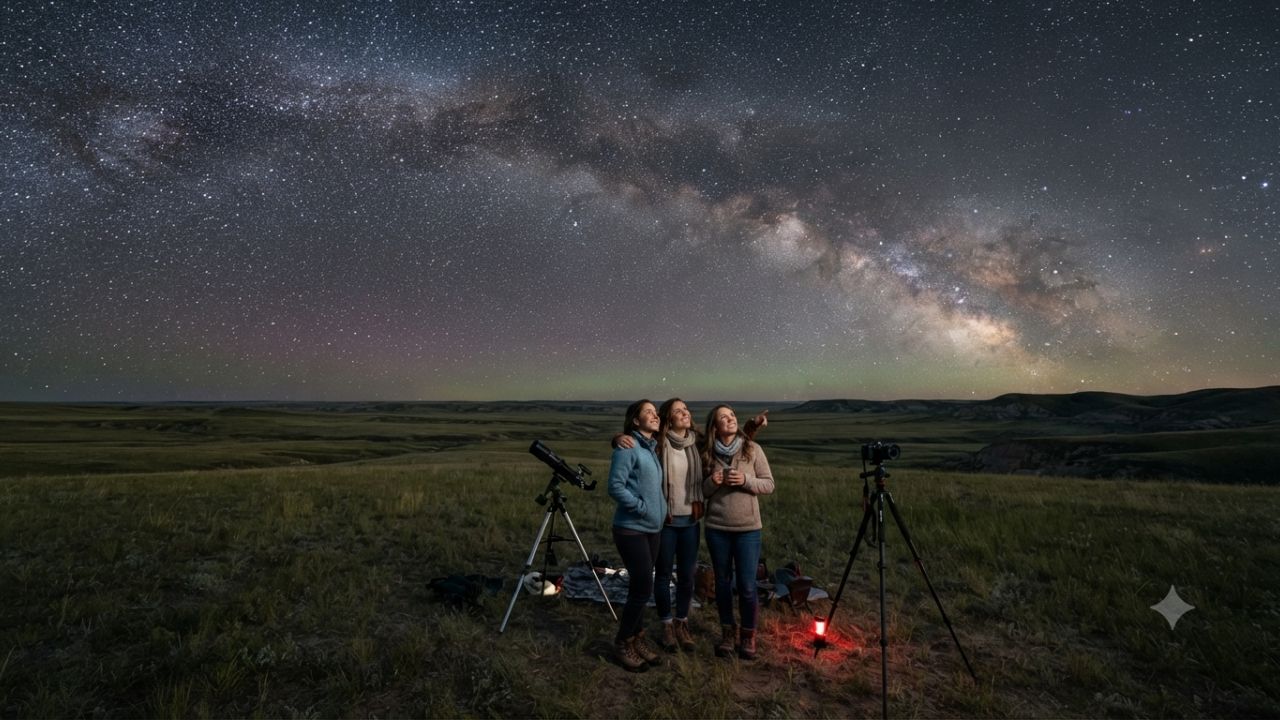
Saskatchewan's Grasslands National Park and Cypress Hills Interprovincial Park stand as two of North America's premier RASC-designated Dark-Sky Preserves, offering Class 1 Bortle optics and high-latitude aurora tracking.
The Canadian province of Saskatchewan has established itself as a global epicenter for night-sky preservation and eco-friendly astrotourism. Encompassing two of North America's largest and darkest sanctuaries designated by the Royal Astronomical Society of Canada (RASC)—Grasslands National Park and Cypress Hills Interprovincial Park—the province provides unobstructed views of deep space, the Milky Way, and high-latitude Aurora Borealis displays.
By enforcing strict municipal light-shielding policies, 30-kilometer buffer zones, and 2,700-Kelvin outdoor lighting caps, Parks Canada and Saskatchewan Parks maintain pristine dark-sky conditions that protect nocturnal species along the Central Flyway while extending rural tourism economies into the autumn and winter shoulder seasons.
Saskatchewan Dark-Sky Preserves Technical Comparison
| Preserve Name | RASC Designation | Reserve Area | Elevation & Optical Standards | Sky Brightness & Bortle Rating | Key Stargazing Sectors & Astronomical Infrastructure |
|---|---|---|---|---|---|
| Grasslands National Park | October 2, 2009 | 907 km² | Low prairie humidity; visual magnitude limit +7.5 to +8.4 | 22.0 mag/arcsec² (Bortle Class 1) | West Block: Frenchman River Valley near Val Marie (coulees & homesteads); East Block: Wood Mountain badlands & K-Pg boundary |
| Cypress Hills Interprovincial Park | 2004 (Canada's 1st Interprovincial DSP) | 400 km² | 1,466 m elevation (1,392 m plateau elevation; 600 m above prairies) | 21.8 mag/arcsec² (Bortle Class 1) | Centre Block: Dark Sky Observatory (14-inch / 356mm Celestron Schmidt-Cassegrain); West Block: Primitive dark campsites near Fort Walsh |
Annual Astronomical Conventions & Outreach Gatherings
| Event / Program Name | Primary Location | Schedule / Timing | Organizer & Event Format | Key Technical Highlights & Outreach |
|---|---|---|---|---|
| Saskatchewan Summer Star Party (SSSP) | Meadows Campground, Cypress Hills | Annually in August (New Moon Phase) | RASC Saskatoon & Regina Centres | Multi-night observational convention; technical lectures, 20-inch Dobsonian gear demos |
| Frenchman River Valley Night Walks | West Block, Grasslands National Park | Bi-annually in May & July | Parks Canada Interpreter Staff | Guided night-sky walks, nocturnal ecology interpretation, airglow tracking |
| Cypress Hills Public Observatory Sessions | Centre Block Observatory, Cypress Hills | Seasonal (May to October) | Cypress Hills Park Astronomy Guides | Public viewing through 356mm Celestron optics; daytime solar-filtered telescope observations |
Photometric Optics & Aurora Tracking Dynamics
Astronomical measurements recorded across Saskatchewan's preserves highlight the contrast between rural night sanctuaries and urban environments:
- Grasslands National Park (22.0 mag/arcsec²): Registers pure Bortle Class 1 darkness. Natural airglow is visible along the horizon, allowing observers to view faint deep-sky targets without optical magnification.
- Cypress Hills Interprovincial Park (21.8 mag/arcsec²): Positioned 1,466 meters above sea level as the highest point between Labrador and the Rocky Mountains, observers sit above prairie haze and humidity.
- Urban Comparison: Urban centers such as Saskatoon and Regina record sky brightness levels below 18.0 mag/arcsec², obscuring over 95% of visible stars.
- High-Latitude Auroral Oval (50°N–60°N): Positioned directly beneath the auroral oval, observers in Grasslands or Cypress Hills can track vibrant green and purple Aurora Borealis displays during minor geomagnetic events (KP index 3 to 4), whereas lower latitudes require KP 6+ storm levels.
Cultural Foundations: Indigenous Cree Star Knowledge
Night-sky interpretation across Saskatchewan incorporates ancestral astronomical knowledge preserved by First Nations communities, including the Cree, Saulteaux, Nakota, Lakota, and Dakota.
- Cree Astronomy (Atchakosuk): The constellation modernly known as the Big Dipper is identified in Cree star lore as Mistikosow Atchak (the Fisher Star).
- The North Star (Keewatin): Serves as a vital navigational marker across the vast northern plains.
- Archaeoastronomy & Medicine Wheels: Historic stone medicine wheels throughout southern Saskatchewan align with solar solstices and stellar risings, linking Indigenous heritage with modern night-sky conservation.
Ecological Impact & Rural Astrotourism Economy
Night-sky preservation generates tangible environmental and economic benefits:
- Nocturnal Biodiversity Protection: Southern Saskatchewan serves as a vital corridor along the Central Flyway migration route for over 300 bird species. Eliminating Artificial Light at Night (ALAN)—which can reduce nocturnal insect populations by up to 40%—safeguards threatened native species including the black-tailed prairie dog, burrowing owl, swift fox, and 14 native bat species.
- Economic Support for Gateway Communities: Dark-sky tourism draws 15,000 to 18,000 visitors annually to Grasslands National Park, extending the traditional travel season into autumn and winter. Rural gateway towns such as Val Marie, Maple Creek, and Wood Mountain experience 15% to 20% increases in shoulder-season hotel, dining, and eco-guide bookings during major New Moon phases and meteor showers.
Traveler Logistics Guide: Astrophotography & Regulations
Visiting Saskatchewan's Dark-Sky Preserves requires compliance with environmental protection protocols.
1. Gateway Travel & Route Navigation
- Val Marie Gateway (Grasslands West Block): Accessible via Highway 4 south from Swift Current (approx. 1 hour 15 minutes). Val Marie serves as the primary base for West Block coulees and Frenchman River Valley trails.
- Wood Mountain Gateway (Grasslands East Block): Accessible via Highway 18 west from Rockglen. Ideal for exploring badlands topography and the K-Pg boundary.
- Maple Creek Gateway (Cypress Hills Centre Block): Located 25 minutes south of Maple Creek on Highway 21, providing paved access to the Centre Block observatory, hotel lodges, and full-service campgrounds.
2. Night Vision & Lighting Regulations
- Red Light Protocol: Visitors must use red-filtered headlamps or flashlights exclusively within park boundaries. White light destroys human rhodopsin (night adaptation), requiring 30 minutes for visual recovery.
- Transport Canada Laser Pointer Rules: Handheld green laser pointers are strictly regulated near flight corridors to prevent pilot glare and visual pollution.
- Full Cut-Off Fixtures: All park structures utilize 100% downward-shielded LED fixtures capped at 2,700 Kelvin to prevent skyglow.
3. Astrophotography Camera Settings
- Lens & ISO Configuration: Utilize fast wide-angle lenses (f/1.8 to f/2.8) paired with ISO settings between 3200 and 6400.
- Exposure Duration: Set exposure times between 20 and 30 seconds on full-frame camera sensors to capture detailed Milky Way structures without introducing star trailing.
- Best Travel Window: Schedule visits during the 5 days surrounding the monthly New Moon phase from July through October for maximum sky darkness.
Related Travel Guides
Disclaimer
This article is for informational and educational purposes only. It does not constitute legal, financial, or professional advice. While we strive to provide accurate and up-to-date information, travel policies, regulations, and conditions change rapidly. Always verify information with official sources before making travel decisions. Nomad Lawyer makes no representations about the accuracy, reliability, completeness, or suitability of the information provided. Readers should consult qualified professionals for advice specific to their circumstances. The views expressed in this article are those of the author and do not necessarily reflect the views of Nomad Lawyer.
Naina Thakur
Contributor & Travel Specialist
Travel enthusiast and legal writer covering visa regulations, responsible tourism, and cultural journeys across global destinations.
Learn more about our team →