
The Lost Athena Parthenos: Guide to Phidias's Colossal Masterpiece and Modern Reconstructions 2026
Explore the history, dimensions, and disappearance of the Athena Parthenos, the gold and ivory colossus that once anchored the Parthenon in classical Athens.

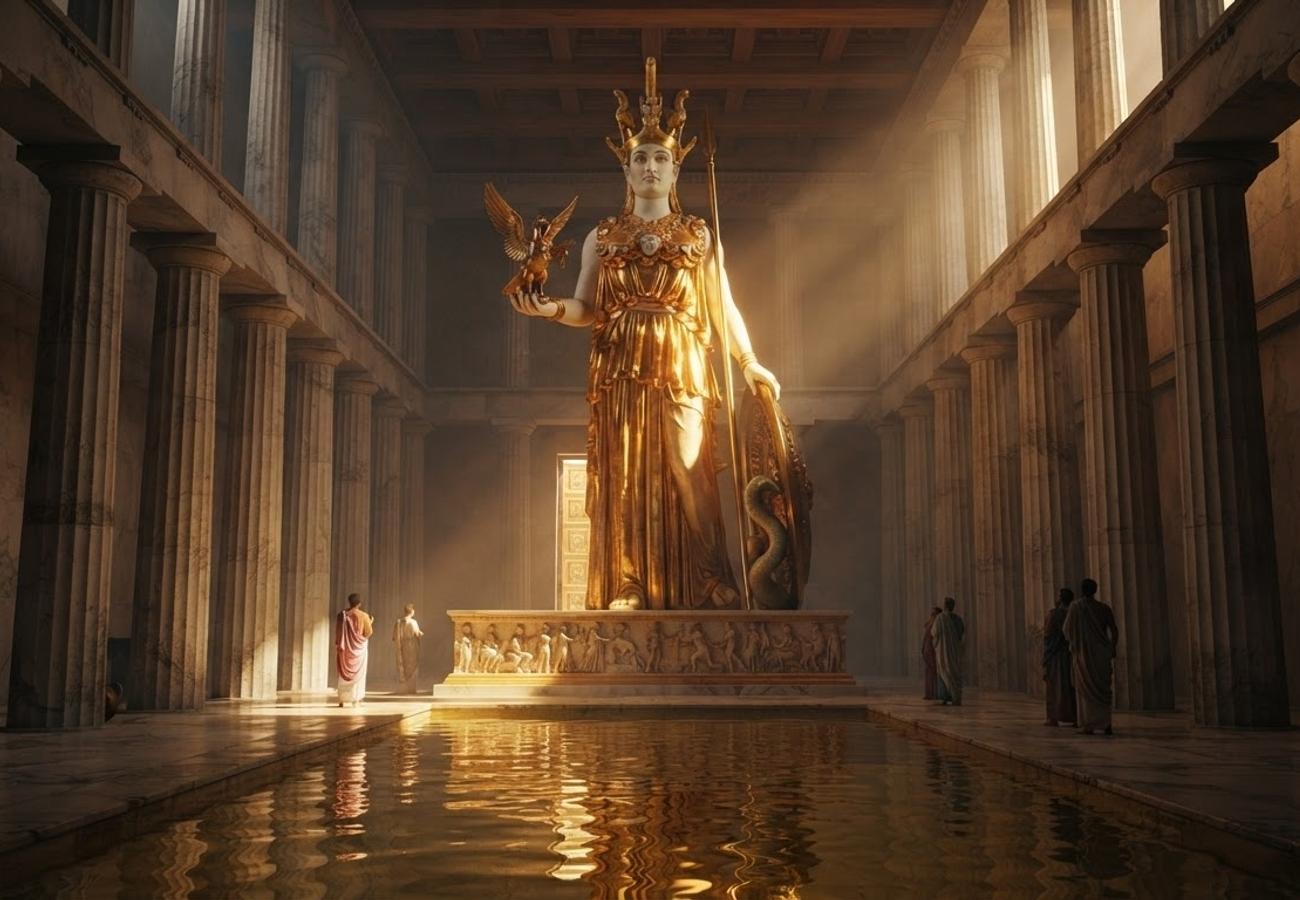
Image generated by AI
For those entering the Parthenon in the 5th century BCE, the primary draw was not the architecture but the overwhelming presence of the Athena Parthenos. This colossal cult statue, crafted by the sculptor Phidias, served as the spiritual and political anchor of classical Athens, representing the city's wealth and imperial identity.
While the original masterpiece is lost, its influence persists. For the modern traveler, understanding the scale and material of this vanished icon is essential to comprehending the Acropolis.
The Centerpiece of Periclean Athens
The term "Parthenon" originally referred specifically to the inner chamber (the naos) that housed the statue, rather than the entire temple structure. Dedicated around 439 or 438 BCE, the statue was the crowning achievement of the Periclean era.
The building served a dual purpose: it was a sacred temple and a high-security treasury. The Athena Parthenos was not merely a religious icon but a financial reserve; the gold plates covering the statue were designed to be removable and meltable in times of extreme economic crisis.
Technical Specifications and Iconography
Based on ancient texts and Roman copies, the original statue was a "chryselephantine" work—a combination of gold and ivory.
- Dimensions: Estimated height of 11 to 12 meters (approximately 38 to 40 feet).
- Materials: Ivory plates for exposed skin attached to a wooden core; solid gold plates for clothing and armor.
- Right Hand: Held a figure of Nike (Victory), approximately 1.8 meters high.
- Left Arm: Supported a large shield resting on the ground.
- Key Symbols: A helmet adorned with griffins and sphinxes, the aegis featuring the Gorgon’s head, and a coiled serpent (Erichthonios) between the goddess and her shield.
For those seeking a tangible reference, the Varvakeion Athena—a one-meter-high Roman marble copy located in the National Archaeological Museum in Athens—is considered the most faithful surviving reproduction of the original's proportions.
The Interior Experience: Light and Water
The encounter with Athena Parthenos was a choreographed sensory experience. Visitors entered from the east through massive bronze doors, moving from the harsh sunlight into a dim, cool interior.
Our analysis of the site suggests the interior was a "forest" of two-tiered columns. A shallow pool of salted water likely sat before the statue. This served two functions: it regulated humidity to prevent the ivory from cracking and created shimmering reflections of the gold statue, enhancing the divine atmosphere.
The base of the statue was also a work of art, featuring low-relief carvings of battle scenes and the birth of Pandora. The shield depicted an Amazonomachy (battle between Greeks and Amazons), and the sandal soles featured a Centauromachy, reinforcing the theme of Greek order over chaos.
The Mystery of the Disappearance
There is no single historical record documenting the exact moment the Athena Parthenos was destroyed. However, evidence points to a gradual decline.
The Parthenon was converted into a Christian church by the 6th century CE. Because the gold was essentially a city reserve, it is highly probable that the plates were stripped during political or economic instability. Perishable materials like the wooden core and ivory would have succumbed to decay or the various fires that plagued the Acropolis in late antiquity. By the medieval period, the statue had vanished entirely.
Comparative Site Data: Original vs. Replica
| Feature | Original (Athens) | Nashville Replica (USA) |
|---|---|---|
| Status | Lost/Destroyed | Intact |
| Height | 11–12 Meters | 42 Feet |
| Material | Gold and Ivory | Modern Materials |
| Setting | Ruined Cella | Full-scale Reconstructed Temple |
| Experience | Imaginary/Archaeological | Spatial/Immersive |
Why This Matters: The Industry Implication
For travelers visiting Athens today, the Parthenon is a skeletal ruin. The "Information Gain" for a visitor lies in recognizing that the building was designed as a frame for a specific object. Without the statue, the architecture loses its primary purpose.
From a logistical perspective, this explains the enduring value of the Nashville replica. While it is a modern construction, it provides the only way to experience the spatial relationship between the colossal statue and the temple's interior volume. To truly understand the Acropolis, a visitor should contrast the Varvakeion Athena's detail in the museum with the skeletal remains of the Parthenon.
Forward Outlook
Archaeological focus is shifting toward the study of ancient lighting and atmospheric effects. Future visitors may see more augmented reality (AR) integrations at the Acropolis site, attempting to digitally overlay the gold and ivory goddess back into the ruins to restore the original visual narrative.
The void left by the Athena Parthenos remains one of the most influential absences in art history.
Related Travel Guides
Disclaimer
This article is for informational and educational purposes only. It does not constitute legal, financial, or professional advice. While we strive to provide accurate and up-to-date information, travel policies, regulations, and conditions change rapidly. Always verify information with official sources before making travel decisions. Nomad Lawyer makes no representations about the accuracy, reliability, completeness, or suitability of the information provided. Readers should consult qualified professionals for advice specific to their circumstances. The views expressed in this article are those of the author and do not necessarily reflect the views of Nomad Lawyer.
Preeti Gunjan
Contributor & Community Manager
A passionate traveller and community builder. Preeti helps grow the Nomad Lawyer community, fostering engagement and bringing the reader experience to life.
Learn more about our team →