Santorini Drives Winter Tourism Transformation with 32-Video Heritage Campaign to Counter Summer Cruise Overcrowding

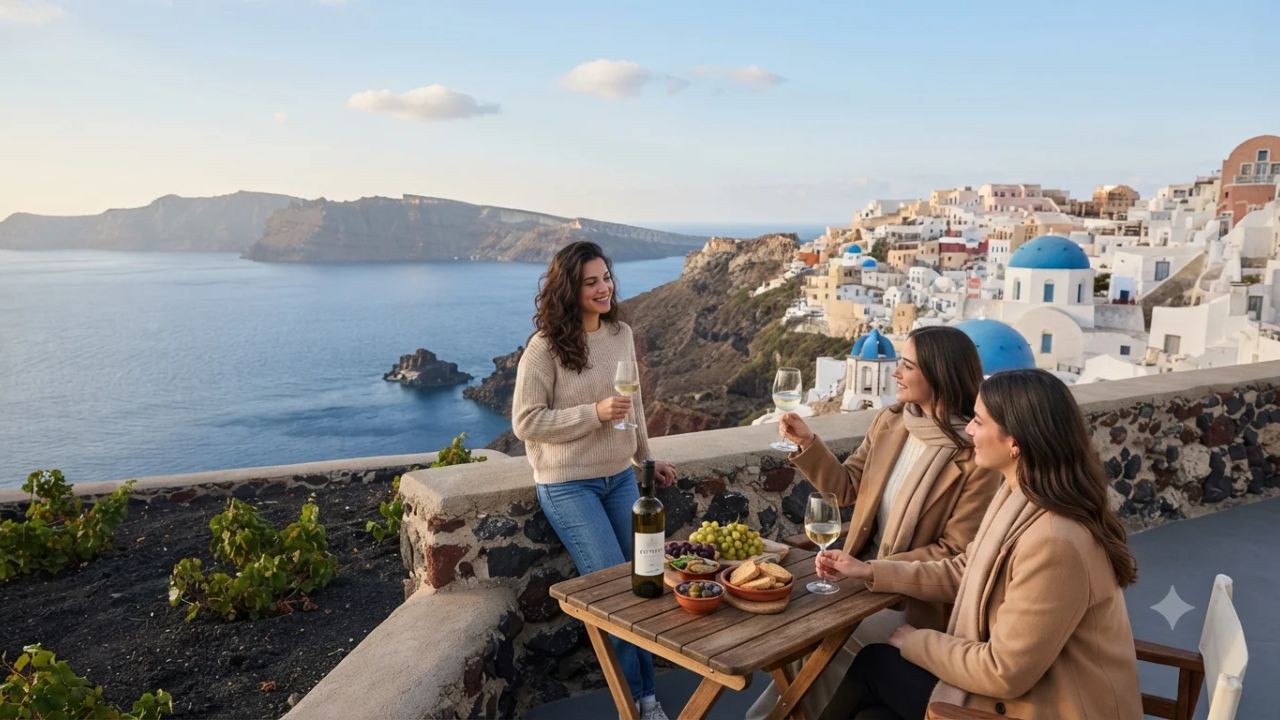
THIRA, Greece — Santorini has initiated a comprehensive destination marketing shift aimed at establishing a sustainable year-round visitor economy, launching a 32-video promotional campaign that champions volcanic viticulture, prehistoric archaeology, and traditional inland villages to counter intense summer cruise overcrowding.
The municipal and regional tourism initiative, highlighted in European tourism briefings on November 11, 2026, seeks to redistribute visitor arrivals across the calendar year following an uneven start to 2026 shaped by regional geopolitical uncertainty and lingering traveller sensitivity to 2025 Cycladic seismic tremors. By highlighting the island's quieter winter persona—supported by an off-peak €4 cruise disembarkation levy and an existing 8,000-passenger daily cruise arrival cap—Greek destination managers aim to transition Santorini from a congested warm-weather selfie hotspot into a year-round cultural, culinary, and archaeological retreat.
            SANTORINI TOURISM REBALANCING ARCHITECTURE (2026–2027)

  [ TRADITIONAL SUMMER MONOCULTURE ]       [ EMERGING YEAR-ROUND MODEL ]
  • Severe Peak Overtourism (July–Aug)     • Four-Season Tourism Distribution
  • 8,000 Cruise Daily Cap Under Strain    • Cultural, Wine & Heritage Tourism
  • €20 Peak Cruise Disembarkation Levy    • €4 Off-Peak Winter Cruise Levy
  • Infrastructure, Power & Water Crises   • Stabilized Local Resident Economy
                 |                                        |
                 +-------------------+--------------------+
                                     |
                                     v
         [ 32-VIDEO TARGETED DIGITAL PROMOTIONAL CAMPAIGN ]
         • Volcanic Vineyard Traditions (Assyrtiko Basket Vines)
         • Bronze Age Minoan Settlement of Akrotiri
         • Medieval Fortified Villages (Pyrgos, Megalochori, Emporio)
         • Traditional Winter Gastronomy & Artisanal Culture
Rebalancing the Cyclades: Santorini’s Strategic Pivot to Winter Tourism
Santorini, known historically as Thira, has long symbolized the extreme peaks and valleys of Mediterranean overtourism. During the peak summer months of July and August, the crescent-shaped volcanic caldera accommodates hundreds of thousands of international visitors. Narrow pedestrian streets in Fira and Oia become congested with day-trippers from arriving mega-liners, straining municipal desalination plants, municipal waste networks, and island road corridors.
However, the summer 2026 season exposed structural vulnerabilities in this seasonal monoculture. In the opening months of the year, several independent hoteliers recorded room occupancy contractions of 30% to 40% compared to historical benchmarks. Tourism analysts attributed this initial softness to multiple concurrent factors:
- Regional Geopolitical Headwinds: Tensions across the Eastern Mediterranean and Middle East prompted some long-haul travellers to reconsider flights into the Aegean basin.
- Seismic Tremor Sensitivity: Minor tectonic tremors recorded across the Cyclades fault line during 2025 created lingering booking hesitancy among first-time international visitors.
- Capacity Oversupply: The rapid growth of short-term holiday rentals significantly increased island bed capacity, diluting occupancy rates even as overall passenger arrivals stabilized by late autumn.
To resolve these recurring boom-and-bust cycles, the municipality of Thira and Greek national tourism authorities launched a coordinated digital campaign featuring 32 cinematic short videos. Rather than recycling familiar summer imagery of crowded infinity pools and cliffside sunsets, the video series explores Santorini’s lesser-known cultural assets: ancient winemaking techniques, subterranean cave architecture, quiet coastal walking paths, and peaceful village squares where traditional island life continues uninterrupted by mass tourism.
               SANTORINI SEASONAL DEMAND CONTRAST MATRIX

   [ SUMMER HIGH SEASON (JUNE–SEPTEMBER) ]
   • Atmosphere: High-Density Mass Crowds, Congested Cliffside Corridors
   • Cruise Movement: Up to 8,000 Passengers Disembarking Daily (Strict Cap)
   • Cruise Disembarkation Levy: €20.00 Per Passenger (Peak Surcharge)
   • Accommodation Rates: Peak Premium (€400–€1,200+ per night for caldera views)
   • Primary Activities: Beach Clubs, Sunset Gatherings, Catamaran Day Cruises

   [ WINTER CULTURAL SEASON (NOVEMBER–MARCH) ]
   • Atmosphere: Quiet Medieval Alleys, Local Community Plazas, Reflective Calm
   • Cruise Movement: Minimal or Zero Mega-Ship Berthing; Occasional Small Yachts
   • Cruise Disembarkation Levy: €4.00 Per Passenger (75% Off-Peak Reduction)
   • Accommodation Rates: Off-Peak Value (€90–€280 per night for luxury suites)
   • Primary Activities: Volcanic Wine Tastings, Akrotiri Archaeology, Ridge Hiking
Cruise Passenger Controls and the €4 Winter Disembarkation Levy
A central pillar of Greece’s broader tourism management strategy is the enforcement of fiscal and operational controls on cruise ship operations, which have historically generated intense daytime crowding along the caldera rim.
1. Enforcement of the 8,000-Passenger Daily Ceiling
Originally developed in cooperation with the Cruise Lines International Association (CLIA) in 2018, Santorini operates a strict digital berth allocation system that caps the volume of arriving cruise passengers at 8,000 individuals per 24-hour cycle.
Before this system was implemented, peak days regularly saw five or six mega-liners discharging more than 15,000 guests simultaneously into the tender port of Skala, causing hours-long queues at the Fira cable car and steep donkey paths. The booking portal forces cruise lines to distribute arrivals across alternating morning and afternoon windows or divert ships to alternative Greek ports.
              SANTORINI CRUISE PASSENGER MANAGEMENT PIPELINE

  [ OFFSHORE CALDERA ANCHORAGE ] ===> TENDER BOATS TO SKALA HARBOR
                                             |
                                             v
  [ THREE TRANSIT ARTERIES TO FIRA ]
  1. Municipal Cable Car System (Approx. 600 Passengers / Hour Max Capacity)
  2. Karavolades Cliffside Staircase (588 Steps - Walking Route)
  3. Traditional Mule / Donkey Trail (Animal Welfare Regulations Enforced)
                                             |
                                             v
  [ FIRA CALDERA RIM (8,000 PASSENGER DAILY CEILING PREVENTS GRIDLOCK) ]
2. Tiered Seasonal Cruise Disembarkation Levies
In July 2025, the Greek Government legislated a tiered cruise passenger fee structure designed to incentivize off-peak travel and generate municipal revenue for local island infrastructure. The levy imposes significantly higher charges on Greece’s two most congested island destinations—Santorini and Mykonos—while offering substantial discounts during the cooler months:
| Greek Cruise Port Tier | Peak Season (June – September) | Shoulder Months (April, May, October) | Winter Off-Peak (November – March) | Municipal Revenue Allocation |
|---|---|---|---|---|
| Santorini & Mykonos | €20.00 per passenger | €12.00 per passenger | €4.00 per passenger | Island infrastructure, ports, water grids |
| Other Greek Ports (Heraklion, Corfu, Rhodes, Piraeus) | €5.00 per passenger | €3.00 per passenger | €1.00 per passenger | Regional port maintenance & sustainability |
During November 2026, cruise visitors disembarking in Santorini pay just €4 per passenger—an 80% reduction compared to the summer peak fee. This pricing policy encourages cruise operators to schedule late-autumn and winter itineraries through the Southern Aegean, rewarding lines that bring visitors when local merchants, tavernas, and museums actively seek customer traffic.
Volcanic Viticulture: The Winter Appeal of Santorini’s Ancient Basket Vines
One of the central themes emphasized in the 32-video campaign is Santorini’s ancient viticultural heritage. While summer tourists encounter the island’s wine industry through crowded tasting rooms, winter offers an intimate look at one of the oldest continuously cultivated agricultural landscapes in the world.
Santorini’s terroir is unique on the planet. The catastrophic Minoan volcanic eruption around 1600 BCE coated the island in thick layers of volcanic ash, pumice stone, and basaltic lava. This soil contains zero organic matter and virtually no clay, making it naturally immune to phylloxera, the microscopic aphid that decimated European vineyards in the late 19th century. Consequently, Santorini’s vines grow on their original, un-grafted ancient rootstocks, some of which are centuries old.
             THE SANTORINI KOULOURA (BASKET PRUNING SYSTEM)

       [ FIERCE AEGEAN WINDS / MELTEMI GUSTS ]
                      |   |   |
                      v   v   v
            +-----------------------+
            |  Woven Woody Canes    |  <=== Protects delicate buds & flowers
            |  Form a Ground Wreath |       from windblown pumice abrasion
            |  (The "Kouloura")     |
            +-----------------------+
                      ^   ^   ^
                      |   |   |
       [ NOCTURNAL SEA MIST (MALTÉZI) ]
       (Volcanic pumice absorbs night sea mist; delivers hydration without rain)
1. The Art of the Kouloura Pruning System
To survive the island's harsh climate—characterized by gale-force winds, intense summer sun, and near-total lack of rainfall—Santorini’s winegrowers developed the kouloura pruning method. Instead of training vines upright along vertical trellises, vignerons weave the flexible canes into low-lying circular baskets resting directly upon the volcanic soil.
The grapes grow on the inside of the wreath, protected from windblown volcanic pumice and shaded from scorching sunlight. During the winter and spring, the porous volcanic soil acts like a sponge, absorbing heavy maritime moisture from nocturnal sea fogs (maltézi) and slowly releasing water to the vine roots during dry periods.
2. Exploring Traditional Canavas in the Quiet Season
Santorini’s flagship white grape, Assyrtiko, produces bone-dry, highly acidic white wines distinguished by flinty minerality, citrus aromas, and subtle saline notes derived from the sea air. Complementary native varietals include Athiri, Aidani, and the rare red grape Mavrotragano, along with the naturally sweet sun-dried dessert wine Vinsanto.
During winter, visitors can explore traditional canavas—historic cellars carved directly into subterranean pumice cliffs in villages such as Pyrgos, Megalochori, and Mesa Gonia. Without the press of summer tour groups, travellers can meet directly with winemakers, witness winter pruning rituals, and participate in unhurried cellar tastings accompanied by local cheeses and fava purée.
| Santorini Wine Dimension | Agricultural & Oenological Feature | Seasonal Visitor Experience |
|---|---|---|
| Primary White Varietal | Assyrtiko (70%+ of total island vineyard plantings) | Tasting bone-dry, high-acid, mineral-driven vintages |
| Soil Composition | Volcanic ash, pumice, basaltic rock; 0% clay | Soil immunity to phylloxera; 400+ year-old root systems |
| Pruning Architecture | Low-lying basket crown (Kouloura) | Inspecting woven circular wreaths during winter pruning |
| Sweet Dessert Wine | Vinsanto (Sun-dried white grapes aged in oak barrels) | Tasting complex notes of dried fig, honey, and dark raisin |
| Cellar Architecture | Canava (Subterranean vaulted caves dug into pumice) | Natural geothermal temperature and humidity stabilization |
Archaeological Treasures Beyond the Sunsets: Akrotiri and Ancient Thera
While summer visitors often treat archaeological sites as secondary stops between beach excursions, winter shifts historical exploration to the centre of the travel experience.
            SANTORINI PREHISTORIC & CLASSICAL HERITAGE AXIS

  [ PREHISTORIC SETTLEMENT OF AKROTIRI ]
  • Minoan Bronze Age Urban Centre (Destroyed ~1600 BCE)
  • "Pompeii of the Aegean": Preserved Under Deep Volcanic Ash
  • Three-Story Ashlar Buildings, Sophisticated Underground Plumbing
  • Famous Frescoes: The Spring Fresco, The Young Boxers, The Fisherman
                         |
                         v (15 km Transit)
  [ ANCIENT THERA (MESA VOUNO MOUNTAIN RIDGE) ]
  • Settlement from 9th Century BCE to Byzantine Era (Dorian, Hellenistic, Roman)
  • Perched 360 Metres Above Sea Level Between Kamari and Perissa
  • Agora, Theater, Temples of Apollo Karneios, and Gymnasium of the Ephebes
1. Akrotiri: The Aegean’s Bronze Age Marvel
Situated on the island's southwestern peninsula, the Archaeological Site of Akrotiri is one of the most significant prehistoric ruins in Europe. Often referred to as the "Pompeii of the Aegean," this prosperous Minoan port town was buried beneath pumice and ash during the catastrophic Theran eruption of the 16th century BCE.
Because the inhabitants appear to have evacuated prior to the final eruption, no human remains were found, but their physical civilization was preserved in detail:
- Urban Engineering: The site features multi-story private stone residences, paved central avenues, elaborate stone staircases, and an advanced subterranean sewage network connected to indoor flush toilets.
- Minoan Fresco Artistry: The walls of Akrotiri were adorned with naturalistic frescoes displaying vibrant pigments—depicting blue monkeys, swallows flying over spring lilies, boxing youths, and trading fleets.
- Winter Advantage: Akrotiri is enclosed beneath an expansive bio-climatic timber-and-steel canopy. In July, radiant heat and crowd congestion inside the shelter can be uncomfortable. In winter, cooler ambient temperatures and near-empty walkways allow visitors to examine ancient masonry and pottery in peaceful comfort.
2. Ancient Thera: Mountain Fortress of the Dorians
Perched high atop the rugged limestone ridge of Mesa Vouno, 360 metres above the coastal villages of Kamari and Perissa, lies Ancient Thera. Founded by Dorian colonists in the 9th century BCE, the settlement served as an important naval lookout and trading base through Hellenistic, Roman, and Byzantine times.
A winter hike up the zig-zagging cobblestone path from Kamari rewards walkers with panoramic views across the open Aegean Sea. Within the ruins, visitors can trace the ancient Agora, inspect carved stone inscriptions honoring Apollo Karneios, and walk through the Hellenistic theater looking out toward the horizon without summer tour groups.
The Living Villages of the Interior: Pyrgos, Megalochori, and Emporio
Beyond the coastal tourist strips of Fira and Oia, Santorini’s heart resides in its fortified inland settlements. Constructed during the Byzantine and Venetian eras (13th to 16th centuries) to defend against Aegean pirate raids, these villages showcase authentic Cycladic vernacular architecture.
                 SANTORINI MEDIEVAL FORTIFIED VILLAGES (KASTELIA)

  [ PYRGOS KALLISTIS ]             [ MEGALOCHORI ]                [ EMPORIO ]
  • Highest Village on Island      • Neoclassical Mansions        • Best Preserved Fortress
  • Venetian Kasteli Fortress      • Intricate Bell Towers        • Labyrinthine Defense Maze
  • Panoramic 360° Island Views    • Historic Canava Cellars      • Goulas Tower & Hidden Doors
  • Panoramic Hiking to Profitis   • Traditional Kafeneia         • Ancient Church of
    Ilias Monastery                  Plazas                         Panagia Mesani
1. Pyrgos Kallistis: The Medieval Capital
Until 1800, Pyrgos served as the administrative capital of Santorini. Constructed on the slopes of Mount Profitis Ilias, the village is designed as an amphitheatrical fortress (Kasteli). Houses were built with thick outer walls that formed a continuous defensive perimeter, with narrow vaulted passageways and overhead murder holes designed to trap marauding pirates.
In winter, Pyrgos offers a peaceful escape. Visitors can wander up past whitewashed churches and blue domes to the ruins of the Venetian fortress at the summit, taking in 360-degree views across the entire island from the caldera cliffs to the eastern vineyards.
2. Megalochori: Neoclassical Grace and Vineyard Paths
Located south of the caldera basin, Megalochori preserves an architectural blend of modest subterranean cave houses (yposkafa) and opulent neoclassical mansions built by wealthy 19th-century wine merchants.
The village is renowned for its arched bell towers that straddle narrow cobblestone lanes. In the off-season, Megalochori’s central square becomes a gathering point for local residents, who sit outside traditional kafeneia drinking Greek coffee and discussing the seasonal olive and grape harvest.
3. Emporio: Labyrinthine Pirate Defense Architecture
Emporio is the largest village on Santorini and contains the island's best-preserved medieval Kasteli. The entrance to the fortress consists of a single narrow doorway, leading into a dense maze of interconnected houses, stone staircases, and arched bridges. The layout was intentionally disorienting so that invading pirates would become trapped in dead-end alleys.
Wandering through Emporio in winter reveals an authentic residential community where children play in the courtyards and elders tend vegetable gardens, entirely removed from the commercial cruise circuits of the northern cliffs.
| Inland Village | Historical Origin & Era | Distinctive Architectural Features | Winter Highlights |
|---|---|---|---|
| Pyrgos Kallistis | Byzantine & Venetian (13th C.) | Fortified Kasteli, narrow stepped tunnels, stone ramparts | Quiet walking trails to Profitis Ilias Monastery; sweeping island panoramas |
| Megalochori | Venetian Wine Center (17th C.) | High-walled neoclassical estates, ornate multi-bell archways | Meeting local winemakers; dining in authentic year-round tavernas |
| Emporio | Medieval Defensive Hub (15th C.) | Goulas defensive tower, labyrinthine pirate-defense alleys | Exploring the inner fortress maze without souvenir shop stalls |
| Finikia | Agricultural Hamlet (18th C.) | Earth-toned cave dwellings, stone courtyard ovens | Serene vineyard trail walks directly adjacent to Oia |
Connectivity and Infrastructure Realities: Navigating Winter in Santorini
While winter travel to Santorini offers peace and cultural immersion, holidaymakers and travel planners must account for seasonal reductions in transport and hospitality infrastructure.
             SANTORINI WINTER TRANSPORTATION & ACCESS NETWORK

  [ ATHENS INTERNATIONAL AIRPORT (ATH) ]
                 |
                 v (Aegean / Olympic Air - 45-Minute Flight, 3–5 Daily)
  [ SANTORINI AIRPORT (JTR - FRAPORT GREECE) ]
                 |
                 +-----------------------+-----------------------+
                 |                                               |
                 v                                               v
  [ PIRAEUS HARBOR (ATHENS) ]                     [ LOCAL ISLAND LOGISTICS ]
  • Blue Star Ferries Conventional Vessels        • KTEL Island Bus (Reduced Schedule)
  • 7.5 to 8.5 Hours Transit Time                 • Rental Cars & Taxis (Recommended)
  • Operates in High Winter Swells                • Centralized Base: Fira & Pyrgos
1. Air Access: Domestic Air Bridges via Athens
During the summer peak, Santorini Airport (JTR), managed by Fraport Greece, handles heavy international air traffic. Official figures from July 2026 recorded substantial international passenger movements through the terminal:
- Italy: 93,315 passenger movements
- United Kingdom: 59,362 passenger movements
- France: 35,158 passenger movements
Between November and late March, however, direct international charter flights cease entirely. International travellers reach the island by connecting through Athens International Airport (ATH). Aegean Airlines and its regional subsidiary Olympic Air operate between three and five daily domestic flights utilizing modern ATR-72 turboprops and Airbus A320 aircraft, providing a reliable 45-minute flight link to the capital.
2. Maritime Ferry Links: Conventional Ferries vs Summer Catamarans
High-speed passenger catamarans that link the Cycladic islands during summer are laid up for dry-dock maintenance during winter. Instead, sea transport relies on large, conventional roll-on/roll-off (ro-pax) passenger ferries operated primarily by Blue Star Ferries.
These vessels take approximately 7.5 to 8.5 hours to sail from Piraeus to Santorini’s Athinios Port, stopping en route at Paros, Naxos, and Ios. While slower, these steel-hulled liners handle winter Aegean sea swells far better than catamarans, maintaining vital supply chains and passenger connections even during rough weather.
3. Hotel and Dining Operations in the Off-Season
Travel advisors must set clear expectations regarding hospitality:
- Caldera Suites: Approximately 70% to 80% of cliffside luxury hotels in Oia and Imerovigli close between November and March for structural refurbishments. However, an increasing number of boutique design hotels and historic cave suites remain open year-round, equipped with underfloor heating, indoor plunge pools, and cozy fireplaces.
- Dining: Beachfront tavernas in Kamari and Perissa close for the winter. In contrast, authentic traditional restaurants in Fira, Pyrgos, and Megalochori remain open, serving hearty winter Greek cuisine including slow-cooked lamb, baked gigantes beans, and tomato fritters (tomatokeftedes).
- Local Island Transit: The local KTEL bus network operates on a reduced winter timetable. Renting a compact car or SUV is strongly advised for visitors wishing to explore rural wineries and archaeological sites independently.
Strategic Guidance for Travel Advisors, Tour Operators, and Cultural Travellers
For travel trade professionals and independent cultural travellers, curating an off-season Santorini itinerary requires careful logistical foresight:
- Target the Right Passenger Demographics: Winter Santorini is ideally suited for cultural connoisseurs, photographers, wine enthusiasts, hikers, and couples seeking romantic solitude. It is unsuited for clients seeking beach parties, energetic nightlife, warm swimming weather, or continuous poolside sunbathing.
- Select Fira or Pyrgos as an Accommodation Base: Rather than booking isolated coastal resorts, base clients in Fira or Pyrgos. These towns retain active year-round communities, ensuring that pharmacies, bakeries, grocery stores, and high-quality tavernas remain within walking distance.
- Verify Archaeological and Winery Operating Hours: Archaeological sites such as Akrotiri operate on shorter winter hours (typically closing by 15:30). Wineries often require advance tasting reservations during winter because cellar doors may not be staffed continuously.
- Build Travel Buffers Around Sea and Air Departures: Winter Aegean storms can occasionally ground flights or trigger temporary ferry sailing bans (apagoreftiko). Instruct travellers to maintain a flexible itinerary and avoid scheduling tight same-day international flight connections in Athens when returning from the islands.
Frequently Asked Questions
Why is Santorini promoting winter tourism through a 32-video campaign?
Santorini launched the 32-video digital promotional campaign to counter severe summer overtourism and diversify its economy into a year-round destination. The campaign highlights authentic cultural experiences that summer visitors often miss, including volcanic winemaking, prehistoric archaeology at Akrotiri, traditional gastronomy, and quiet medieval village life.
How much do cruise ship passengers pay to disembark in Santorini during winter?
Under Greece's seasonal cruise passenger levy introduced in July 2025, visitors disembarking from cruise ships in Santorini during the winter months (November through March) pay €4 per passenger. In contrast, peak summer visitors (June through September) pay €20 per passenger, while shoulder season visitors pay €12.
Is Santorini’s 8,000-passenger daily cruise cap still enforced in winter?
Yes, the 8,000-passenger daily disembarkation limit remains permanently in effect through the digital berth allocation system established with CLIA. However, during the winter months, cruise passenger arrivals naturally decline far below this ceiling, ensuring an uncrowded atmosphere across the island.
Can visitors tour wineries and archaeological ruins during the winter?
Yes. Akrotiri remains open year-round with winter visiting hours, offering an unhurried, comfortable experience beneath its sheltered canopy. Major wineries in Pyrgos and Megalochori welcome winter guests for cellar tours and Assyrtiko tastings, though advance reservations are strongly recommended.
How do travellers reach Santorini in winter when direct charter flights stop?
Travellers reach Santorini during winter by taking domestic flights from Athens International Airport (a 45-minute flight operated several times daily by Aegean Airlines and Olympic Air) or by taking year-round conventional passenger ferries (such as Blue Star Ferries) from Piraeus Harbor, which take roughly 7.5 to 8.5 hours.
Related Travel Guides
- Spain’s Port of Motril Welcomes Windstar Star Legend on Landmark Spanish Mystery Cruise After 18-Year Absence
- TUI Cruises Unveils Nine-Ship Mein Schiff Summer 2028 Programme Across Northern Europe, Mediterranean, and Atlantic
- Auckland Dual Cruise Ship Arrivals Highlight Global Port Infrastructure Demands Across New Zealand, Pacific, and Europe
- Greece Cruise Tourism Shifts West as Corfu Tops One Million Passengers While Piraeus Falls 19% Amid Middle East Tensions
This article is for informational purposes. Flight routes, passenger regulations, visa rules, and transit advisories are subject to change by airlines and aviation authorities. Readers are advised to verify schedules and travel documentation with relevant carriers and border agencies before departure.
Related Stories
ASEAN and South Korea Accelerate Cross-Border QR Payments and Tourism Quality Standards to Expand Bilateral Travel to 20 Million Visitors