Django Fest México 2026 Brings Global Gypsy Jazz and Swing to San Miguel de Allende

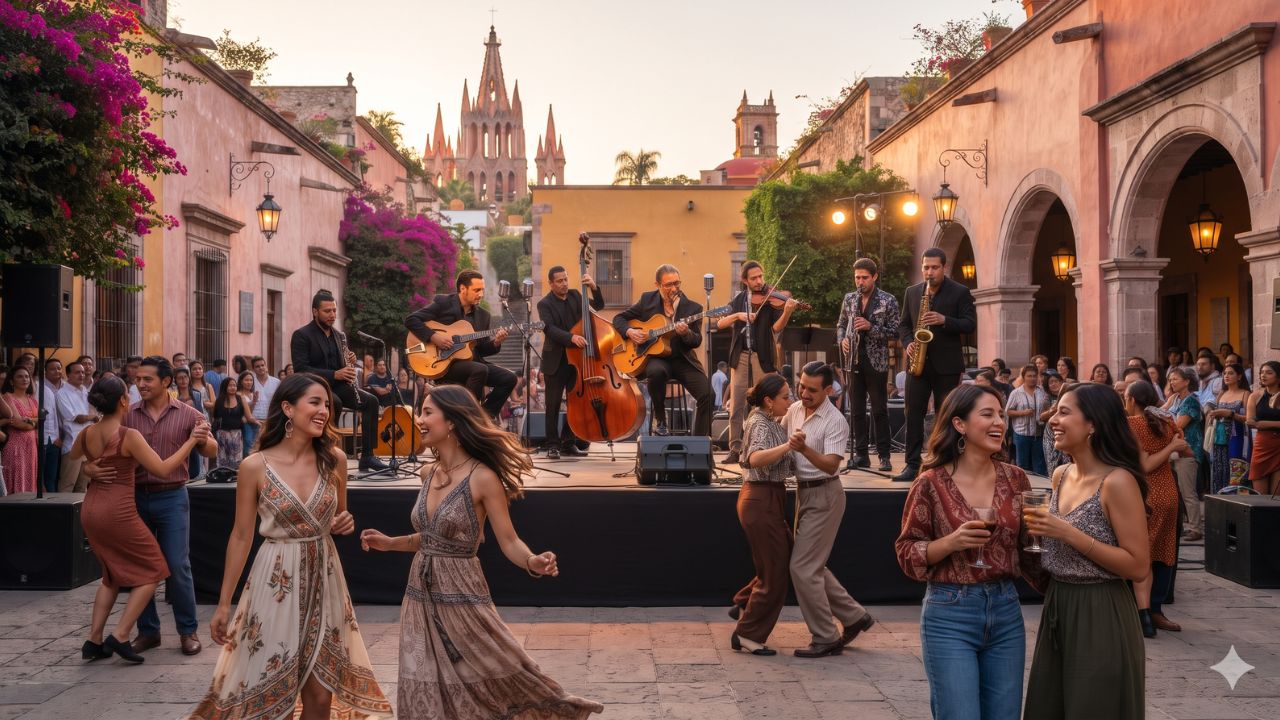
Behind the pink cantera stone facade of an 18th-century textile mill in Mexico's central highlands, acoustic guitars and clarinets will echo European swing rhythms as Django Fest México converts a colonial heritage town into Latin America's premier hot jazz capital.
From 4 to 6 December 2026, San Miguel de Allende will host Django Fest México at Foro El Obraje, bringing international virtuosos, social swing dancers, and music students together in the state of Guanajuato. Rooted in the acoustic jazz manouche style pioneered in 1930s Paris by Romani-French guitarist Django Reinhardt and violinist Stéphane Grappelli, the three-day gathering pairs open-air concerts with masterclasses, social dances, and street performances. For travelers exploring central Mexico during the festive onset of December, the festival provides an acoustic counterpoint to the town’s traditional baroque streetscapes.
Hot Jazz Takes Root in the Guanajuato Highlands
Staged within the historic perimeter of Foro El Obraje—an open-air cultural arena framed by hand-carved cantera stonework near the town's historical center—Django Fest México balances international performance standards with participatory community education. Unlike conventional commercial stadium festivals that separate artists behind security barriers, the event functions as an interactive musical retreat.
The 2026 schedule features 10 full-scale concerts, 16 targeted instructional workshops, six curated dance showcases, and three late-night social dancing gatherings. Instruction ranges from gypsy jazz guitar improvisation and swing rhythm mechanics (la pompe) to vintage Lindy Hop and Charleston partner dance steps.
The lineup bridges European, North American, and Mexican jazz networks. Featured headline artists include London-based clarinetist and saxophonist Giacomo Smith, known for driving the United Kingdom's vintage jazz resurgence, and Chicago guitarist Jake Sanders, an authority on pre-war American swing. Their collaborations with resident Mexican musicians highlight the global cross-pollination of acoustic jazz traditions, pairing European swing syncopation with the expressive warmth of Mexican acoustic guitar craftsmanship.
Event Program, Venues, and Cultural Sights Breakdown
A structured overview of festival operations, performance spaces, and surrounding historic sites illustrates how music connects to San Miguel's broader heritage.
| Festival & Heritage Element | Operational Location / Landmark | Scheduled Features & Offerings | Cultural Insight for Visitors |
|---|---|---|---|
| Django Fest México 2026 | Foro El Obraje (Near town center) | 10 concerts, 16 workshops, 6 dance showcases, 3 social dances |
Open-air cantera courtyard setting |
| Parroquia de San Miguel Arcángel | Plaza Principal (El Jardín) | Iconic neo-Gothic pink cantera towers | Designed by indigenous master mason Zeferino Gutiérrez |
| Sanctuary of Atotonilco | 8 miles north of town center | 18th-century Baroque murals & chapels | Co-inscribed under UNESCO recognition in 2008 |
| El Charco del Ingenio | Botanical Ecological Reserve | Semi-arid canyon, cactaceae collection | Historic nature sanctuary safeguarding endemic flora |
| Fábrica La Aurora | Calzada de la Aurora | Converted textile mill art complex | Contemporary galleries, open artist studios, design shops |
| Mercado de Artesanías | Lucas Balderas pedestrian alley | Tin lanterns, brass mirrors, Talavera pottery | Regional Otomí and Bajío craft traditions |
| El Mirador | Salida Real a Querétaro | Elevated panoramic observation terrace | Spectacular vantage point over central church steeples |
The historic core of San Miguel de Allende and the nearby Sanctuary of Jesús Nazareno de Atotonilco gained collective inscription as a UNESCO World Heritage Centre property in 2008. Founded in the 16th century along the historic Silver Route (Camino Real de Tierra Adentro), the municipality blends indigenous Otomí cultural roots with Spanish baroque, neoclassical, and neo-Gothic architecture.
Navigating San Miguel's Cobblestones and December Highland Climate
Perched at an elevation of 6,233 feet (1,900 meters) above sea level, San Miguel de Allende experiences distinct microclimates during early December. While daytime high temperatures reach a comfortable 72°F to 75°F (22°C to 24°C) under clear blue skies, highland temperatures drop rapidly once the sun dips behind the Sierra Central mountains, falling to 45°F (7°C) by midnight. Because Foro El Obraje is an open-air venue, packing layered woolen wraps, leather jackets, and scarves is essential for attending evening concerts.
Footwear is another critical practical consideration. The town's preserved colonial roads consist of rounded river stones set in mortar, featuring narrow sidewalks and steep inclines. Sturdy, flat-soled walking shoes or boots with rubber traction are mandatory; smooth-soled dress shoes or heels make negotiating steep cobbled streets like Calle Aldama hazardous.
Travelers arriving by air access the region through two regional facilities: Guanajuato International Airport (BJX / Del Bajío) in Silao, located approximately 75 minutes west by road, and Querétaro Intercontinental Airport (QRO), located 60 minutes southeast. Both airports offer private shuttle transfers and authorized taxi stands managed through the Guanajuato Tourism Board. Avoid renting a car: vehicular traffic within the historic center is heavily restricted, street parking is virtually non-existent, and the historic core is easily explored on foot.
Visitor Insider Tips for Festival Attendees
Maximizing your time during the festival weekend requires balancing musical schedules with local cultural rhythms:
- Secure Workshop Passes in Advance: Because workshop classrooms at Foro El Obraje accommodate limited participant numbers to ensure direct interaction with masters like Giacomo Smith and Jake Sanders, walk-up registrations on Friday afternoon frequently encounter sold-out sessions. Reserve your multi-day workshop pass online before traveling.
- Base Yourself in San Antonio or Guadalupe: While staying directly on the Jardín Principal puts you next to church bells that chime throughout the night, residential neighborhoods like Colonia San Antonio and Colonia Guadalupe offer peaceful, authentic stays. Located a flat 10-to-15-minute walk from both the central plaza and Foro El Obraje, these quarters feature indie coffee roasters, street murals, and quiet boutique bed-and-breakfasts.
- Visit the Sanctuary of Atotonilco on Sunday Morning: Take a 15-minute local bus or taxi north to Atotonilco. Often referred to as the "Sistine Chapel of Mexico," this 18th-century sanctuary features interior ceilings and walls blanketed in intricate Mexican folk-baroque frescoes painted by indigenous artist Antonio Martínez de Pocasangre over thirty years.
- Walk the Conservation Trails of El Charco: Take a morning retreat away from trumpet and guitar scales at El Charco del Ingenio, a 170-acre botanical garden and nature preserve positioned on the canyon rim above town. The sanctuary protects rare highland desert plants, including endangered native cacti, agaves, and medicinal herbs, alongside wetlands hosting migratory winter waterfowl.
- Sample Regional Bajío Specialties: Bypass generic tourist cafes on the plaza and head toward Calle Mesones or the Mercado Ignacio Ramírez. Order enchiladas mineras—corn tortillas dipped in guajillo chili sauce, lightly fried, filled with fresh ranchero cheese, and piled high with stewed potatoes and carrots—paired with warm atole de grano.
Architectural Preservation and the Local Creative Economy
The arrival of an international acoustic music festival aligns with San Miguel de Allende’s century-long reputation as an artistic sanctuary. In the late 1930s and 1940s, institutions like the Escuela Universitaria de Bellas Artes and Instituto Allende drew visual artists, sculptors, and writers from across the Americas, establishing an economy centered around creative production and heritage preservation.
However, international acclaim brings urban challenges. The municipality enforces strict architectural preservation codes, dictating that building facades adhere to designated earth tones (ochre, terracotta, sienna) and prohibiting commercial neon signage. At the same time, regional conservationists actively work to protect the fragile highland watershed and semi-arid botanical habitats surrounding the urban basin.
Django Fest México honors this delicate urban fabric by utilizing existing historic architectural courtyards like Foro El Obraje rather than building temporary acoustic stages. The event channels economic activity toward independent local guitar luthiers, culinary workers, and neighborhood guesthouses, demonstrating how heritage tourism and contemporary performing arts can enrich a community without compromising its architectural integrity.
Frequently Asked Questions
When and where does Django Fest México 2026 take place?
Django Fest México 2026 takes place from 4 to 6 December 2026 at Foro El Obraje, an open-air cultural venue in San Miguel de Allende, Guanajuato, Mexico.
Which international airports serve San Miguel de Allende?
Visitors fly into either Guanajuato International Airport (BJX / Del Bajío) in Silao (75 minutes away) or Querétaro Intercontinental Airport (QRO) (60 minutes away), connecting to the town via pre-booked shared shuttles or private taxis.
What musical styles are featured at the festival?
The festival focuses on jazz manouche (gypsy jazz), 1930s acoustic swing, and blues, accompanied by instructional workshops in jazz improvisation and vintage swing dance styles including Lindy Hop and Charleston.
Experiencing the syncopated rhythm of acoustic swing against San Miguel's ancient cantera stone creates an unforgettable connection to Mexico’s rich creative spirit.
Related Travel Guides
This article is for informational purposes. Flight routes, passenger regulations, visa rules, and transit advisories are subject to change by airlines and aviation authorities. Readers are advised to verify schedules and travel documentation with relevant carriers and border agencies before departure.
Related Stories
Sendas del Tren: Paraguay Launches South America’s Longest Planned Rail-Trail Cycling Greenway
Antigua and Barbuda Corporate Incentive Travel Growth: 448,626 Arrivals Signal Luxury Shift 2026