Wisconsin Thanksgiving Travel Guide 2026: 1.63 Million Holiday Rush, Peak Traffic Hours, and Gas Costs

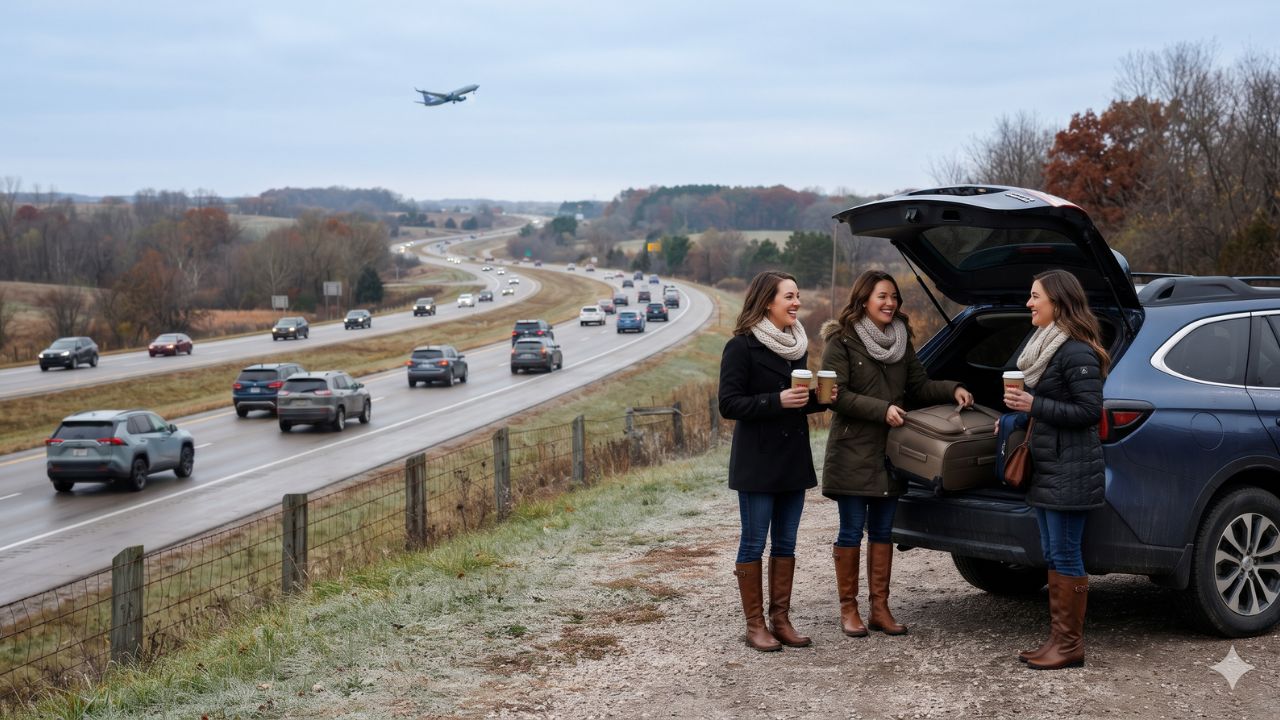
While domestic air travel across the United States is projected to decline 0.2% ahead of Thanksgiving amid domestic return airfares averaging $800, Wisconsin is bucking the national trend—with airport departures surging 0.9% to 138,183 passengers even as 1.44 million road-trippers face a 30% annual jump in pump prices.
According to official holiday travel projections released by AAA and INRIX, approximately 1,634,348 Wisconsin residents will travel at least 50 miles away from home during the seven-day holiday window from Tuesday, 24 November through Monday, 30 November 2026. While the total marks a slight 0.4% dip (6,293 fewer travellers) from the revised 2025 benchmark of 1,640,641, highway corridors like Interstate 94, Interstate 43, and Interstate 39/90 are bracing for intense seasonal volume. Despite petrol climbing to an average of $3.63 per gallon across the Badger State, road travel accounts for 88.3% of all journeys, confirming that multi-passenger family automobile trips remain the backbone of Upper Midwest holiday mobility.
Wisconsin Thanksgiving 2026 Travel Projections and Cost Analysis
The dynamics shaping Thanksgiving 2026 reveal clear household trade-offs between soaring airline tickets and rising forecourt fuel costs. AAA booking data shows domestic return airfares averaging roughly $800 nationwide, a 17% jump year over year. Despite that ticket surge, Wisconsin flyers will post modest volume gains, while road journeys absorb a modest 0.7% decrease (9,641 fewer drivers).
The table below details the official AAA modal breakdown for Wisconsin alongside comparative national metrics:
| Travel Category / Metric | Wisconsin 2025 Baseline | Wisconsin 2026 Forecast | Annual Change (WI) | National Outlook (US) | US Annual Change |
|---|---|---|---|---|---|
| Total Person-Trips | 1,640,641 | 1,634,348 | −0.4% | 81.5 million | −0.1% |
| Automobile Travel | 1,452,775 | 1,443,134 | −0.7% | 72.9 million | Approximately −200,000 |
| Air Travel | 136,892 | 138,183 | +0.9% | 5.96 million | −0.2% |
| Other Transport (Rail/Bus) | 50,974 | 53,031 | +4.0% | Approximately 2.6 million | Positive growth |
| Regular Petrol (Per Gallon) | $2.79 | $3.63 | +$0.84 (+30.1%) | $3.81 | Moderating weekly |
| 15-Gallon Fuel Purchase | $41.85 | $54.45 | +$12.60 | $57.15 | National baseline |
Wisconsinites heading to the pumps face an extra $12.60 expense on every 15-gallon tank compared to November 2025. For an SUV or light truck taking on 20 gallons, fill-ups jump from $55.80 last year to $72.60 this season. Even with this increase, Wisconsin drivers enjoy a modest advantage over the broader US average of $3.81 per gallon, which explains why driving remains mathematically cheaper than flying when three or four family members travel together.
Critical Congestion Windows and Departure Strategy
Transport analytics firm INRIX and AAA have identified specific choke points where holiday motorists will face severe travel friction. Understanding these hourly bottlenecks along the Interstate 94 corridor connecting Milwaukee, Madison, and Minneapolis-St. Paul is essential to avoiding multi-hour delays.
The table below outlines the peak congestion periods and recommended departure windows across Thanksgiving week:
| Calendar Date | Heaviest Congestion Window | Suggested Optimum Departure | Regional Traffic Corridor Notes |
|---|---|---|---|
| Tuesday, 24 November | 2:00 PM – 8:00 PM | Depart before 1:00 PM | Mixed commercial freight and early holiday getaways around Milwaukee |
| Wednesday, 25 November | 12:00 PM – 7:00 PM | Depart before 12:00 PM | The most congested driving afternoon of the entire holiday cycle |
| Thursday, 26 November | Lighter overall movement | Flexible throughout day | Uncongested morning travel; watch for midday deer crossings |
| Friday, 27 November | 1:00 PM – 7:00 PM | Depart before 12:00 PM | Retail corridor traffic near Brookfield, Madison East, and Green Bay |
| Saturday, 28 November | 12:00 PM – 9:00 PM | Depart before 11:00 AM | Early campus returns and regional sports traffic |
| Sunday, 29 November | 12:00 PM – 8:00 PM | Depart before 11:00 AM | Massive homeward surge along I-94 South toward Chicago and I-90 West |
| Monday, 30 November | 2:00 PM – 7:00 PM | Depart before 1:00 PM | Final return flow blending into evening business rush hours |
Leaving before noon on Wednesday and before 11:00 AM on Sunday eliminates the sharpest delays at the Marquette Interchange in Milwaukee and the Interstate 39/90/94 split in Portage County.
What Makes Wisconsin Holiday Travel Corridors Different
Driving across Wisconsin in late November involves unique regional challenges that southern and coastal road-trippers rarely encounter. The transition from late autumn into early winter across the Driftless Area, the central plains, and the Northwoods brings rapid temperature drops and sudden freeze-thaw cycles.
Interstate 94 serves as the Midwest's primary industrial and passenger spine, funneling traffic between the Chicago metropolitan area, Milwaukee's lakefront, the state capital of Madison, and the Twin Cities. Where I-94 intersects with I-43 in Milwaukee and I-39 in Madison, holiday volumes regularly push road capacity past its limit.
Furthermore, rural stretches through Juneau, Jackson, and Monroe counties cut through dense hardwood forests and agricultural wetlands. Late November coincides with the annual white-tailed deer breeding season, dramatically increasing the risk of wildlife vehicle collisions between dusk and dawn. Add lake-effect squalls blowing off Lake Michigan along the eastern tier from Kenosha to Green Bay, and motorists must navigate changing road friction, slush spray, and reduced visual range within minutes.
Visitor Insider Tips for Holiday Motorists and Flyers
Successfully maneuvering Wisconsin's holiday transport grid demands proactive logistics, real-time monitoring, and cold-weather preparedness:
- Deploy the WisDOT 511 Network Continuously: Access real-time highway conditions through the Wisconsin Department of Transportation 511 Network. The system provides continuous updates on active incidents, winter maintenance operations, lane restrictions, and direct feeds from more than 500 state highway cameras.
- Audit Vehicle Winter Equipment Before Heading North: Sub-zero wind chills are common across northern Wisconsin by late November. Inspect tire tread depths, test battery cold-cranking amps, refill washer fluid with de-icer rated to −20°F, and carry a winter safety pack containing wool blankets, high-calorie snacks, and a portable jump-pack.
- Utilize Alternative Midwestern Regional Airports: With Milwaukee Mitchell International Airport (MKE) and Dane County Regional Airport (MSN) handling near-record load factors, check regional feeder options like Appleton International (ATW) or Green Bay Austin Straubel (GRB) if flying east. For Chicago-bound travelers, regional Amtrak Hiawatha and Borealis train services offer reliable bypass routes around Interstate 94 construction zones.
- Fuel Up Off Mainline Interstates: Filling stations positioned directly adjacent to major off-ramps in Lake Delton or Johnson Creek routinely add a 15- to 20-cent premium per gallon. Exit 2 to 3 miles away into municipal downtowns like Oconomowoc or Watertown to secure rates closer to the statewide $3.63 average.
- Explore Seasonal Detours with Regional Tourism Guides: For travelers combining holiday visits with regional exploration, consult scenic byways and heritage itineraries through Travel Wisconsin. Historic river towns along the Mississippi River or the quiet peninsula of Door County provide peaceful off-interstate detours.
- Track Regional Fuel Variance via National Dashboards: If your road trip crosses state lines into Illinois (where fuel taxes push pump prices significantly higher) or Minnesota, plan tank fills using real-time price maps on AAA Gas Prices.
Cultural and Environmental Context
Thanksgiving mobility in Wisconsin reflects deep communal traditions centered on family gatherings, hunting camps, and regional hospitality. For multi-generational families scattered between rural dairy townships and urban centers, holiday road travel represents a cultural priority that economic inflation rarely breaks.
However, the sheer volume of 1.44 million motorists traversing state highways poses real environmental considerations. Concentrated exhaust emissions along the Interstate 94 corridor impact air basins near Lake Michigan, while thousands of tons of road salt applied to melt black ice wash into sensitive freshwater watersheds, including the Rock, Wisconsin, and Fox rivers.
Municipalities and the Wisconsin Department of Transportation increasingly use liquid brine pre-wetting solutions rather than raw rock salt, reducing chemical runoff while keeping pavement clear. By smoothing travel peaks and encouraging off-peak departures, transportation agencies seek to reduce idling emissions during holiday traffic jams.
FAQ: Navigating Wisconsin Thanksgiving Travel 2026
What are the worst days and hours to drive in Wisconsin over Thanksgiving?
Wednesday, 25 November between 12:00 PM and 7:00 PM is the most congested departure window. For return trips, Sunday, 29 November between 12:00 PM and 8:00 PM brings heavy delays. Depart before 11:00 AM to avoid gridlock.
How much higher are Wisconsin gas prices for Thanksgiving 2026?
Regular petrol averages $3.63 per gallon across Wisconsin—a 30% increase (84 cents higher) compared to $2.79 in November 2025. However, Wisconsin remains lower than the national average of $3.81.
How many Wisconsin residents are traveling for Thanksgiving 2026?
AAA projects 1,634,348 Wisconsin residents will travel at least 50 miles from home between 24 and 30 November. Over 1.44 million will drive, while 138,183 will fly.
How can drivers monitor Wisconsin highway conditions in real time?
Motorists can consult the Wisconsin Department of Transportation’s free 511 Wisconsin service (online at 511wi.gov or via the mobile app), which provides 24/7 access to road condition maps, winter maintenance alerts, and over 500 traffic cameras.
By beating the Wednesday rush and packing for sudden freezes, Wisconsin travelers can conquer 1.6 million holiday journeys and arrive safely at the family table.
Related Travel Guides
This article is for informational purposes. Flight routes, passenger regulations, visa rules, and transit advisories are subject to change by airlines and aviation authorities. Readers are advised to verify schedules and travel documentation with relevant carriers and border agencies before departure.
Related Stories

North Carolina Ranks Cheapest US State for Gas and Diesel: Thanksgiving Road Trip Guide 2026

Hamilton Ontario Holiday Weekend Guide 2026: CPKC Holiday Train, Hess Village, and Winter Markets