Porto Secures Direct Washington Flights as TAP Air Portugal Expands Transatlantic Routes for 2027

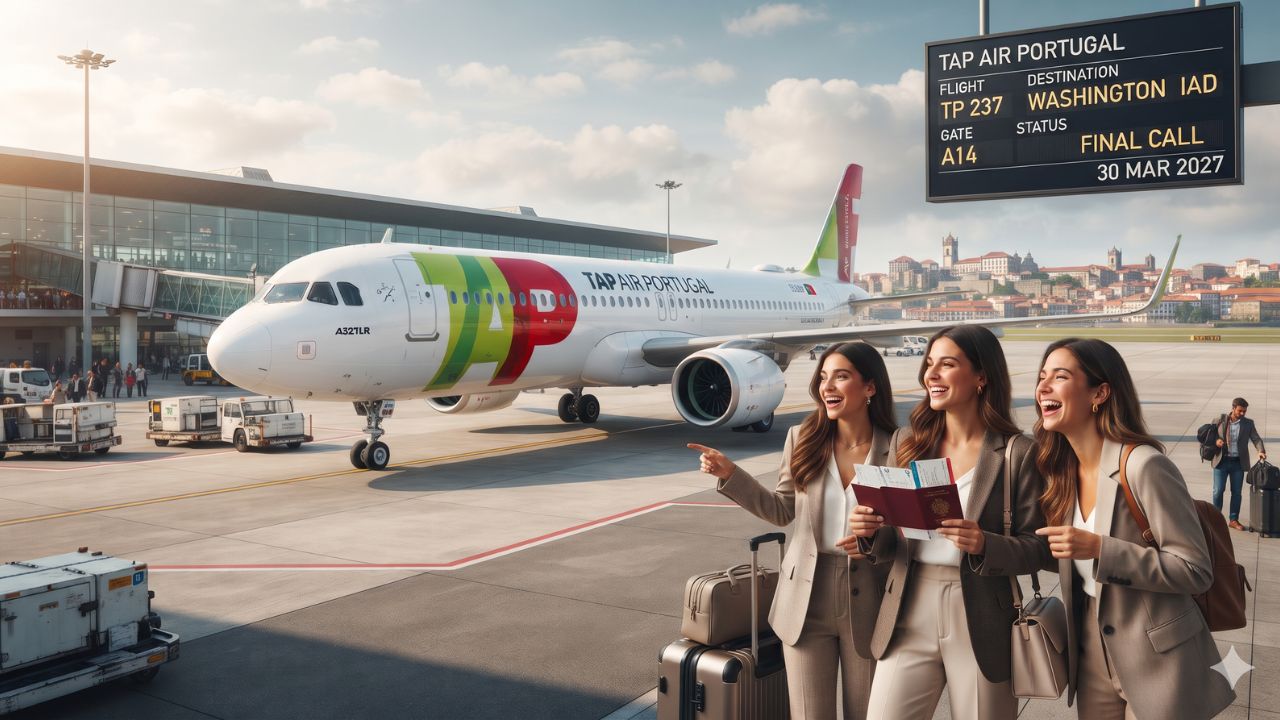
While international travelers heading to Portugal have historically squeezed through the crowded immigration halls of Lisbon, northern Portugal's Francisco Sá Carneiro Airport is emerging as an independent transatlantic gateway. Beginning on 30 March 2027, flag carrier TAP Air Portugal launches year-round nonstop service connecting Porto directly with Washington Dulles International Airport. Operating three times weekly with introductory return fares starting at €529, the service establishes Washington as Porto’s eighth intercontinental route and its third non-stop destination in the United States, alongside established year-round services to New York and Boston.
Operating the long-range Airbus A321LR narrowbody aircraft configured with 171 seats—including 16 lie-flat Business Class suites—the route circumvents capital transfers entirely. For travelers departing the American capital region, the eight-hour-and-thirty-five-minute flight lands directly on the doorstep of the Douro Valley wine country, Atlantic surfing beaches, and the Romanesque granite churches of northern Portugal, without requiring a single layover in Lisbon, Madrid, or London.
The Transatlantic Network Expansion Across Northern Portugal
The launch of the Washington Dulles link reflects a calculated decentralization of Portuguese aviation. With Lisbon’s Humberto Delgado Airport facing severe runway slot saturation, TAP Air Portugal and airport operator ANA Aeroportos de Portugal have invested heavily in establishing Francisco Sá Carneiro Airport (OPO) as a self-sustaining intercontinental hub.
TAP operates more than 130 direct weekly flights out of Porto, connecting northern travelers to an intercontinental roster that includes São Paulo, Rio de Janeiro, Luanda, Praia, Sal Island, New York, Boston, and now Washington. Across North America as a whole, TAP operates more than 80 weekly flights across 11 destinations.
The airport itself has undergone a comprehensive infrastructure transformation, anchored by a completed €50 million runway modernization alongside ongoing renovations across passenger security, check-in zones, fast-track lanes, and premium lounges. Supporting this flight expansion, TAP is constructing a dedicated Maintenance and Engineering facility at Porto Airport scheduled for completion in 2028, which will bring approximately 200 specialized aerospace engineering jobs to the northern district.
Seasonal Flight Schedules and Aircraft Configuration
Evaluating the summer and winter timetables reveals how flight frequencies rotate across transatlantic seasons:
| Flight Parameter / Timetable | Summer 2027 (From 30 March 2027) | Winter 2027 (From 31 October 2027) | Aircraft Configuration & Amenities |
|---|---|---|---|
| Porto to Washington (OPO–IAD) | Tue & Thu: Departs 7:20 pm, arrives 10:55 pm Sat: Departs 5:10 pm, arrives 8:45 pm |
Tue, Thu & Sun: Departs 6:35 pm | Airbus A321LR (171 seats total) |
| Washington to Porto (IAD–OPO) | Wed & Fri: Departs 12:25 am, arrives 12:50 pm Sat: Departs 10:15 pm, arrives 10:40 am Sun |
Mon, Wed & Fri: Departs 12:10 am to 1:10 am, arrives ~12:30 pm | 16 lie-flat Business Class suites |
| Flight Duration | Westbound: 8h 35m / Eastbound: 7h 25m | Westbound: ~8h 45m / Eastbound: ~7h 20m | Seatback entertainment screens & USB power |
| Introductory Return Fare | From €529 (including all taxes) | Subject to seasonal holiday pricing | Economy and Business fare bundles |
| Porto Airport Infrastructure | Modernized 3,480m runway (€50M project) | Over 100 direct international routes | Dedicated TAP maintenance hub (2028) |
What Makes Porto and Northern Portugal Different
Stepping out into Porto immerses visitors in a city defined by granite topography, Atlantic sea salt, and centuries of maritime commerce. Rather than the sun-bleached limestone of Lisbon or the dry scrub of the Algarve, Porto is anchored by the deep, terraced gorge of the Douro River, spanned by the double-deck iron arches of the Dom Luís I Bridge.
At the core of the city lies the Historic Centre of Oporto, Luiz I Bridge and Monastery of Serra do Pilar, inscribed as a UNESCO World Heritage site in 1996. The neighborhood of Ribeira tumbles down steep hillsides in narrow cobbled alleys lined with centuries-old townhouses faced with blue-and-white hand-painted azulejo tiles. Crossing the lower deck of the bridge leads directly into Vila Nova de Gaia, where ancient lodges—including Graham’s, Taylor’s, and Cálem—have aged vintage tawny and ruby Port wines in massive oak vats since the seventeenth century.
Traveling beyond the urban center via Visit Portugal reveals the Alto Douro wine region, the oldest demarcated wine region in the world. Visitors can board historic commuter trains from São Bento station—famous for its 20,000 historic tiles depicting Portuguese battle scenes—and track the riverbank east to Pinhão, where dramatic slate terraces drop precipitously into glassy waters, cultivating Touriga Nacional and Tinta Roriz grapes.
Visitor Insider Tips for Arriving in Porto
Landing directly at Francisco Sá Carneiro Airport gives travelers an immediate advantage over those traveling overland from Lisbon, provided they navigate regional transit correctly:
- Take the Metro Directly from the Airport Terminal: Francisco Sá Carneiro Airport features an integrated underground light rail station. Board the Metro do Porto Line E (Violet) directly outside the arrivals hall; a €2.25 Title Z4 ticket delivers you to Trindade station in downtown Porto in just 27 minutes, avoiding expensive highway taxi queues.
- Book Gaia Port Cellar Tastings in Advance: While casual tasting rooms line the riverside promenade in Vila Nova de Gaia, intimate visits to working vintage barrel cellars and private quintas require booking several days ahead, particularly between June and September. Seek out smaller lodges like Ramos Pinto for historic archives, or Churchill’s for boutique tastings away from cruise ship crowds.
- Order the Francesinha at Traditional Breweries: Porto’s signature culinary creation is the Francesinha—a decadent sandwich layered with cured ham, fresh linguiça sausage, and roast beef, smothered in melted cheese and a spiced beer-and-tomato sauce. Avoid tourist menus along the Ribeira waterfront; head uptown to neighborhood institutions like Cervejaria Brasão or Café Santiago where locals dine.
- Take the Urban Linha do Douro Commuter Train: Avoid expensive tour buses to explore the Douro Valley. The regional rail service departing Porto São Bento to Pocinho runs directly along the water’s edge for over 100 kilometers. Sit on the right side of the carriage departing São Bento for unbroken river gorge views between Régua and Pinhão.
Cultural and Environmental Context
The rise of direct long-haul aviation into northern Portugal brings economic vitality to regional communities while sparking essential conversations about sustainable destination stewardship. For decades, interior villages across Trás-os-Montes and the Minho faced severe youth outmigration. Direct air links from the United States channel high-value, culturally minded travelers directly into family-owned quintas, traditional stone agro-tourism estates, and artisanal olive oil mills, revitalizing rural economies.
At the same time, regional authorities are addressing environmental pressures along the Douro river basin. Heavy boat cruise traffic on the river and summer heat waves have prompted local conservation bodies to enforce strict wash restrictions on river vessels and implement climate-adaptive terracing across steep vineyard slopes to prevent topsoil erosion during winter downpours. By encouraging year-round travel through off-peak schedules, TAP's route helps smooth tourist foot traffic across the calendar, preventing the hyper-concentration that strains fragile historic infrastructure.
FAQ: Traveling Between Washington and Porto 2027
When do TAP's direct flights between Washington and Porto begin?
Nonstop flights commence on 30 March 2027, operating three times weekly on a year-round schedule between Francisco Sá Carneiro Airport and Washington Dulles.
What aircraft does TAP Air Portugal fly on the Porto–Washington route?
The service utilizes an Airbus A321LR narrowbody aircraft, featuring 171 seats, including 16 lie-flat Business Class suites and 155 Economy seats.
What are the starting fares for the new transatlantic service?
Introductory return fares begin at €529, including all mandatory taxes and carrier surcharges, subject to seat availability and travel season.
How do travelers get from Porto Airport to the historic center?
The Metro do Porto Line E (Violet) connects the airport directly to central Trindade station in roughly 27 minutes for approximately €2.25.
With direct wings connecting the Potomac to the Douro, Porto steps out from Lisbon's shadow, offering travelers a direct, untamed path into Portugal's northern soul.
Related Travel Guides
This article is for informational purposes. Flight routes, passenger regulations, visa rules, and transit advisories are subject to change by airlines and aviation authorities. Readers are advised to verify schedules and travel documentation with relevant carriers and border agencies before departure.
Related Stories
Mexico Child Travel Rules Explained: SAM Forms, Parental Consent, and Family Border Entry for 2026

New York City Launches Global Five-Borough Tourism Campaign Ahead of 2026 FIFA World Cup