Manaus Hosts Amazon Responsible Tourism Forum: Community Lodges, Bioeconomy, and Rio Negro Expeditions

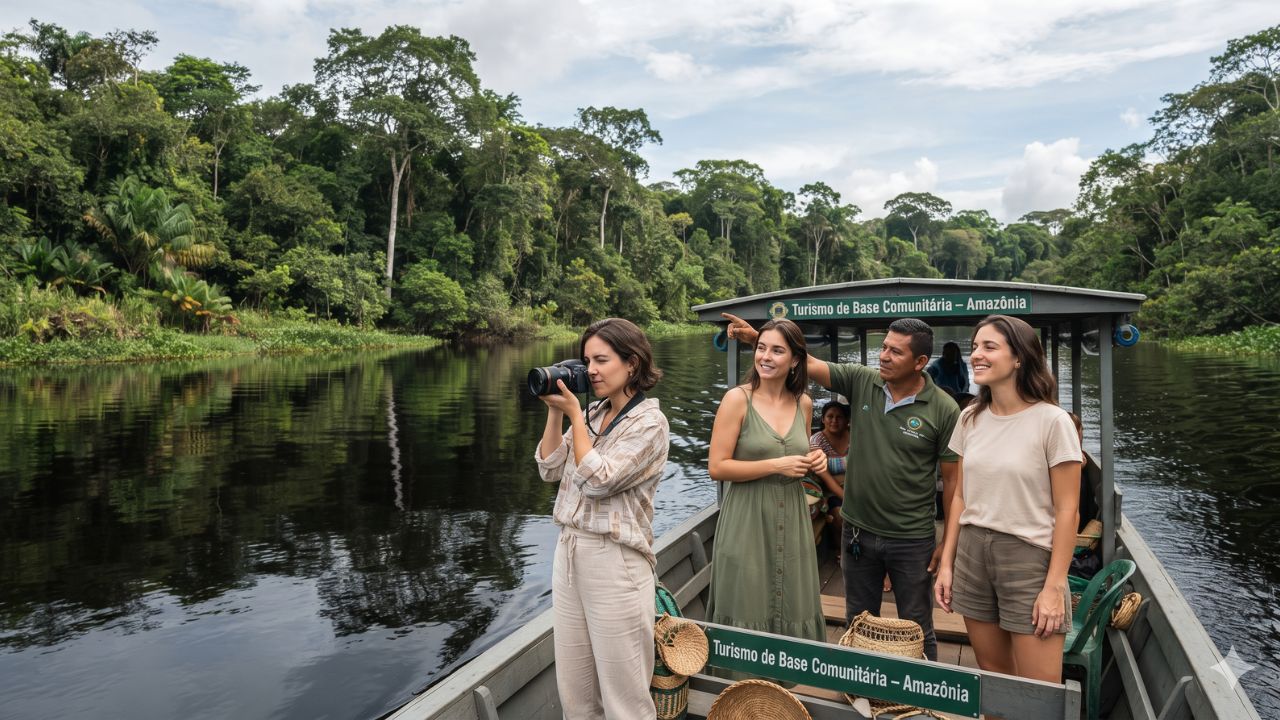
Deep in the heart of the world's largest river basin, the historic Amazonian metropolis of Manaus is pivoting away from extractive jungle excursions toward community-governed ecotourism. From 23 to 25 November 2026, the capital of Amazonas state convenes the Brazilian Responsible Tourism Forum – Amazon Edition, hosted at the prestigious National Institute of Amazonian Research (INPA). Formally announced by INPA on 16 November 2026, the three-day summit gathers indigenous leaders, traditional riverine (ribeirinho) community organizers, conservation biologists, and ecotourism entrepreneurs to establish a sustainable economic model for rainforest travel.
The forum addresses five critical pillars: community-based tourism (TBC), the forest bioeconomy, Afro-Brazilian cultural tourism, wilderness navigation safety, and responsible international promotion. A centerpiece of the gathering takes place on 25 November 2026, when delegates embark on a technical field expedition into the Rio Negro Sustainable Development Reserve. For international travelers navigating Visit Brasil, this shift marks the emergence of authentic, conservation-led journeys that channel tourism spending directly into forest protection.
The Scientific Framework: INPA and the New Amazon Tourism Model
Choosing INPA as the host institution roots tourism strategy directly in rainforest ecology. Founded in 1952, the research institute manages critical climate towers, river monitoring stations, and biodiversity sanctuaries across the central Amazon basin. Rather than treating tourism as passive sight-seeing, the forum approaches travel as an active mechanism within the standing-forest bioeconomy.
The bioeconomy framework integrates non-timber forest harvesting—such as native wild cacao, wild pirarucu fish harvesting, and açaí cultivation—directly into guest experiences. By engaging with local cooperatives, visitors provide sustainable alternative revenues to illegal gold mining (garimpo) and agricultural deforestation. Concurrently, sessions on Afro-tourism illuminate the long-overlooked history of quilombola communities in the northern Amazon, whose ancestors established self-governing sanctuaries along hidden blackwater river channels.
A vital operational component is nature tourism safety. Amazonian expeditions traverse intricate river networks subject to rapid seasonal water fluctuations. The forum establishes practical guidelines covering riverboat navigation protocols, satellite communications, emergency wilderness first aid, and certified local naturalist guiding standards to safeguard travelers deep within remote tributaries.
Key Themes and Field Operations of the 2026 Manaus Forum
The three-day program balances institutional panels with field-based evaluations of community-managed reserves:
| Program Pillar / Field Session | Primary Operational Focus | Target Stakeholders | Real-World Application for Travelers |
|---|---|---|---|
| Community-Based Tourism (TBC) | Autonomous indigenous & ribeirinho hospitality | Village elders, community associations | Direct stays in native-run river lodges; authentic cultural exchanges |
| Amazon Bioeconomy Integration | Sustainable forest products & agroforestry | Local farming cooperatives, chefs | Farm-to-table dining featuring tucupi, pirarucu, and native fruits |
| Afro-Tourism Representation | Quilombola cultural history & heritage trails | Afro-Brazilian heritage historians | Specialized cultural walking routes along historical river settlements |
| Nature Tourism Safety Standards | Navigational protocols & remote medevac | Riverboat captains, jungle guides | Verified safety gear, VHF radios, and certified wild-water pilots |
| Rio Negro Technical Field Visit | On-site reserve inspection (25 Nov 2026) | Registered delegates & operators | Practical evaluation of conservation lodge zoning and waste systems |
| International Market Promotion | Positioning the Amazon beyond mass tourism | Global operators, Embratur | High-value, low-density wildlife safaris and multi-day river journeys |
What Makes Manaus and the Rio Negro Basin Unique
Surrounded by thousands of square miles of dense primary rainforest, Manaus sits at the confluence of the tea-colored Rio Negro and the muddy, silt-heavy Rio Solimões. At the "Meeting of the Waters" (Encontro das Águas), these two colossal rivers flow side by side for over six miles without mixing, separated by differences in water density, temperature, and speed.
In the center of the city, the late nineteenth-century rubber boom left behind grand neoclassical monuments, most famously the Teatro Amazonas. Built in 1896 with Italian Carrara marble, French glass, and Scottish cast iron, the pink-domed opera house hosted European tenors in the heart of the equatorial jungle. Nearby, the Adolpho Lisboa Municipal Market, constructed with ironwork designed by the Eiffel workshops, is lined with wooden stalls selling medicinal jungle barks, wild honey, and massive fresh pirarucu fillets.
Departing the city docks by regional wooden double-decker riverboats navigates travelers into the Central Amazon Conservation Complex, a UNESCO World Heritage site that protects the Anavilhanas freshwater archipelago and the Rio Negro Sustainable Development Reserve. In these blackwater flooded forests (igapós), high acidity naturally suppresses mosquito larvae, creating a tranquil environment where travelers paddle canoes through canopies draped in bromeliads, spot pink river dolphins (boto cor-de-rosa), and listen to the territorial calls of red howler monkeys.
Visitor Insider Tips for Responsible Amazon Travel
Traveling deep into the Amazon requires informed preparation, respectful community protocols, and seasonal awareness:
- Align Itineraries with River Water Levels: The Amazon operates on two distinct hydrological seasons: the high-water flooded season (May to August), when rivers rise up to 45 feet, allowing canoes to glide through treetop canopies; and the dry season (September to December), when river waters recede, exposing white-sand river beaches and concentrating wildlife along narrow channels.
- Book Directly with Community-Run Enterprises: Skip generic day tours that crowd tame sloths or caged caimans along the highway. Book multi-day excursions managed under oversight by the Chico Mendes Institute for Biodiversity Conservation (ICMBio), staying in solar-powered community lodges within the Rio Negro Reserve where tour revenues remain with ribeirinho families.
- Observe Indigenous and Village Etiquette: When visiting native communities along the Rio Negro, always ask permission before taking photographs of residents, community elders, or religious ceremonies. Purchase handicrafts directly from local artisans rather than souvenir shops in Manaus to support community economies.
- Comply with Health and Medication Guidelines: Yellow fever vaccination is mandatory for entering the Amazonas basin and must be administered at least ten days prior to arrival. Pack high-DEET insect repellent, broad-spectrum sunscreen, lightweight long-sleeved linen shirts, and water purification tablets for remote trekking sectors.
Cultural and Environmental Context
The emergence of community-based tourism across the Rio Negro basin is an environmental line of defense for the Amazon. For decades, commercial pressure from illegal timber extraction, wildcat mining, and cattle ranching encroached on regional reserves. By establishing viable tourism concessions, local communities transform the living forest into an asset more economically valuable standing than felled.
However, scaling sustainable tourism requires careful environmental management. Increased motorized boat traffic can disturb delicate riparian habitats and erode riverbanks during low-water months. The protocols emerging from the INPA forum emphasize slow-speed electric outboards, comprehensive solar-powered battery arrays, greywater filtration systems, and strict daily visitor caps. Empowering ribeirinho guardians ensures that traditional ecological knowledge guides the future of conservation in the Amazon.
FAQ: Visiting Manaus and the Brazilian Amazon 2026
What is the Brazilian Responsible Tourism Forum – Amazon Edition?
It is a three-day national summit taking place at INPA in Manaus from 23 to 25 November 2026, focusing on community tourism, bioeconomy, safety, and Amazon conservation.
How do travelers reach the Rio Negro Sustainable Development Reserve?
The reserve is reached by private riverboat or motorized canoe from Manaus, heading upriver along the Rio Negro into protected blackwater tributaries.
What vaccinations are required to visit Manaus and the Amazon?
A valid yellow fever vaccination is strongly recommended and routinely required, along with up-to-date routine travel immunizations.
Why do the Rio Negro and Rio Solimões flow side-by-side without mixing?
Differences in water temperature, flow velocity, and mineral density prevent the black, warm Rio Negro and cold, sandy Rio Solimões from blending for over six miles.
Where the dark waters of the Rio Negro embrace the rainforest canopy, authentic travel is measured not by the miles conquered, but by the living ecosystems preserved.
Related Travel Guides
This article is for informational purposes. Flight routes, passenger regulations, visa rules, and transit advisories are subject to change by airlines and aviation authorities. Readers are advised to verify schedules and travel documentation with relevant carriers and border agencies before departure.
Related Stories
Busch Gardens Tampa Bay Unveils Simbi Rush: World's Fastest Water Coaster Launching in 2027

California Christmas Staycation Guide 2026: Balboa Park Nights, Solvang Julefest, and Yosemite Winter Escapes