
easyJet Flight U2213 Bird Strike Sparks Precautionary Return at Bristol Airport: Passenger and Safety Guide

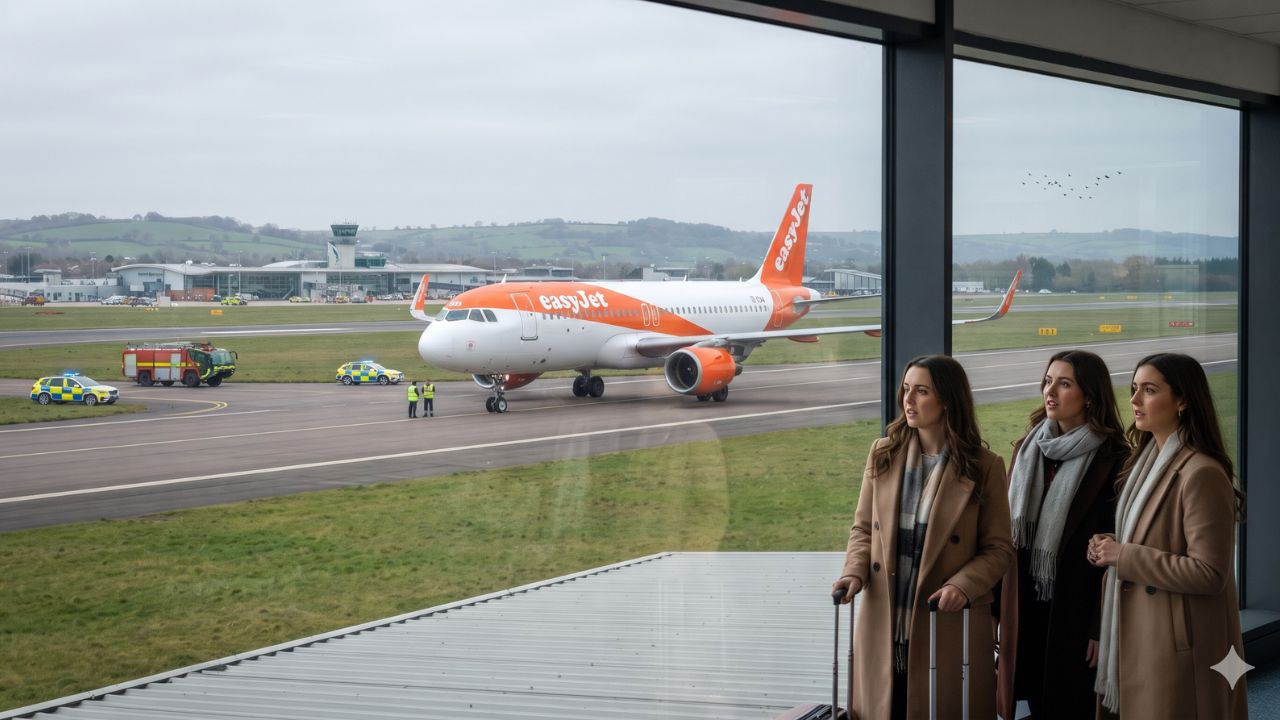
Although modern commercial jet turbines are engineered to withstand the ingestion of an eight-pound bird without catastrophic uncontained disintegration, any airborne wildlife collision during climb-out commands an immediate operational response. On 18 November 2026, easyJet flight U2213, scheduled to connect Bristol Airport in southwest England with Edinburgh Airport in Scotland, encountered a bird strike moments after takeoff. Exercising standard flight deck caution, the flight crew terminated the climb, reversed course, and executed a normal landing back on Bristol's runway, where airport fire and rescue appliances marshaled along taxiways as a standard safety precaution.
While airport spotters and social feeds quickly speculated about internal engine damage, official technical investigators from the Air Accidents Investigation Branch (AAIB) and the UK Civil Aviation Authority have not issued a formal occurrence bulletin confirming mechanical failure. The carrier dispatched a replacement airframe to ferry passengers north to Edinburgh, illustrating the conservative procedural thresholds airlines enforce whenever foreign objects impact aerodynamic control surfaces or high-bypass turbofans.
Flight Deck Decision Making and Aerodrome Emergency Protocols
The incident involving flight U2213 underscores how low-altitude wildlife hazards dictate airline procedures during departure and approach phases. Departures out of the Severn Estuary basin frequently intersect migratory flyways and coastal gull colonies. When a bird strike occurs, flight crews face sensory cues ranging from distinct cockpit thuds and fleeting airframe vibrations to subtle anomalies in exhaust gas temperatures (EGT) or engine spool-up readouts.
A return to the departure field does not signify an emergency dive or impending engine failure. Regulatory standards enforced by the UK Civil Aviation Authority (CAA) instruct flight crews to treat suspected engine strikes with conservative prudence. Continuing a climb to cruising altitude over the Pennines with potential fan blade distortion introduces unnecessary operational risk. Landing back at an aerodrome equipped with comprehensive maintenance hangars and engineering staff allows technicians to perform borescope camera inspections of internal compressor stages before certifying the airframe for return to service.
Airport emergency tenders met flight U2213 upon touchdown not because the aircraft was ablaze, but under established local standby procedures. Air traffic controllers automatically activate airfield fire stations for returning aircraft reporting foreign object strikes, ensuring thermal imaging cameras can inspect brake temperatures and landing gear assemblies following an expedited, overweight landing rollout.
Documented Historical Bird Strike Incidents and Technical Outcomes
To understand how aviation regulators assess wildlife encounters, documented investigation reports from across the globe reveal how damage thresholds range from minor inspections to forced off-airport landings:
| Incident Date | Territory & Aircraft Type | Documented Occurrence & Diverting Action | Investigating Safety Authority | Established Operational Finding |
|---|---|---|---|---|
| 18 Nov 2026 | United Kingdom, easyJet U2213 | Bird strike on departure from Bristol; returned safely | Precautionary airline action; CAA logging | Replacement aircraft arranged; normal landing |
| 17 Jun 2024 | New Zealand, Boeing 737-8FE | Engine damage following departure from Queenstown | Australian Transport Safety Bureau (ATSB) | Precautionary diversion executed to Invercargill |
| 25 Sep 2023 | United Kingdom, Skyranger Swift 912 | In-flight bird strike leading to loss of power | UK Air Accidents Investigation Branch (AAIB) | Controlled forced landing conducted near Dunstable |
| 10 Jan 2017 | United Kingdom, Boeing 737-8K5 | Left engine bird ingestion departing Bournemouth | UK Air Accidents Investigation Branch (AAIB) | Diverted safely to London Gatwick above max landing weight |
| 20 Jun 2012 | New Zealand, Airbus A320 | Right engine bird ingestion during Wellington departure | NZ Transport Accident Investigation Commission (TAIC) | Resulted in subsequent in-flight shut down on later sector |
| 15 Jan 2009 | United States, Airbus A320 | Dual engine bird ingestion after LaGuardia departure | US National Transportation Safety Board (NTSB) | Forced ditching on Hudson River; all 155 survived, 5 injured |
| 22 Feb 2000 | United States, Airbus A320 | Bird ingestion causing serious engine core damage | US Federal Aviation Administration (FAA) | Precautionary climb termination and immediate return |
What Makes Aerodrome Wildlife Management Different
Coastal and riverine airfields throughout the British Isles encounter distinct ecological patterns that differentiate them from landlocked continental hubs. Bristol Airport sits atop an exposed plateau in North Somerset, bordered by agricultural pastures and the tidal waters of the Bristol Channel. These wetlands serve as critical foraging corridors for large bird species, including herring gulls, starlings, and lapwings.
To counteract these hazards, certified UK aerodromes deploy specialized wildlife control units that patrol perimeter runways around the clock. These teams utilize acoustic distress-call cannons, bio-acoustic dispersers mounted on all-terrain vehicles, and habitat modification strategies—such as long-grass management policies that discourage ground-nesting birds from congregating near tarmac strips.
Despite active deterrence, seasonal migrations and adverse wind patterns can push flocks across active climb gradients. When an aircraft moving at 160 knots intersects bird trajectories during initial rotation, pilots have negligible reaction time to execute visual avoidance. Aviation safety relies instead on structural airframe shielding, bird-ingestion certification standards, and rigorous pilot simulator training covering single-engine missed approaches and abnormal system management.
Visitor Insider Tips for Handling Diversions and Flight Disruptions
When mid-air wildlife encounters, mechanical precautionary returns, or unscheduled diversions interrupt a journey, travelers should navigate their rebooking and passenger rights methodically:
- Understand UK261 Compensation Boundaries: Under United Kingdom air passenger rights legislation (UK261), bird strikes are classified by aviation authorities and judicial precedent as "extraordinary circumstances" beyond the airline's operational control. As a result, monetary compensation for flight delays is typically exempt. However, the airline remains legally obligated to provide a duty of care, including complimentary food, beverages, and hotel lodging if delays extend overnight.
- Secure Boarding Documentation on Replacement Aircraft: When easyJet or other budget carriers deploy a replacement aircraft, passengers receive updated boarding passes. Retain both original and replacement electronic boarding passes, along with luggage receipt barcodes, to reconcile frequent flyer tracking and any incurred expense claims.
- Coordinate Ground Transport Rescheduling: A precautionary return to Bristol with subsequent aircraft substitution creates multi-hour arrival delays into Edinburgh. If you have pre-booked onward transfers, rental cars at Edinburgh Airport, or ScotRail connections from Edinburgh Gateway, notify operators immediately to amend reservation time slots.
- Request Electronic Proof of Delay: If missed hotel nights or business engagements require claiming through private travel insurance, request a written or digital "Statement of Delay" from the airline customer service desk or via the airline's mobile app before leaving the terminal.
Cultural and Environmental Context
The coexistence of dense international air networks and sensitive wildlife habitats represents an ongoing ecological tension across the United Kingdom. Protecting wild bird populations along migratory estuaries while safeguarding passenger aircraft requires complex environmental stewardship. Modern airport biodiversity protocols favor non-lethal dispersal methods, utilizing pyrotechnics, trained falcons, and digital radar tracking to monitor flock movements without eradicating regional fauna.
At the same time, passenger psychology during operational anomalies reveals the critical importance of measured risk communication. The sight of flashing emergency beacons on taxiways can induce undue panic among traveling passengers. Airport fire brigades muster automatically for precautionary landings as standard risk mitigation, reflecting an institutional safety culture where false alarms are preferable to delayed emergency response.
FAQ: Flight Safety and Bird Strikes 2026
What caused easyJet flight U2213 to return to Bristol?
The aircraft encountered a bird strike shortly after takeoff on 18 November 2026. The flight crew executed a precautionary return to Bristol Airport for technical inspection.
Did easyJet flight U2213 suffer confirmed engine failure?
No official technical investigation report from the AAIB or CAA has confirmed internal engine failure or permanent structural damage. The return was handled as a routine precautionary procedure.
Are passengers entitled to compensation under UK261 for bird strikes?
No. Bird strikes are legally categorized as extraordinary circumstances, exempting airlines from delay compensation, though carriers must provide meals, refreshments, and alternate transportation.
How did easyJet transport passengers to Edinburgh after the incident?
The airline mobilized a replacement aircraft to Bristol Airport to operate the scheduled service to Edinburgh, minimizing passenger layover delays.
In modern commercial aviation, returning to the tarmac after an unexpected bird strike is not a sign of mechanical fragility, but the hallmark of a system engineered to choose safety over schedule every time.
Related Travel Guides
This article is for informational purposes. Flight routes, passenger regulations, visa rules, and transit advisories are subject to change by airlines and aviation authorities. Readers are advised to verify schedules and travel documentation with relevant carriers and border agencies before departure.
Related Stories

San Francisco Airport Hit by FAA Ground Stop as 40 MPH Gales Push Inbound Delays to 658 Minutes
Storm Boelo 2026: Flight Cancellations and Airport Chaos Across Ireland and the UK
