
Russia Travel Reveals 12 Longest Train Journeys Worldwide With The Ultimate 8 Day Rail Adventure Leading The List
Russia Travel Reveals 12 Longest Train Journeys Worldwide With The Ultimate 8 Day Rail Adventure Leading The List

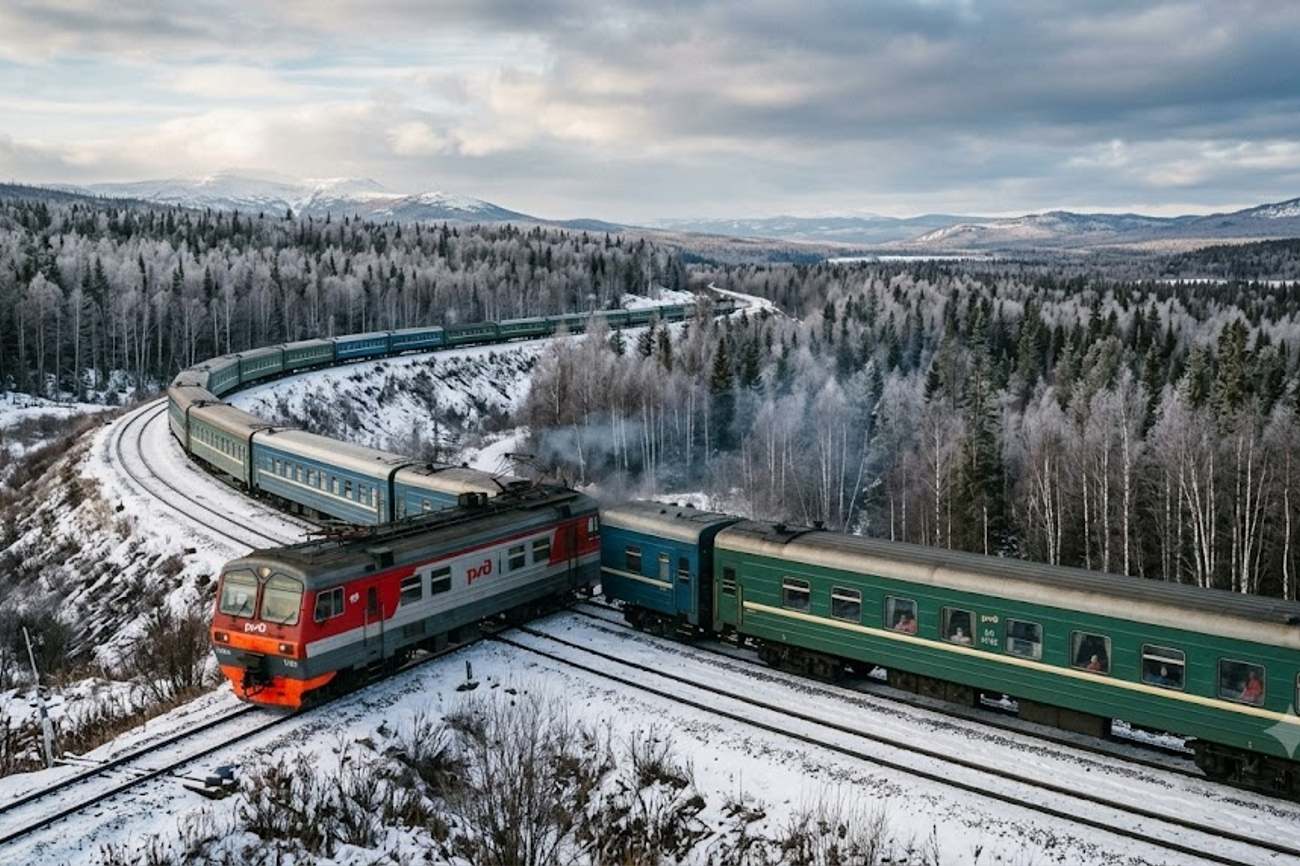
Image generated by AI
[Moscow, October 2023] — The rail corridor connecting Moscow to Pyongyang currently stands as the longest scheduled direct passenger train journey on earth, spanning more than 10,000 kilometres. This massive overland operation leverages the expansive infrastructure of the Russian Railways (RZD) network to bridge the gap between the Russian capital and North Korea, requiring passengers to remain onboard for eight consecutive days.
The route serves as the pinnacle of long-distance rail travel, utilizing a complex system of through-carriages and international transitions to navigate the vast Siberian wilderness and the Far East. While the journey is an anomaly in an era of high-speed aviation, it represents the maximum operational limit of scheduled passenger rail, connecting distant geopolitical hubs through some of the most remote landscapes on the planet.
The Mechanics of Ultra-Long-Haul Rail
The ability to operate journeys exceeding 9,000 kilometres relies heavily on "through-carriage" technology. This operational method allows specific sleeper cars to be detached from one locomotive and coupled to another at major junctions without requiring passengers to disembark. This system is essential for routes like the Moscow to Neryungri service, which covers 6,950 kilometres and terminates in southern Yakutia.
By utilizing these through-carriages, the rail network can maintain a seamless passenger experience across disparate regional lines. This is particularly evident on the Chita to Anapa route—a seasonal service stretching 7,070 kilometres—where passengers transition from eastern Siberia to the Black Sea coast over a period of five days and 15 hours.
Global Distance Benchmarks: Russian Rail Routes
Russia's geography necessitates these extreme distances. The following table outlines the primary long-distance corridors currently in operation, categorized by their total distance and estimated transit time.
| Route | Distance (km) | Duration | Key Regions Covered |
|---|---|---|---|
| Moscow $\rightarrow$ Pyongyang | 10,000+ | 8 Days | Siberia, Far East, North Korea |
| Moscow $\rightarrow$ Vladivostok (Rossiya) | 9,300 | ~7 Days | Trans-Siberian Corridor |
| Moscow $\rightarrow$ Vladivostok (Standard) | 9,000+ | 6.5 Days | Trans-Siberian Corridor |
| Kislovodsk $\rightarrow$ Neryungri | 7,960 | 6+ Days | North Caucasus, Far East |
| Chita $\rightarrow$ Adler | 7,500 | 6 Days | Siberia, Black Sea Coast |
| Chita $\rightarrow$ Anapa | 7,070 | 5 Days, 15 Hours | Siberia, Black Sea Coast |
| Moscow $\rightarrow$ Neryungri | 6,950 | Varies | Moscow, Southern Yakutia |
| Adler $\rightarrow$ Severobaykalsk | 6,880 | 5+ Days | Black Sea, Lake Baikal |
| Moscow $\rightarrow$ Chita | 6,200 | 4.5 Days | Urals, Eastern Siberia |
| Irkutsk $\rightarrow$ Anapa | 6,000 | 4-5 Days | Lake Baikal, Black Sea |
| Moscow $\rightarrow$ Severobaykalsk | 5,550 | 3 Days, 15 Hours | Urals, Lake Baikal |
| Moscow $\rightarrow$ Ulan-Ude | 5,500 | 4 Days | Urals, Siberia |
What This Means for Travelers
For the modern traveler, these routes are less about efficient transit and more about endurance and immersion. Unlike standard regional rail, these journeys function as mobile hotels. Passengers must choose between open sleeping berths (shared compartments) and private cabins, as they will be living in these spaces for up to a week.
Practical Passenger Impacts:
- Logistics: Travelers must account for significant "dead time." A trip from Moscow to Vladivostok consumes nearly a full week of a traveler's itinerary.
- Amenities: Onboard dining facilities are essential, though passengers are typically advised to carry supplementary supplies for journeys exceeding four days.
- Visa and Border Requirements: For the Moscow to Pyongyang route, travelers face stringent international border controls. This is not a standard tourist ticket; it requires specific diplomatic or approved travel authorization.
- Seasonality: Many of the longest routes, such as the Chita to Anapa or Adler to Severobaykalsk services, are seasonal. Booking these requires checking specific windows of operation rather than year-round schedules.
Infrastructure and Environmental Challenges
The routes described above are not merely long; they are geographically punishing. The trains must traverse the Ural Mountains and the Siberian wilderness, areas prone to extreme temperature fluctuations that can impact rail stability and heating systems.
The International Union of Railways (UIC) monitors these types of long-haul operations for safety and efficiency. The Russian network's ability to maintain schedules across 10,000 kilometres is a testament to the durability of their sleeper carriage design, which is specifically engineered for multi-day habitation. The transition from the humid Black Sea coast (Adler/Anapa) to the frigid regions of Yakutia or the Far East represents one of the most dramatic climatic shifts a passenger can experience on a single ticket.
The Legacy of the Trans-Siberian System
While the Moscow to Pyongyang route holds the distance record, the Trans-Siberian Railway remains the operational backbone of the region. The "Rossiya" train, covering 9,300 kilometres, is the gold standard for this experience. It connects Europe to the Pacific coastline, passing through major hubs including Yekaterinburg, Omsk, Novosibirsk, and Irkutsk.
The network serves as a vital economic artery, but for the global nomad, it offers a slow-travel alternative to the International Air Transport Association (IATA) regulated flight paths. While a flight from Moscow to the Far East takes hours, the rail equivalent takes days, providing a granular look at the cultural and geographic diversity of the Eurasian landmass.
FAQ: Ultra-Long-Haul Russian Rail 2023
How do passengers survive 8 days on a train? Trains are equipped with sleeper carriages containing beds, dining cars for meals, and basic hygiene facilities. Most passengers utilize private compartments for privacy and bring personal food supplies to supplement onboard dining.
Do I have to change trains on the Moscow to Neryungri route? No. This route utilizes through-carriage technology. Your specific carriage is detached from one train and attached to another, meaning you stay in your bed while the train configuration changes around you.
Are these trains available for international tourists? While the domestic Siberian routes are generally open to those with valid visas, the Moscow to Pyongyang route is highly restricted and typically limited to specific diplomatic or approved passenger groups.
What is the difference between the Rossiya and standard Moscow-Vladivostok trains? The Rossiya is a premium service covering approximately 9,300 kilometres with a focus on comfort and a slightly faster schedule (roughly seven days) compared to some slower, standard regional services.
The distance is the destination when the journey lasts a week.
#MoscowToPyongyang #TransSiberianRailway #RZD #SiberianRail #LongDistanceTravel2023 #VladivostokRail
Related Travel Guides
- How Did This Million Euro Abbey Investment Rewrite The Future Of Luxury Travel In Umbria, Find Out Now
- Porto Santo Beach Escape: Portugal’s 9km Golden Sand Island Sanctuary in the Madeira Archipelago
- Armenia Reshapes Yerevan Travel With Biometric Technology as Zvartnots e-gates Lead Nationwide Border Upgrade
Disclaimer
This article is for informational and educational purposes only. It does not constitute legal, financial, or professional advice. While we strive to provide accurate and up-to-date information, travel policies, regulations, and conditions change rapidly. Always verify information with official sources before making travel decisions. Nomad Lawyer makes no representations about the accuracy, reliability, completeness, or suitability of the information provided. Readers should consult qualified professionals for advice specific to their circumstances. The views expressed in this article are those of the author and do not necessarily reflect the views of Nomad Lawyer.
Preeti Gunjan
Contributor & Community Manager
A passionate traveller and community builder. Preeti helps grow the Nomad Lawyer community, fostering engagement and bringing the reader experience to life.
Learn more about our team →