Rotana Targets 25 Hotels in Egypt by 2030 to Establish Third-Largest Regional Market Amid 30 Million Visitor Surge

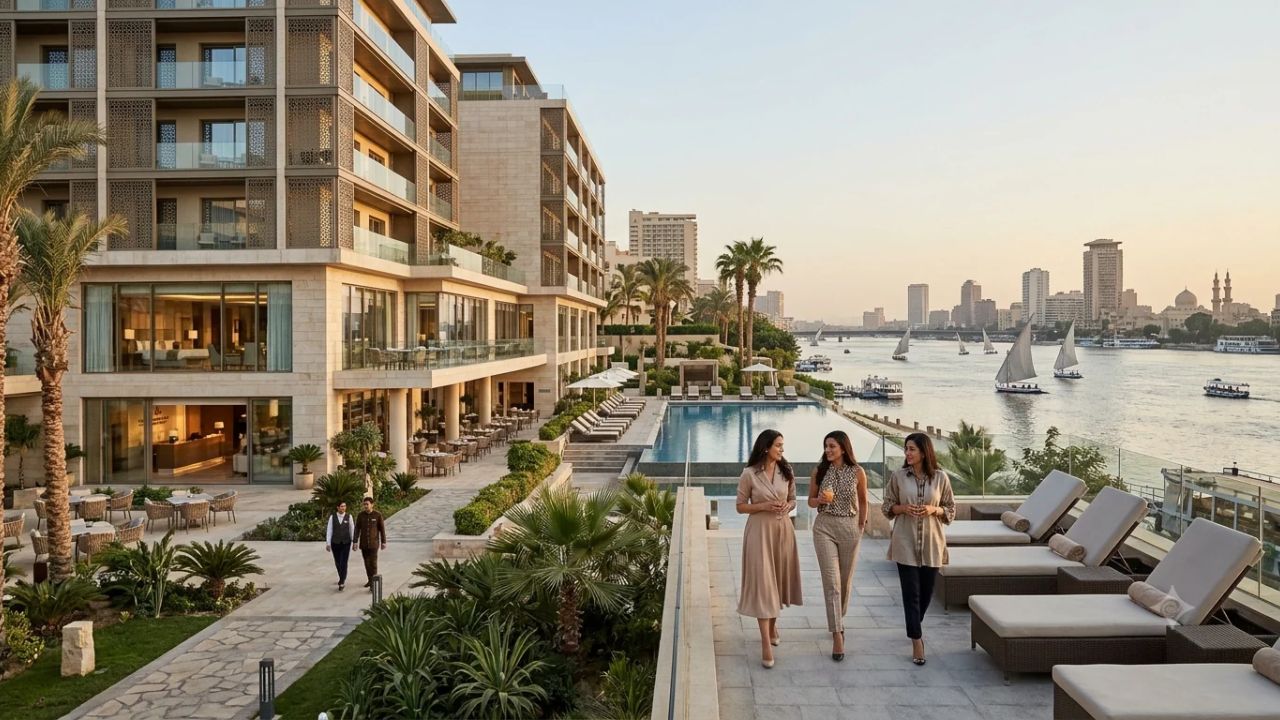
Abu Dhabi-headquartered hospitality giant Rotana Hotel Management Corporation has unveiled an ambitious strategic blueprint to scale its operating and development footprint in Egypt to 25 properties by 2030. Formally outlined during the Future Hospitality Summit Egypt 2026, the expansion initiative seeks to elevate Egypt into Rotana’s third-largest global operating market after the United Arab Emirates and Saudi Arabia. Supported by an existing base of three operational hotels and an active pipeline of eight committed developments comprising 3,469 combined rooms, the hotel group is targeting aggressive expansion across Cairo, Alexandria, Luxor, the Red Sea, and the Mediterranean North Coast to capitalize on Egypt’s national objective of welcoming 30 million international tourists annually.
The strategic pivot reflects profound structural transformations within Egypt's macroeconomic and tourism landscape. Following a record-breaking performance in 2025, when official figures from Egypt's State Information Service confirmed approximately 19 million international visitor arrivals, the North African nation has accelerated public and private capital deployments to expand hotel room inventories. To achieve the state's statutory target of 30 million annual arrivals by the end of the decade, industry analysts estimate Egypt requires upwards of 200,000 additional hospitality keys across luxury, mid-scale, and extended-stay segments.
Rotana's expansion model leverages asset-light hotel management agreements (HMAs) with prominent institutional real estate developers and regional sovereign funds. By deploying a multi-brand ecosystem spanning full-service luxury resorts, urban lifestyle concepts, and serviced hotel apartments, Rotana aims to capture expanding corporate travel, regional Gulf leisure demand, and long-stay digital nomad flows.
ROTANA HOTELS EGYPT 2030 EXPANSION MATRIX
| METRIC / BENCHMARK CURRENT STATUS (2026) STRATEGIC 2030 OBJECTIVE |
|---|
| ------------------------------------------------------------------------------------------------ |
| Operational Properties 3 Hotels (1,406 Keys) Substantial Portfolio Scaling |
| Committed Pipeline 8 Hotels (2,063 Keys) Under active construction/planning |
| Total Committed Footprint 11 Properties (3,469 Keys) Foundation for multi-regional reach |
| Long-Term Target Portfolio 25 Properties by 2030 Requires 14 additional signed hotels |
| Regional Portfolio Standing Fourth in MENA Targeted #3 (behind UAE and KSA) |
| National Tourism Context 19 Million Visitors (2025) 30 Million Visitors Statutory Target |
| Core Expansion Corridors Cairo, Alexandria, Luxor, Red Sea Riviera, Mediterranean North Coast |
Strategic Blueprint: The Road from 11 to 25 Hotels by 2030
During presentations at the Future Hospitality Summit Egypt 2026 (FHS Egypt), Rotana’s executive leadership detailed how the group intends to more than double its committed presence over the next four years.
At present, Rotana operates three signature properties in Egypt, providing a combined capacity of 1,406 rooms. These operational assets are reinforced by eight confirmed hotel projects in various stages of design and construction, which will inject 2,063 keys into the market. Together, this gives Rotana a firm existing platform of 11 hotels and 3,469 rooms.
To cross the threshold of 25 properties by 2030, Rotana is pursuing an additional 14 hotel management agreements. The company's expansion criteria prioritize conversions of existing independent properties seeking global distribution reach, mixed-use commercial developments in greater metropolitan centers, and master-planned coastal luxury communities.
Rotana Egypt Portfolio Growth Trajectory (Rooms & Keys)
-------------------------------------------------------------------------------------
Currently Operational (3 Hotels):     [1,406 Keys] ==================
Confirmed Pipeline (8 Hotels):        [2,063 Keys] ==========================
Total Committed Base (11 Hotels):     [3,469 Keys] ============================================
2030 Target Capacity (25 Hotels):     [Estimated 7,500+ Keys by 2030 Horizon]
-------------------------------------------------------------------------------------
Securing 25 operational and pipeline properties would cement Egypt as Rotana's third-largest market globally. Currently, the United Arab Emirates serves as Rotana’s primary market, where the group manages thousands of keys across Dubai, Abu Dhabi, and the Northern Emirates, followed by Saudi Arabia, where expansion is accelerating under Vision 2030. Elevating Egypt ahead of other regional hubs establishes North Africa as a central pillar of Rotana's long-term corporate valuation.
| Portfolio Phase | Number of Hotels | Total Room Inventory | Key Geographic Focus | Strategic Operational Role |
|---|---|---|---|---|
| Operational Assets | 3 Properties | 1,406 Keys | Red Sea, Greater Cairo | Established brand equity, active cash-flow generation |
| Active Pipeline | 8 Properties | 2,063 Keys | Cairo, Coastal Hubs | Mid-term capacity delivery, new brand concept rollouts |
| Committed Baseline | 11 Properties | 3,469 Keys | Urban & Resort Nodes | Foundation for unified regional sales & loyalty network |
| 2030 Target Objective | 25 Properties | ~7,500+ Keys (Est.) | Nationwide Footprint | Third-largest global market status; comprehensive coverage |
Geographic Diversification: Cairo, Alexandria, Luxor, and Coastal Corridors
Rotana's development strategy avoids geographic over-concentration by dispersing new properties across five distinct macroeconomic and tourism zones:
ROTANA TARGET EXPANSION HUBS ACROSS EGYPT
| Column 1 |
|---|
| REGION PRIMARY TRAVEL SEGMENTS DEVELOPMENT PRIORITIES |
| ------------------------------------------------------------------------------------------------ |
| Greater Cairo Corporate MICE, Diplomatic Missions, New Administrative Capital, West Cairo |
| Heritage Tourists (GEM & Pyramids) near Sphinx Airport, New Cairo |
| Alexandria Mediterranean Maritime Commerce, Waterfront business hotels, |
| Regional Business, Cultural Leisure Boutique urban heritage properties |
| Luxor Nile Cultural Cruises, Archaeological Bespoke heritage resorts, luxury |
| Expeditions, Global Heritage Tourism lodging near Valley of the Kings |
| Red Sea Riviera European Winter Sun, Marine Diving, All-inclusive family resorts, luxury |
| Leisure & Wellness Getaways wellness sanctuaries, eco-resorts |
| Mediterranean Sahel High-Net-Worth Gulf Vacationers, Ultra-luxury coastal retreats, |
| (North Coast) Domestic Summer Leisure, Yachting serviced summer residences |
Greater Cairo: Business Gateways, Diplomatic Hubs, and Archaeological Centers
Cairo functions as both Egypt’s economic engine and its primary international aviation gateway. Rotana’s expansion in the capital targets three distinct micro-markets:
- West Cairo and Giza: Driven by the operations of Sphinx International Airport (SPX) and the full public opening of the Grand Egyptian Museum (GEM), West Cairo is experiencing unprecedented international leisure demand. Rotana is evaluating upscale hotel and serviced apartment projects to accommodate cultural tourists visiting the Giza plateau.
- New Cairo and the Fifth Settlement: Serving as Cairo's private corporate and financial epicenter, New Cairo attracts steady multinational business travel and international conferences.
- The New Administrative Capital (NAC): As government ministries, foreign embassies, and regional corporate headquarters migrate east, the NAC represents a high-priority corridor for executive business hotels, convention facilities, and long-stay serviced apartments.
Alexandria: Mediterranean Commercial Vitality and Cultural Tourism
As Egypt’s primary Mediterranean seaport and second-largest metropolitan center, Alexandria presents strong fundamentals for hospitality development. Commercial shipping, industrial manufacturing, and regional banking drive corporate lodging demand year-round. Rotana is identifying opportunities along the Mediterranean waterfront to serve business travelers during the working week while capturing domestic weekend leisure and regional cultural tourists exploring the Bibliotheca Alexandrina and Greco-Roman heritage monuments.
Luxor: Capitalizing on the Upper Egypt Heritage Renaissance
Luxor represents the spiritual heart of classical Egyptian archaeology. With international travelers returning in force to explore the Valley of the Kings, Karnak Temple complex, and Luxor Temple, the city faces a structural shortage of modern, internationally branded luxury hotel rooms.
Rotana's interest in Luxor centers on delivering culturally sensitive, high-end hospitality that complements Nile river cruise itineraries. By establishing a luxury resort presence in Upper Egypt, Rotana can cross-sell curated heritage packages that seamlessly connect Cairo cultural stays with Luxor temple excursions.
The Red Sea Riviera: Upgrading Established Coastal Enclaves
Egypt's Red Sea destinations—including Sharm El Sheikh, Hurghada, El Gouna, and Marsa Alam—remain established engines of foreign currency generation, drawing millions of sun-seeking holidaymakers from Europe, Central Asia, and the Gulf.
Rotana’s growth in the Red Sea focuses on premium repositioning. Rather than competing in the commoditized budget charter market, Rotana is targeting upscale all-inclusive properties, dedicated diving retreats, and family wellness resorts that cater to higher-spending European independent travelers and Gulf vacationers seeking Red Sea marine recreation.
The Mediterranean North Coast (Sahel): The Next Frontier of Luxury Leisure
Egypt's North Coast (Sahel), stretching from Alexandria west to Marsa Matrouh, is undergoing an unprecedented multi-billion-dollar luxury real estate transformation. Catalyzed by the landmark $35 billion Ras El Hekma development agreement and substantial sovereign infrastructure investments, Sahel is evolving from a localized two-month domestic summer retreat into a world-class Mediterranean leisure destination.
Rotana is actively assessing luxury beachfront resorts and branded residential developments across the North Coast. These developments are engineered to attract high-net-worth travelers from the UAE, Saudi Arabia, and Kuwait who seek temperate summer climates, luxury yachting marinas, and upscale beachfront living within a three-hour flight from Gulf hubs.
Multi-Brand Architecture: Aligning Hotel Concepts with Market Needs
To successfully execute 25 hotel projects across diverse destinations, Rotana is deploying its multi-tiered brand architecture:
ROTANA BRAND DEPLOYMENT STRATEGY IN EGYPT
| Column 1 |
|---|
| BRAND CONCEPT TARGET MARKET SEGMENT KEY ATTRIBUTES |
| ------------------------------------------------------------------------------------------------ |
| Rotana Hotels & Resorts Upscale business and leisure Full-service upscale hospitality, |
| travelers conference hubs, signature dining |
| Arjaan Hotel Apartments Extended-stay corporate expats, Fully serviced suites, kitchenettes, |
| consultants, relocating families residential amenities, long leases |
| Centro by Rotana Modern business travelers, Smart design, accessible price point |
| millennials, budget corporate grab-and-go dining, tech-enabled |
| Rayhaan Hotels & Resorts Family-oriented travelers, Alcohol-free environment, holistic |
| regional GCC visitors wellness, culturally aligned dining |
| Edge by Rotana Independent hotel owners seeking Fast franchise onboarding, global |
| global distribution loyalty access, unique local design |
Full-Service Flagships: Rotana Hotels & Resorts
The flagship Rotana Hotels & Resorts brand will serve as the anchor for large-scale developments in Cairo, Alexandria, and prime coastal locations. These properties feature comprehensive meeting, incentive, conference, and exhibition (MICE) spaces, signature fine-dining restaurants, expansive pool decks, and full-service wellness spas designed to host international summits and major leisure gatherings.
Long-Stay Optimization: Arjaan Hotel Apartments
Extended-stay lodging represents one of the fastest-growing sectors in Middle Eastern hospitality. With multinational corporations expanding operations in Egypt and large-scale industrial projects requiring months-long consultant deployments, Arjaan Hotel Apartments by Rotana addresses clear market demand. Offering spacious studio, one-bedroom, and two-bedroom layouts with fully equipped kitchenettes and hotel amenities, Arjaan properties provide institutional owners with high average occupancy and stable cash flows.
Lifestyle and Value: Centro by Rotana
To capture Egypt's rapidly expanding domestic travel market and cost-conscious international business travelers, Rotana is evaluating rollout sites for Centro by Rotana. The lifestyle brand emphasizes smart spatial planning, modern digital check-in systems, communal co-working spaces, and convenient dining concepts, delivering modern design without the heavy overhead of traditional luxury hotels.
Independent Conversions: Edge by Rotana
A key accelerator for reaching 25 properties by 2030 is Edge by Rotana, the group’s collection brand launched to partner with established independent hotel owners. Edge allows operating properties to maintain their unique regional design identity while plugging into Rotana’s global sales engine, central reservation system, and loyalty network. This asset-light model enables rapid portfolio scaling with minimal capital expenditure.
Macroeconomic Drivers: Egypt's 30 Million Tourist Mandate
Rotana's long-term corporate commitment aligns directly with Egypt's national economic development strategy. The country's tourism sector has emerged as a critical pillar for foreign currency generation, employment, and fiscal stabilization.
Egypt National Tourism Expansion Trajectory
-------------------------------------------------------------------------------------
2025 International Arrivals (Achieved):   [19 Million Visitors] ========================
2030 National Statutory Target:          [30 Million Visitors] =====================================
Additional Hospitality Keys Required:    [200,000+ Keys Nationwide]
-------------------------------------------------------------------------------------
According to official data released by Egypt's State Information Service, the country welcomed approximately 19 million international visitors in 2025, outperforming regional recovery benchmarks and establishing a new historical record.
Building upon this momentum, the Egyptian government, through its National Tourism Strategy, has set an official target of attracting 30 million international tourists annually by 2030. Achieving this milestone requires widespread expansion across multiple infrastructure sectors:
- Hospitality Capacity Expansion: Egypt currently possesses approximately 220,000 operating hotel rooms. Accommodating 30 million visitors will require expanding national room capacity to over 420,000 keys, creating vast opportunities for experienced international hotel management operators like Rotana.
- Aviation Infrastructure and Connectivity: The government has invested heavily in modernizing airport infrastructure, expanding Cairo International Airport, upgrading Hurghada and Sharm El Sheikh terminals, and opening new regional gateways including Sphinx International Airport in Giza and New Alamein International Airport on the North Coast. Low-cost carrier subsidies and bilateral open-skies agreements continue to stimulate direct flights from key European and Asian feeder markets.
- High-Speed Inter-City Transport: The construction of Egypt's high-speed electric rail network—linking Ain Sokhna on the Red Sea through the New Administrative Capital and Cairo to Alexandria and New Alamein on the Mediterranean—will fundamentally streamline passenger transit, enabling international visitors to easily combine beach holidays with urban cultural tours.
- Heritage and Cultural Megaprojects: The phased public unveiling of the Grand Egyptian Museum, the restoration of Islamic Cairo, and extensive archaeological upgrades across Saqqara and Luxor have renewed global cultural interest in Egyptian heritage.
| Tourism Development Parameter | 2025 Baseline Benchmark | 2030 National Objective | Hospitality Sector Implication |
|---|---|---|---|
| Annual International Arrivals | 19 Million Visitors | 30 Million Visitors | 57.8% growth in visitor arrivals over five years |
| National Hotel Room Inventory | ~220,000 Operating Keys | 420,000+ Keys Needed | Urgent demand for 200,000+ newly built or rebranded rooms |
| Aviation Transit Capacity | Sphinx & Alamein Operational | Full Regional Open Skies | Direct charter & low-cost access to regional hubs |
| Inter-City Rail Transit | Conventional Rail Network | High-Speed Electric Rail | Seamless same-day transit between Red Sea, Cairo, and Sahel |
| Key Inbound Feeder Markets | Western Europe, Russia | Expanded GCC, India, China | High demand for recognized regional brands like Rotana |
Investment Landscape: Hotel Management Agreements and Institutional Partnerships
Rotana’s path toward 25 hotels by 2030 relies on an asset-light operating model centered on hotel management agreements (HMAs) with private institutional developers, real estate investment trusts (REITs), and sovereign investment vehicles.
During the Future Hospitality Summit Egypt 2026, Rotana executives engaged directly with major regional property owners. Key themes governing these commercial discussions included:
- Institutional Capital Deployment: Significant investment funds from the UAE and Saudi Arabia are flowing into Egyptian commercial real estate and leisure infrastructure. As a UAE-headquartered operator with deep brand equity across the Gulf, Rotana serves as a natural operating partner for Gulf-backed capital projects in Egypt.
- Inflation Protection and Operational Efficiency: In an operating environment shaped by currency devaluations and domestic inflation, institutional owners require hotel managers capable of driving cost efficiencies. Rotana's centralized regional procurement networks, energy-saving operational systems, and regional sales distribution provide owners with margin defense.
- Conversion Opportunities: Given high construction and financing costs for greenfield developments, many Egyptian property owners are prioritizing the conversion and rebranding of operating hotels. Rotana’s flexible brand standards enable rapid asset transitions that improve average daily rates (ADR) and revenue per available room (RevPAR).
Practical Advice for International and Regional Travelers Visiting Egypt in 2026/2027
As Egypt's hospitality infrastructure expands rapidly across major cities and resort coasts, travelers can optimize their itineraries by incorporating strategic planning considerations:
- Leverage Secondary Gateway Airports: When visiting Cairo for archaeological discovery, check for flights landing at Sphinx International Airport (SPX) rather than Cairo International (CAI). Sphinx Airport is located within 20 minutes of the Grand Egyptian Museum and Giza Plateau, bypassing downtown traffic.
- Combine Cultural Hubs with Coastal Retreats: With improved highway networks and emerging high-speed rail corridors, structure itineraries that pair 3 to 4 days of cultural exploration in Cairo or Luxor with restorative leisure along the Red Sea or Mediterranean North Coast.
- Book Brand-Managed Serviced Apartments for Extended Stays: Digital nomads, business consultants, and extended family groups should consider serviced hotel apartments like Arjaan by Rotana. These properties provide fully equipped kitchens, dedicated living rooms, and lower weekly or monthly rates compared to standard hotel rooms.
- Coordinate Summer Stays with Mediterranean Sahel Openings: Travelers planning summer journeys should consider the Mediterranean North Coast between June and September, where temperatures remain significantly milder than Cairo or Luxor, and new luxury beach resorts provide world-class coastal amenities.
Frequently Asked Questions
What are Rotana's expansion plans in Egypt for 2030?
Rotana plans to expand its Egyptian hotel portfolio to 25 properties by 2030. Announced at Future Hospitality Summit Egypt 2026, the strategy aims to make Egypt the company's third-largest global operating market after the United Arab Emirates and Saudi Arabia.
How many properties does Rotana currently have in Egypt?
Rotana currently operates three properties in Egypt with 1,406 rooms, backed by an active pipeline of eight committed hotel developments comprising 2,063 rooms. This provides an established operational base of 11 hotels and 3,469 rooms.
Which Egyptian cities and regions is Rotana targeting for new hotels?
Rotana is targeting developments across five core geographic zones: Greater Cairo (commercial centers, New Administrative Capital, and West Cairo near the Grand Egyptian Museum), Alexandria, Luxor, the Red Sea Riviera, and the Mediterranean North Coast (Sahel).
How does Rotana's expansion align with Egypt's national tourism goals?
Egypt welcomed approximately 19 million international visitors in 2025 and has established an official target of attracting 30 million international tourists annually by 2030. Accommodating this growth requires more than 200,000 new hotel rooms nationwide, creating substantial demand for experienced international hospitality managers like Rotana.
Related Travel Guides
- Jordan Tourism Receipts Reach Record $6.35 Billion as UAE and GCC Travelers Power Sector Transformation
- Morocco Expands Thematic Tourism Roadmap as Pan-African Regional Visas and Aviation Reforms Advance
- Japan Sparks Luxury Travel Surge While Australia and New Zealand Cut Spending to Protect Holiday Budgets
This article is for informational purposes. Flight routes, passenger regulations, visa rules, and transit advisories are subject to change by airlines and aviation authorities. Readers are advised to verify schedules and travel documentation with relevant carriers and border agencies before departure.
Related Stories

Four Seasons Hotel Jakarta Unveils Famiglia Lunch Club at ALTO: Elevating Italian Skyline Dining in the Golden Triangle
Kyoto Hotel Rates Climb as Occupancy Slips: How Japan's New Tiered Accommodation Tax and Regional Shifts Impact Travel Budgets