Jordan Tourism Receipts Reach Record $6.35 Billion as UAE and GCC Travelers Power Sector Transformation in 2026

Jordan’s tourism economy achieved a record financial milestone during the first nine months of 2026, generating JD 4.50 billion ($6.35 billion USD) in sector revenues as an influx of travelers from the United Arab Emirates, Saudi Arabia, and the broader Gulf Cooperation Council offset double-digit contractions from Western markets. Official data released under the Executive Programme of the Economic Modernisation Vision (2026–2029) highlights a 4.9% year-on-year increase in total earnings, anchored by 5.66 million international arrivals and a historic 21.5% revenue jump in September alone. Strategic diversification into premium Gulf leisure, Asian religious heritage routes, and domestic travel initiatives has effectively stabilized the Kingdom's hospitality ecosystem against regional volatility.
The macroeconomic transformation of Jordan’s hospitality sector in 2026 provides a compelling blueprint for how tourism-dependent economies navigate complex regional geopolitical headwinds. While traditional transatlantic and Western European tour groups softened amid regional tensions, targeted marketing campaigns by the Jordan Tourism Board (JTB) and proactive bilateral aviation connectivity successfully redirected visitor flows. High-spending travelers from the UAE, Saudi Arabia, Kuwait, Qatar, and Oman, paired with accelerating arrivals from China, India, and Southeast Asia, have reshuffled the Kingdom's tourism demographic baseline.
Beyond foreign capital injections, Jordan strengthened its macro-fiscal stability by retaining domestic consumer liquidity. Outbound travel spending by Jordanian nationals and resident foreign expatriates dropped by 4.9% between January and September 2026, settling at JD 1.07 billion ($1.51 billion USD). This contraction in the national net travel deficit, coupled with robust inbound growth, delivered strong fiscal reinforcement for the central government's wider economic modernization mandates.
JORDAN TOURISM FISCAL PERFORMANCE (Q1-Q3 2026)
| CORE METRIC 2026 PERFORMANCE (JAN-SEP) YEAR-ON-YEAR CHANGE |
|---|
| ------------------------------------------------------------------------------------------------ |
| Total Tourism Receipts JD 4.50 Billion ($6.35B USD) +4.9% vs. 2025 |
| September Monthly Revenue JD 563 Million ($794.3M USD) +21.5% vs. September 2025 |
| Total International Arrivals 5.66 Million Visitors Diversified demographic footprint |
| Arab Market Receipts Regional Driver +18.8% year-on-year |
| Asian Source Market Receipts Emerging Cultural Driver +12.3% year-on-year |
| Outbound Travel Expenditure JD 1.07 Billion ($1.51B USD) -4.9% (Retained Domestic Liquidity) |
| Expatriate Jordanian Arrivals 1.25 Million Entries 22.1% of Total Inbound Volume |
Macroeconomic Review: Record Q3 Receipts and Fiscal Deficit Reduction
The comprehensive third-quarter 2026 performance audit published by the Government Performance and Achievement Monitoring Unit at the Prime Ministry confirms that Jordan's tourism sector entered an accelerated growth phase during the late summer cycle. Total inbound tourism earnings reached JD 4.50 billion ($6.35 billion USD) during the January-to-September period, representing a 4.9% increase compared to the corresponding nine-month timeframe in 2025.
A decisive growth catalyst occurred in September 2026, when monthly tourism receipts jumped 21.5% year-on-year to reach $794.3 million (approximately JD 563 million). This late-season surge proved vital in pushing national tourism revenues past projected fiscal benchmarks, demonstrating strong market resilience as regional leisure travel entered its autumn peak.
Jordan Monthly Tourism Receipts Trend (2026 Milestone)
-------------------------------------------------------------------------------------
January-September Total Revenue:       JD 4.50 Billion ($6.35B) [+4.9% YoY]
September 2026 Standalone Revenue:     JD 563 Million ($794.3M) [+21.5% YoY]
Outbound Spending by Residents:        JD 1.07 Billion ($1.51B) [-4.9% Deficit Drop]
-------------------------------------------------------------------------------------
The expansion of inbound receipts coincided with a disciplined contraction in outbound travel spending. Expenditures by Jordanian nationals and residents traveling overseas fell to JD 1.07 billion ($1.51 billion USD), down 4.9% from 2025 levels. By retaining disposable consumer capital within the domestic economy and expanding inbound foreign exchange receipts, Jordan narrowed its travel trade deficit, providing essential foreign currency reserves for the Central Bank of Jordan and bolstering national liquidity.
| Fiscal Indicator | Jan–Sep 2025 (Baseline) | Jan–Sep 2026 (Reported) | Metric Variance | Economic Significance |
|---|---|---|---|---|
| Inbound Tourism Revenue | JD 4.29 Billion ($6.05B) | JD 4.50 Billion ($6.35B) | +4.9% | Record nine-month gross foreign exchange receipts |
| September Inbound Receipts | $653.7 Million | $794.3 Million (JD 563M) | +21.5% | Highest single-month growth rate of the fiscal year |
| Outbound Resident Spending | JD 1.12 Billion ($1.58B) | JD 1.07 Billion ($1.51B) | -4.9% | Enhanced capital retention and deficit contraction |
| Total Inbound Visitors | 5.51 Million | 5.66 Million | +2.7% | Successful regional demographic realignment |
| Expatriate Jordanian Entries | 1.30 Million | 1.25 Million | -4.1% spend | Represented 22.1% of total inbound visitor entries |
The Gulf Engine: UAE and Regional Arab Markets Drive Inbound Earnings
The central driver of Jordan’s revenue expansion in 2026 has been the performance of Arab markets, which registered an 18.8% year-on-year increase in aggregate receipts. Within this regional segment, travelers from the Gulf Cooperation Council (GCC) demonstrated the highest expenditure per visitor and exceptional booking consistency.
GULF COOPERATION COUNCIL INBOUND DYNAMICS
| Column 1 |
|---|
| SOURCE COUNTRY PRIMARY TRAVEL MOTIVATION KEY GEOGRAPHIC HUBS IN JORDAN |
| ------------------------------------------------------------------------------------------------ |
| United Arab Emirates High-end wellness, luxury nature Amman 5-star hotels, Dead Sea resorts, |
| retreats, boutique city escapes Ayla Oasis coastal enclave in Aqaba |
| Saudi Arabia Family leisure, summer highlands, Amman shopping corridors, Ajloun hills, |
| medical and therapeutic treatments Specialized private hospitals & clinics |
| Kuwait, Qatar, Oman Private desert glamping expeditions, Wadi Rum luxury dome camps, Red Sea |
| exclusive diving, bespoke heritage charter yachts, Petra VIP access |
| Levant & N. Africa Cross-border business, trade forums, Urban Amman, Irbid commercial zones, |
| (Iraq, Egypt, Pal.) family reunification, transit stays Zarqa wholesale distribution centers |
United Arab Emirates: The Premium Wellness and Luxury Leisure Influx
Travelers originating from the United Arab Emirates have emerged as Jordan's fastest-expanding premium demographic. Emirati travelers are selecting Jordan for luxury wellness escapes, architectural retreats, and short-break leisure journeys.
This growth has been unlocked by direct air links connecting Dubai International (DXB), Abu Dhabi International (AUH), and Sharjah International (SHJ) to both Queen Alia International Airport (AMM) in Amman and King Hussein International Airport (AQJ) in Aqaba. With flight durations under three hours, Jordan has established itself as an accessible weekend getaway for Gulf expatriates and Emirati nationals.
Hospitality data indicates heavy Emirati patronage across five-star properties along the Dead Sea hotel strip, boutique heritage properties in historic Amman, and the master-planned Ayla Oasis waterfront community in Aqaba, where private residences, championship golf courses, and luxury marinas cater directly to Gulf tastes.
Saudi Arabia: High-Volume Cross-Border Family and Medical Tourism
Saudi Arabia remains the single largest volume driver among foreign arrivals to Jordan. Shared land borders, historical ties, and extensive direct flights between Riyadh, Jeddah, Dammam, and Amman sustain high border traffic.
Saudi travel patterns in 2026 were concentrated across four distinct categories:
- Summer Mountain Retreats: Escaping peak Gulf heat for the temperate northern highlands of Ajloun, Jerash, and Salt.
- Family Entertainment and Retail Leisure: Multi-generational family stays in Amman, patronizing shopping districts, culinary avenues, and cultural performances.
- Advanced Healthcare and Therapeutic Services: Direct utilization of Jordan's internationally accredited private hospital network in Amman for specialized medical procedures.
- Dead Sea Dermatology and Rehabilitation: Wellness stays leveraging the unique mineral waters and hyper-saline environment of the Jordan Rift Valley.
Kuwait, Qatar, and Oman: High-Value Bespoke and Experiential Travel
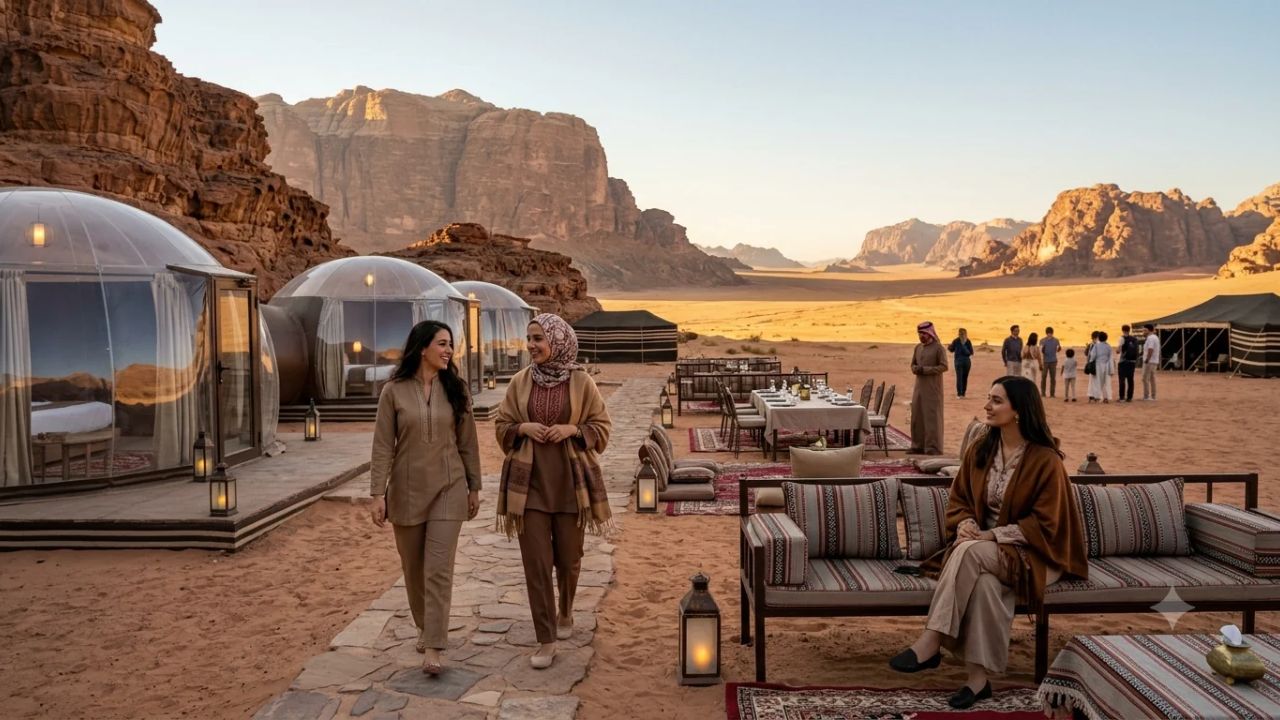
Visitors from Kuwait, Qatar, and Oman contributed significantly to luxury lodging earnings. These travelers exhibited a strong preference for experiential luxury, booking high-end bubble domes and luxury bedouin camps in Wadi Rum, private chartered yachts along the Gulf of Aqaba, and curated, privately guided archaeological tours through Jerash, Petra, and Umm Qais.
The Levant and North Africa: Consistent Cross-Border Commerce
Beyond the Arabian Peninsula, travelers from neighboring Arab states provided steady baseline revenues. Visitors from Iraq, Egypt, and the Palestinian territories generated essential activity across commercial hospitality, trade delegations, transit accommodation, and family visits, maintaining hotel occupancy in secondary urban centers outside traditional tourist corridors.
Asian Market Expansion: Religious Tourism, Pilgrimage Routes, and Cultural Circuits
Complementing the regional Gulf surge, Asian source markets delivered an impressive 12.3% year-on-year increase in inbound tourism revenue during the first nine months of 2026. This performance reflects long-term promotional investments by the Jordan Tourism Board across key South and East Asian metropolitan centers.
Asian Market Revenue Growth (+12.3% Year-on-Year)
-------------------------------------------------------------------------------------
India:               MICE conferences, destination weddings, luxury heritage tours
China:               Resumed group tours, Nabataean & Greco-Roman archaeology focus
South Korea:         Christian pilgrimage routes, biblical landmarks, UNESCO sites
Malaysia/Indonesia:  Islamic heritage circuits, shrines of the Sahaba, regional tours
-------------------------------------------------------------------------------------
India: MICE Corporate Events, Destination Weddings, and Leisure
Tier-one metropolitan hubs across India—including Mumbai, New Delhi, and Bengaluru—generated strong visitor growth. Streamlined electronic visa approvals and competitive group travel packages allowed Jordan to capture high-spending Indian incentive corporate gatherings (MICE) and destination weddings. Indian leisure travelers increasingly paired Petra and Wadi Rum with Dead Sea resort packages.
China: Organized Heritage Groups and Classical Antiquities
Following the complete restoration and expansion of approved group leisure travel, Chinese visitor numbers to Jordan's ancient architectural sites expanded rapidly. Chinese cultural travelers prioritized comprehensive itineraries featuring the Greco-Roman ruins of Jerash, the mosaic heritage of Madaba, and the Nabataean rock-cut architecture of Petra.
South Korea: Cultural Discovery and Christian Pilgrimage
South Korean arrivals maintained steady growth, driven by a combination of general cultural tourism and faith-based Christian pilgrimage travel. Delegations followed established biblical routes connecting Mount Nebo, Bethany Beyond the Jordan, and Mukawir (Machaerus), generating high hotel occupancy in Madaba and the Jordan Valley.
Malaysia and Indonesia: Islamic Heritage Circuits
Organized tour operators in Southeast Asia expanded dedicated Islamic heritage circuits across the Kingdom. Malaysian and Indonesian travelers journeyed to Jordan to visit the shrines and burial sites of the Prophet’s companions (Sahaba) in southern Jordan, the battlefield of Mutah in Karak, and historical landmarks across Amman and the northern governorates, frequently integrating Jordan into multi-destination regional religious journeys.
Mitigating Western Market Contractions and Leveraging the Expatriate Bedrock
The double-digit expansion across Arab (+18.8%) and Asian (+12.3%) source markets provided a vital buffer against sharp contractions observed across long-haul Western markets during the first nine months of 2026.
Western Market Revenue Contractions vs. Expatriate Bedrock (2026)
-------------------------------------------------------------------------------------
European Source Markets:       [-23.7% Revenue Drop] Regional geopolitical sensitivity
United States & Americas:      [-16.3% Revenue Drop] Uncoupling multi-country itineraries
Jordanian Expatriates:         [-4.1% Spend Drop]   1.25M arrivals (22.1% of total)
-------------------------------------------------------------------------------------
European Downturn: Aviation Realignment and Geopolitical Anxiety
Tourism revenue originating from European countries fell by 23.7% year-on-year. Heightened geopolitical sensitivities across the broader Middle East prompted European consumer caution across traditional source markets such as the United Kingdom, Germany, France, and Italy.
This downturn directly impacted budget airline frequencies. Low-cost carriers that had driven substantial European tourist volume in previous years reduced scheduled rotations and consolidated chartered flight capacity into Queen Alia International Airport and King Hussein International Airport. In response, national tourism authorities worked to position Jordan as a stable, secure, and standalone destination separate from regional turbulence.
The Americas: Uncoupling the Holy Land Tour Circuit
Receipts from the United States and the wider Americas dropped by 16.3% during the nine-month period. Historically, American leisure travelers visited Jordan as part of extended multi-country Holy Land itineraries. When cross-border itineraries were disrupted by regional instability, tour operators faced widespread cancellations. The Jordan Tourism Board and private inbound agencies countered this trend by aggressively marketing Jordan as an independent, standalone luxury destination featuring distinct cultural, adventure, and culinary assets.
Jordanian Expatriates: The Bedrock Demographic
Jordanians residing abroad represented the structural bedrock of the national travel economy. While total financial expenditure by overseas Jordanians registered a slight 4.1% decline, expatriate arrivals totaled approximately 1.25 million entries between January and September 2026.
Representing 22.1% of all international entries into the Kingdom (out of 5.66 million total visitors), expatriate Jordanians sustained domestic airline passenger loads, utilized regional hospitality services, and channeled vital remittances into local commerce during summer holidays and religious celebrations.
| International Source Demographic | Jan–Sep 2026 Financial Trajectory | Key Operational Factors |
|---|---|---|
| Arab Source Nations | +18.8% Revenue Increase | High spending per visitor from UAE, Saudi Arabia, Kuwait, Qatar |
| Asian Source Nations | +12.3% Revenue Increase | Growth in Indian MICE, Chinese cultural tours, and SE Asian pilgrimage |
| European Nations | -23.7% Revenue Decline | Flight schedule consolidations and consumer geopolitical anxiety |
| United States & Americas | -16.3% Revenue Decline | Disruption of traditional multi-destination Holy Land itineraries |
| Jordanian Expatriates | -4.1% Spend / 1.25M Entries | Accounted for 22.1% of total arrivals; vital foundational economic support |
Historic and Natural Landmark Performance: Aqaba, Petra, and Wadi Rum
Jordan's national archaeological parks, biosphere reserves, and coastal resorts recorded 1.93 million visits between January and September 2026. Footfall patterns reflect changing traveler preferences and source market realignments:
Landmark Footfall Distribution (1.93 Million Total Landmark Visits)
-------------------------------------------------------------------------------------
Aqaba Overnight Visitors:       [656,600] ===================================
Petra Archaeological Park:      [362,000] ===================
Wadi Rum Protected Area:        [219,100] ============
Other Sites (Jerash, Salt, etc):[692,300] =====================================
-------------------------------------------------------------------------------------
- Aqaba (656,600 Overnight Visitors): Topping the national destination roster, the coastal city benefited from its status as a premier Red Sea leisure hub. Aqaba attracted sustained demand for coral reef diving, yacht charters, duty-free retail, and high-end resort living at Tala Bay and Ayla Oasis, supported by regular domestic and regional flights.
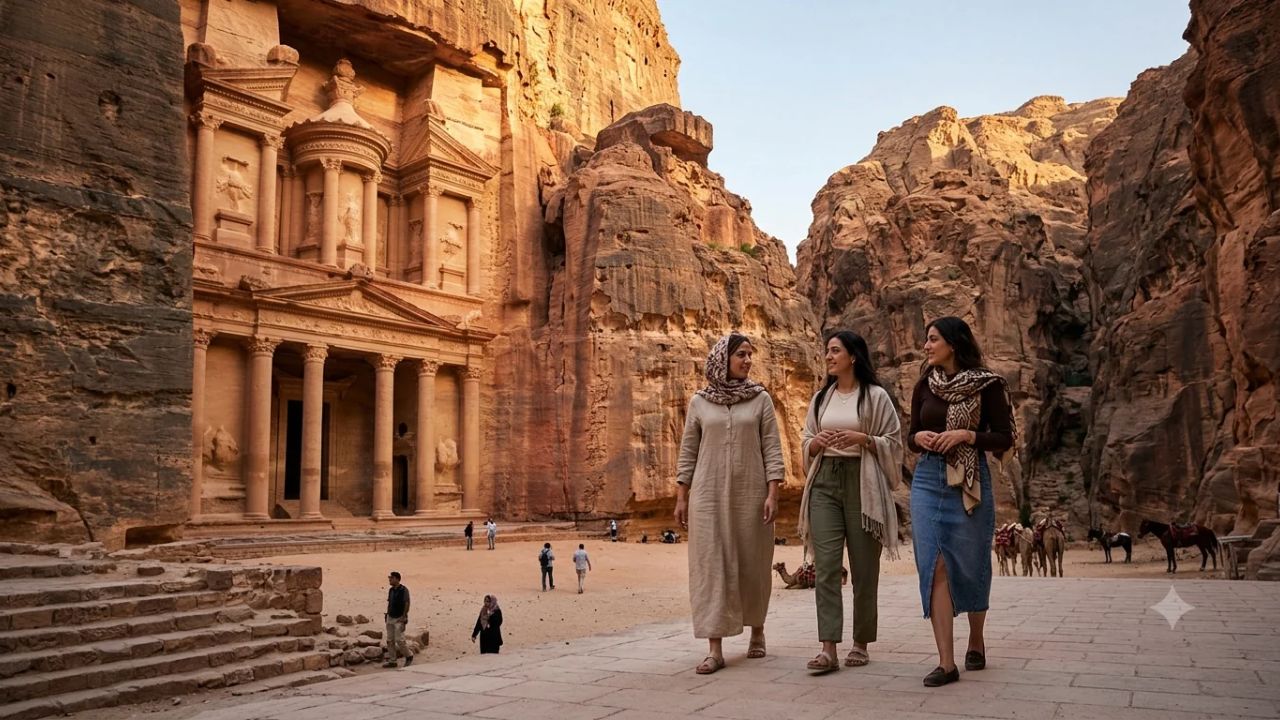
- Petra (362,000 Visitors): The ancient Nabataean capital remained the cultural centerpiece of the Kingdom. While group tour volume from Western Europe softened, specialized promotions across Asian and Gulf markets helped maintain footfall, sustaining licensed tour guides, horse-carriage operators, and local hospitality providers throughout Wadi Musa.
- Wadi Rum Protected Area (219,100 Visitors): The desert reserve maintained strong occupancy across its luxury bedouin camps and geodesic bubble domes. Wadi Rum’s global reputation as a premier film production location, coupled with eco-trekking and astronomy tourism, drew steady engagement from independent international travelers and regional weekenders.
Domestic Tourism Mobilization: The "Urdunna Jannah" Program
To ensure that tourism revenues circulate into rural communities and secondary governorates, the Ministry of Tourism and Antiquities expanded its flagship domestic initiative, "Urdunna Jannah" (Our Jordan Is Paradise campaign). The subsidized program makes heritage and nature travel affordable for local families while directing capital to small businesses outside major metropolitan centers:
- 202,000 Domestic Participants: Jordanian citizens joined subsidized weekend and multi-day cultural journeys across the country.
- 6,430 Dispatched Group Trips: Coordinated transport fleets moved participants from major cities into regional attractions.
- Decentralized Economic Impact: Domestic travel spending directly supported family-owned traditional restaurants, women's artisanal cooperatives, certified local transport operators, and rural homestays from the olive groves of Umm Qais to the southern cliffs of Dana.
"URDUNNA JANNAH" DOMESTIC TOURISM IMPACT (2026)
| PROGRAM METRIC RECORDED OUTPUT ECONOMIC BENEFIT |
|---|
| ------------------------------------------------------------------------------------------------ |
| Total Domestic Participants Over 202,000 Citizens Affordable, accessible family exploration |
| Organized Excursions 6,430 Group Trips Mobilized domestic transport and bus fleets |
| Community Beneficiaries Hundreds of SMEs Direct revenue for rural eateries & crafts |
| Geographic Reach All 12 Governorates Capital redistribution beyond urban centers |
Cultural Economy and Event Tourism: Entertainment as a Strategic Driver
Event tourism has become a primary pillar of Jordan's Economic Modernisation Vision, transforming the Kingdom from a seasonal sightseeing stop into a regional entertainment hub. During the first nine months of 2026:
- 9 Major International Productions: Staged across historic amphitheatres and contemporary arenas, featuring acclaimed musical ensembles, orchestral concerts, and theatrical productions.
- 42,000 Concert Attendees: Major productions convened broad audiences, with more than 24,000 attendees traveling from outside Jordan. This 57% international visitor ratio confirms the commercial viability of event tourism in driving hotel bookings and restaurant spending.
- Digital Platform calendar.jo: The government launched and expanded a centralized digital portal, aggregating 189 national events spanning culinary festivals, handicraft exhibitions, marathon competitions, and film showcases to facilitate visitor trip planning.
Infrastructure Upgrades, Religious Heritage, and Environmental Standards
To modernize the visitor journey and protect national heritage assets, Jordan executed extensive capital regeneration works across major historical and environmental sites in 2026:
Baptism Site (Bethany Beyond the Jordan) Master Plan
Formal development agreements were finalized for designated land plots adjacent to the UNESCO World Heritage Baptism Site. The master plan establishes dedicated hospitality zones, eco-lodges, and pilgrim accommodation centers designed to host extended religious stays, international theological conferences, and quiet contemplation along the Jordan River.
Heritage Regeneration in Historic Downtown As-Salt
Following its inscription as a UNESCO World Heritage site for its culture of hospitality and architectural harmony, Old Salt completed comprehensive urban rehabilitation. Historic yellow sandstone facades were restored, walking trails modernized, and community-led visitor centers inaugurated, turning the hillside town into an active hub for cultural walking tours and local culinary experiences.
Northern Eco-Tourism and the Ajloun Forest Reserve
In northern Jordan, extensive upgrades were completed on the state-of-the-art visitor complex at Ajloun National Park. Operating alongside the Ajloun Cable Car (Teleferique), the modernized center offers educational environmental exhibits, botanical trails, and panoramic viewing platforms, driving strong year-round eco-tourism into the surrounding oak forests.
Nationwide Environmental Upgrades across Heritage Monuments
Jordan integrated modern conservation standards across its primary archaeological assets:
- Water Conservation: Advanced low-flow water fixtures were installed across visitor facilities at 46 key archaeological sites, cutting water consumption in fragile desert and semi-arid zones.
- Waste Management and Recycling: Deployed 88 dedicated waste-sorting and recycling hubs across multiple governorates, establishing structured recycling protocols at major monuments including Jerash, Petra, and Mount Nebo.
CAPITAL REGENERATION & SUSTAINABILITY INITIATIVES
| Column 1 |
|---|
| SITE / INITIATIVE PROJECT SCOPE STRATEGIC OUTCOME |
| ------------------------------------------------------------------------------------------------ |
| Bethany Beyond the Jordan Pilgrim accommodation & eco-zones Expanded multi-day faith stays |
| Historic Downtown As-Salt Heritage trail & facade renewal Authentic community walking tours |
| Ajloun Forest Complex Modern visitor education center Enhanced northern eco-tourism |
| 46 Archaeological Sites Water-saving plumbing retrofits Resource conservation in arid zones |
| 88 Recycling Stations Regional waste sorting deployment Clean, modern visitor environments |
Strategic Takeaways for International Travelers Visiting Jordan in 2026/2027
Travelers planning journeys to Jordan across late 2026 and 2027 can optimize their itineraries by incorporating key sector updates:
- Leverage Diversified Aviation Routes: Take advantage of expanded flight networks connecting Gulf hubs (Dubai, Abu Dhabi, Sharjah) directly to Aqaba for streamlined access to the Red Sea, Wadi Rum, and southern Jordan, avoiding overland transit from Amman when prioritizing the south.
- Utilize the Jordan Pass: International visitors staying a minimum of three nights should purchase the unified Jordan Pass prior to departure. The pass waives entry visa fees and grants prepaid admission to over 40 archaeological parks, including Petra and Jerash.
- Explore Beyond the Golden Triangle: While Petra, Wadi Rum, and Aqaba form Jordan's core sightseeing circuit, dedicate time to northern cultural hubs like As-Salt, Jerash, and the Ajloun forest trails, which offer uncrowded heritage discovery and authentic community engagement.
- Monitor the calendar.jo Event Schedule: Check the official cultural calendar before departure to coordinate trips with musical festivals, artisan fairs, and regional sporting events staged in historic amphitheatres and urban centers.
Frequently Asked Questions
What were Jordan's total tourism earnings for the first nine months of 2026?
Jordan’s tourism receipts reached a record JD 4.50 billion ($6.35 billion USD) between January and September 2026, representing a 4.9% increase compared to the same period in 2025. This growth was boosted by a 21.5% year-on-year surge in September alone, which generated $794.3 million.
Which international source markets drove Jordan's tourism revenue growth?
Revenue growth was driven primarily by an 18.8% increase in receipts from Arab nations, with premium travelers from the United Arab Emirates and Saudi Arabia leading the Gulf segment. In addition, Asian source markets grew by 12.3%, propelled by Indian business and wedding groups, Chinese heritage tours, and Southeast Asian religious pilgrimage circuits.
How did Jordan offset declines from European and American visitors?
Jordan compensated for a 23.7% decline in European revenue and a 16.3% decline in American revenue by expanding direct flight connectivity with Gulf partners, promoting standalone luxury and cultural itineraries, and relying on its expatriate demographic. Approximately 1.25 million Jordanian expatriates visited during the first nine months of 2026, representing 22.1% of total international entries.
What is the "Urdunna Jannah" program and what did it achieve in 2026?
"Urdunna Jannah" (Our Jordan Is Paradise campaign) is Jordan’s national domestic tourism initiative operated by the Ministry of Tourism and Antiquities. During the first nine months of 2026, the program subsidized travel for over 202,000 citizens across 6,430 organized group trips, channeling economic benefits directly into rural communities, local restaurants, and transport providers across all 12 governorates.
Related Travel Guides
This article is for informational purposes. Flight routes, passenger regulations, visa rules, and transit advisories are subject to change by airlines and aviation authorities. Readers are advised to verify schedules and travel documentation with relevant carriers and border agencies before departure.
Related Stories
Morocco Expands Thematic Tourism Roadmap as Pan-African Regional Visas, Aviation Reforms, and Community Models Advance in 2026

Portugal Showcases Évora to Canadian Travel Buyers as Guest Nights Climb 7.5% Across Regional Heritage Corridors