Morocco Expands Thematic Tourism Roadmap as Pan-African Regional Visas, Aviation Reforms, and Community Models Advance in 2026

African sovereign governments and regional economic communities are advancing fundamentally distinct tourism roadmaps in late 2026, highlighted by Morocco’s nine-theme experiential travel overhaul alongside sweeping cross-border visa pacts in East and Southern Africa, aviation tax cuts in West Africa, and revenue-sharing conservation models in Rwanda.
Rather than operating under a single centralized continental policy, Africa’s tourism development is characterized by autonomous regional initiatives tailored to specific geographical, economic, and logistical realities. Across North Africa, Morocco is executing an ambitious strategic roadmap designed to decentralize tourism away from Marrakech and Agadir, guiding visitors into Atlas mountain trekking, desert circuits, artisanal crafts, and rural gastronomy. Simultaneously, multilateral economic blocs are addressing the structural barriers that have historically hindered intra-African and multi-country international travel, including high airfares, restrictive border procedures, and fragmented hotel quality standards.
From the East African Community’s ten-year marketing master plan ahead of the 2027 Africa Cup of Nations to the Southern African Development Community’s progress on the SADC UNIVISA pilot, the continent is undergoing an operational transformation. The definitive measure of these strategic frameworks will not be determined by high-level ministerial declarations, but by whether reforms deliver tangible price reductions, seamless border crossings, and direct economic dividends to local communities and small tourism enterprises.
Fragmented Ambitions: Africa's Diversified Regional Tourism Strategies
The contemporary African travel landscape is defined by diverse national and regional development pathways. While national governments recognize tourism as a primary driver of foreign exchange receipts, infrastructure investment, and job creation, their operational approaches reflect distinct regional priorities.
| Region / Sovereign State | Core Strategic Tourism Initiative | Key Mechanism and Geographic Scope | Implementation Status and Practical Operational Reality |
|---|---|---|---|
| Morocco | Experiential Tourism Roadmap | 9 thematic pillars and 5 cross-cutting cultural areas | National execution; expanding regional flights, hotel standards, and artisan training |
| East African Community (EAC) | 2027–2036 Regional Marketing Plan | 8 member states; joint promotion and AFCON 2027 leverage | Adopted in October 2026; requires unified border systems and common hotel plaques |
| Southern Africa (SADC) | SADC Tourism UNIVISA Pilot | 5 pilot nations: Angola, Mozambique, Namibia, South Africa, Zimbabwe | Approved in August 2026; revenue-sharing and fee-collection protocols being finalized |
| KAZA Transfrontier Area | KAZA UNIVISA Operational Scheme | Zambia and Zimbabwe, plus Kazungula day-trips to Botswana | Fully operational US$50 30-day visa; does not permit full travel across all 5 KAZA nations |
| West Africa (ECOWAS) | Aviation Cost Reduction Policy | Removal of select taxes; 25% cut in passenger and security charges | Ghana established monitoring committee in August 2026; regional effective dates diverge |
| South Africa | Tourism Growth Partnership Plan | 5 priorities: access, marketing, safety, products, jobs | Real-time performance dashboard; sector supported 954,000 direct jobs in 2024 (4.9% of GDP) |
| Rwanda | Community Revenue-Sharing Program | 10% of all national park tourism revenue diverted to communities | Over RWF 23 billion invested across nearly 1,300 local infrastructure projects by August 2026 |
| Cabo Verde | Archipelagic Logistics Integration | Linking resort islands (Sal/Boa Vista) to agricultural islands | Economic assessments highlight domestic ferry and regional aviation bottlenecks |
This multi-speed development means international travelers and tour operators cannot treat Africa as a uniform regulatory environment. A travel package spanning multiple countries requires navigating distinct visa architectures, varied aviation fee structures, and uneven physical transport connectivity.
Morocco's Thematic Transformation: Nine Core Pillars and Experiential Travel
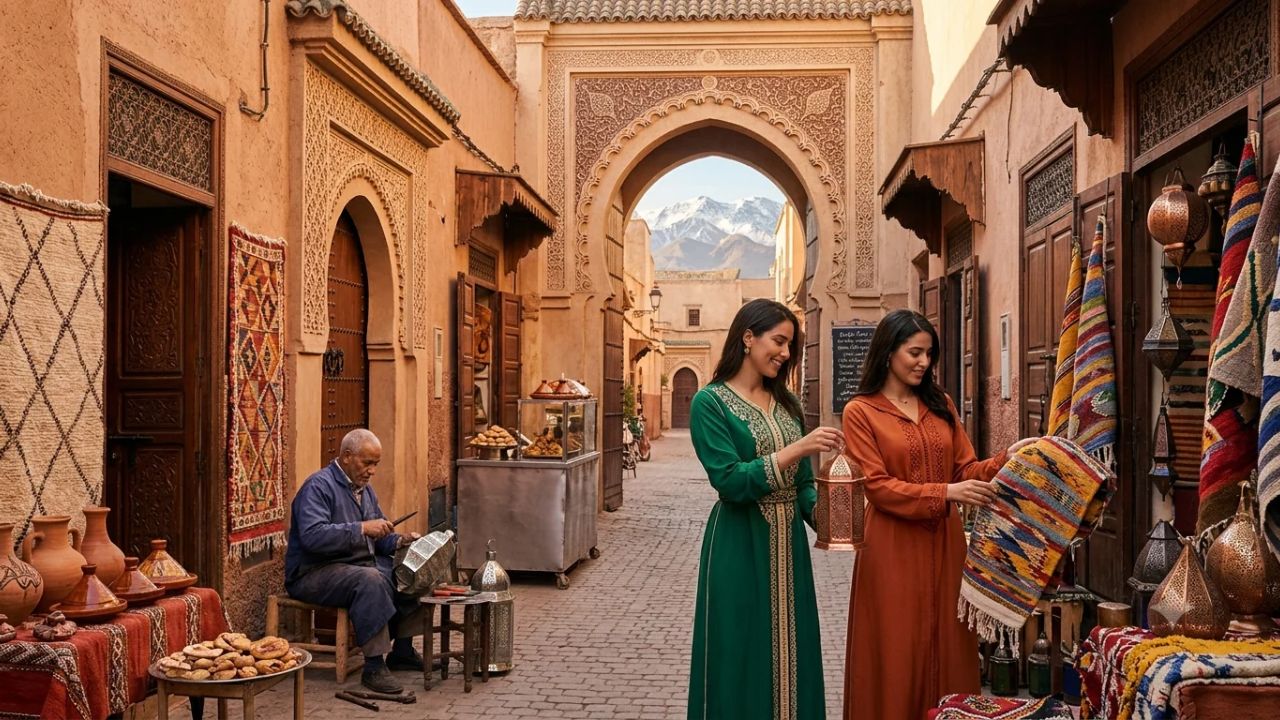
In North Africa, the Kingdom of Morocco is implementing an expansive tourism roadmap designed to move beyond traditional mass-market sightseeing. Historically, international arrivals were concentrated within a handful of urban centers, notably Marrakech, Casablanca, Tangier, and the beach resorts of Agadir.
Morocco’s updated development blueprint restructures the national tourism offering around nine primary operational themes:
- Nature and Ecotourism: Conservation-focused travel across national parks, oases, and cedar forests.
- Hiking and Trekking: High-altitude expeditions through the High Atlas, Middle Atlas, and Anti-Atlas ranges, including Mount Toubkal routes.
- City Breaks and Urban Escapes: Short-stay cultural getaways in imperial cities such as Fes, Meknes, and Rabat.
- Beach and Coastal Recreation: Developing Atlantic and Mediterranean coastlines for water sports, surfing (Taghazout), and family holidays.
- Desert Expeditions: Sahara dune excursions, camel trekking, and stargazing camps around Merzouga and Zagora.
- Cultural and Historical Circuits: Curated historical itineraries traversing ancient kasbahs, UNESCO ksar settlements, and Roman ruins at Volubilis.
- Business Tourism and MICE: Expanding international conference, incentive, and exhibition infrastructure in Casablanca and Marrakech.
- Wellness and Thermal Tourism: Developing traditional hammams, mineral springs, and holistic retreat centers.
- Active Adventure Sports: Mountain biking, canyoning, and off-road desert rallies.
These nine themes are supported by five cross-cutting cultural dimensions:
- Regional Gastronomy: Promoting authentic Moroccan culinary traditions, spice markets, and cooking schools.
- Festivals and Performing Arts: Supporting traditional music festivals (such as the Gnaoua World Music Festival in Essaouira) and heritage celebrations.
- Handicrafts and Artisan Cooperatives: Establishing direct-to-consumer sales channels for leather workers, ceramic artists, and Berber carpet weavers.
- Environmental Sustainability: Implementing green hotel certifications, water conservation technology, and waste minimization.
- Alternative Accommodations: Expanding licensed rural guesthouses, eco-lodges, and historic riads.
To translate these thematic concepts into commercially viable products, Morocco’s roadmap prioritizes expanded direct point-to-point air links from European gateways, modernized hotel capacity, comprehensive vocational hospitality training, and digital data monitoring systems.
East Africa's Ten-Year Horizon: Marketing Alignment, AFCON 2027, and Border Visas
In October 2026, tourism ministers from the East African Community (EAC) convened to formally adopt a unified regional marketing strategy spanning 2027 to 2036. The ambitious ten-year blueprint covers an eight-nation regional bloc: Burundi, the Democratic Republic of the Congo (DRC), Kenya, Rwanda, Somalia, South Sudan, Tanzania, and Uganda.
The overarching vision is to market East Africa as a seamless, single-destination circuit, enabling international visitors to combine Tanzanian and Kenyan safari migrations with Rwandan gorilla trekking, Ugandan river adventures, and coastal retreats in Zanzibar.
| East African Tourism Initiative | Operational Scope | Practical Execution Requirements |
|---|---|---|
| EAC Marketing Strategy (2027–2036) | 8 member states | Joint digital campaigns, regional tour bundling, and shared overseas promotion |
| AFCON 2027 Tournament Hosting | Kenya, Tanzania, Uganda | Dispersing football fans into regional safaris, cultural venues, and secondary cities |
| Regional Hotel Classification | Community-wide | Accelerating standardized audits, certificates, and physical plaques across properties |
| Existing East Africa Tourist Visa | Kenya, Rwanda, Uganda | Fully operational US$100 90-day multi-entry visa; entry must begin in issuing state |
| Proposed EAC Single Tourist Visa | 8 member states | Study comments due 30 November 2026; requires unified border systems and revenue splits |
AFCON 2027: The Near-Term Infrastructure Catalyst
The 2027 Africa Cup of Nations (AFCON), co-hosted by Kenya, Tanzania, and Uganda, represents the first immediate operational test of this regional vision. Tourism ministers have mandated that tournament logistics must extend beyond stadium turnstiles. The strategy aims to encourage visiting football supporters to book secondary safaris, mountain excursions, and cultural tours.
This initiative is driving regional harmonization of accommodation standards. East African ministers have mandated an accelerated rollout of the EAC Hotel Classification System, adopting standardized inspection criteria and uniform physical plaques to ensure consistent service quality across hotels, lodges, and tented camps.
Clarifying the East African Visa Divide
Travelers and tour operators must distinguish between marketing aspirations and legal border regulations. A marketing strategy covering eight countries does not mean a single visa grants universal access:
- The East Africa Tourist Visa: A functional, operational agreement covering only three nations: Kenya, Rwanda, and Uganda. It costs US$100, is valid for 90 days, allows multiple entries between the three participating countries, and requires the traveler to enter first through the country that issued the visa.
- The Proposed EAC Single Tourist Visa: A broader, pending proposal intended to encompass all eight EAC member nations. In October 2026, regional ministers reviewed an updated technical study on the proposal, setting a firm deadline of 30 November 2026 for member states to submit formal comments regarding border control integration and revenue-sharing mechanisms. Until this wider instrument is formally ratified, funded, and deployed, travelers visiting countries like Tanzania, Burundi, or the DRC must continue securing separate national visas.
Southern Africa: SADC UNIVISA Pilot Approval and the KAZA Precedent
In Southern Africa, cross-border travel facilitation advanced significantly in August 2026 when heads of state approved a landmark agreement establishing the pilot phase of the SADC Tourism UNIVISA.
The approved pilot encompasses five major travel destinations within the Southern African Development Community: Angola, Mozambique, Namibia, South Africa, and Zimbabwe. Designed to eliminate duplicative visa applications and encourage extended multi-country journeys across Southern Africa’s premier wildlife and coastal circuits, the agreement represents a major diplomatic milestone.
However, approval of the agreement does not mean the SADC UNIVISA is operational for consumer applications. Throughout October and November 2026, regional technical committees remained engaged in negotiations regarding the collection, management, and proportional distribution of visa revenue among the five treasury departments. Participating governments must also integrate electronic visa software platforms and train border immigration personnel before applications open to the public.
| Southern African Visa Instrument | Participating Nations | Cost & Validity Terms | Operational Reality for Travelers |
|---|---|---|---|
| SADC Tourism UNIVISA (Pilot) | Angola, Mozambique, Namibia, South Africa, Zimbabwe | Terms under negotiation | Approved by leaders in August 2026; revenue-sharing and border systems being finalized |
| KAZA UNIVISA (Active) | Zambia & Zimbabwe (plus Kazungula day-trip to Botswana) | US$50; valid for up to 30 days | Fully operational at designated ports; does not allow unrestricted travel across all 5 KAZA states |
Lessons from the Operational KAZA UNIVISA
Southern Africa already possesses a working model of bilateral visa facilitation in the KAZA UNIVISA. Established to support the Kavango-Zambezi Transfrontier Conservation Area, the KAZA UNIVISA allows eligible international visitors to travel freely between Zambia and Zimbabwe for up to 30 days for a single fee of US$50. The visa also permits day-trips into Botswana via the Kazungula border post, provided the traveler returns to Zambia or Zimbabwe on the same day.
Equally important, travelers must understand that while the broader Kavango-Zambezi conservation ecosystem spans five nations (Angola, Botswana, Namibia, Zambia, and Zimbabwe), the KAZA UNIVISA does not grant unrestricted entry into Namibia, Angola, or overnight stays in Botswana.
South Africa’s Tourism Growth Partnership Plan
As the economic anchor of the southern region, South Africa is executing its Tourism Growth Partnership Plan, structured around five strategic priorities: expanding international air access, executing coordinated foreign marketing, enhancing tourist safety, diversifying regional products, and stimulating job creation.
To ensure accountability, the South African government established a specialized Project Management Office and a real-time digital monitoring dashboard to track departmental progress against key performance indicators. The strategic importance of the sector is supported by official macroeconomic data: tourism directly supported 954,000 jobs across South Africa in 2024, contributing 4.9% to national Gross Domestic Product (GDP).
West Africa's Airfare Challenge: ECOWAS Tax Reforms and Ghana's Leadership
In West Africa, the primary structural impediment to leisure and business tourism is not marketing, but the prohibitive cost of intra-regional aviation. Heavy government taxes, passenger service fees, security levies, and jet fuel surcharges frequently push short-haul airfares between neighboring West African capitals above the cost of intercontinental flights to Europe.
To address this barrier, the Economic Community of West African States (ECOWAS) adopted a binding regional air transport policy designed to:
- Completely eliminate selected non-operational aviation taxes across member states.
- Mandate a 25% reduction in passenger service and aviation security charges.
- Establish a permanent regional oversight mechanism to audit airport compliance.
| Aviation Reform Parameter | Regional ECOWAS Directive | Ghanaian National Implementation |
|---|---|---|
| Aviation Tax Eliminaton | Removal of non-operational fiscal levies | National committee auditing state airport tax schedules |
| Passenger & Security Fees | Mandatory 25% reduction across member hubs | Directives issued to Ghana Airports Company Limited |
| National Implementation Body | Regional ministerial monitoring council | Inter-agency committee established by Transport Ministry in August 2026 |
| Statutory Enactment Date | ECOWAS documentation cites 1 January 2026 | Ghanaian official statements cite 1 July 2026 |
In August 2026, Ghana took concrete steps toward domestic execution when its Ministry of Transport established an inter-agency national committee to coordinate and enforce the policy across Kotoka International Airport (ACC) and regional hubs.
However, industry analysts highlight a significant administrative discrepancy: while official ECOWAS regional updates indicate the policy took effect on 1 January 2026, statements issued by the Ghanaian Transport Ministry cite an effective statutory date of 1 July 2026. In addition, aviation economists caution that a 25% reduction in government passenger charges does not automatically translate into a 25% drop in total retail ticket prices. Airline ticket pricing is governed by base airfares, fuel costs, aircraft maintenance, insurance premiums, and seat availability. The true success of the ECOWAS reform will be evaluated by whether airlines pass tax savings directly to consumers through lower booking fares.
Tangible Community Dividends: Rwanda's Revenue Sharing and Cabo Verde's Island Transport
Sustainable tourism development requires that international visitor expenditures translate into measurable improvements for local host communities. Two distinct African destinations provide valuable case studies in community integration.
Rwanda: Direct Conservation Revenue Sharing
The Republic of Rwanda operates one of the world's most transparent and measurable tourism revenue-sharing frameworks. Under national legislation, the Rwanda Development Board (RDB) directs 10% of all gross tourism revenues generated by national parks—most notably Volcanoes National Park, home to endangered mountain gorillas—directly into community development initiatives in bordering districts.
Official figures confirmed that by August 2026, Rwanda’s revenue-sharing program had invested more than RWF 23 billion (approximately US$17 million) across nearly 1,300 local community projects. These funds have financed:
- Construction of modern primary and secondary school classrooms.
- Community health centers and maternity clinics in rural sectors.
- Clean water boreholes and gravity-fed water supply networks.
- Agricultural cooperatives, seed distribution programs, and local commercial enterprise grants.
A vital analytical distinction must be maintained: this 10% statutory allocation applies specifically to national park entry and trekking revenues, rather than gross nationwide tourism spending.
| Community Model Metric | Rwanda National Park Revenue Sharing | Cabo Verde Archipelagic Tourism Integration |
|---|---|---|
| Core Mechanism | Mandatory 10% statutory diversion of park revenue | National transport integration between resort and rural islands |
| Confirmed Capital Invested | Over RWF 23 billion across nearly 1,300 projects | Public and private investment into inter-island ferry and air networks |
| Primary Beneficiaries | Rural communities bordering national parks | Agricultural, fishing, and local logistics producers across archipelago |
| Structural Bottleneck | Ensuring transparent project selection and auditing | High operational costs and scheduling unreliability of inter-island transport |
Cabo Verde: The Archipelagic Supply Chain Challenge
In the Atlantic archipelago of Cabo Verde, tourism development faces an internal logistics hurdle. An official 2026 macroeconomic assessment highlighted that while international visitor arrivals have surged, tourism activity is heavily concentrated on two flat, sun-drenched resort islands: Sal and Boa Vista.
The fundamental challenge for Cabo Verde is spreading the economic benefits of resort tourism to the country’s agricultural, mountainous, and cultural islands, such as Santo Antão, Santiago, and Fogo. Irregular, high-cost domestic flights and maritime ferry connections make it difficult for farming and fishing cooperatives on surrounding islands to supply fresh produce, meat, and seafood to large all-inclusive resorts on Sal and Boa Vista. Improving inter-island maritime and aviation transport represents an essential prerequisite for transforming mass-market resort tourism into a sustainable national economic driver.
Practical Guidance for Travelers Planning Multi-Country African Itineraries
Travelers planning multi-destination African journeys across late 2026 and 2027 should adhere to practical verification protocols:
- Verify Active Visa Eligibility: Distinguish between approved regional visa agreements (like the SADC UNIVISA pilot) and operational entry schemes (like the East Africa Tourist Visa or KAZA UNIVISA). Always verify whether specific nationality exemptions apply at intended land border crossings.
- Scrutinize Total Airfare Quotes: Monitor whether regional aviation tax cuts in West Africa reflect in final published airfares by comparing base fares, carrier surcharges, and airport taxes across multiple travel dates.
- Audit Tour Inclusions for Local Community Impact: Seek out tour operators, eco-lodges, and safari providers that actively demonstrate local employment, transparent community revenue sharing, and local agricultural sourcing.
Frequently Asked Questions
What are the nine themes in Morocco's new tourism roadmap?
Morocco's roadmap organizes tourism around nine themes: nature/ecotourism, hiking/trekking, city breaks, beaches, desert expeditions, cultural circuits, business travel (MICE), wellness/thermal tourism, and active adventure sports, supported by local food, festivals, and handicrafts.
Which countries are covered by the East Africa Tourist Visa?
The operational East Africa Tourist Visa covers Kenya, Rwanda, and Uganda for a fee of US$100, granting 90-day multiple-entry access. The wider EAC Single Tourist Visa proposal covering all eight member nations is currently under review.
What is the status of the SADC Tourism UNIVISA?
Southern African leaders approved the SADC Tourism UNIVISA pilot agreement in August 2026 for Angola, Mozambique, Namibia, South Africa, and Zimbabwe. Technical committees are currently finalizing fee-collection and revenue-sharing mechanisms before public rollout.
How does Rwanda's tourism revenue-sharing program work?
Rwanda mandates that 10% of all national park tourism revenues be directed to community development around protected areas. By August 2026, the program had invested over RWF 23 billion across nearly 1,300 local community projects.
Related Travel Guides
This article is for informational purposes. Flight routes, passenger regulations, visa rules, and transit advisories are subject to change by airlines and aviation authorities. Readers are advised to verify schedules and travel documentation with relevant carriers and border agencies before departure.
Related Stories
Jordan Tourism Receipts Reach Record $6.35 Billion as UAE and GCC Travelers Power Sector Transformation in 2026

Portugal Showcases Évora to Canadian Travel Buyers as Guest Nights Climb 7.5% Across Regional Heritage Corridors