Rome Imposes Strict Golf Cart Restrictions to Combat Historic Center Traffic and Overtourism

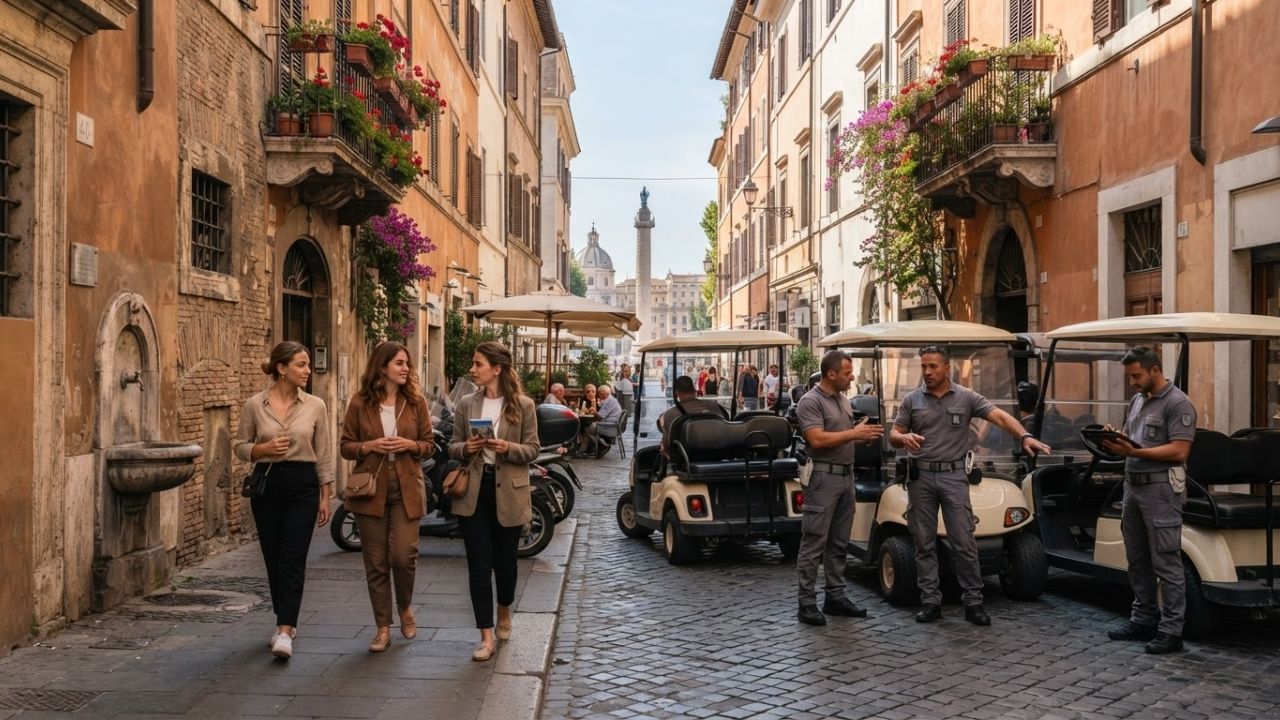
Image generated by AI
Rome municipal authorities have launched a regulatory crackdown on commercial golf cart tour operators, enforcing strict vehicle caps, fixed transit corridors, and licensing requirements across the Italian capital's historic center.
ROME, Italy — Faced with hundreds of electric golf carts clogging narrow cobblestone lanes and occupying limited street space around ancient monuments, the city government of Rome (Roma Capitale) has initiated enforcement actions against unregulated tourist transport operators. According to urban planning directives monitored by Turismo Roma, municipal police have stepped up inspections across UNESCO World Heritage zones, targeting illegal parking, unauthorized passenger drops, and vehicle congestion near landmarks including the Colosseum, Pantheon, and Piazza Navona.
| Regulatory Milestone | Policy & Enforcement Metric |
|---|---|
| Enforcement Zone | Rome Historic Center (Centro Storico UNESCO Heritage Zone) |
| Target Vehicles | Commercial electric sightseeing golf carts |
| Primary Municipal Concern | Urban gridlock, illegal parking on historic plazas, overtourism friction |
| Proposed Countermeasures | Vehicle fleet caps, mandatory operator licenses, fixed transit routes |
| Enforcement Body | Polizia Locale di Roma Capitale (Rome Local Police) |
Rapid Expansion of Sightseeing Carts Strains Ancient Street Grid
Electric golf cart tours have surged in popularity across Rome, offering international tourists a rapid method to visit major landmarks without navigating long walking distances over uneven cobblestones. Operating in a legal gray zone between rental vehicles and guided excursions, the fleet has expanded rapidly to meet high demand during peak summer and autumn travel seasons.
However, residents and urban preservationists argue that the influx of hundreds of light electric vehicles has added congestion to streets designed centuries before modern motorized transit.
| Stakeholder Group | Primary Perspective on Golf Cart Tourism | Key Arguments |
|---|---|---|
| City Authorities & Residents | Commercial expansion aggravates urban overtourism | Carts block narrow lanes, occupy resident parking, and create safety risks |
| Tour Operators & Business Owners | Electric carts provide clean, low-impact sightseeing | Zero tailpipe emissions, smaller footprint than buses, high economic yield |
| Elderly & Mobility-Impaired Visitors | Essential accessibility solution for historic exploration | Enables visitors unable to walk long distances to experience Rome's heritage |
Proposed Municipal Framework: Vehicle Caps, Fixed Corridors, and Licensing
To restore order across central thoroughfares, Rome’s transport department is finalizing a regulatory framework specifically tailored for light electric tourist vehicles. The proposed ordinance moves away from total bans, focusing instead on structured integration through mandatory licensing and spatial control.
| Regulatory Measure | Strategic Objective | Operational Mechanism |
|---|---|---|
| Fleet Cap Limits | Restrict total commercial units operating daily | Imposes hard ceilings on licensed tourist cart numbers |
| Designated Corridors | Establish fixed sightseeing transit routes | Prevents carts from entering high-density pedestrian lanes |
| Structured Licensing | Require municipal permits for tour operators | Eliminates unverified grey-market commercial providers |
| Dedicated Parking Hubs | Designate specific pickup and drop-off zones | Prevents cart operators from idling on historic piazzas |
Balancing Accessibility for Elderly Travelers Against Heritage Protection
Proponents of electric cart tours emphasize that the vehicles solve mobility barriers for senior travelers, families with young children, and visitors with physical disabilities who find traversing Rome’s steep hills and rough paving difficult.
Unlike large diesel tour buses, which are barred from central zones under Rome's Zona a Traffico Limitato (ZTL) rules, electric carts produce zero local emissions. Industry representatives contend that establishing designated parking hubs and structured routes will preserve accessibility while eliminating street clutter.
| Tourism Advantage | Accessibility & Environmental Factor |
|---|---|
| Zero Local Emissions | Electric battery powertrains reduce exhaust pollution near fragile marble ruins |
| Enhanced Mobility Access | Serves aging global traveler demographics unable to complete 10km walking tours |
| Reduced Vehicle Footprint | Significantly smaller physical size than traditional 50-passenger tourist coaches |
Rome’s Broader Strategy to Manage Urban Overtourism
The crackdown on commercial golf carts forms part of a broader municipal effort to mitigate overtourism across Rome. City hall has already implemented visitor capacity limits at major fountains, restricted heavy tourist coach access within the ZTL boundary, and introduced strict regulations on short-term holiday rentals.
By regulating light electric transport, Rome aims to set a precedent for other European historic capitals—such as Florence, Venice, and Dubrovnik—that face similar challenges balancing modern visitor services with historic preservation.
| European Historic Capital | Overtourism Challenge | Municipal Policy Action |
|---|---|---|
| Rome, Italy | Golf cart congestion & ZTL vehicle overload | Fleet caps, fixed tour routes, and strict police enforcement |
| Venice, Italy | Day-tripper overcrowding in canal zones | Day-visit entry fees & bans on large cruise ship dockings |
| Florence, Italy | Residential housing depletion & STR saturation | Bans on new short-term rental properties in historic center |
| Dubrovnik, Croatia | Cruise passenger congestion on city walls | Daily cruise arrival caps & staggered visitor entry times |
Practical Advice for Tourists Planning Sightseeing Tours in Rome
Travelers visiting Rome who wish to take an electric cart tour should verify that their chosen operator holds valid municipal licenses and adheres to official transport routes. Booking accredited tours in advance ensures compliance with city safety standards.
Visitors are encouraged to combine electric cart tours for long-distance city orientation with walking exploration of central pedestrian zones like Campo de' Fiori, Trastevere, and the Jewish Ghetto.
Frequently Asked Questions
Why is Rome cracking down on tourist golf carts in the city center?
City authorities are implementing restrictions to curb severe traffic congestion, illegal parking on historic plazas, and overtourism friction caused by hundreds of unregulated electric carts in narrow ancient streets.
Are electric golf cart tours completely banned in Rome?
No, the city is not imposing an outright ban. Instead, authorities are introducing fleet caps, mandatory operator licenses, fixed transit corridors, and designated parking hubs.
What are the main benefits of electric golf carts for tourists in Rome?
Electric carts offer zero local emissions, smaller vehicle footprints than tour buses, and essential mobility assistance for elderly visitors and travelers with physical disabilities exploring hilly or uneven terrain.
How do Rome's new rules fit into its broader overtourism policy?
The golf cart regulations complement existing city policies, including coach bans in central ZTL zones, visitor management at historic fountains, and short-term rental restrictions to preserve Rome's UNESCO World Heritage sites.
Related Travel Guides
This article is for informational purposes. Flight routes, passenger regulations, visa rules, and transit advisories are subject to change by airlines and aviation authorities. Readers are advised to verify schedules and travel documentation with relevant carriers and border agencies before departure.
Related Stories

Italy–Peru Direct Flight Talks: Unlocking Rome, Milan, and High-Speed Rail Two-City Itineraries
12 Best Places to Visit in Europe for First-Time Travelers According to Quora