
Romania Advances With Greece and Others as TOURAL Expands Digital Tourism Validation in Tulcea and Pineto
Romania Advances With Greece and Others as TOURAL Expands Digital Tourism Validation in Tulcea and Pineto

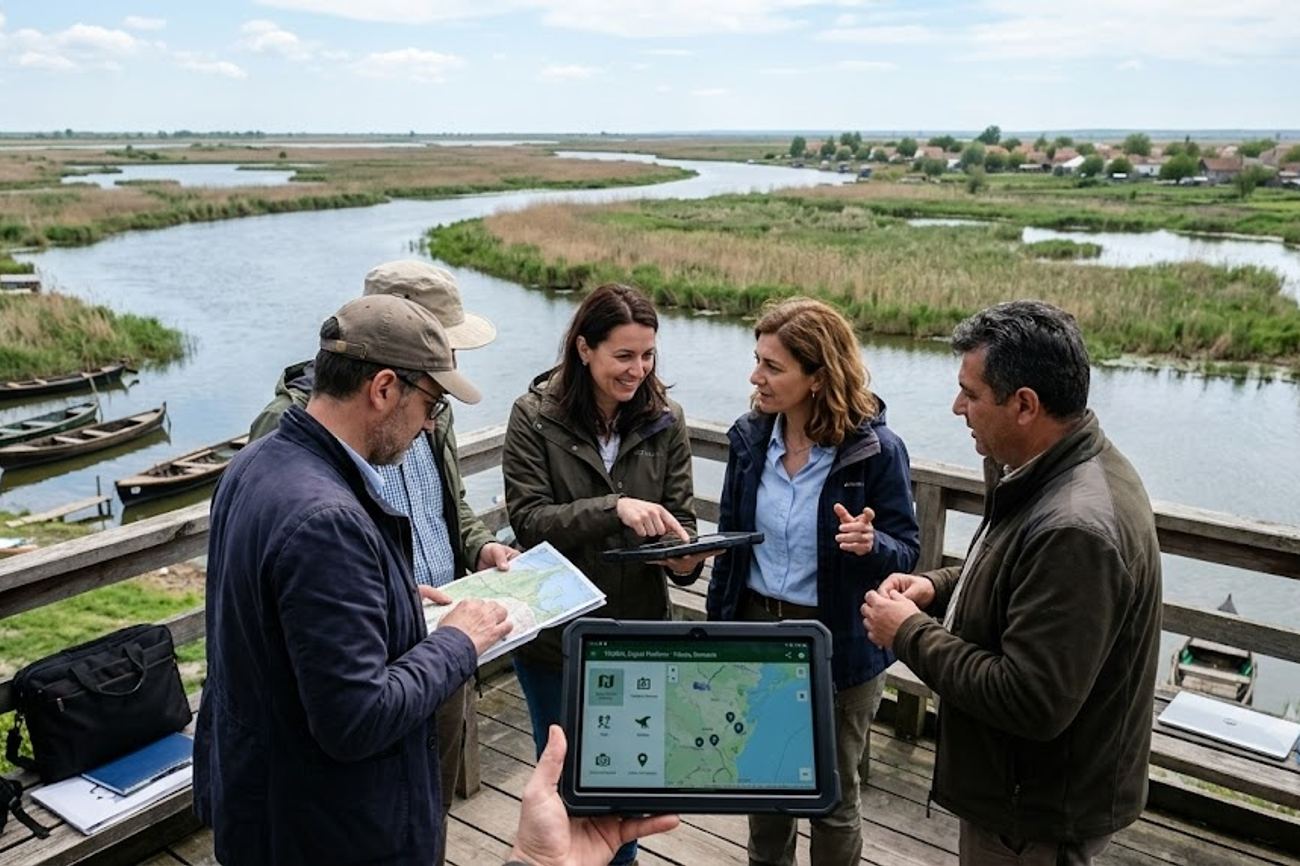
Image generated by AI
[Brussels, September 2026] — The European Union-funded TOURAL programme has entered its final implementation phase, transitioning from academic heritage research to the deployment of digital visitor tools and tourism-flow management systems across six pilot regions in Europe.
The initiative, which concludes on 31 December 2026, is currently testing a model designed to divert tourist traffic away from overcrowded urban centers and toward rural, coastal, and island destinations. Operating across Romania, Greece, Italy, Croatia, Bulgaria, and Ukraine, the project utilizes a total budget of €2,999,927.50, with the full amount provided by the European Commission. The current phase focuses on the validation of small-scale services and the establishment of regional Knowledge Awareness Centres (KACs) to sustain the project's impact beyond its official end date.
The Shift Toward Digital Destination Management
What began as a focused study on underwater archaeology has evolved into a comprehensive experiment in destination management. The primary objective is no longer merely the promotion of submerged sites, but the creation of a scalable framework for managing tourism demand in fragile environments.
According to data from the CORDIS database, 40 per cent of the project is categorized under the Digital Agenda policy-priority tracker. This shift is evident in the recent release of project deliverables, which prioritize predictive destination tools and virtual reality (VR) over traditional promotional materials.
The program is split into two distinct macro-regions:
- The Adriatic-Ionian Group: Comprising Greece, Italy, and Croatia.
- The Black Sea Group: Comprising Bulgaria, Romania, and Ukraine.
By integrating cultural, scientific, and community assets, TOURAL aims to create year-round tourism activity that reduces the reliance on seasonal peaks and prevents the degradation of "hotspot" locations.
Who Is Affected: Pilot Regions and Propositions
The TOURAL model is being tested through six specific pilot destinations, each focusing on a different aspect of sustainable growth.
| Country | Pilot Destination | Primary Tourism Proposition | Travel Trade Significance |
|---|---|---|---|
| Romania | Danube Delta / Tulcea | Ecotourism, slow tourism, and citizen science | Tests capacity management in environmentally sensitive wetlands. |
| Greece | North Sporades / Alonissos | Marine biodiversity, VR diving, and "silver tourism" | Models how VR can supplement physical diving to extend the season. |
| Italy | Teramo Province / Pineto | Coastal-to-mountain routes and senior travel | Tests the diversion of coastal crowds toward inland SMEs. |
| Croatia | Pag Island / Šimuni | Nautical tourism and maritime heritage | Bridges the gap between specialist diving and general heritage tourism. |
| Bulgaria | Nessebar | UNESCO heritage and visitor-flow management | Tests tech-driven dispersal of visitors beyond coastal hubs. |
| Ukraine | Kutsurub Rural Region | Ancient Olbia heritage and digital-first tours | Establishes a recovery-oriented digital model for constrained markets. |
What This Means for Travelers
For the average traveler, the TOURAL project translates into a fundamental change in how they interact with lesser-known European destinations. Rather than relying on static brochures or generic travel blogs, visitors in these six regions will encounter a unified digital environment.
Enhanced Accessibility via VR Travelers who cannot dive or access remote underwater sites can now use immersive VR applications to explore submerged archaeology and marine biodiversity. This "virtual diving" allows for a broader demographic—including seniors and those with physical limitations—to experience heritage sites without risking the environment or their own safety.
Smarter Destination Navigation The introduction of a visitor-facing platform integrates destination data, multimedia content, and specific points of interest into a single interface. This reduces the friction of visiting rural areas where tourist infrastructure is typically fragmented.
Managed Crowd Levels The most significant "behind-the-scenes" change is the implementation of the Flow Capacity Tool and Predictive Advisor. While travelers won't see the software, they will feel the effects: better-distributed crowds, reduced wait times at key sites, and a more sustainable pace of visitation. The system analyzes visitor segments based on carbon footprint, water consumption, and length of stay, allowing local managers to optimize the "visitor mix" rather than simply chasing higher headcounts.
A Warning on Maturity Travelers and agencies should note that as of March 2026, these tools are classified as a "minimum viable product." They currently lack automated feedback learning and self-adaptive optimization. They are pilot decision-support systems, not fully matured commercial platforms.
Infrastructure Integration in Tulcea and Pineto
The transition from theoretical research to physical infrastructure is most visible in Romania and Italy.
In Romania, Tulcea has become a strategic anchor for the project. The CPMR Balkan and Black Sea Commission scheduled the TOURAL Final General Assembly in Tulcea from 16 to 18 September 2026. The Danube Delta pilot is now integrating ecotourism and gastronomy with "citizen-science" participation, allowing tourists to contribute to the actual monitoring of the wetlands.
In Italy, the Teramo pilot has focused on the "Coastal-to-Mountain" concept. The Abruzzo regional government established a Knowledge Awareness Centre (KAC) within the Pineto tourist information office in May 2026. These KACs act as operational nodes that support local small-to-medium enterprises (SMEs) and validate sustainable tourism models in real-time. By embedding the KAC into an existing visitor office, TOURAL ensures that the project's digital tools remain available to the community after the EU funding expires.
The Bulgarian Model: Forecasting and Diversification
Bulgaria is utilizing the Nessebar pilot to solve the perennial problem of coastal over-concentration. The 2026 action plan for the Municipality of Nessebar incorporates a digital toolkit specifically designed for visitor-flow forecasting.
By using simulation tools, Nessebar aims to push tourism activity into the rural hinterland, diversifying the economic benefit of the UNESCO heritage site. This involves using VR to draw interest toward less-visited areas and using ecological monitoring to ensure that the increase in rural foot traffic does not damage the local environment.
FAQ: TOURAL Digital Tourism 2026
What is the main goal of the TOURAL programme? TOURAL aims to develop sustainable tourism in six European regions by using digital tools and VR to manage visitor flows and promote lesser-known rural, coastal, and underwater heritage sites, reducing pressure on overcrowded hotspots.
How does the "virtual diving" feature work for tourists? It uses immersive VR applications to provide access to underwater archaeology and marine biodiversity. This allows non-divers or those with mobility issues to explore submerged sites that are otherwise physically inaccessible.
When does the project officially end? The TOURAL programme is scheduled to conclude its implementation period on 31 December 2026.
Which countries are participating in the pilot? The project involves Romania, Greece, Italy, Croatia, Bulgaria, and Ukraine, divided into the Adriatic-Ionian and Black Sea macro-regions.
Digital infrastructure is now the primary bridge between European heritage preservation and sustainable economic growth.
#TOURAL2026 #EU_Tourism_Digital #DanubeDelta_Tourism #Nessebar_VisitorFlow #Pineto_KAC #AdriaticIonian_Tourism
Related Travel Guides
- Discover Asmara Now: Why This UNESCO Capital’s Modernist Architecture Is Africa’s Best-Kept Secret
- Bulgaria Unveils Tourism Growth Push With Germany Poland and More Markets to Reach 8 Million Visitors Annually by 2029
- Zimbabwe’s Masuwe Tourism City Could Transform Victoria Falls Travel With Longer Stays, MICE and New Experiences
Disclaimer
This article is for informational and educational purposes only. It does not constitute legal, financial, or professional advice. While we strive to provide accurate and up-to-date information, travel policies, regulations, and conditions change rapidly. Always verify information with official sources before making travel decisions. Nomad Lawyer makes no representations about the accuracy, reliability, completeness, or suitability of the information provided. Readers should consult qualified professionals for advice specific to their circumstances. The views expressed in this article are those of the author and do not necessarily reflect the views of Nomad Lawyer.
Kunal K Choudhary
Co-Founder & Contributor
A passionate traveller and tech enthusiast. Kunal contributes to the vision and growth of Nomad Lawyer, bringing fresh perspectives and driving the community forward.
Learn more about our team →