
Discover Asmara Now: Why This UNESCO Capital’s Modernist Architecture Is Africa’s Best-Kept Secret
Discover Asmara Now: Why This UNESCO Capital’s Modernist Architecture Is Africa’s Best-Kept Secret

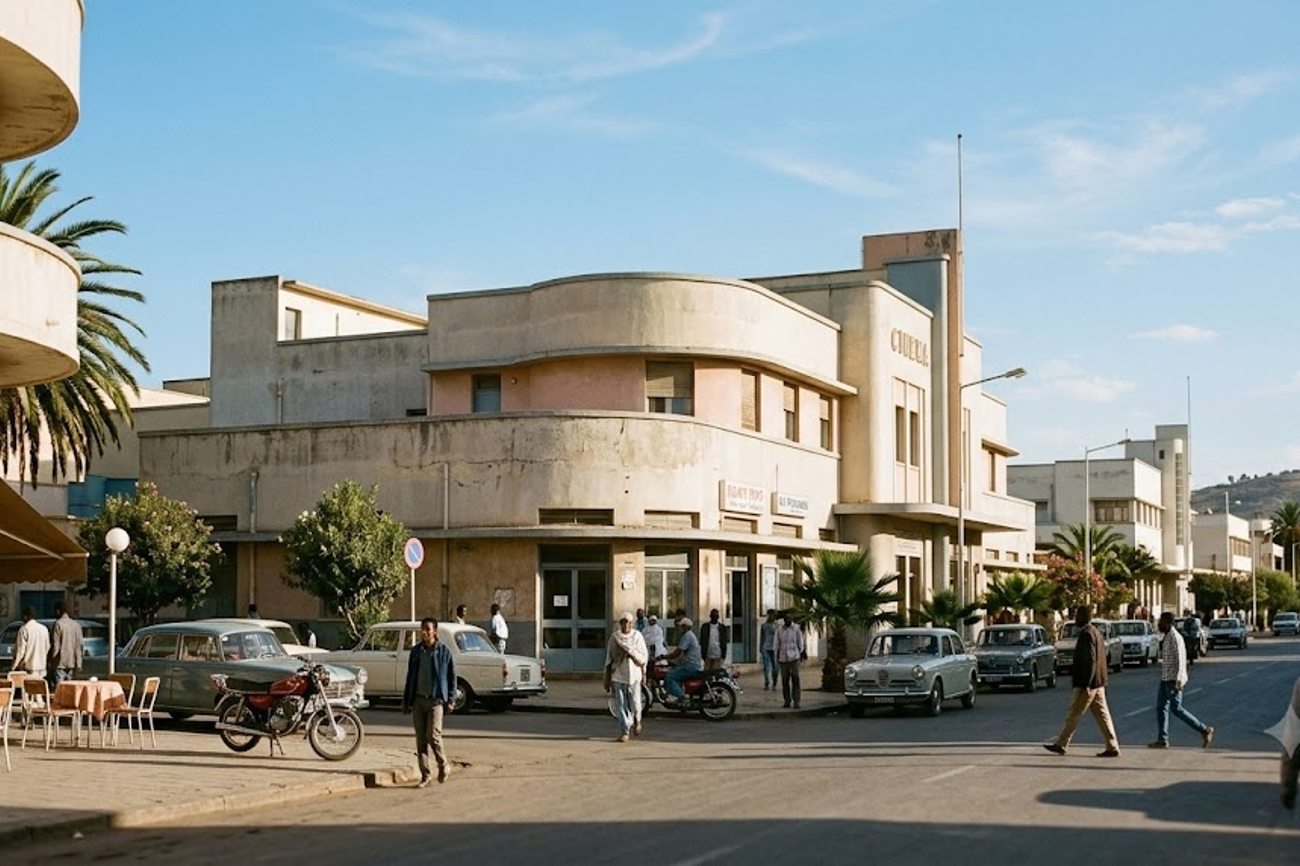
Image generated by AI
400 modernist buildings constructed within a compressed window of the late 1930s define the urban core of Asmara, creating a concentration of Futurist and Art Deco design that is virtually unmatched globally. While most European cities saw their early 20th-century avant-garde experiments erased by wartime destruction or aggressive post-war redevelopment, the Eritrean capital serves as a structural time capsule. This architectural density is not a coincidence of survival but the result of a specific colonial ambition that transformed a highland village into "La Piccola Roma" (Little Rome), where Italian architects, restricted by conservative norms in Italy, were given a blank canvas to execute radical geometric and nautical forms.
The Colonial Laboratory of the Horn of Africa
The genesis of Asmara’s unique aesthetic lies in the fascist Italian occupation of Eritrea, specifically between the 1930s and 1941. During this era, the city became a living laboratory for the stile moderno and Rationalist movements. Architects deployed sweeping curves and daring cantilevered concrete to project an image of colonial supremacy and technological progress. Because these designs were often deemed too experimental for the domestic Italian market, Asmara became the primary site for architectural risk-taking.
The preservation of this legacy was ironically ensured by subsequent hardship. Following Eritrean independence in 1993, a combination of economic isolation and stringent national property laws prevented the kind of commercial gentrification that typically replaces historic facades with glass-and-steel skyscrapers. This "preservation shield" kept the central grid intact, allowing the city to maintain its 1930s visual integrity until it was officially recognized by the UNESCO World Heritage Centre in July 2017. The inscription of "Asmara: A Modernist African City" signaled a shift from accidental preservation to intentional cultural management.
Mapping the Modernist Grid
Asmara is organized around a rationalist grid, blending European urban planning with the natural topography of the Eritrean highlands. The city's layout emphasizes wide, palm-lined boulevards and open squares that facilitate pedestrian-led exploration. The primary artery, Harnet Avenue (formerly Viale Mussolini), serves as the epicenter for this architectural survey, showcasing a mix of basalt, terracotta, and ochre-colored rendering.
The following table outlines the primary architectural landmarks and their significance within the city's current tourism framework:
| Landmark | Architect/Origin | Key Feature | Significance |
|---|---|---|---|
| Fiat Tagliero | Giuseppe Pettazzi (1938) | Cantilevered concrete wings | Mimics an airplane in flight; peak Futurist design |
| Cinema Impero | Italian Colonial Era | Geometric facade & vintage neon | Example of 1930s entertainment architecture |
| Harnet Avenue | Municipal Planning | Rationalist shopfronts | The central spine of the city's commercial grid |
| Civic Buildings | Various (1930s-1941) | Local basalt & terracotta | Integration of local materials with Italian modernism |
To maintain this environment, the Eritrean Ministry of Information and various cultural boards now enforce strict zoning regulations. These codes monitor everything from commercial signage to structural alterations, ensuring that new developments do not clash with the established 1930s aesthetic.
Expert Analysis: The Geopolitics of Heritage Tourism
For the sophisticated traveler, Asmara represents a complex intersection of colonial trauma and aesthetic triumph. The transition of these buildings from symbols of occupation to assets for sustainable economic development is a calculated strategic pivot by the Eritrean government. By leveraging the International Air Transport Association (IATA) standards for increasing accessibility and promoting structured cultural programs, the state is attempting to monetize a legacy that was once purely about control.
The direct consequence for travelers booking trips to Asmara is a highly curated experience. Unlike the organic, chaotic growth of other African capitals, Asmara’s tourism is channeled through specialized guided heritage tours and municipal preservation initiatives. This ensures the "museum" quality of the city remains intact but also means that the visitor experience is closely monitored by state authorities.
The pricing pressure created by this "off-the-beaten-path" status is currently low, but the UNESCO designation typically acts as a precursor to a surge in luxury boutique hotel conversions of modernist villas. Travelers who visit now are seeing the city in its rawest form; however, the implementation of strict building codes suggests that the government is preparing the infrastructure for a higher volume of high-spending architectural tourists. The risk for the city is the "museumification" effect, where the urban center becomes a static display rather than a living city, but for now, the integration of community engagement programs suggests a desire to distribute tourism wealth among local residents.
Key Takeaways
- Architectural Density: Asmara contains over 400 modernist buildings from the 1930s, making it one of the world's most concentrated hubs of Art Deco and Futurist design.
- UNESCO Status: The city was designated a World Heritage site in July 2017, specifically for its unique application of early modernist urbanism in an African context.
- Preservation Drivers: A combination of 1993 independence-era property laws and recent municipal zoning codes has prevented the demolition of colonial-era structures.
- Must-See Landmark: The 1938 Fiat Tagliero building remains the definitive example of the city's "airplane" architecture and Futurist ambition.
- Visitor Experience: Exploration is primarily conducted via walking tours starting at Harnet Avenue, focusing on a grid of rationalist civic and commercial buildings.
FAQ: Asmara Heritage Tourism 2024
What makes Asmara's architecture different from other colonial cities? Unlike most colonial cities that followed traditional European styles, Asmara was a testing ground for Futurist and Rationalist movements. Architects used radical geometries and concrete forms that were too avant-garde for Italy at the time, creating a unique "modernist" African cityscape.
Is Asmara safe for architectural tours? Visitors typically utilize structured cultural programs and specialized guided tours. These tours are the recommended way to navigate the city's heritage sites, as they provide necessary historical context and align with local municipal regulations.
When is the best time to visit Asmara for sightseeing? Because of its highland location, Asmara avoids the extreme heat of the lowlands. Travelers can explore the walking tours of Harnet Avenue and the Fiat Tagliero building year-round, though aligning visits with local cultural festivals is recommended.
Do I need a special permit to photograph the buildings? While the city is open to tourists, some civic buildings and administrative offices are monitored by the Ministry of Information. It is advisable to use licensed guides who can navigate local regulations regarding photography of government structures.
Asmara stands as a concrete reminder that the most enduring legacies are often those born from the strangest contradictions.
Tags: Asmara Modernism, Eritrea Tourism, Fiat Tagliero, UNESCO Africa 2017, Italian Rationalism Architecture
Related Travel Guides
- Bulgaria Unveils Tourism Growth Push With Germany Poland and More Markets to Reach 8 Million Visitors Annually by 2029
- Egypt Positions Luxor as Upper Egypt Medical Tourism Hub With 522 Hospital Beds and Advanced Care
- Uzbekistan Unlocks New Travel Era With High Speed Tashkent Nukus Train Cutting Journeys and Connecting Regions
Disclaimer
This article is for informational and educational purposes only. It does not constitute legal, financial, or professional advice. While we strive to provide accurate and up-to-date information, travel policies, regulations, and conditions change rapidly. Always verify information with official sources before making travel decisions. Nomad Lawyer makes no representations about the accuracy, reliability, completeness, or suitability of the information provided. Readers should consult qualified professionals for advice specific to their circumstances. The views expressed in this article are those of the author and do not necessarily reflect the views of Nomad Lawyer.
Raushan Kumar
Founder & Lead Developer
Full-stack developer with 11+ years of experience and a passionate traveller. Raushan built Nomad Lawyer from the ground up with a vision to create the best travel and law experience on the web.
Learn more about our team →