
Rapid KL Increases Sepang F1 Shuttle Capacity Following Opening Day Logistics Failures in 2026
Rapid KL deployed additional fleet capacity and revised dispatch intervals after severe congestion stranded thousands of Formula 1 fans during the 2026 Malaysian Grand Prix opening day.

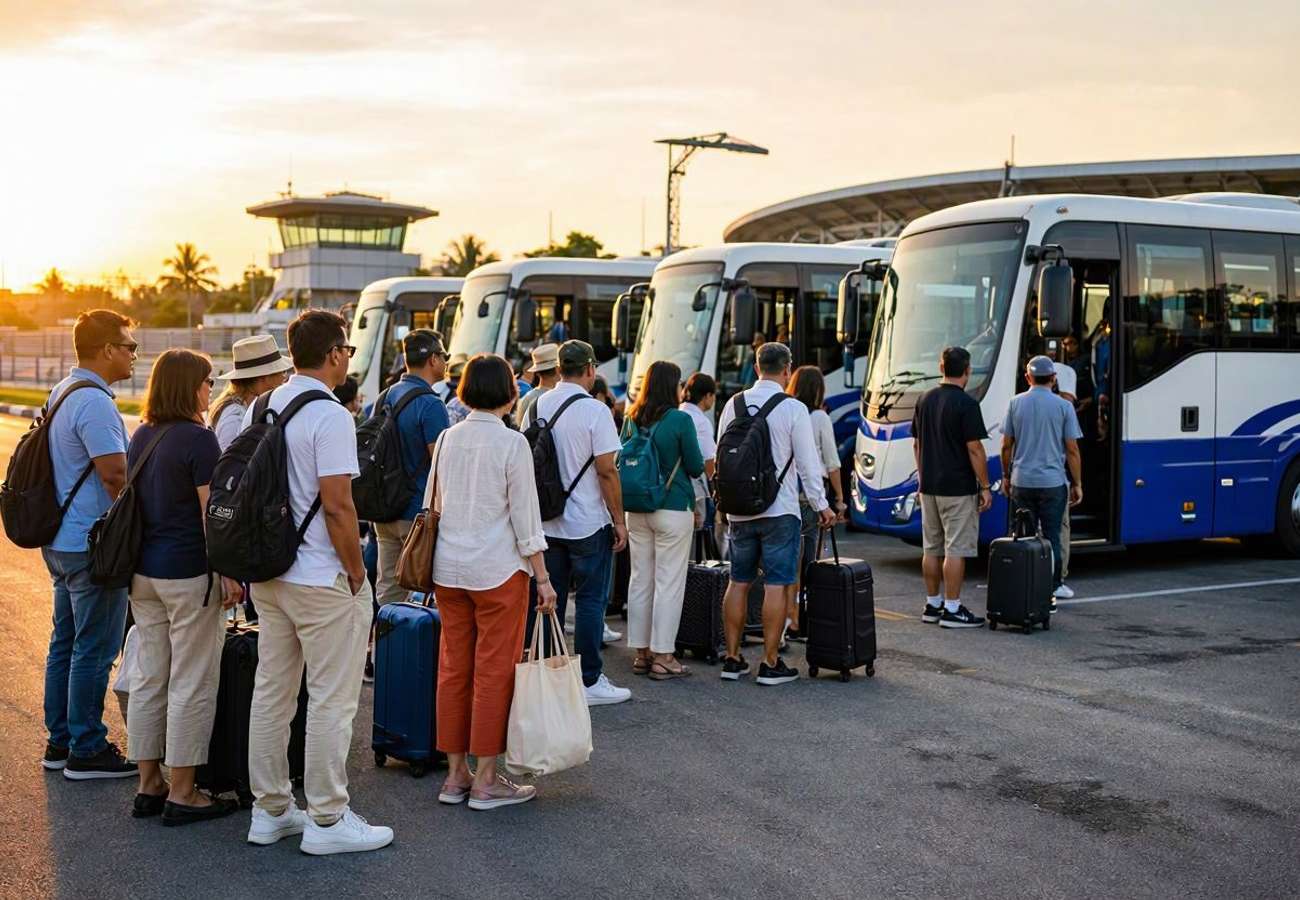
Image generated by AI
The 2026 Malaysian Grand Prix opening day saw thousands of spectators stranded in gridlock, forcing Rapid KL to pivot its operational strategy mid-event to prevent a total logistics collapse. This failure highlights a recurring gap in "mega-event" planning where projected attendance often outpaces the actual throughput capacity of transit hubs, specifically the corridor between the Sepang International Circuit and Kuala Lumpur International Airport (KLIA).
The Logistics Gap in Numbers
The return of Formula 1 to Sepang from 2 to 4 October 2026 served as a stress test for Malaysia's transport infrastructure. While the event drew over 200,000 spectators across the weekend, the initial transport framework proved insufficient for the evening peak on Friday.
Rapid KL had originally committed a fleet of 95 free shuttle buses to operate from 7:00 AM to midnight. These vehicles were tasked with connecting the circuit to three primary hubs: KLIA Terminal 2, Mitsui Outlet Park, and De-Village in Bandar Baru Enstek. However, the lack of systematic queuing and poor wayfinding signage resulted in hour-long waits and spectators walking along hazardous access roads to reach the airport.
Data from the first 24 hours indicated that the 95-bus fleet could not maintain the necessary dispatch intervals to clear the venue during the post-session surge. In response, Rapid KL implemented the following changes starting Saturday, 3 October 2026:
- Increased fleet coordination to reduce wait times.
- Deployment of additional vehicles to strengthen frequency.
- Revised crowd flow management at loading points.
- Enhanced visibility of ground staff at queuing zones.
Comparative Operational Performance
The shift from Friday's "chaotic" state to Saturday's "orderly" state demonstrates the impact of real-time fleet scaling. When comparing the first day of the event to the subsequent race days, the operational focus shifted from mere availability to active flow management.
| Metric | Opening Day (Oct 2) | Race Days (Oct 3-4) | Change/Impact |
|---|---|---|---|
| Fleet Size | 95 Shuttle Buses | 95+ (Additional units added) | Increased capacity |
| Dispatch Interval | Irregular / Peak Congestion | Tightened Coordination | Reduced wait times |
| Queue Management | Unstructured / Fan-led | Staff-managed / Systematic | Improved boarding flow |
| Wayfinding | Limited Signage | Enhanced Ground Staff Guidance | Reduced pedestrian wandering |
| Passenger Experience | Hour-long waits / Walking | Orderly boarding | Higher satisfaction levels |
This volatility in transport efficiency is common in high-density events. According to data trends often tracked by OAG, the synchronization of ground transport with airport arrivals is the primary failure point for international sporting events. In this instance, the reliance on the Express Rail Link (ERL) to bring fans to the airport terminals created a bottleneck that the 95-bus shuttle fleet was not equipped to handle during the Friday exit peak.
What This Means for Travelers
For those attending high-capacity events at the Sepang International Circuit or similar venues, the 2026 Grand Prix serves as a case study in risk mitigation. Relying solely on "free" provided shuttles during peak exit windows is a high-risk strategy.
Actionable Booking and Transit Advice:
- Avoid the Peak Exit: If attending a session that ends at a fixed time, expect a 2-3 hour delay in exiting the venue. Plan your airport transfers or hotel check-ins with a minimum 4-hour buffer.
- Diversify Transport Modes: Do not rely exclusively on the Rapid KL shuttles. While the International Air Transport Association (IATA) emphasizes the importance of seamless multimodal connectivity, the reality at Sepang suggests that pre-booked private transfers or ride-sharing (where accessible) may be necessary, despite the traffic.
- Verify Route Hubs: Ensure you know the specific queue for your destination (KLIA T2 vs. Mitsui Outlet Park) before entering the loading zone to avoid being routed to the wrong hub.
- Monitor Real-Time Updates: Use official event apps or social media channels for real-time shuttle load updates, as static signage often fails during crowd surges.
Future Projection: The Path to Permanent F1 Status
The operational failures of October 2nd are more than just a convenience issue; they are a diplomatic and commercial hurdle. Malaysia is currently in discussions with Formula 1 management to secure a permanent spot on the racing calendar.
Industry analysts suggest that the World Travel & Tourism Council (WTTC) metrics for "destination readiness" will be used to evaluate Sepang's performance. The speed with which Rapid KL and circuit management corrected the shuttle bottlenecks will likely be a key talking point in these negotiations. If Malaysia cannot guarantee a seamless transit experience for 200,000+ visitors, the commercial viability of a permanent return remains precarious.
The long-term fix will likely require a permanent expansion of the shuttle staging areas and a more integrated digital ticketing system that staggers departure times to flatten the demand curve.
FAQ: Sepang F1 Transport 2026
Will shuttle bus prices increase for future races? Currently, the shuttles provided by Rapid KL are free. However, if the event moves to a permanent model, the operator may introduce tiered pricing or integrated transit passes to fund a larger, more permanent fleet.
Is the Express Rail Link (ERL) a reliable alternative? Yes, the ERL is the most reliable way to reach the airport terminals. The bottleneck occurs specifically in the "last mile" between the airport and the circuit, not on the rail line itself.
Which transport option is fastest for leaving Sepang? During peak times, the coordinated Rapid KL shuttles are the most efficient way to reach KLIA T2, provided you are in the queue early. Private vehicles often face worse gridlock on access roads.
Efficiency in transit is the difference between a world-class sporting event and a logistical nightmare.
Related Travel Guides
Disclaimer
This article is for informational and educational purposes only. It does not constitute legal, financial, or professional advice. While we strive to provide accurate and up-to-date information, travel policies, regulations, and conditions change rapidly. Always verify information with official sources before making travel decisions. Nomad Lawyer makes no representations about the accuracy, reliability, completeness, or suitability of the information provided. Readers should consult qualified professionals for advice specific to their circumstances. The views expressed in this article are those of the author and do not necessarily reflect the views of Nomad Lawyer.
Raushan Kumar
Founder & Lead Developer
Full-stack developer with 11+ years of experience and a passionate traveller. Raushan built Nomad Lawyer from the ground up with a vision to create the best travel and law experience on the web.
Learn more about our team →