
NCAA Warns Wetter Spring Seasons Disrupt Tournament Flights in 2026
NCAA tournament travel faces mounting flight disruptions as wetter spring seasons collide with packed collegiate basketball schedules. Extreme weather events during peak March Madness create unprecedented aviation challenges for teams and fans.

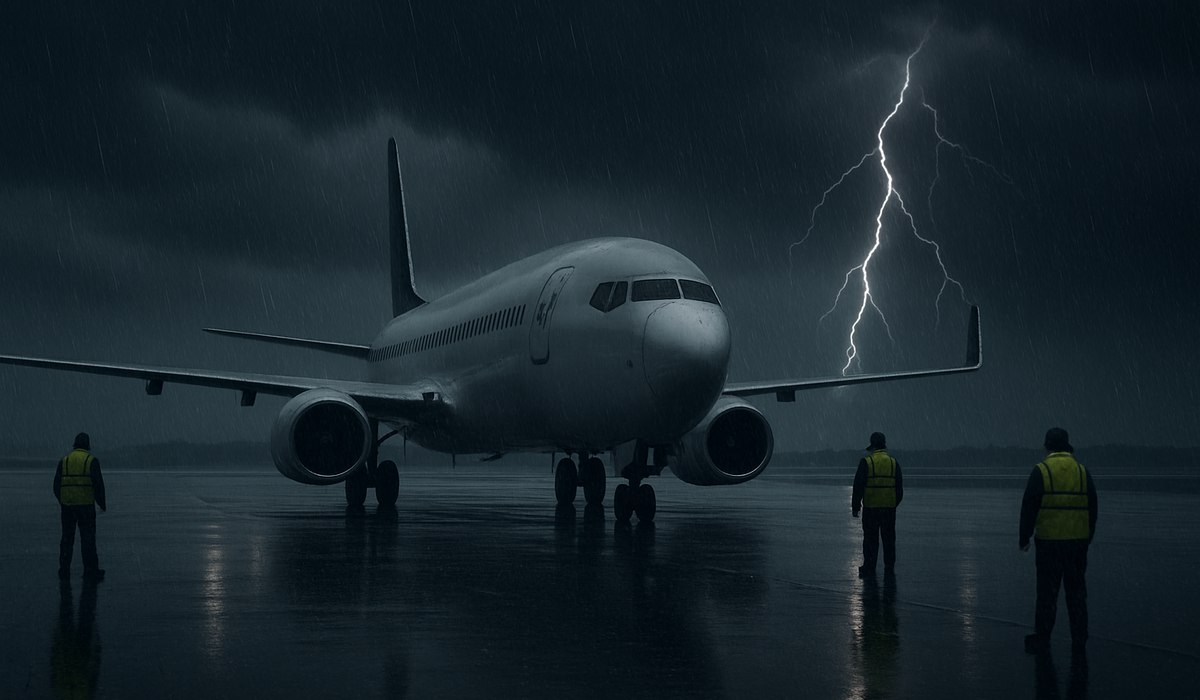
Image generated by AI
NCAA Tournament Travel Faces Mounting Flight Disruptions from Wetter Spring Seasons
College basketball's signature March Madness tournament is colliding with intensifying spring storm patterns, as the NCAA confronts a critical travel challenge: extreme weather disruptions during peak tournament scheduling. New guidance reveals that NCAA warns wetter atmospheric conditions are driving unprecedented flight delays across major hubs precisely when thousands of fans, athletes, and support staff travel to championship venues. From Midwest airports to East Coast facilities, the convergence of packed tournament calendars with increasingly volatile spring weather systems is creating a perfect storm for aviation disruptions that threatens both competitive schedules and traveler experiences.
Spring Storm Seasons Create Perfect Disruption Storm for Tournament Travel
March and early April represent one of aviation's most volatile windows. Late winter systems overlap with strengthening spring storm fronts, creating conditions where heavy rain, snow, and severe thunderstorms repeatedly snarl air traffic. Recent tournament seasons documented thousands of flight cancellations and delays across major regional hubs precisely when arenas fill for men's and women's March Madness games and collegiate championships.
The timing creates a cascading problem. Spring break leisure travel competes for identical aircraft and crews, reducing network resilience. When a single storm system sweeps across multiple regions, the entire airspace becomes congested. Even charter flights serving college teams navigate the same runways, taxiways, and ground infrastructure as commercial carriers. When weather triggers ground stops or extended spacing between takeoffs, tournament-bound aircraft queue alongside every other flight, eliminating priority advantages that teams might otherwise enjoy.
Travel analysts emphasize this sobering reality: NCAA warns wetter conditions mean tournaments are increasingly exposed to multi-day storm systems that upend carefully constructed flight schedules. The infrastructure simply cannot absorb simultaneous weather impacts across multiple major airports without significant delays rippling through tournament logistics.
How Extreme Weather Compounds NCAA Tournament Logistics
Federal aviation data provides stark context for tournament planners. The FAA reports that roughly 75% of system-impacting delays exceeding 15 minutes over recent years were attributed to weather conditions. In 2024 alone, approximately two-thirds of all U.S. flight delays connected to weather—far exceeding factors like traffic volume or runway capacity.
These statistics translate into real operational challenges. Transportation analysts estimate U.S. flight delays cost tens of billions annually, with weather as the primary driver. Affected passengers face hundreds of dollars in additional expenses for hotels, meals, and rebooking when storms force cancellations.
For NCAA tournaments, this backdrop matters enormously. Teams must depart on precise schedules. Fans coordinate travel weeks in advance. Hotels book solid months prior. Yet the underlying aviation system remains fundamentally fragile during late winter and early spring. When tournament seedings are announced and destination cities confirmed, the national airspace enters one of its most volatile operational phases.
Climate assessments from U.S. agencies and international bodies confirm worsening trends. Warmer air masses and increased atmospheric moisture create conditions favoring severe convective storms. Heavy precipitation events, more frequent thunderstorms, and stronger wind events consistently increase operational risk. Extreme heat combined with unstable air masses produces widespread thunderstorm outbreaks, forcing wide detours and extended holding patterns. Recent summer and transitional seasons highlight how these dynamics lead to thousands of delays at single airports daily.
Charter Flights Caught in Same Weather Delays as Commercial Traffic
A common assumption suggests charter flights avoid commercial congestion. This misses critical realities of modern aviation infrastructure. NCAA warns wetter conditions affect all aircraft equally because they share fundamental constraints: taxiways, runways, approach corridors, and airspace sectors are singular resources.
When weather forces ground stops, even premium charter operations wait in identical queues. Controllers must implement arrival spacing rules uniformly. Runways become unavailable to everyone simultaneously. Deicing operations slow across all aircraft types when precipitation intensifies.
Recent tournament seasons demonstrated this plainly. Teams flying charter planes experienced delays matching or exceeding commercial carriers during major storm systems. The NCAA acknowledged that charter availability, while valuable, cannot overcome weather-driven constraints built into the national airspace system. Ground delays at hub airports impact charter and commercial flights identically.
This reality forces planners toward difficult choices. Building extra buffer time into schedules means departing earlier or arriving later than competition requires. Choosing alternative routing through smaller airports introduces different complications. The underlying problem remains unchangeable: severe weather creates hard stops that money and premium services cannot overcome.
Federal Data Confirms Weather as Primary Flight Disruption Driver
Documentation from the Federal Aviation Administration leaves no ambiguity: weather dominates flight disruption causes. Recent FAA reports systematically analyzed major delay events, confirming that precipitation, wind, visibility, and thunderstorm activity account for the overwhelming majority of serious disruptions.
Looking specifically at 2024-2025 data, the FAA identified weather as a factor in approximately 65-75% of all delays. This far exceeds secondary factors. Runway capacity, traffic congestion, and mechanical issues combined represent less significant disruption drivers than weather alone.
The U.S. Transportation Department's Office of Aviation Enforcement and Proceedings tracks these metrics continuously. Analysis from the FAA indicates that spring seasons, particularly March and April, consistently rank among the year's most disruptive periods. Transitional weather patterns—where cold and warm air masses collide—create instability that generates both rain and severe thunderstorms.
Climate research reinforces this outlook. Studies examining aviation vulnerability to climate shifts show that wetter seasonal patterns increase disruption frequency and severity. The U.S. Climate Resilience Toolkit documents how airports themselves face flooding risks during extreme precipitation, closing taxiways, disrupting deicing operations, and sometimes triggering simultaneous ground stops at multiple hubs.
For NCAA tournament operations, this federal data translates into concrete implications. Planners cannot rely on weather improving. Historical patterns suggest late winter and spring will remain volatile operational periods. Building tournament schedules without accounting for probable weather-driven delays risks competitive integrity and traveler satisfaction.
Key Data Table: NCAA Tournament Travel and Weather Disruption Metrics
| Metric | 2024-2025 Data | Impact on Tournament Travel |
|---|---|---|
| Weather-related flight delays (% of total) | 65-75% | Most disruptions occur during tournament season |
| March-April average delays per hub | 20-30% above annual average | Peak tournament months face worst conditions |
| Charter flight delays during severe weather | Equivalent to commercial | No operational advantage during storms |
| Economic cost of weather delays (annual U.S.) | Tens of billions | Individual travelers face $200-500+ per disruption |
| FAA ground stop frequency (spring months) | 15-25 days per season | Multiple airports affected simultaneously |
| Passenger rebooking success during multi-day events | 40-60% within 4 hours | Significant delays in tournament recovery |
| Average cancellation rate during major systems | 8-12% of flights | 1 in 10 flights removed from schedule |
What This Means for Travelers: NCAA Tournament Travel Action Checklist
Tournament travel requires preparation that acknowledges weather realities:
-
Book flights at least 5-7 days before tournament dates to maximize schedule flexibility if disruptions occur and allow rebooking options.
-
Purchase refundable tickets or travel insurance that covers weather-related cancellations, protecting financial investments when storms force changes.
-
Select airports with geographic diversity—if flying to tournaments, identify alternate airports within 100-mile radius as backup options.
-
Monitor weather forecasts 10-14 days before travel using services like FlightAware to anticipate potential disruptions early.
-
Arrive at airports 3+ hours before domestic tournament travel to accommodate longer security lines and weather-related congestion during peak periods.
-
Check airline websites directly for delay notifications rather than relying solely on airport information, which updates slower than carrier systems.
Disclaimer
This article is for informational and educational purposes only. It does not constitute legal, financial, or professional advice. While we strive to provide accurate and up-to-date information, travel policies, regulations, and conditions change rapidly. Always verify information with official sources before making travel decisions. Nomad Lawyer makes no representations about the accuracy, reliability, completeness, or suitability of the information provided. Readers should consult qualified professionals for advice specific to their circumstances. The views expressed in this article are those of the author and do not necessarily reflect the views of Nomad Lawyer.
Preeti Gunjan
Contributor & Community Manager
A passionate traveller and community builder. Preeti helps grow the Nomad Lawyer community, fostering engagement and bringing the reader experience to life.
Learn more about our team →