
Qatar and Saudi Arabia Transform Abu Samra–Salwa Border Into Major Tourism Corridor in 2026

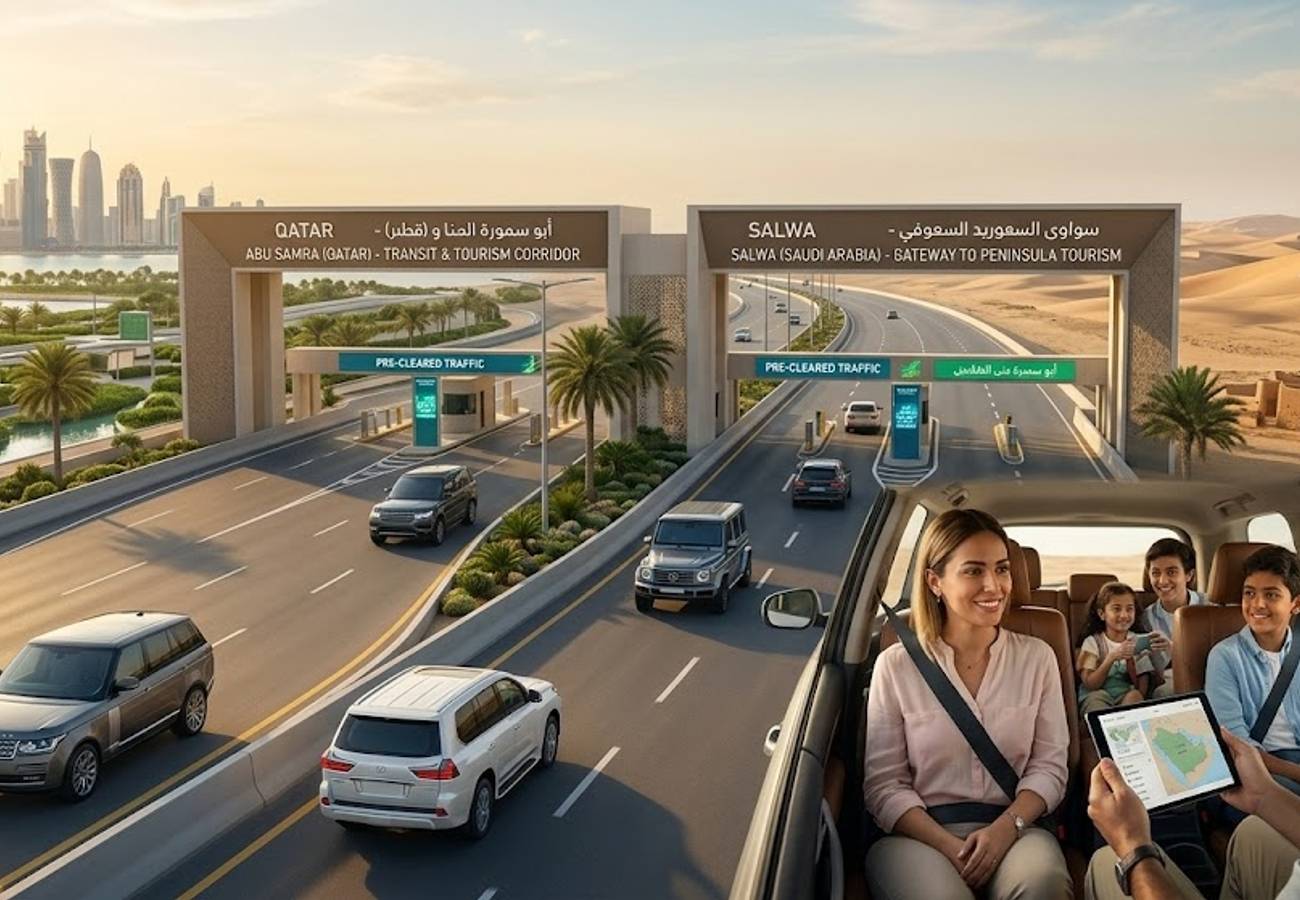
Image generated by AI
Qatar and Saudi Arabia are transforming their shared Abu Samra–Salwa land border into a major tourism corridor in 2026, accelerating road trips, cultural exchanges, and multi-destination Gulf itineraries.
DOHA, Qatar — A major shift in Arabian Peninsula travel patterns is underway as Qatar and Saudi Arabia pivot their shared land border from a routine transit checkpoint into a dynamic tourism corridor. The Abu Samra crossing in Qatar and the Salwa crossing in Saudi Arabia form the sole terrestrial connection between Qatar and the wider Arabian Peninsula, providing a direct highway route for passenger vehicles, regional tour buses, and commercial transport.
In 2026, enhanced border infrastructure and streamlined digital customs clearance are encouraging regional and international tourists to combine both destinations within single vacation itineraries. The development enables flexible multi-stop travel, driving economic growth across retail, hospitality, and dining sectors on both sides of the frontier.
Abu Samra–Salwa Crossing Connects Gulf Destinations via Land Corridor
Saudi Arabia represents Qatar’s only direct land neighbor, making the Abu Samra–Salwa road link vital for cross-border mobility. Historically utilized primarily for commercial freight and local commuting, the corridor is now engineered to accommodate expanding passenger volumes seeking overland travel.
The land route offers a flexible, cost-effective alternative to short-haul regional flights. Families, weekend holidaymakers, and international tour groups are increasingly utilizing passenger vehicles to explore the contrasting tourism products of both nations.
By establishing a continuous travel belt between Doha and major eastern Saudi urban hubs, the corridor supports a multi-destination tourism framework across the Gulf Cooperation Council (GCC) region.
Qatar–Saudi Arabia Cross-Border Tourism Framework and Segment Matrix
The reference table below details the primary travel segments, key destination highlights, infrastructure features, and economic outcomes generated along the Abu Samra–Salwa border corridor:
| Travel Parameter | Qatar Highlights | Saudi Arabia Highlights | Border Corridor Inclusions & Logistics |
|---|---|---|---|
| Primary Travel Segments | Weekend getaways, luxury stays & cultural breaks | Desert safaris, heritage sites & regional touring | Family road trips, corporate extensions & leisure circuits |
| Flagship Destinations | Doha waterfront, Souq Waqif, Katara Cultural Village | Al-Ahsa Oasis, Eastern Province & historic ruins | Abu Samra (Qatar) & Salwa (Saudi Arabia) terminals |
| Transit & Infrastructure | Multi-lane highway links to Doha metro network | Direct road access to Dammam & Riyadh expressways | Digital pre-clearance, automated lanes & vehicle inspection |
| Economic Growth Drivers | Retail spending, luxury hotels & waterfront dining | Regional hotel stays, eco-lodges & heritage tours | Border-adjacent fuel, dining & roadside hospitality |
| Target Travel Demographic | Regional GCC drivers & international multi-stop visitors | Road-trip enthusiasts & cultural heritage travelers | Streamlined GCC e-visa & multi-entry transit permits |
Doha Attractions Draw Saudi Road Travelers for Short Breaks
For Qatar, the expanded land corridor provides direct access to the large Saudi domestic travel market. The ease of driving across the border allows Saudi families and residents from the Eastern Province to visit Qatar for short weekend breaks without booking flights.
Capital city Doha presents a major draw, offering world-class cultural institutions like the Museum of Islamic Art, expansive retail destinations, luxury waterfront resorts, and family entertainment complexes.
The influx of overland visitors provides steady weekend occupancy for Doha hotels, while boosting revenue for local restaurants, retail malls, and cultural venues.
Qatar Visitors Access Expanding Saudi Heritage and Desert Tourism
The tourism relationship is reciprocal. For Qatar-based residents and international tourists arriving via Hamad International Airport, the land border opens seamless road access to Saudi Arabia’s expanding portfolio of cultural and natural attractions.
Travelers crossing from Abu Samra into Salwa can explore nearby historical regions such as the UNESCO-listed Al-Ahsa Oasis, renowned for its ancient date palm groves, natural springs, and historic fortresses.
Longer driving itineraries extend into Saudi Arabia’s desert landscapes, historic ruins, and major urban centers, providing a diverse contrast to Qatar’s compact coastal cityscape.
Digital Pre-Clearance Systems Streamline Border Transit Logistics
A core element driving border tourism growth in 2026 is the implementation of advanced digital border management technologies. Both Qatari and Saudi authorities have introduced pre-clearance digital portals allowing travelers to register passenger manifests and vehicle details prior to arrival.
By completing identity verification and customs declarations electronically, drivers can utilize dedicated fast-track lanes at Abu Samra and Salwa, significantly reducing waiting times during peak holiday weekends.
These digital enhancements eliminate friction points for international tour operators organizing multi-country bus itineraries, ensuring predictable transit schedules across the frontier.
Practical Implications for Gulf Travelers and Regional Mobility
For international and regional travelers, the emergence of the Abu Samra–Salwa tourism corridor transforms how itineraries are planned across the Middle East. Combining Qatar’s luxury urban environment with Saudi Arabia’s vast geographic diversity within a single driving holiday yields greater travel variety without requiring multiple air tickets.
From an economic perspective, cross-border road tourism distributes visitor spending into secondary border towns and roadside services, benefiting local fuel stations, dining venues, and regional hotels along the highway.
As GCC nations continue working toward unified regional travel frameworks, the Qatar–Saudi land corridor serves as a model for integrated multi-destination tourism across the region.
Traveler Guidance: Navigating the Abu Samra–Salwa Border Corridor
Travelers planning a cross-border road trip between Qatar and Saudi Arabia should follow these practical steps:
- Complete Digital Pre-Registration: Upload passenger passport details and vehicle registration documents to official Qatari and Saudi border portals before departure.
- Verify Cross-Border Rental Permits: If driving a rental vehicle, ensure your rental agreement explicitly includes authorization and insurance coverage for international transit.
- Confirm Visa Requirements: Verify eligibility for GCC e-visas or multi-entry tourist visas prior to reaching the border control gates.
- Plan Peak Crossing Times: Travel during early morning hours on weekdays to avoid peak weekend customs traffic at Abu Samra and Salwa.
Related Travel Guides
- Puglia in Italy Opens Bespoke 2026–27 Wellness Retreats for Australian Teachers and Travel Advisors
- Switzerland Exceeds $960 Billion GDP as Premium Tourism and High-Tech Innovation Drive European Growth
- Laos Japanese Tourist Arrivals Surge 36 Percent in H1 2026 Driven by Osaka Expo and Tokyo Promotions
Disclaimer
This article is for informational and educational purposes only. It does not constitute legal, financial, or professional advice. While we strive to provide accurate and up-to-date information, travel policies, regulations, and conditions change rapidly. Always verify information with official sources before making travel decisions. Nomad Lawyer makes no representations about the accuracy, reliability, completeness, or suitability of the information provided. Readers should consult qualified professionals for advice specific to their circumstances. The views expressed in this article are those of the author and do not necessarily reflect the views of Nomad Lawyer.
Raushan Kumar
Founder & Lead Developer
Full-stack developer with 11+ years of experience and a passionate traveller. Raushan built Nomad Lawyer from the ground up with a vision to create the best travel and law experience on the web.
Learn more about our team →