
Qatar Joins Israel, UAE, Iran, Bahrain, Iraq, Kuwait, And All Countries Across Middle East In Witnessing Another Cease Fire Talks On Hold As Canada Releases Urgent Travel Advisory For Canadian Travelers Ensuring Safety Through Nonstop Helpline Support, Visa Assistance And Emergency Shelter Services Across Dubai, Jerusalem, Doha, Manama And Baghdad
Qatar Joins Israel, UAE, Iran, Bahrain, Iraq, Kuwait, And All Countries Across Middle East In Witnessing Another Cease F

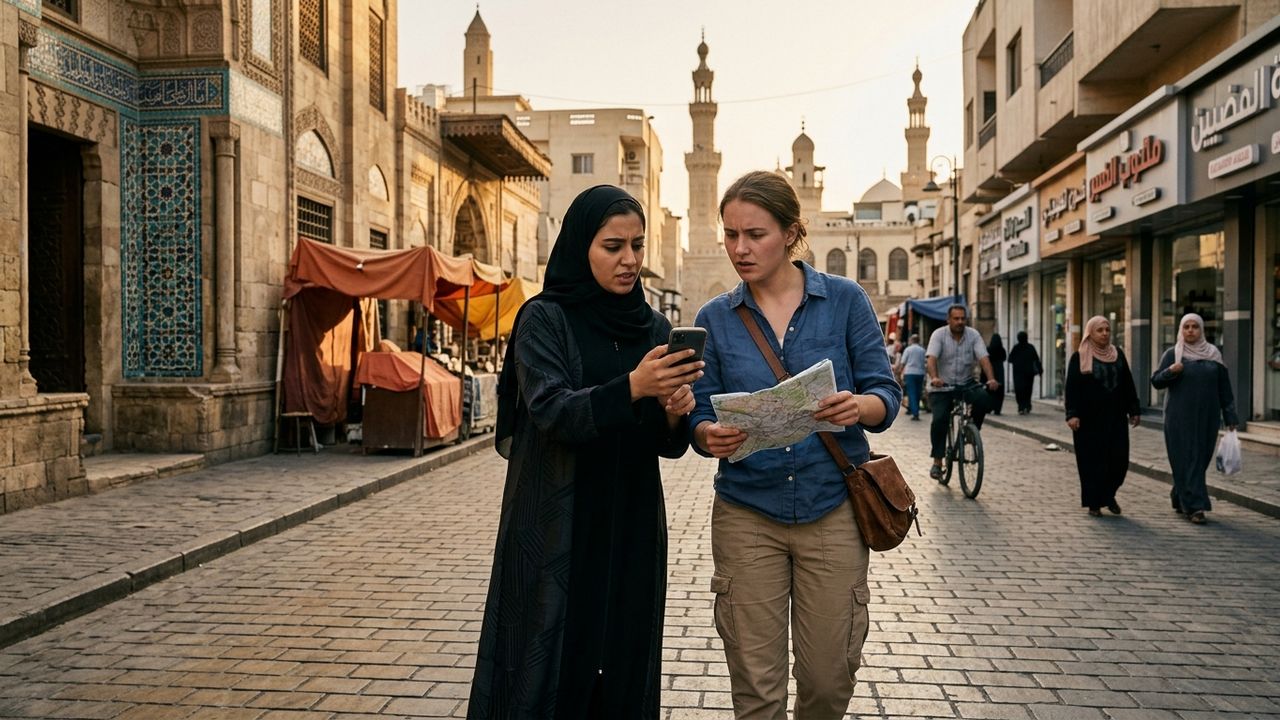
Image generated by AI
[Ottawa, June 21, 2026] —
Canada Issues Urgent Travel Advisory as Middle East Ceasefire Talks Stall Amid Regional Airspace Disruptions and Geopolitical Tensions Across Gulf Nations
Diplomatic channels remain locked as Middle East ceasefire talks stall, triggering an urgent travel advisory from Canada affecting fourteen nations across the Gulf and Levant. Consular reports and flight tracking data confirm that airspace volatility and sudden routing changes are disrupting international mobility throughout the region. The advisory, issued on June 21, 2026, directs citizens to monitor security developments in high-transit corridors while commercial departure windows remain open.
Since late February, the broader Middle East has operated under a highly fragile security framework. Diplomatic negotiations have repeatedly suspended, leaving regional stability in a state of continuous flux. Aviation authorities and government agencies now monitor overlapping security developments that directly impact commercial flight paths, ground transportation networks, and passenger transit corridors. The ongoing uncertainty has forced foreign governments to continuously update emergency guidance for travelers navigating high-risk zones.
Doha Transit Hub Faces Altitude Uncertainty Amid Regional Flight Rerouting
Qatar continues to function as a primary aviation crossroads in the Gulf, drawing passengers attempting to bypass disrupted regional routes. Consular officials report that fluctuating airspace conditions and security alerts have introduced significant uncertainty for travelers transiting through Doha. Canadian authorities urge citizens to maintain strict situational awareness, register with official embassy channels, and monitor airline schedules for sudden cancellations or alternates. Despite robust airport infrastructure, Qatar’s geographic positioning places it squarely within the region’s aviation sensitivity zone.
Jerusalem and Tel Aviv Airspace Triggers Heightened Security Protocols
Israel remains under sustained security pressure as diplomatic stalemates prolong regional instability. Government reports classify Jerusalem and Tel Aviv as high-monitoring corridors where travelers encounter periodic flight delays and precautionary security measures. Officials advise citizens to restrict non-essential movement, maintain proximity to designated emergency shelters, and strictly follow directives from local authorities and embassy personnel. Airspace unpredictability continues to influence both commercial tourism and corporate travel operations across the country.
Dubai International Airport Maintains Operations Despite Gulf Spillover Risks
The United Arab Emirates sustains one of the most stable commercial aviation environments in the Middle East, yet indirect exposure to neighboring conflicts still impacts routing. Flight tracking data confirms that Dubai International Airport operates at near-full capacity while managing frequent international reroutes and weather-related delays linked to nearby restricted zones. Canadian advisories stress that travelers must prepare for sudden operational shifts, even though domestic infrastructure remains highly reliable. Regional instability continues to drive heightened monitoring from foreign diplomatic missions.
Iran Travel Classification Remains Strict as Commercial Routes Tighten
Iran maintains its highest-risk designation due to compounding diplomatic friction and airspace limitations. Consular assessments indicate that commercial flight availability remains severely restricted, while emergency evacuation protocols heavily depend on third-party transit nations. Authorities continue to warn against all non-essential travel, citing limited consular access during crisis scenarios and complex ground transportation networks. The country remains a focal point of sensitivity within the broader regional security framework.
Manama Gulf Corridor Monitors Maritime and Aviation Spillover Threats
Bahrain operates under normal commercial and tourism conditions, yet its strategic Gulf location subjects it to indirect security exposure. Officials highlight proximity to active maritime shipping lanes and the potential for temporary airspace disruptions as primary concerns for international visitors. Travelers receive guidance to maintain elevated awareness and follow real-time embassy notifications regarding regional flight adjustments. Manama’s internal stability remains intact, but external geopolitical currents continue to shape travel planning.
Baghdad Transit Zone Warns of Sudden Ground and Air Restrictions
Iraq experiences elevated travel risk as shifting military dynamics directly influence aviation and ground movement protocols. Consular reports emphasize that Baghdad faces potential sudden airport closures, unpredictable ground transportation security levels, and constrained emergency exit pathways during escalation periods. Authorities strongly recommend that citizens utilize remaining commercial departure windows while operational routes stay open. The corridor remains highly sensitive to broader Middle East airspace fluctuations.
Kuwait Strategic Position Draws Precautionary Aviation Monitoring
Kuwait sustains internal stability while functioning as a critical connectivity node between Gulf states. Government advisories flag regional airspace disruptions, potential flight schedule volatility, and sudden operational reroutes as key risk factors for transit passengers. Officials classify Kuwait as a transit-sensitive location rather than an active conflict zone, yet maintain precautionary monitoring due to its geographic alignment with sensitive maritime and aviation corridors. Travelers receive guidance to anticipate mid-route adjustments.
Amman Border Crossings and Air Traffic Navigate Regional Pressure
Jordan serves as an essential transit gateway linking multiple regional hotspots, making its infrastructure both vital and vulnerable. Canadian monitoring highlights potential border crossing interruptions, air traffic rerouting impacts, and indirect spillover effects from neighboring security developments. Officials confirm that Amman maintains internal stability while remaining exposed to external geopolitical pressures. Transit passengers must prepare for rapid schedule modifications and alternative routing options.
Lebanon and Syria Corridors Enforce Complete Travel Avoidance
Both Lebanon and Syria remain under strict avoidance classifications due to persistent instability and infrastructure vulnerabilities. Consular assessments indicate that active conflict-related risks, severely limited evacuation pathways, and unpredictable ground security conditions create unacceptable danger levels for international visitors. Authorities strongly advise immediate departure for any citizens currently present in these zones. Diplomatic missions continue to prioritize emergency coordination over routine travel support.
Oman Stability Contrasts With Yemen Conflict Conditions
Oman operates as a comparatively secure diplomatic and travel destination within the broader regional landscape. Canadian monitoring maintains a precautionary stance for Muscat while issuing complete travel avoidance directives for Yemen, where ongoing conflict and humanitarian challenges severely restrict movement. The stark contrast between the two nations illustrates the fragmented nature of Middle East travel advisories. Visitors to Oman receive routine security updates, while Yemen remains entirely off-limits to commercial tourism.
Canadian Consular Network Activates Multi-Tier Emergency Support Systems
The Government of Canada has deployed a comprehensive emergency response framework to assist citizens navigating Middle East instability. Officials outline a continuous helpline network operating through phone, email, and secure messaging platforms to guarantee real-time consular access. Registration systems enable authorities to track traveler locations, distribute immediate security alerts, and coordinate evacuation logistics. Assisted departure operations may include commercial flight prioritization, charter arrangements, and cross-border transport support when standard routes falter. Emergency passport issuance, document renewal, and transit visa facilitation remain active at all embassies.
Impact Analysis
The suspension of ceasefire negotiations has created a ripple effect across global aviation networks, forcing airlines to adjust flight paths, insurers to revise coverage terms, and governments to allocate additional consular resources. Transit hubs in Doha, Dubai, and Manama absorb the brunt of passenger rerouting, straining local airport capacity and ground handling services. Financial markets and tourism boards in the region report immediate revenue declines as corporate travel budgets freeze and leisure bookings face cancellation penalties. Aviation analysts warn that prolonged diplomatic stagnation could trigger extended airspace closures, further complicating supply chain logistics and international mobility.
Forward-Looking Conclusion
Regional diplomatic channels remain locked as ceasefire discussions stall, leaving air travel and ground transit vulnerable to sudden policy shifts. Consular officials emphasize that early departure planning, documentation readiness, and continuous government monitoring represent the most effective risk mitigation strategies. International travelers must treat the Middle East as a dynamic operational environment where route stability depends directly on evolving security assessments. Future aviation scheduling will likely reflect these fluctuations until a definitive diplomatic resolution emerges.
Related Travel Guides
Disclaimer
This article is for informational and educational purposes only. It does not constitute legal, financial, or professional advice. While we strive to provide accurate and up-to-date information, travel policies, regulations, and conditions change rapidly. Always verify information with official sources before making travel decisions. Nomad Lawyer makes no representations about the accuracy, reliability, completeness, or suitability of the information provided. Readers should consult qualified professionals for advice specific to their circumstances. The views expressed in this article are those of the author and do not necessarily reflect the views of Nomad Lawyer.
Raushan Kumar
Founder & Lead Developer
Full-stack developer with 11+ years of experience and a passionate traveller. Raushan built Nomad Lawyer from the ground up with a vision to create the best travel and law experience on the web.
Learn more about our team →