
Global Markets Live: Tech and Travel Stocks Jolt Amid Rate Shifts in March 2026
Global markets live trading shows tech, travel, and pharma sectors reshaping investor sentiment in March 2026. Microsoft, United Airlines, Mastercard, Novartis, and UBS drive volatility as geopolitical tension and interest rate expectations reshape travel demand and equity valuations.

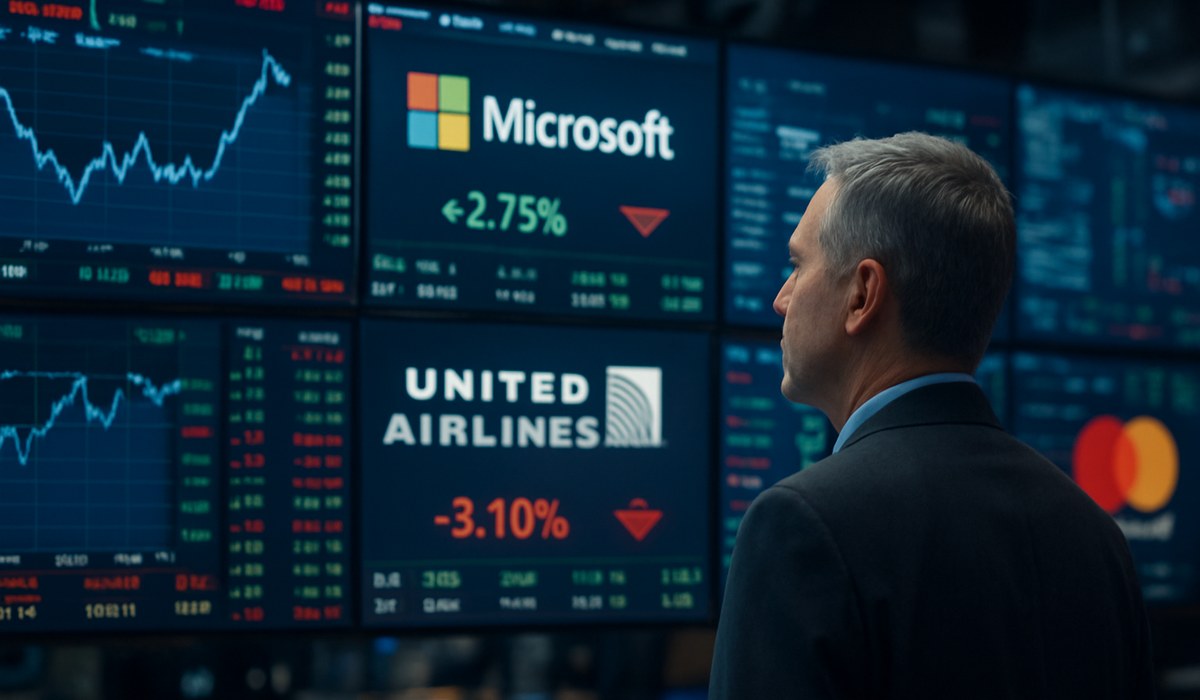
Image generated by AI
Global Markets Live: How Tech and Travel Stocks Are Reshaping Traveler Costs in March 2026
Microsoft, United Airlines, Mastercard, Novartis, and UBS dominate global markets live trading as a volatile stretch reshapes both investor sentiment and real-world travel prices. Technology valuations, airline fuel exposure, cross-border payment flows, pharmaceutical stability, and European banking dynamics create a complex backdrop for travelers planning spring and summer journeys. Geopolitical tensions in the Middle East, rising crude oil prices, and shifting interest rate expectations drive sharp market swings that directly impact ticket pricing and travel accessibility.
Microsoft's AI Boom Anchors Tech Markets—And Your Flight Search Algorithms
Microsoft remains a central barometer for global risk appetite. The tech giant's massive weighting in major equity indices gives outsized influence over how traders price risk across the entire global markets live ecosystem. Recent sessions have seen traders reassess cloud and AI valuations after concerns emerged about artificial intelligence revenue durability and higher-for-longer borrowing costs affecting enterprise budgets.
Investors watch Microsoft's cloud and AI-related metrics closely as a proxy for whether corporate technology spending can expand sustainably. Large-cap U.S. technology firms are expected to sustain heavy investment in generative AI infrastructure through 2030, with trillions of dollars in projected spending cementing Microsoft's role in data center buildout. Market analysis suggests resilient guidance on cloud growth steadies broader equity benchmarks, while deceleration triggers outsized swings in technology-heavy indices. For travelers, this matters: global markets live volatility in Microsoft stock directly correlates with airline technology spending, payment processor investments, and the cost structures of online travel agencies.
United Airlines Trapped Between Record Bookings and Fuel Shock Reality
Travel-linked stocks experience sharp moves as geopolitical Middle East tensions collide with robust passenger demand signals. United Airlines has been especially volatile in global markets live trading, reporting some of the strongest booking trends in corporate history during early 2026. Leisure and premium travel appetite remains firm even after the post-pandemic rebound stabilizes.
Simultaneously, crude oil prices have spiked toward triple-digit levels, reviving airline cost structure concerns. Major U.S. carriers, including United, operate with limited fuel hedging, leaving exposure to energy market swings. Sector analysis highlights this mismatch: strong revenue trends clash with investor concerns about higher ticket prices eroding demand if fuel costs remain elevated. United's share-price volatility has become a real-time gauge of how far consumers can absorb rising airfares before demand softens. United Airlines' operational decisions on capacity and fuel efficiency directly influence March 2026 fares across transatlantic and Asia-Pacific routes. For global markets live watchers, United's trading reflects fundamental strength masked by short-term energy market headlines.
Mastercard's Cross-Border Data Proves Travel Demand Stays Resilient
Payments giant Mastercard offers one of the clearest high-frequency reads on global travel flows through anonymized cross-border transaction data. Recent published presentations indicate solid growth in card spending across borders, particularly in travel-related categories like flights, accommodation, and experiences. Asia-Pacific and European source markets drive consistent outbound spending despite volatile equity markets and geopolitical uncertainty.
Mastercard's tourism and consumption trend studies confirm travelers remain willing to spend on international journeys. This pattern supports airlines, hotels, and destination economies relying on visitor spending for retail and service revenues. For global markets live analysts, Mastercard's resilient payment data offsets gloom surrounding airline sector energy pressures. Asset-light companies with diversified fee income, such as Mastercard, weather volatility better than capacity-heavy operators like carriers. Mastercard's real-time transaction insights reveal genuine traveler sentiment beyond equity market noise, providing a data-driven counterweight to airline stock volatility.
Novartis Stabilizes European Sentiment as Defensive Pharma Play
Novartis emerges as an important stabilizer during periods when cyclical travel and technology sectors face pressure. As a large pharmaceutical group, Novartis benefits from relatively steady healthcare demand, with pipeline news and regulatory milestones driving stock movement more than macro headlines. Investors increasingly use Novartis and peer companies as partial havens when growth or geopolitical risk concerns flare up, creating selective demand for defensive positioning in global markets live trading.
Pharmaceutical stability provides a psychological counterweight to volatile travel and tech sectors. When airline stocks swing sharply on fuel prices or tech stocks decline on interest rate fears, pharma names like Novartis offer steady ground for portfolio rebalancing. This dynamic affects broader market sentiment, reducing panic selling that might otherwise cascade through travel-related equities. For portfolio managers tracking global markets live, pharma represents essential stability ballast.
UBS Anchors European Banking Amid Integration and Wealth Management Expansion
UBS remains closely watched following Credit Suisse integration and its expanding role in global wealth management. Markets scrutinize cost-cutting progress, capital buffers, and synergy guidance as the bank cements its position as a dominant Swiss-based financial institution. Share price reactions often ripple through European banking indices, influencing credit availability and investment appetite for travel-sector equities.
UBS's stability matters for travel investors because banking sector health determines credit access for airlines, hotel operators, and travel platforms pursuing expansion. UBS wealth management services influence institutional investor positioning in travel-related equities, affecting capital flows into carriers and tourism operators. Strong UBS performance supports broader European equity sentiment, potentially boosting travel stock valuations even when energy prices surge.
Global Markets Live Data: Key March 2026 Travel and Tech Indicators
| Metric | Current Level | 30-Day Trend | Traveler Impact |
|---|---|---|---|
| Crude Oil Price (WTI) | $95–105/barrel | ↑ Upward | Airfares rise 2–4% per $10/barrel increase |
| Microsoft Cloud Revenue Growth | Steady YoY expansion | ↑ Resilient | Tech investment in airline systems continues |
| Mastercard Cross-Border Volume | +8–12% YoY | ↑ Positive | Strong international leisure and business travel |
| United Airlines Booking Momentum | Strongest in 5 years | ↑ High demand | Premium cabin availability tightens, prices escalate |
| Novartis Stock Volatility (VIX proxy) | Lower than tech sector | ↓ Stable | Defensive positioning supports market confidence |
| UBS European Banking Index Weight | ~18% of index | → Stable | Credit availability for travel expansion remains sound |
What This Means for Travelers: Actionable Takeaways for March and Beyond
-
Book premium cabin flights now if budget allows. United Airlines and peer carriers report record bookings. Global markets live volatility in airline stocks signals tightening seat inventory. Premium cabins fill earliest, and fuel surcharges are already embedding into fares.
-
Lock in international trips via credit card spending. Mastercard data confirms strong cross-border demand. Favorable airline pricing occurs during off-peak windows (midweek, shoulder seasons). Global markets live strength in payment volumes indicates sustained consumer confidence.
-
Monitor oil price headlines for last-minute deals. Temporary crude price dips occasionally trigger carrier discounting. Set price alerts on United, American, and Delta routes. Fuel cost spikes typically reverse within 2–4 weeks, creating brief repricing windows.
-
Use tech company earnings announcements to predict airfare moves. Microsoft and Google earnings dates often coincide with corporate travel budget clarity. Global markets live strength in tech boosts business travel demand and premium pricing. Plan leisure trips around tech earnings seasons to avoid congestion.
-
Expect currency stability in USD-denominated routes. UBS and European banking strength support currency stability. Dollar-strength trends favor U.S. travelers heading to Europe. Global markets live banking sentiment directly influences forex-adjusted fares.
Frequently Asked Questions
How do global markets live movements affect my flight prices? Crude oil prices, airline stock performance, and fuel hedging decisions directly influence ticket pricing within 48–72 hours. When global markets live show oil spikes, carriers typically add fuel surcharges to bookings. Conversely, a weak airline stock may trigger revenue management adjustments, occasionally releasing cheaper inventory to boost load factors and share price.
Will global markets live volatility in tech stocks impact my business travel budget? Yes. Microsoft, Amazon, and Google earnings drive corporate travel budget visibility. When global markets live shows strong tech earnings, companies increase business travel allocations, tightening business-class availability and raising premium cabin fares. Weak tech earnings reduce corporate travel demand, occasionally creating discounts on premium products.
Does Mastercard's cross-border data signal continued growth in international travel? Mastercard's anonymized transaction data confirms sustained international leisure and business travel spending across Asia-Pacific and European markets. Global markets live payment volume strength indicates travelers remain willing to spend on flights, hotels, and experiences despite equity market volatility, validating stable to growing international tourism through Q2 2026.
Should I wait for global markets live uncertainty to ease before booking travel? No. Mastercard and United Airlines data show underlying travel demand remains resilient regardless of stock market noise. Waiting for "perfect" market conditions typically results in higher fares as availability tightens. Global markets live volatility does not reliably predict airfare direction; booking 4–8 weeks in advance remains optimal regardless of equity sentiment.
Related Travel Guides
Navigating Airline Fuel Surcharges in 2026: A Traveler's Strategy Guide
How to Lock in Premium Flight Prices During Market Volatility
Cross-Border Payment Optimization for International Business Travelers
European Travel During Banking Sector Transitions: Practical Tips
Disclaimer
Disclaimer
This article is for informational and educational purposes only. It does not constitute legal, financial, or professional advice. While we strive to provide accurate and up-to-date information, travel policies, regulations, and conditions change rapidly. Always verify information with official sources before making travel decisions. Nomad Lawyer makes no representations about the accuracy, reliability, completeness, or suitability of the information provided. Readers should consult qualified professionals for advice specific to their circumstances. The views expressed in this article are those of the author and do not necessarily reflect the views of Nomad Lawyer.
Raushan Kumar
Founder & Lead Developer
Full-stack developer with 11+ years of experience and a passionate traveller. Raushan built Nomad Lawyer from the ground up with a vision to create the best travel and law experience on the web.
Learn more about our team →