
United States World's Largest Air Force: 2026 Defense Spending Report
April 2026 SIPRI report confirms United States world leader in military spending. Five nations control 60% of global defense budgets, reshaping air travel security protocols.

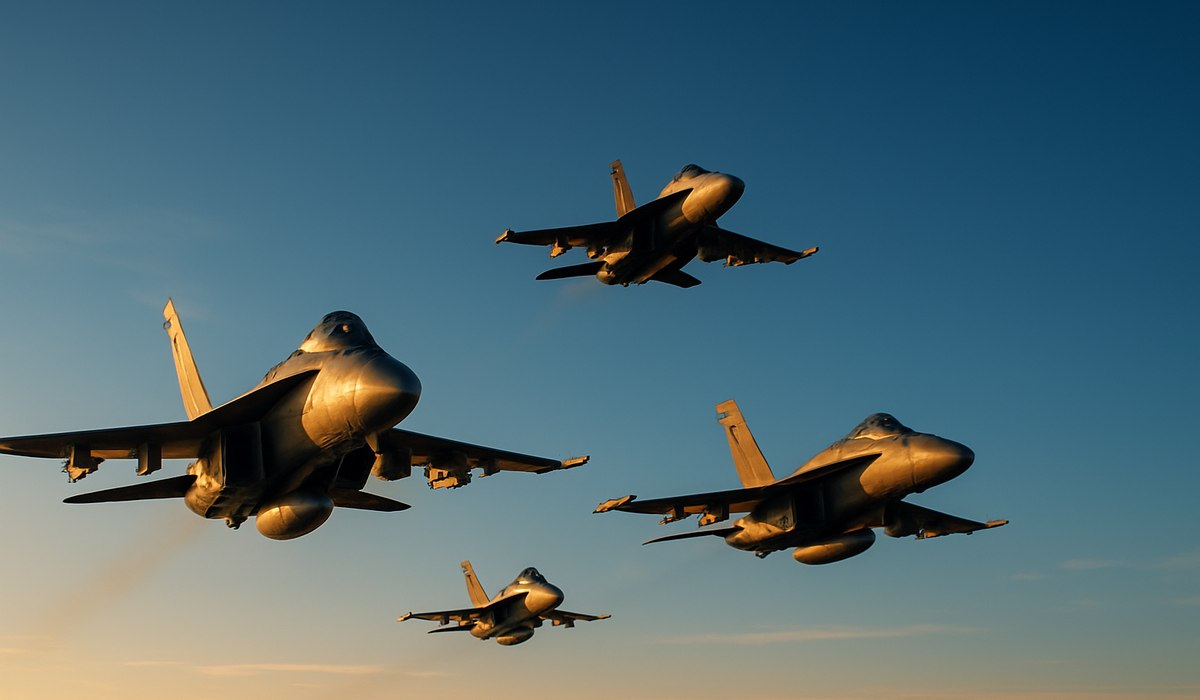
Image generated by AI
Global Defense Spending Reveals Aviation Security Investment Priorities
The United States dominates the world's largest air forces by annual defense budget, according to the April 2026 Stockholm International Peace Research Institute (SIPRI) report. Five nations—the United States, China, Russia, Germany, and India—collectively command 60% of planetary military expenditures. This concentration of defense spending directly impacts international aviation infrastructure, airport security operations, and cross-border flight protocols that affect millions of travelers annually.
Understanding which countries allocate the largest defense budgets provides crucial context for travelers navigating global airspace and international airports. Military spending influences aviation safety standards, air traffic control modernization, and bilateral flight agreements that determine route availability and security procedures at major aviation hubs.
Global Military Spending Hierarchy and Aviation Impact
The world's defense spending structure reveals how geopolitical priorities reshape travel corridors. The five largest military spenders invest resources that extend beyond combat operations into civilian aviation oversight. These investments fund air traffic control systems, airport security infrastructure, and emergency response capabilities affecting passenger safety.
China ranks second in annual defense budgeting, followed by Russia, Germany, and India. Each nation's military budget influences regional aviation policies. Germany's substantial defense allocation supports European airspace coordination through organizations managing thousands of daily international flights. India's growing defense investment reflects Asia-Pacific aviation expansion, requiring parallel investments in airport capacity and air traffic modernization.
Countries outside the top five collectively spend only 40% of global defense budgets, creating disparities in aviation infrastructure quality. Developing nations often lack resources for modern air traffic control systems, creating operational challenges for airlines routing flights through their airspace.
United States Defense Budget Dominance in Global Aviation
The United States world military leader allocates resources extending into civilian aviation infrastructure. American defense spending supports the Federal Aviation Administration (FAA), which maintains the world's busiest and most complex airspace. The FAA manages over 45,000 daily flights across U.S. territory, implementing security protocols influenced by military-grade defense investments.
U.S. defense budgets fund airport security agencies, international aviation agreements, and technology development affecting global flight operations. American airports implement security standards adopted internationally, meaning U.S. military investment indirectly shapes passenger screening procedures worldwide.
The substantial American defense commitment ensures continuous modernization of air traffic control systems, runway infrastructure, and emergency response capabilities. Travelers benefit from decades of military-funded aviation research translated into civilian applications—from collision avoidance technology to advanced weather prediction systems.
Visit the FAA's official website for current flight safety standards and regulatory information.
Asia-Pacific Military Investment Trends Reshape Regional Aviation
China and India's expanding defense budgets signal increased aviation development across Asia-Pacific markets. China's second-place defense spending supports both military air operations and civilian airport modernization. Major Chinese airports now rival or exceed American facilities in passenger capacity and technological sophistication.
India's entry into the top five military spenders reflects broader regional aviation expansion. Indian airports serve 1.3 billion citizens across a vast geographic area, requiring substantial infrastructure investment beyond traditional defense applications. Military aviation bases often share facilities with civilian airports, creating hybrid operations that improve overall aviation efficiency.
Regional spending increases accelerate airport construction, air traffic control modernization, and pilot training programs across Asia-Pacific. Airlines expanding into emerging Asian markets benefit from military-funded infrastructure investments, reducing operational costs and improving safety records.
European Defense Spending Increases Support International Aviation Integration
Germany's top-five position in defense spending reflects European commitment to coordinated aviation security. German airports function as crucial hubs connecting European and global networks. Defense investments support the European Organization for the Safety of Air Navigation (Eurocontrol), managing airspace for 41 European nations.
Russia's substantial military budget influences Eastern European aviation policies, affecting flight routes and overflight restrictions for international carriers. Post-2022 geopolitical tensions modified airspace access, with defense spending determining which carriers can operate through restricted corridors.
European nations collectively coordinate aviation policies through NATO and EU frameworks, with military budgets supporting these collaborative security systems. Enhanced defense investments accelerated implementation of single European sky initiatives, modernizing air traffic control and reducing flight delays across the continent.
Military Spending Impact on International Air Travel Security
Defense budgeting decisions cascade into airport security procedures affecting every international traveler. Countries with higher military allocations implement advanced screening technologies, including biometric systems and artificial intelligence-powered threat detection. These security measures, originating in military defense applications, enhance passenger safety while potentially extending check-in procedures.
The concentration of defense spending among five nations creates global aviation standards. Airports in militarily-invested countries implement protocols adopted internationally, establishing baseline security expectations worldwide. Airlines operating across multiple countries must comply with varying security standards influenced by regional defense investments.
Military aviation research drives civilian aircraft technology advancement. Defense budgets fund aerodynamic innovations, engine efficiency improvements, and materials science breakthroughs eventually adopted by commercial manufacturers. Travelers benefit from safer, more fuel-efficient aircraft developed through military-funded research programs.
Consult the U.S. Department of Transportation for passenger rights information and airline accountability standards.
Traveler Action Checklist
- Review country-specific flight requirements before booking international travel, as defense spending influences visa policies and security protocols
- Check current airport security procedures at FlightAware to understand enhanced screening in militarily-invested nations
- Verify airline compliance with international safety standards established through military-funded research initiatives
- Allow additional time for airport procedures in countries implementing advanced security technologies
- Monitor geopolitical developments affecting airspace access and overfly restrictions in defense-spending regions
- Register with your airline for flight disruption notifications reflecting security-related delays
- Purchase travel insurance covering flight cancellations from security or geopolitical factors
Key Data: Global Defense Spending and Aviation Implications
| Ranking | Nation | Global Share | Primary Aviation Impact | Key Airlines |
|---|---|---|---|---|
| 1 | United States | 35-40% | FAA leadership, international standards | American, Delta, United |
| 2 | China | 12-14% | Rapid airport expansion, airspace modernization | Air China, China Southern |
| 3 | Russia | 3-4% | Eastern European corridor control | Aeroflot, S7 Airlines |
| 4 | Germany | 3-4% | European hub coordination, Eurocontrol support | Lufthansa, Condor |
| 5 | India | 2-3% | Regional expansion, emerging market connectivity | Air India, IndiGo |
| Combined | Top 5 Nations | 60% | Global aviation governance, security standards | Worldwide impact |
What This Means for Travelers
Defense spending concentration among five major powers directly influences your travel experience. Countries with substantial military budgets implement advanced airport security systems, often causing longer processing times but enhancing safety. When booking international flights, factor additional time at airports in high-defense-spending nations, particularly the United States, China, and Germany.
The military-to-civilian technology pipeline means travelers benefit from continuous aviation safety improvements. Modern aircraft incorporate decades of military research, while air traffic control systems implement defense-funded innovations. Understanding these connections helps travelers appreciate why rigorous security procedures exist—they originate from military-grade protection standards.
Geopolitical tensions between major defense spenders occasionally affect airspace access and flight routing. Monitoring international relations helps travelers anticipate potential route changes or airline schedule modifications. Following aviation news sources provides advance warning of airspace restrictions or security modifications affecting your planned routes.
FAQ: Global Defense Spending and Air Travel
How does military spending affect airline ticket prices? Defense investments in airport infrastructure and air traffic modernization indirectly reduce operational costs for airlines. Advanced traffic management systems decrease flight delays and fuel consumption, potentially lowering ticket prices. However, security-related spending increases airport fees passed to consumers, creating mixed pricing effects.
**Why does the United States world leader status impact international
Disclaimer
This article is for informational and educational purposes only. It does not constitute legal, financial, or professional advice. While we strive to provide accurate and up-to-date information, travel policies, regulations, and conditions change rapidly. Always verify information with official sources before making travel decisions. Nomad Lawyer makes no representations about the accuracy, reliability, completeness, or suitability of the information provided. Readers should consult qualified professionals for advice specific to their circumstances. The views expressed in this article are those of the author and do not necessarily reflect the views of Nomad Lawyer.
Preeti Gunjan
Contributor & Community Manager
A passionate traveller and community builder. Preeti helps grow the Nomad Lawyer community, fostering engagement and bringing the reader experience to life.
Learn more about our team →