
The Battle of the Gulf: Insider Analysis of Emirates and Qatar Airways' Record FY25 Wealth and What It Delivers for Travelers

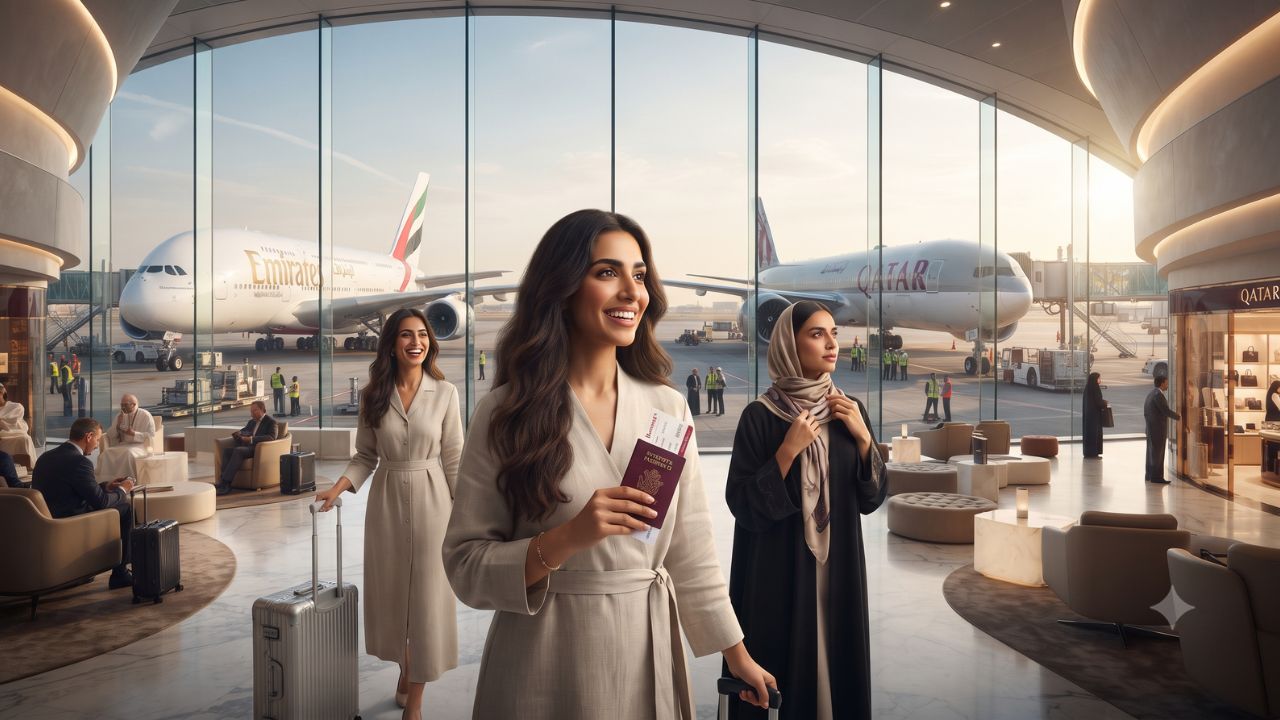
Generating a combined $58.3 billion in annual revenue and extracting up to $650 per passenger, Emirates and Qatar Airways posted the most profitable financial year in Middle Eastern aviation history for the fiscal cycle ending March 31, 2025. As global long-haul demand pivoted decisively toward premium cabins and high-efficiency mega-hub transit, Dubai-based Emirates secured $4.7 billion in net profit ($5.8 billion pre-tax) on $34.9 billion in total revenue, while Doha-based Qatar Airways achieved an all-time record $2.15 billion net profit (7.85 billion QAR) on $23.4 billion in revenue—a 28% year-over-year surge.
For international travelers navigating journeys across Europe, Asia, Africa, and Australasia, these record-breaking balance sheets translate into fierce commercial rivalry. Both flag carriers are reinvesting billions directly into expanded airport lounges, next-generation widebody fleets, and subsidized stopover programs that transform routine layovers in Dubai and Doha into immersive cultural getaways.
The Dual Models of Middle Eastern Dominance: Scale vs. Hyper-Connectivity
While both carriers operate out of state-of-the-art Arabian Gulf hubs located less than 250 miles apart, their operational network strategies diverge significantly.
According to verified filings tracked by the International Air Transport Association (IATA), Emirates prioritizes high-density trunk routes using exclusively widebody aircraft. Transporting 53.7 million passengers with a fleet of 260 aircraft, Emirates funnels traffic through 148 primary world gateways, maximizing seat capacity via double-decker Airbus A380s and Boeing 777s. This focus on premium cabin volume allowed Emirates to achieve an industry-leading average revenue yield of $650 per passenger.
Conversely, Qatar Airways operates a versatile hyper-connectivity model. Serving 177 active destinations across 256 aircraft, the carrier connects secondary and tertiary cities directly through Hamad International Airport (DOH) in Doha. Transporting 43.1 million travelers at an average yield of $547 per passenger, Qatar Airways utilizes a diverse mix of Airbus A350s, Boeing 787 Dreamliners, and Boeing 777s to serve emerging regional capitals that cannot sustain mega-jumbos.
Comprehensive Financial and Operational Comparison (FY2024–25)
| Operational & Financial Metric | Qatar Airways (FY2024–25) | Emirates (FY2024–25) | Strategic Passenger Takeaway |
|---|---|---|---|
| Total Group Revenue | $23.4 Billion (85.2B QAR) | $34.9 Billion (127.9B AED) | Emirates operates higher aggregate revenue scale |
| Net Annual Profit | $2.15 Billion (+28% YoY) | $4.7 Billion ($5.8B Pre-Tax) | Record profitability reinvested into passenger cabins |
| Total Passengers Carried | 43.1 Million Travelers | 53.7 Million Travelers | Emirates captures higher high-density trunk volume |
| Average Revenue Per Passenger | $547 | $650 | Emirates extracts premium yields via A380 luxury cabins |
| Active Operating Fleet | 256 Aircraft (Mixed Widebody) | 260 Aircraft (All-Widebody) | Qatar deploys versatile A350/B787s to secondary cities |
| Global Destination Network | 177 Active City Pairs | 148 Global Destinations | Qatar provides broader secondary city reach |
| Flagship Business Product | Qsuite (Sliding Quad Suites) | Club Suite & A380 Onboard Bar | Both offer lie-flat beds and direct aisle access |
| Dedicated Air Freight Arm | Qatar Airways Cargo | Emirates SkyCargo | Vital cold-chain logistics for pharma & e-commerce |
Premium Cabin Innovations: Qsuite vs. The Emirates A380 Experience
The fierce competition between Doha and Dubai has reshaped global expectations for premium air travel.
Qatar Airways: The Quad-Cabin Qsuite Standard
Qatar Airways' signature business-class product, the Qsuite, features sliding full-height privacy doors and configurable quad seating that allows business colleagues or families to create a private four-person suite. Positioned at Hamad International Airport, Qatar Airways passengers access the expansive Al Mourjan Business Lounge and the indoor tropical garden known as The Orchard.
Emirates: Iconic Superjumbo Luxury
Emirates continues to differentiate itself through signature luxury amenities aboard its flagship Airbus A380 fleet. First Class travelers receive access to private shower spas and fully enclosed suites, while both First and Business travelers enjoy the iconic Horseshoe Onboard Lounge and bar on long-haul flights. At Dubai International Airport (DXB), Emirates operates dedicated concourses with direct-from-lounge boarding gates.
Visitor Insider Tips
- Maximizing Subsidized Stopover Packages: Both airlines offer subsidized stopover hotel programs. Through Visit Qatar, travelers booking multi-city itineraries can book 4-star and 5-star luxury hotel stays in Doha starting from just $14 per night for up to four nights. Through the Dubai Department of Economy and Tourism, Emirates offers discounted hotel and attraction packages in downtown Dubai.
- Navigating Hamad (DOH) vs. Dubai (DXB) Terminals: Hamad International Airport in Doha operates entirely under a single integrated terminal, making 60-to-75-minute connections straightforward on foot. Dubai International Concourse A, B, and C require navigating between concourses via automated train shuttles; ensure a minimum 90-minute connection window at DXB.
- Loyalty Currency Flexibility: Qatar Airways utilizes Avios as its reward currency, allowing seamless 1:1 balance transfers to British Airways Executive Club, Iberia Plus, and Finnair Plus. Emirates Skywards miles can be redeemed for upgrades directly at check-in or onboard using in-flight Wi-Fi.
- Secondary City Access: If traveling to secondary regional destinations in Southeast Asia, Africa, or Eastern Europe (such as Da Nang, Kilimanjaro, or Sarajevo), check Qatar Airways first, as their 177-destination network serves regional hubs that Emirates does not fly to directly.
Cultural and Environmental Context
The financial expansion of Emirates and Qatar Airways forms the backbone of national economic diversification strategies designed to build post-hydrocarbon service economies across the Gulf Cooperation Council (GCC). Revenue generated through aviation directly underpins cultural tourism, world-class museums (such as Doha's Museum of Islamic Art and Dubai's Museum of the Future), and hospitality employment.
Environmentally, both carriers are investing heavily in fleet renewal to meet global net-zero aviation targets. Operating modern aircraft like the Airbus A350-1000 and Boeing 787-9 reduces per-passenger carbon emissions by 20% to 25% compared to older widebodies. Concurrently, both airlines have initiated Sustainable Aviation Fuel (SAF) blending trials at key international departure ports, supporting international commitments toward greener long-haul skies.
FAQ: Flying Emirates vs Qatar Airways 2026
Which airline operates a larger global destination network?
Qatar Airways serves a broader network of 177 active destinations, connecting more secondary and regional cities worldwide compared to Emirates' 148 global destinations.
How do stopover hotel prices compare between Doha and Dubai?
Qatar Airways' Discover Qatar program offers luxury 4-star and 5-star hotel stopovers in Doha starting at $14 per night, while Emirates provides competitive tiered hotel stopover packages in Dubai.
What is the main difference in fleet strategy between the two airlines?
Emirates operates exclusively large widebody aircraft (Airbus A380 and Boeing 777), while Qatar Airways operates a versatile mix of widebody aircraft including Airbus A350s, Boeing 787s, and Boeing 777s.
Can travelers transfer frequent flyer points between Qatar Airways and partner airlines?
Yes. Qatar Airways Privilege Club uses Avios, allowing 1:1 point transfers with British Airways, Iberia, and Finnair for award flights and cabin upgrades.
Above the desert sands and across every ocean, the golden age of Arabian aviation continues to redefine how the world connects.
Related Travel Guides
Disclaimer
This article is for informational and educational purposes only. It does not constitute legal, financial, or professional advice. While we strive to provide accurate and up-to-date information, travel policies, regulations, and conditions change rapidly. Always verify information with official sources before making travel decisions. Nomad Lawyer makes no representations about the accuracy, reliability, completeness, or suitability of the information provided. Readers should consult qualified professionals for advice specific to their circumstances. The views expressed in this article are those of the author and do not necessarily reflect the views of Nomad Lawyer.
Raushan Kumar
Founder & Lead Developer
Full-stack developer with 11+ years of experience and a passionate traveller. Raushan built Nomad Lawyer from the ground up with a vision to create the best travel and law experience on the web.
Learn more about our team →