
Portugal to Singapore by Rail: Record-Breaking 13-Country Journey Now Possible via New Laos-China Railway Link
A groundbreaking Portugal-to-Singapore rail route spanning 13 countries and two continents is now possible thanks to the Laos-China railway connection, creating the world's longest interconnected rail network.

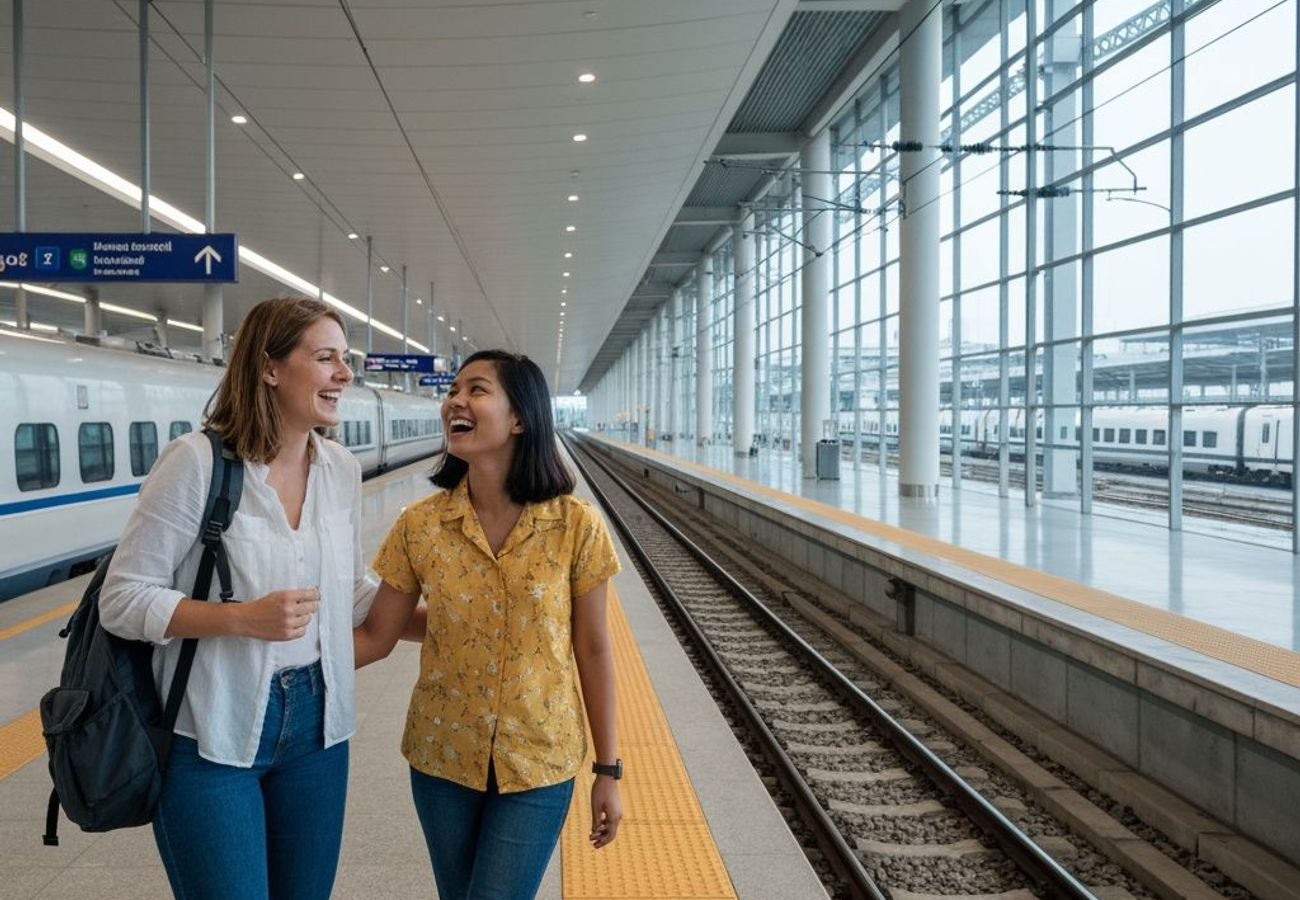
Image generated by AI
The World's Longest Rail Journey Is Finally Here
It sounds like pure fantasy: board a train in Portugal and ride uninterrupted through thirteen countries across two continents, arriving weeks later in Singapore. Yet thanks to the newly operational Laos-China railway connection, this record-breaking journey is no longer theoretical—it's now geographically possible.
The expanded rail infrastructure has created what many are calling the world's longest interconnected rail network bridging Europe and Asia. While no single train operates the entire route, coordinated national rail systems now enable continuous overland travel planning from Lisbon to Singapore using multiple transcontinental corridors.
This is a landmark moment for global rail connectivity.
Bridging The Asian Gap That Changed Everything
For decades, rail enthusiasts dreamed of seamless European-to-Asian train travel. The dream always hit a wall: missing rail continuity across critical sections of Asia.
The Laos-China railway, completed recently, solved this puzzle. By strengthening rail access between China and mainland Southeast Asia, the corridor eliminated a major geographic bottleneck that had fragmented Asia's rail infrastructure.
Before this connection, long-distance rail continuity from China into Southeast Asia was inconsistent and fragmented. Now? Smooth passenger movement across the region is finally viable.
Reddit: "I've been researching this route for years. The Laos connection literally changed everything for overland travelers. No more dead ends." — r/travel
The Route: Thirteen Countries, One Epic Corridor
The proposed journey connects approximately 13 nations through a seamless overland framework spanning two continents.
Starting point: Lagos, Portugal. From there, the route moves through Spain and France before accessing the wider Eurasian rail corridor. It continues across Russia and China, then flows into Laos, Thailand, Malaysia, and finally Singapore.
Each region contributes distinct geography and culture. Western Europe offers historic cities and Atlantic coastlines. Eurasia introduces vast plains and legendary long-distance rail segments. East Asia brings modern high-speed infrastructure. Southeast Asia adds tropical environments and emerging rail corridors.
The journey transforms into a living continental map—gradual, immersive, transformative.
Major Hubs That Anchor The Experience
Several globally significant cities form crucial waypoints along this network.
Paris functions as a central European rail hub connecting multiple international lines. Moscow serves as one of the longest continental rail gateways linking Europe and Asia. Beijing acts as the central transition point into East Asia's high-speed rail system. Bangkok becomes the critical Southeast Asian hub before final connection into Singapore.
The Paris-to-Moscow segment alone takes approximately 40 hours, reflecting the genuine scale of long-distance rail still possible in our modern age.
Each city allows structured stopovers—opportunities to rest, explore, and continue in stages rather than one exhausting marathon.
The Laos-China Railway: Strategic Breakthrough
The Laos-China railway plays the decisive role in enabling this intercontinental vision. It bridges the previously fragmented section between China and mainland Southeast Asia, allowing smoother passenger movement across the entire region.
This infrastructure strengthens regional integration while supporting both passenger and freight mobility across Southeast Asia's emerging corridors. Connectivity flows seamlessly into Thailand, Malaysia, and Singapore, forming a more cohesive rail network linking broader Eurasian routes.
Transport analysts widely regard this development as a structural breakthrough in Asia's transport infrastructure.
The Practical Reality: What It Takes To Complete This Journey
Here's where romance meets logistics.
No unified ticket exists. Travellers must purchase separate tickets across multiple national rail systems, each with its own pricing, scheduling, and booking infrastructure.
Visa complexity is real. Depending on nationality and transit requirements, travellers may need approximately seven different visas to complete the full journey legally.
Rail gaps remain. In certain Southeast Asian segments, bus travel may be required where rail lines are still developing or remain unconnected.
The estimated total cost runs approximately US$1,350—comparable to long-haul airfare between Europe and Southeast Asia. The time investment, however, is substantially greater due to the multi-leg structure.
The Journey's True Magic: Slow Travel Redefined
This route's defining feature isn't speed—it's immersion.
Instead of collapsing continents in hours via aircraft, passengers witness gradual geographic and cultural transformation in real time. Rail travel provides uninterrupted visual continuity; landscapes evolve perpetually outside the window.
Passengers experience changing climates, languages, architecture, and food cultures as progression develops. Western Atlantic coastlines shift into European urban centers. European cities fade into vast Eurasian terrain. Eurasian plains transition into East Asian high-speed corridors. High-speed networks eventually yield to tropical Southeast Asian environments.
This creates continuous cultural transition—the antithesis of modern travel compression.
Breaking The Journey Into Meaningful Stages
The journey is structured around multiple stopovers rather than continuous endurance travel.
Key cities—Paris, Moscow, Beijing, Bangkok—act as natural breakpoints. These stopovers allow rest, exploration, and genuine engagement with each destination before resuming.
This staged structure transforms the route from an exhausting marathon into a flexible, digestible itinerary. It makes long-distance rail travel practical by reducing fatigue while enabling deeper immersion in each location.
You're not just passing through; you're actually living in each place.
The Evolution Of Transcontinental Rail Ambition
Previously, one of the most recognized extended rail journeys connected London and Singapore through coordinated international rail segments.
The new Portugal-to-Singapore route extends this concept further west and dramatically increases both total distance and country coverage. This reflects broader global shifts where international cooperation and infrastructure expansion enable longer, more interconnected travel corridors.
A single infrastructure upgrade in one region reshapes global travel mapping. The Laos-China railway proved exactly this principle.
A New Standard For Global Rail Mobility
The emergence of this route highlights accelerating integration of international railway systems across continents. While not a single direct train service, it represents a fully connected conceptual rail pathway spanning Europe and Southeast Asia.
The Laos-China railway serves as the critical enabler, linking previously disconnected systems and allowing continuous transcontinental route planning. This development reflects growing global interest in long-distance rail journeys prioritizing experience, sustainability, and genuine immersion over speed.
The world's longest interconnected rail network isn't just infrastructure—it's a statement about how we choose to travel across our planet.
The age of unhurried continental crossing has officially arrived.
Related Travel Guides
Disclaimer
This article is for informational and educational purposes only. It does not constitute legal, financial, or professional advice. While we strive to provide accurate and up-to-date information, travel policies, regulations, and conditions change rapidly. Always verify information with official sources before making travel decisions. Nomad Lawyer makes no representations about the accuracy, reliability, completeness, or suitability of the information provided. Readers should consult qualified professionals for advice specific to their circumstances. The views expressed in this article are those of the author and do not necessarily reflect the views of Nomad Lawyer.
Raushan Kumar
Founder & Lead Developer
Full-stack developer with 11+ years of experience and a passionate traveller. Raushan built Nomad Lawyer from the ground up with a vision to create the best travel and law experience on the web.
Learn more about our team →