
Portugal and Other European Countries Are Now Offering Better Cultural Tourism at Vibrant Markets
Portugal and Other European Countries Are Now Offering Better Cultural Tourism at Vibrant Markets

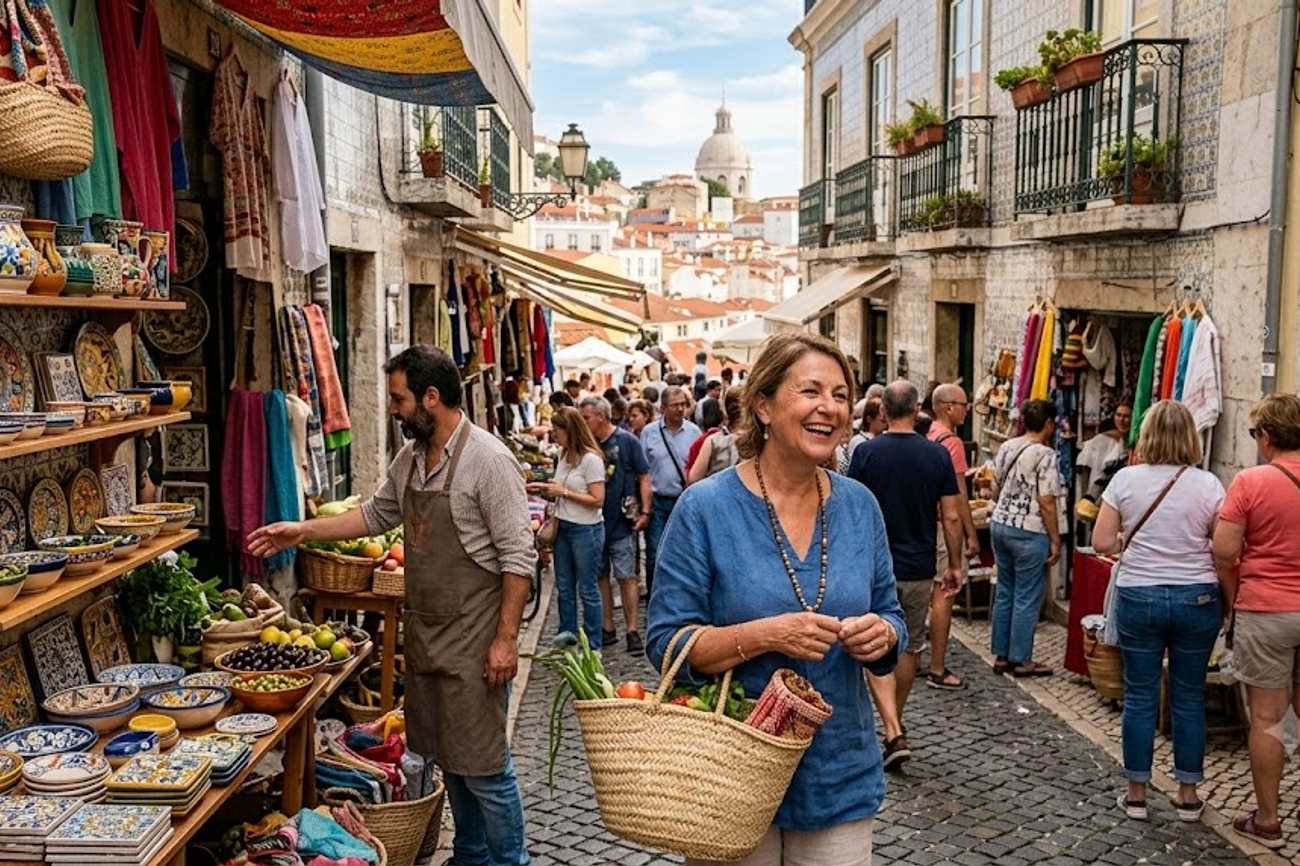
Image generated by AI
471.1 million accommodation nights recorded across the European Union in the first quarter of 2026 signal a robust appetite for city-based travel, providing the backdrop for a growing trend in market-led cultural tourism. While a recent feature highlighting 14 distinct markets across 11 countries serves as an itinerary catalyst, the underlying data reveals a deeper shift in how international visitors are engaging with European destinations. Portugal has emerged as the primary anchor for this trend, securing the highest national representation with key hubs in Porto, Lisbon, and Olhão.
The Architecture of Market-Led Tourism
The current surge in cultural tourism is not driven by new policy or infrastructure, but by the curation of existing local assets into cohesive travel narratives. By grouping diverse offerings—ranging from the seafood and Algarve produce of Olhão’s municipal market to the handmade and vintage goods at Lisbon’s LX Market and the traditional regional flavors of Porto’s Mercado do Bolhão—the industry is attempting to pivot travelers away from generic sightseeing toward "experiential" consumption.
This shift is mirrored across the continent. The itinerary spans a wide geographic and economic spectrum: from the textiles and leather of Forte dei Marmi to the honey and produce of Kotor. In Germany, the Mauerpark in Berlin remains a cornerstone of this movement, with official city records updated on 29 July 2026 confirming its Sunday operation from 10:00 to 18:00. The variety of goods—spanning records, furniture, fashion, and jewelry—illustrates the move toward "slow travel," where the destination is defined by the local trade rather than a landmark.
Quantitative Demand and Border Dynamics
The scale of European tourism in early 2026 underscores the potential footfall for these cultural hubs. According to data from the European Commission, the growth in accommodation is heavily skewed toward international arrivals.
| Period (2026) | Total Accommodation Nights | Growth (Year-on-Year) |
|---|---|---|
| January | 143.5 Million | Not Specified |
| February | 154.4 Million | Not Specified |
| March | 173.2 Million | Not Specified |
| Q1 Total | 471.1 Million | 3.4% |
The disparity in growth rates is telling: foreign guests saw their overnight stays increase by 5.5% year-on-year, while domestic travel grew by only 1.7%. This indicates that the primary driver for the 46.6% of total nights generated by foreign visitors is a desire for cross-border exploration.
However, this movement is now governed by stricter digital oversight. The full implementation of the Entry/Exit System (EES) on 10 April 2026 has fundamentally altered the border experience for non-EU short-stay travelers. By recording facial images, fingerprints, and crossing details at external borders, the European Union has automated the tracking of the 90-day limit within any rolling 180-day period. This creates a logistical hurdle for those attempting multi-country "market hops," particularly when venturing outside the Schengen Area into destinations like Montenegro to visit Kotor.
Expert Analysis: The Dispersal Effect and Pricing Pressure
For the sophisticated traveler, the promotion of markets in secondary cities like Pézenas, Valladolid, and Olhão is more than a travel tip; it is a manifestation of EU policy aimed at regional balance and heritage protection. By diverting traffic from saturated capitals, these initiatives attempt to spread economic benefits to smaller municipalities.
The direct consequence for travelers booking these routes is a shift in the "value proposition" of the trip. When a destination like Pézenas becomes a focal point due to its Saturday market or biannual antiques fairs, the surrounding ecosystem—boutique hotels, local cafés, and transport providers—experiences artificial demand spikes. This creates pricing pressure, meaning "starting rates" for accommodation in these regions are increasingly volatile and rarely reflect the final cost during peak market weekends.
Furthermore, the integration of non-Schengen zones, specifically Montenegro, adds a layer of regulatory friction. Travelers often mistake "European travel" as a monolithic experience, but the movement from a Schengen zone into Kotor requires separate international border processing. The pricing pressure here is not just financial but temporal; the time cost of EES registration and separate national entry requirements in Montenegro can disrupt tight itineraries.
Key Takeaways
- Portugal as a Hub: With three major markets featured (Porto, Lisbon, Olhão), Portugal is currently the primary driver for market-centric cultural itineraries in Europe.
- International Dominance: Foreign visitors are driving EU tourism growth at more than triple the rate of domestic travelers (5.5% vs 1.7% growth in Q1 2026).
- Regulatory Friction: The Entry/Exit System (EES) operational since 10 April 2026 means non-EU travelers face stricter biometric tracking and rigid 90/180-day stay limits.
- Geographic Outliers: Montenegro remains outside the Schengen Area, necessitating separate visa and border checks for visits to markets in Kotor.
- Scheduling Volatility: Market operations are highly specific—such as Berlin's Mauerpark (Sundays only) or Pézenas' antiques fairs (twice yearly)—requiring precise planning over generic bookings.
FAQ: European Market Travel 2026
Do I need a visa for all the featured market destinations? Most are within the Schengen Area, allowing 90 days of travel for eligible nationalities. However, Montenegro (Kotor) is not in Schengen and requires separate entry verification. Always check current IATA guidelines before departure.
How does the Entry/Exit System (EES) affect my trip? If you are a non-EU short-stay traveler, the EES records your biometrics and crossing dates at the external border. This eliminates manual passport stamping and strictly monitors your 90-day allowance across the Schengen zone.
When is the best time to visit the Berlin Mauerpark market? Mauerpark operates every Sunday from 10:00 to 18:00. Admission is free, but visitors should verify local holiday schedules as weather and city events can cause unexpected closures.
Are the listed hotel prices in these market towns fixed? No. Prices provided in travel features are typically starting rates. Due to the "dispersal effect," prices in smaller towns like Pézenas or Valladolid can spike significantly during market days.
The transition from landmark tourism to market-led exploration offers a richer cultural experience, provided the traveler can navigate the increasingly digital borders of the European Union.
Tags: Portugal Tourism 2026, Schengen EES 2026, Montenegro Border Rules, European Cultural Tourism, Mauerpark Berlin, Mercado do Bolhão
Related Travel Guides
Disclaimer
This article is for informational and educational purposes only. It does not constitute legal, financial, or professional advice. While we strive to provide accurate and up-to-date information, travel policies, regulations, and conditions change rapidly. Always verify information with official sources before making travel decisions. Nomad Lawyer makes no representations about the accuracy, reliability, completeness, or suitability of the information provided. Readers should consult qualified professionals for advice specific to their circumstances. The views expressed in this article are those of the author and do not necessarily reflect the views of Nomad Lawyer.
Kunal K Choudhary
Co-Founder & Contributor
A passionate traveller and tech enthusiast. Kunal contributes to the vision and growth of Nomad Lawyer, bringing fresh perspectives and driving the community forward.
Learn more about our team →