
Portugal Trials Starlink Satellite Wi-Fi to Eliminate Dead Zones on Alfa Pendular High-Speed Rail
Portugal is pioneering a hybrid satellite-terrestrial internet model on its flagship Alfa Pendular trains, aiming to pro

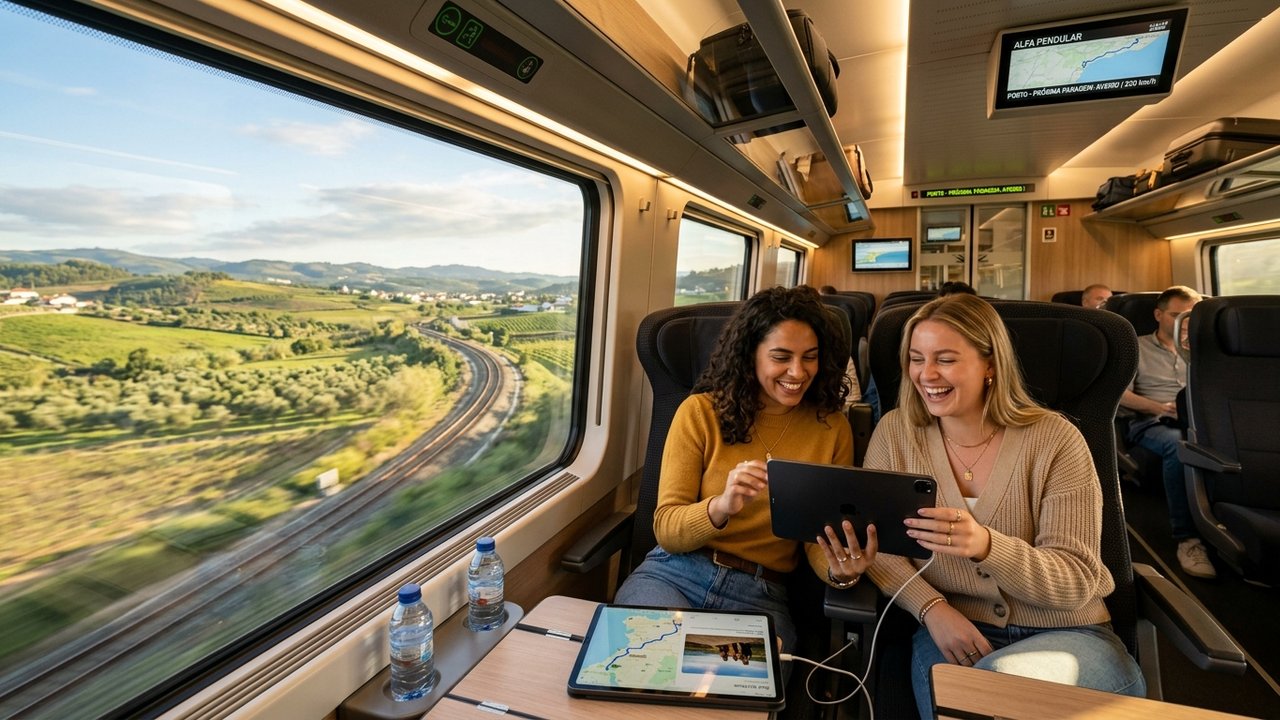
Image generated by AI
Digital Transformation of Portugal’s High-Speed Rail
Portugal has entered a new phase of rail innovation by integrating Starlink-powered satellite internet into its premium Alfa Pendular high-speed fleet. The pilot program, coordinated by the Ministry of Infrastructure and Housing and national operator Comboios de Portugal (CP), is currently being tested on the critical Lisbon–Porto corridor.
This initiative represents a strategic effort to resolve the persistent issue of "internet dead zones" that frequently plague high-speed rail journeys. By leveraging satellite technology, Portugal aims to ensure that passengers remain connected regardless of the challenging geography encountered along the route.
Solving the Connectivity Gap with Hybrid Technology
The Alfa Pendular service, which connects major urban hubs including Lisbon, Porto, Coimbra, and Faro at speeds up to 220 km/h, has historically struggled with signal stability. The country's varied landscape—characterized by deep valleys, mountainous terrain, and coastal cuts—often disrupts traditional 4G and 5G mobile networks.
To counter this, the trial employs a hybrid connectivity architecture. Rather than replacing existing infrastructure, the system works in tandem with terrestrial networks:
- Terrestrial Mode: The system utilizes standard 4G/5G networks when signal strength is high.
- Satellite Mode: The system automatically switches to Starlink satellite links the moment terrestrial signals weaken or disappear.
This seamless handoff ensures that data flow remains uninterrupted, effectively eliminating the total service drops that previously occurred in remote sections of the network.
Early Performance Data and Operational Impact
Initial results from the testing phase indicate a tangible improvement in onboard connectivity. Early data reveals that approximately 19% of all onboard data traffic is now being routed through the satellite system.
Crucially, this percentage represents the specific moments where terrestrial networks would have failed entirely. By filling these gaps, the satellite augmentation has significantly reduced the frequency of connectivity loss for passengers.
Strategic Objectives: Trains as Mobile Workspaces
The Lisbon–Porto corridor was chosen as the primary testbed because it is the nation's busiest intercity route, serving a high volume of both business and leisure travelers. By treating the Alfa Pendular as a "digital lab," engineers can monitor system stability under real-world stress, including high passenger loads and varying weather conditions.
The broader goal of the Ministry of Infrastructure and Housing is to transform long-distance rail travel into a viable mobile workspace. By offering reliable, high-speed internet, the government hopes to:
- Increase Competitiveness: Make rail a more attractive alternative to short-haul flights and private cars.
- Support Remote Work: Allow business travelers to remain productive throughout their journey.
- Enhance Passenger Experience: Provide consistent access to digital entertainment and communication.
Future Outlook for the National Network
Currently, the pilot is operating on a single trainset. If the trial successfully demonstrates consistent bandwidth performance and efficient network switching, Comboios de Portugal plans to expand the technology to additional Alfa Pendular units. There are also long-term ambitions to integrate this hybrid model into Intercidades long-distance services.
As other European nations grapple with similar geographical hurdles in rail connectivity, Portugal’s experiment with Starlink serves as a potential blueprint for the future of digital mobility across the continent.
Key Takeaways
- Technology: Integration of Starlink satellite internet with existing 4G/5G terrestrial networks.
- Primary Route: The high-traffic Lisbon–Porto corridor.
- Performance: 19% of data traffic is already being handled by satellites in areas where mobile signals fail.
- Goal: To eliminate connectivity dead zones and transform trains into productive mobile offices.
- Expansion: Potential rollout to the wider Alfa Pendular fleet and Intercidades services following successful trials.
FAQ
Which trains are receiving the Starlink upgrade? The trial is currently focused on the Alfa Pendular high-speed fleet, specifically on routes connecting Lisbon and Porto.
Does the satellite system replace the existing 4G/5G Wi-Fi? No. It is a hybrid system. The train uses terrestrial mobile networks whenever they are available and only switches to Starlink when the mobile signal is weak or absent.
Why is this necessary for Portuguese rail? Portugal's geography, including mountains and rural valleys, creates many "dead zones" where traditional mobile towers cannot provide a stable signal to a train moving at high speeds.
Related Travel Guides
Disclaimer
This article is for informational and educational purposes only. It does not constitute legal, financial, or professional advice. While we strive to provide accurate and up-to-date information, travel policies, regulations, and conditions change rapidly. Always verify information with official sources before making travel decisions. Nomad Lawyer makes no representations about the accuracy, reliability, completeness, or suitability of the information provided. Readers should consult qualified professionals for advice specific to their circumstances. The views expressed in this article are those of the author and do not necessarily reflect the views of Nomad Lawyer.
Preeti Gunjan
Contributor & Community Manager
A passionate traveller and community builder. Preeti helps grow the Nomad Lawyer community, fostering engagement and bringing the reader experience to life.
Learn more about our team →