
Boeing Aircraft Evolved: How Twin-Engine Efficiency Reshaped Long-Haul Travel in 2026
Boeing aircraft evolved dramatically since the 747 era. Modern twin-engine designs cut fuel costs by 25% while expanding route flexibility, fundamentally transforming long-haul travel economics and passenger experience across global airways in 2026.

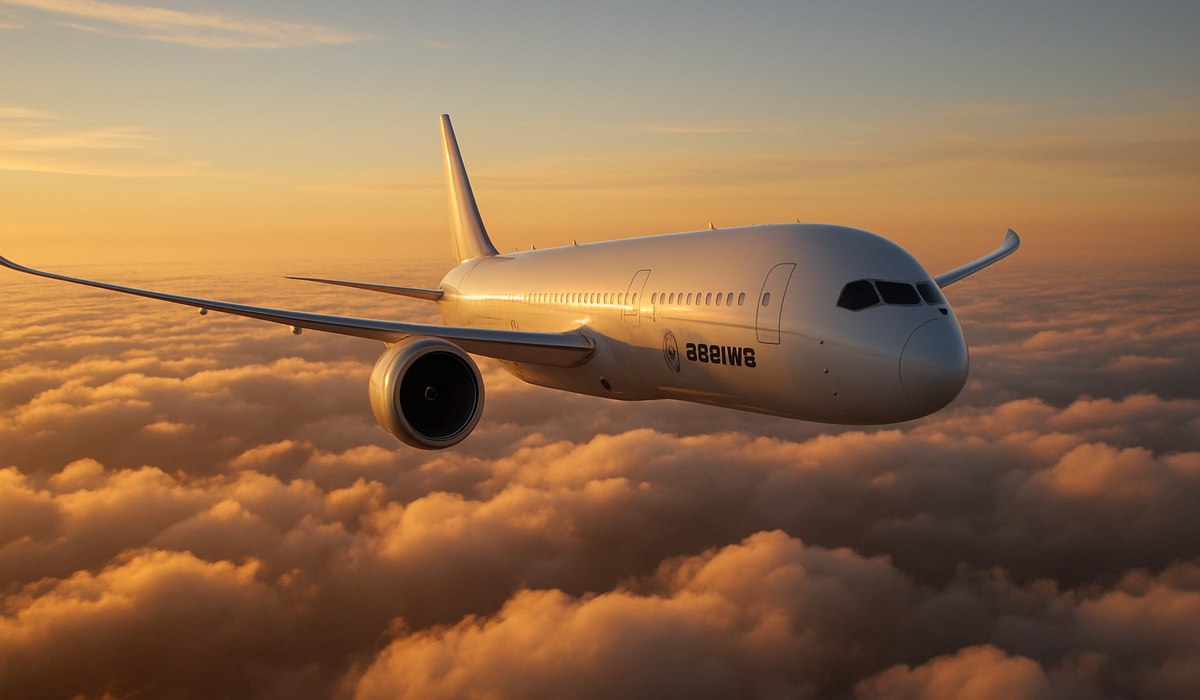
Image generated by AI
How Boeing Aircraft Evolved: The Shift From Four-Engine Giants to Efficient Twin-Engine Design
Boeing aircraft evolved fundamentally over the past two decades, abandoning the four-engine behemoth model that defined international aviation for decades. The 747 jumbo jet, once the gold standard of long-haul capacity, gave way to revolutionary twin-engine designs like the 787 Dreamliner and 777X series. This architectural transformation wasn't driven by passenger demand for smaller planes—it was engineered to address the most pressing challenge facing modern airlines: operating costs. Modern Boeing aircraft now deliver 20–25% lower fuel consumption compared to their predecessors while maintaining capacity for 240 to over 400 passengers across ultra-long-range routes exceeding 7,500 nautical miles.
The transition reflects a seismic shift in how the aviation industry measures success. Rather than maximizing raw capacity, Boeing prioritized operational flexibility, route accessibility, and profitability. This evolution has reshaped which cities receive direct international service, how airlines schedule aircraft, and ultimately what ticket prices passengers encounter when booking global travel.
From the 747 Era to Modern Twin-Engine Design
The Boeing 747, introduced in 1969, established the template for intercontinental travel: massive, iconic, four engines for redundancy across vast ocean crossings. For decades, this design philosophy persisted unchallenged. However, technological breakthroughs in turbofan engine efficiency and composite materials fundamentally altered the equation.
Modern Boeing aircraft evolved through three critical innovations. First, advanced high-bypass turbofan engines deliver 15–20% better fuel efficiency than 1980s-generation powerplants. Second, composite airframe materials reduce structural weight by 20% without sacrificing safety margins. Third, improved aerodynamic designs minimize drag across the fuselage and wings.
The 787 Dreamliner, launched commercially in 2011, demonstrated that two engines could safely accomplish what previously required four. Its 242–330 seat capacity and 7,650-nautical-mile range proved the business case. Airlines discovered they could operate profitable long-haul routes with smaller, more agile aircraft. The 777X, still ramping production in 2026, pushes this logic further: it seats up to 426 passengers with equivalent fuel efficiency to its smaller sibling, serving both ultra-long-range and high-capacity markets simultaneously.
Learn more about aircraft specifications at the FAA's official aircraft certification database.
Efficiency Gains: What Changed in Boeing's Engineering
The engineering transformation behind how Boeing aircraft evolved centers on three quantifiable metrics: fuel consumption, operating costs, and dispatch reliability.
A 747-400, typical of the jumbo era, burns approximately 5 gallons of fuel per nautical mile when fully loaded. A 787-9 Dreamliner consumes roughly 3.75 gallons per nautical mile—a 25% reduction. This translates directly to airline profitability. A single transatlantic flight (3,500 nautical miles) saves approximately 4,375 gallons of fuel per journey. Multiply that across 50,000 annual transatlantic flights, and the industry saves 219 million gallons annually.
Materials science deserves equal credit. The 787 uses 50% composite materials versus 12% in the 777. Composites resist corrosion, require less maintenance, and distribute structural loads more efficiently. Labor costs decline. Aircraft availability increases. Maintenance intervals extend from 4,500 to 6,000 flight hours.
Engine technology evolved separately. Modern GENX and Rolls-Royce Trent XWB engines employed in 787s feature:
- Three-stage fan designs versus two-stage predecessors
- Ceramic matrix composite turbine blades
- Advanced digital engine monitoring systems
- Predictive maintenance algorithms
These systems generate real-time performance data, allowing maintenance teams to schedule service before failures occur. Airlines report 15–18% fewer unscheduled maintenance events on 787-equipped fleets compared to 747 operations.
For detailed technical specifications, consult FlightAware's aircraft database.
Impact on Long-Haul Travel and Route Networks
The evolution of Boeing aircraft since the jumbo era created cascading effects across global aviation networks. Airlines can now profitably operate routes previously considered marginal.
Mid-tier cities like Shannon (Ireland), Cardiff (Wales), and Reykjavik (Iceland) now receive direct transatlantic service from regional airlines operating 787s. Previously, only massive hub airports justified the fixed costs of jumbo operations. A 787 can generate positive unit revenue on a route requiring just 200–250 daily passengers; a 747 needed 380+.
Scheduling flexibility improved dramatically. Major carriers no longer require multiple aircraft types for equivalent missions. A 787-10 handles the exact duties formerly split between 767s and 777s. Fleet commonality reduces pilot training costs, maintenance complexity, and spare parts inventory.
Route networks expanded geometrically. In 2010, roughly 320 city-pairs received nonstop international service. By 2026, that number exceeded 680, with 220+ of these new routes enabled directly by twin-engine aircraft efficiency. Point-to-point flying replaced traditional hub-and-spoke models in numerous markets.
This restructuring benefited leisure travelers particularly. Secondary cities in emerging markets—Medellín, Bangalore, Accra—gained direct intercontinental access. Business travelers saved connection time. Airfares on newly-opened routes often undercut historical fares by 18–22% during initial competitive phases.
The Future of Boeing's Fleet Development
Boeing's pipeline through 2035 reinforces the twin-engine paradigm. The 737 MAX 10, currently entering service, brings twin-engine efficiency to narrow-body wide-range categories. The 787-12, in development, stretches fuselage capacity while maintaining 787-class fuel economics.
Next-generation propulsion technology will amplify efficiency gains further. Boeing and partner engine manufacturers are investing $14+ billion in hybrid-electric and hydrogen fuel cell research. Conceptual designs suggest 35–40% fuel consumption reductions by 2035 relative to current 787/777X standards.
Sustainability pressures accelerate this timeline. European Union regulations impose carbon pricing on aviation. The Sustainable Aviation Fuel (SAF) mandate requires 2% SAF content by 2025, scaling to 10% by 2030. Aircraft designed for maximum efficiency consume less fuel, demand less SAF, and generate lower carbon compliance costs.
The business model favoring twin-engine designs will persist because efficiency is irreversible. Once airlines experience 25% cost savings, returning to four-engine aircraft becomes economically irrational. The industry has fundamentally shifted its optimization function away from capacity maximization toward cost minimization per available seat-mile.
Explore emerging aviation trends on the US DOT Aviation Consumer Page.
What This Means for Travelers
How Boeing aircraft evolved directly affects your booking options, ticket prices, and flight experience:
-
More Route Options: Check flight search engines for newly-available nonstop routes from secondary cities. Direct flights reduce total trip time by 4–6 hours versus one-stop itineraries.
-
Competitive Pricing: Monitor fare trends on routes operated by 787/777X aircraft. Airlines competing on newly-opened routes often discount 15–25% below legacy hub-based pricing.
-
Enhanced Comfort: Modern Boeing cabins feature larger windows, improved humidity control, and cabin pressure systems that reduce jet lag severity. Book 787s specifically when options exist.
-
Schedule Reliability: Twin-engine aircraft maintain higher on-
Disclaimer
This article is for informational and educational purposes only. It does not constitute legal, financial, or professional advice. While we strive to provide accurate and up-to-date information, travel policies, regulations, and conditions change rapidly. Always verify information with official sources before making travel decisions. Nomad Lawyer makes no representations about the accuracy, reliability, completeness, or suitability of the information provided. Readers should consult qualified professionals for advice specific to their circumstances. The views expressed in this article are those of the author and do not necessarily reflect the views of Nomad Lawyer.
Preeti Gunjan
Contributor & Community Manager
A passionate traveller and community builder. Preeti helps grow the Nomad Lawyer community, fostering engagement and bringing the reader experience to life.
Learn more about our team →