Malaysia Tourism and Scapia Launch Campaign to Expand Indian Travel Beyond Kuala Lumpur

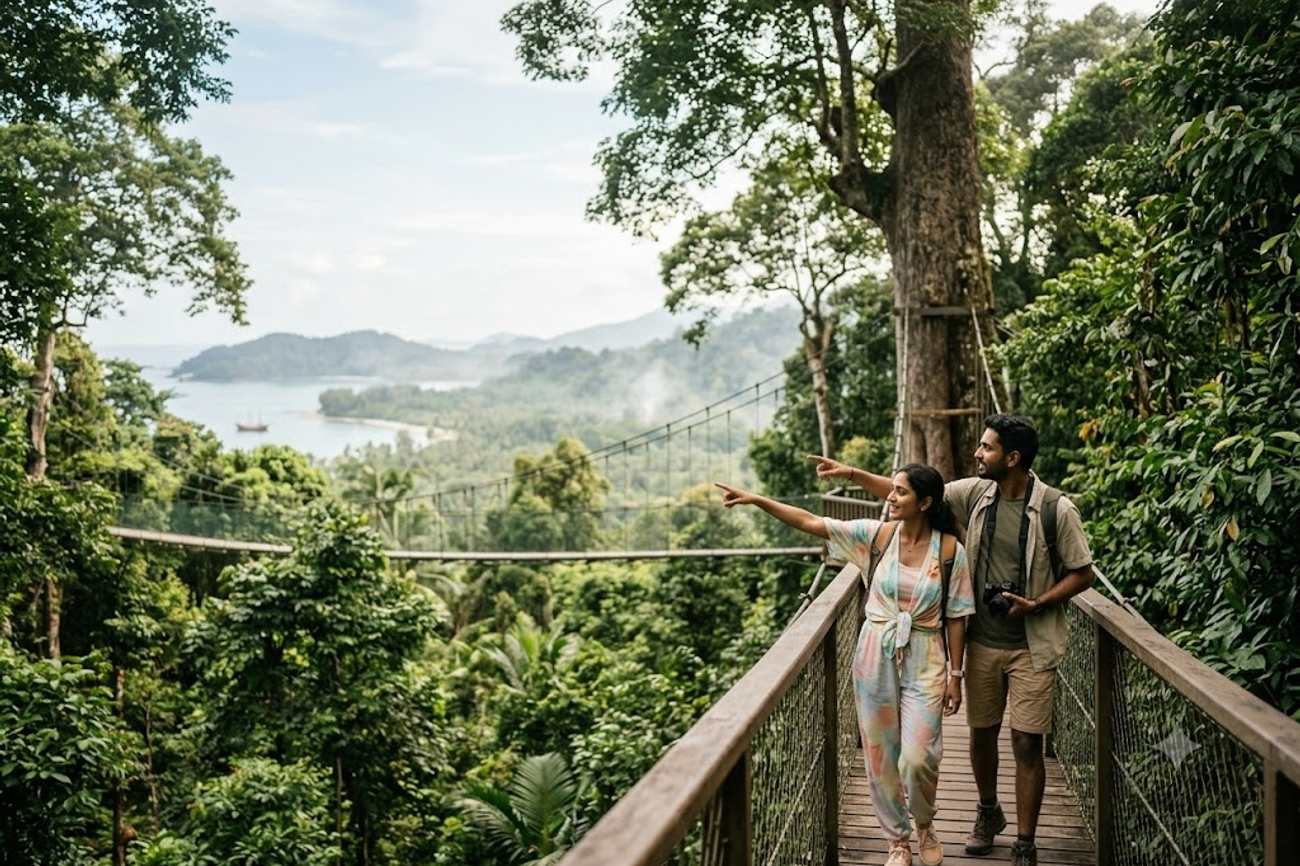
Image generated by AI
Most Indian travelers stick to the shopping malls of Kuala Lumpur and the theme parks of Genting Highlands, but the real soul of the country lies in the rainforests of Borneo and the street food alleys of Penang. While the city-and-highlands circuit is the default, a growing shift toward immersive travel is pushing visitors toward the wilder edges of Sabah and Sarawak.
Beyond the High-Rise: The New Malaysian Itinerary
For years, the Malaysian travel experience for many was a predictable loop of urban luxury and mountain resorts. However, the "Malaysia Calling" initiative marks a turning point, steering travelers toward a more fragmented and authentic geography. The focus has shifted from mere sightseeing to thematic exploration: heritage in Melaka, island solitude in Langkawi, and raw biodiversity in the East.
This isn't just a marketing shift; the data reflects a genuine change in appetite. Flight bookings to Malaysia via the Scapia platform have surged nearly fourfold year-on-year, while accommodation bookings have doubled. While Kuala Lumpur and Langkawi still dominate experience bookings—specifically for aquariums and cable cars—there is a measurable uptick in interest for George Town and the deep jungles of Borneo.
What Makes Malaysia Different
Malaysia is one of the few destinations where you can transition from a colonial heritage street to a prehistoric rainforest within a single domestic flight. The country is split between the Peninsula and the island of Borneo, creating two entirely different worlds.
In the west, Penang and Melaka serve as living museums. These are not sterile heritage sites but functioning neighborhoods where Peranakan architecture blends with street art and ancestral shrines. In contrast, the east—Sabah and Sarawak—offers a scale of nature that is rare in Southeast Asia. From river expeditions to diving in some of the world's most biodiverse waters, the Borneo experience is about disconnection from the grid and reconnection with the wild.
Regional Breakdown: Where to Go and Why
| Destination | Primary Appeal | Must-Try Experience | Vibe |
|---|---|---|---|
| Penang | Culinary Heritage | George Town Street Food | Artistic & Historic |
| Melaka | Colonial History | Jonker Street Night Market | Nostalgic & Slow |
| Langkawi | Coastal Escape | SkyCab Cable Car | Relaxed & Scenic |
| Sabah | Wildlife & Peaks | Mount Kinabalu Trekking | Adventurous & Raw |
| Sarawak | Indigenous Culture | Bako National Park | Mystical & Green |
Visitor Insider Tips
To experience Malaysia like a local rather than a tourist, you have to change how you move and eat.
The Food Strategy: In Penang, ignore the fancy restaurants. The best flavors are found in the "Hawker Centers." Look for the stalls with the longest queues of locals; that is your guarantee of quality. Try the Char Kway Teow (stir-fried noodles) but ensure they use a high-heat wok for that signature smoky flavor.
Timing the Crowds: If you are visiting the Langkawi SkyCab or the attractions in Kuala Lumpur, arrive 30 minutes before the gates open. By 11:00 AM, the queues can become grueling, especially during peak Indian holiday windows.
Transport Hacks: While Grab is the gold standard for city travel, consider domestic flights for the jump to Borneo. The distance is significant, and the contrast in climate and culture is jarring in the best way possible. For more official travel planning, check Tourism Malaysia for updated regional guides.
Etiquette Note: When visiting temples or mosques in Melaka and Penang, carry a light scarf or sarong in your bag. Many sites provide wraps, but having your own is more convenient and shows a higher level of cultural respect.
Cultural and Environmental Context
The push to move tourists away from Kuala Lumpur and Genting Highlands is not just about variety—it is about sustainability. Over-tourism in the capital puts immense pressure on urban infrastructure. By distributing visitors to Sabah and Sarawak, the economic benefits of tourism reach indigenous communities and rural entrepreneurs who protect the rainforests.
Preserving the UNESCO World Heritage sites of George Town and Melaka is a constant battle between modernization and conservation. When you visit these areas, opting for local guesthouses over international hotel chains helps keep the neighborhood's character intact. Furthermore, the wildlife experiences in Borneo are increasingly focused on conservation; always choose operators who prioritize animal welfare over "photo-op" interactions. For more on how these sites are preserved, visit the UNESCO World Heritage Centre.
Logistics and Access
The ease of entry has fundamentally changed the accessibility of the region. Since December 2023, visa-free entry for Indian nationals has removed the primary bureaucratic hurdle, leading to 962,983 arrivals from India between January and August 2026.
Connectivity is equally robust. As of October 2026, there are 193 weekly direct flights operating from over 10 Indian cities. This provides a total weekly capacity of 36,010 seats, making it possible to plan a multi-city trip without spending half the vacation in airports.
FAQ: Visiting Malaysia 2026
What is the best time to visit? The west coast (Penang, Langkawi) is best from November to March. For Borneo (Sabah, Sarawak), the dry season typically runs from March to October, making it the ideal window for trekking and diving.
Do I need a visa? No, Indian nationals have enjoyed visa-free entry since December 2023, significantly simplifying the planning process for short-haul trips.
How do I get there from India? There are 193 weekly direct flights from more than 10 Indian cities to gateways like Kuala Lumpur, Penang, and Langkawi.
Is it safe for solo travelers? Yes, Malaysia is generally very safe. Using ride-sharing apps like Grab and staying in well-reviewed hostels in George Town or KL provides a secure and social environment.
Stop treating Malaysia as a layover and start treating it as a destination.
#MalaysiaTravel2026 #BorneoAdventure #PenangFoodie #VisitMalaysia #IndianTravelersMalaysia #SabahSarawak
Related Travel Guides
- Kiribati Sets Its Sights On Travel Technology As Kiritimati And South Tarawa Explore A Bold New Tourism Future, Here’s The Update
- United Airlines Brings Baseball Playoffs to the Skies with Starlink Wi-Fi and Revolutionary Live TV Streaming
- UAE and Qatar Advance Smart Mobility and AI Infrastructure as GCC Travel Technology Enters New Phase
This article is for informational purposes. Flight routes, passenger regulations, visa rules, and transit advisories are subject to change by airlines and aviation authorities. Readers are advised to verify schedules and travel documentation with relevant carriers and border agencies before departure.
Related Stories
Kiribati Sets Its Sights On Travel Technology As Kiritimati And South Tarawa Explore A Bold New Tourism Future, Here’s The Update
United Airlines Brings Baseball Playoffs to the Skies with Starlink Wi-Fi and Revolutionary Live TV Streaming