
Poland to Launch 250 km/h High-Speed Rail Services Between Warsaw and Krakow by December 2027
Poland is upgrading the Central Railway Line (CMK) with a 1.8 billion zloty investment to enable 250 km/h Pendolino services, slashing Warsaw-Krakow travel times to 1 hour 55 minutes.

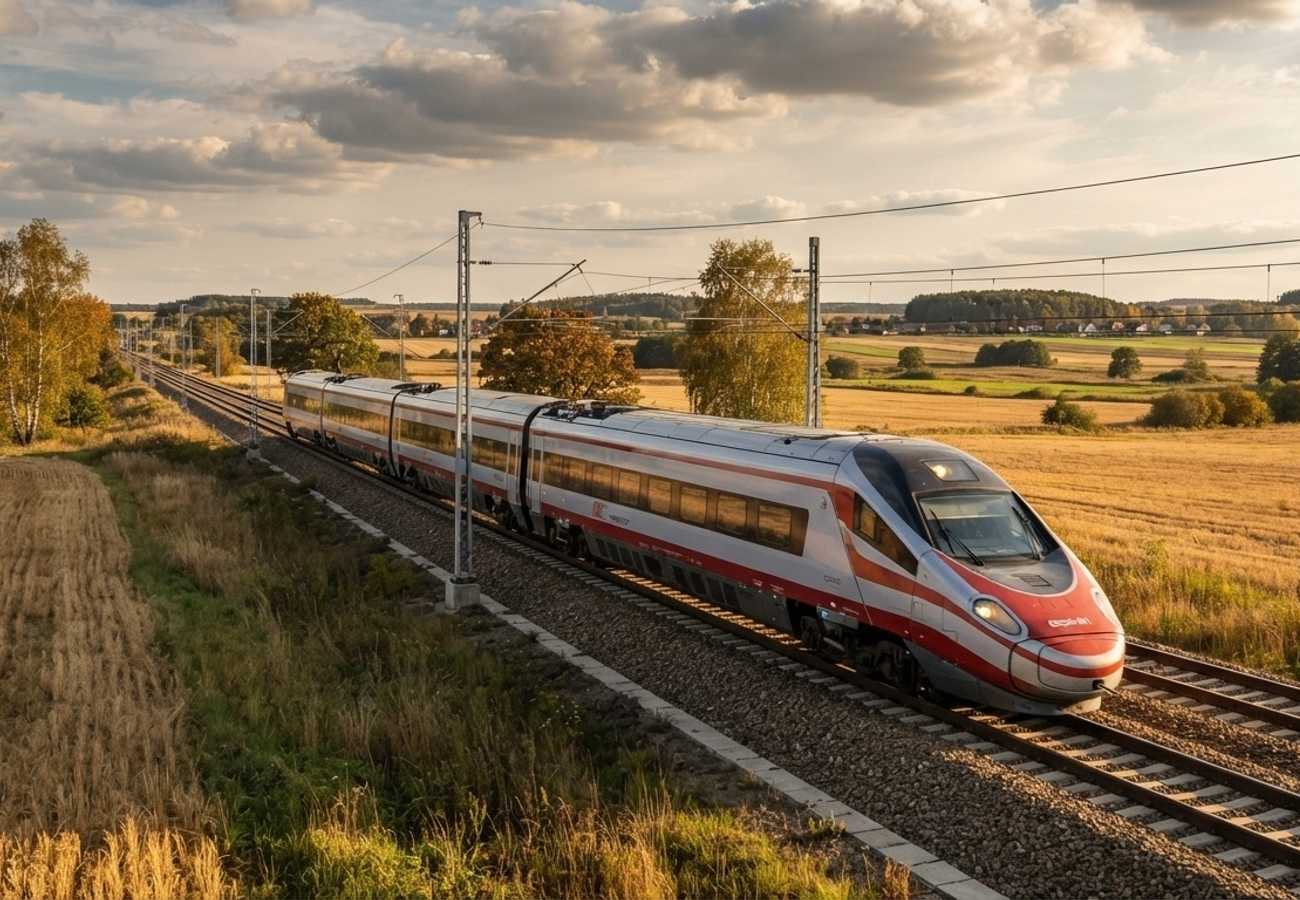
Image generated by AI
Poland is set to break its 200 km/h operational ceiling, introducing 250 km/h passenger services by December 2027. This transition will reduce the Warsaw-Krakow transit time to approximately 1 hour and 55 minutes.
The Polish railway network is undergoing a systemic modernization to align with European high-speed rail standards. Following successful trials of Pendolino rolling stock on the Central Railway Line (CMK), the government is moving forward with a comprehensive infrastructure overhaul. This initiative aims to shift domestic transit patterns away from short-haul flights and private vehicle use toward a sustainable, high-velocity rail corridor.
Technical Infrastructure and Safety Integration
The leap to 250 km/h is not merely a matter of locomotive power but a complete overhaul of signaling and communication. To ensure safety at these velocities, Poland is implementing a dual-layer technology stack:
- GSM-R (Global System for Mobile Communications – Railway): A dedicated digital communication system providing secure, real-time links between train operators and regional control centers.
- ETCS Level 2 (European Train Control System): An advanced digital signaling standard that replaces traditional trackside signals with in-cab displays, allowing for tighter headways and higher safe operating speeds.
The integration of ETCS Level 2 is the primary catalyst allowing the network to surpass the previous 200 km/h limit, ensuring that braking distances and speed restrictions are managed automatically and with precision.
Central Railway Line (CMK) Specifications
The Central Railway Line serves as the backbone of this expansion, linking the capital, Warsaw, with the industrial and cultural hubs of southern Poland, specifically Krakow and Katowice.
To facilitate these speeds, an investment of 1.8 billion zlotys has been allocated. These funds are targeted at track stabilization, signaling upgrades, and the modernization of operational systems across the corridor.
Route Performance Comparison: Warsaw to Krakow
| Parameter | Current Pendolino Service | 2027 High-Speed Service | Variance |
|---|---|---|---|
| Maximum Speed | 200 km/h | 250 km/h | +50 km/h |
| Average Travel Time | ~2 hours 30 minutes | ~1 hour 55 minutes | -35 minutes |
| Primary Corridor | CMK (Central Railway Line) | CMK (Upgraded) | Infrastructure Upgrade |
| Signaling System | Standard/Mixed | ETCS Level 2 / GSM-R | Digital Transition |
Traveler Logistics Guide: Navigating the High-Speed Shift
From a ground-level perspective, the shift to 250 km/h rail fundamentally changes the logistics of domestic Polish travel. For those planning trips for 2027 and beyond, consider the following operational advice:
Booking and Connection Strategy With the reduction in travel time to under two hours, the "day-trip" becomes viable between Warsaw and Krakow. When booking, prioritize the direct Pendolino services on the CMK line; regional trains will not operate at these speeds and will still follow the older, slower schedules.
Station Navigation vs. Airport Transit The primary logistical advantage here is the elimination of the "airport buffer." Unlike flights, which require travel to Chopin (WAW) or Balice (KRK) airports and 2-hour security windows, high-speed rail deposits passengers in the city center. We recommend arriving at Warsaw Centralna or Krakow Glowny only 20-30 minutes before departure.
Digital Transit Integration As Poland aligns with EU standards, expect tighter integration with digital ticketing. Travelers should ensure they have updated mobile apps for PKP Intercity, as ETCS-enabled lines often coincide with updated digital boarding and real-time seat management systems.
Regional Infrastructure Impact
The economic implications of the 1.8 billion zloty investment extend beyond passenger convenience. By tightening the link between Warsaw (the political and financial center) and Krakow (the tourism and academic hub), Poland is creating a "mega-region" effect.
For the tourism sector, this enables multi-city itineraries that were previously cumbersome. Business travel will see a marked increase in efficiency, as the sub-two-hour journey allows for round-trip professional engagements within a single business day. Environmentally, the project positions rail as the primary competitor to the A1 motorway, contributing to a reduction in carbon emissions for the Warsaw-Krakow corridor.
Poland's rail evolution marks a decisive move toward a connected, high-velocity European transit identity.
Related Travel Guides
Disclaimer
This article is for informational and educational purposes only. It does not constitute legal, financial, or professional advice. While we strive to provide accurate and up-to-date information, travel policies, regulations, and conditions change rapidly. Always verify information with official sources before making travel decisions. Nomad Lawyer makes no representations about the accuracy, reliability, completeness, or suitability of the information provided. Readers should consult qualified professionals for advice specific to their circumstances. The views expressed in this article are those of the author and do not necessarily reflect the views of Nomad Lawyer.
Preeti Gunjan
Contributor & Community Manager
A passionate traveller and community builder. Preeti helps grow the Nomad Lawyer community, fostering engagement and bringing the reader experience to life.
Learn more about our team →