
Severe Travel Chaos Paralyzes Pittsburgh Airport as American Airlines, Delta, and Southwest Face 72 Delays and 6 Flight Cancellations Disrupting New York and London Routes: Airline News
Massive weather-driven airport disruptions hit Pittsburgh International Airport, triggering 72 delays and 6 cancellations across major domestic and transatlantic routes operated by Delta, United, and Spirit.

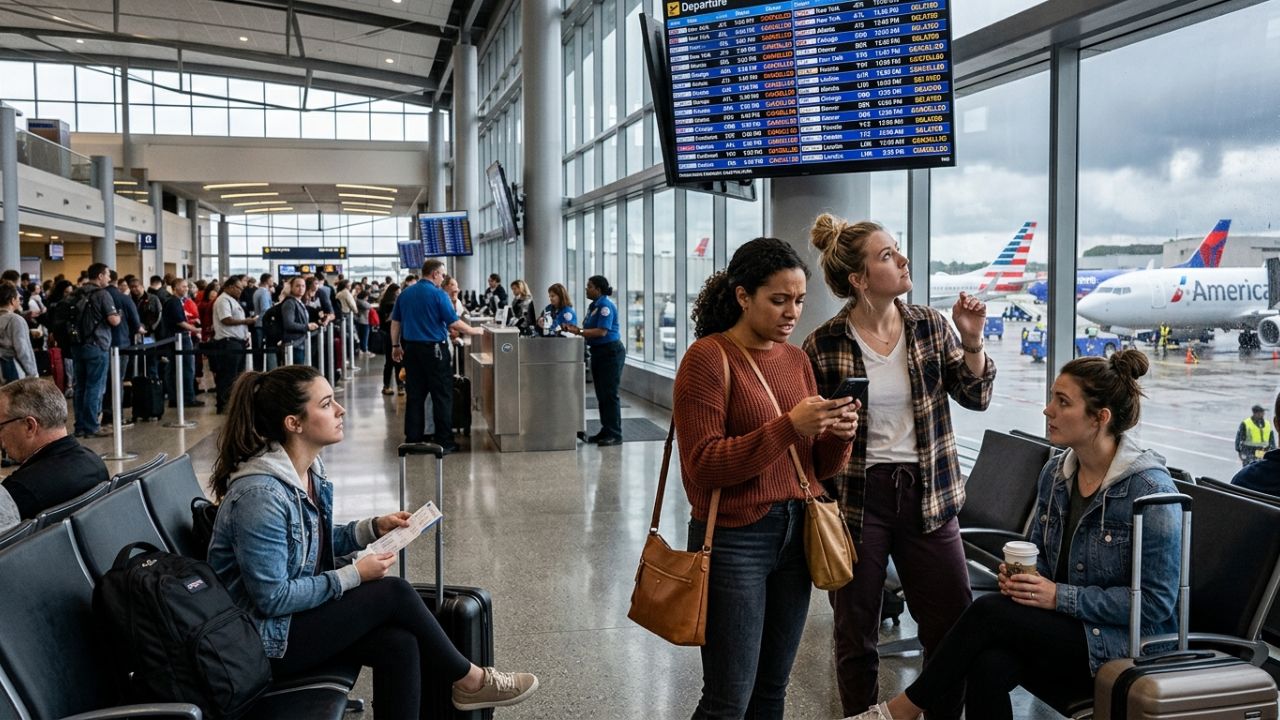
Image generated by AI
In a devastating breakdown of Pennsylvania's regional and international aviation mobility, severe weather and compounding air traffic bottlenecks have triggered massive travel chaos at Pittsburgh International Airport (PIT). Reported on Saturday, June 20, 2026, as stranded passengers desperately monitor the latest airline news for any sign of relief, a compounding wave of FAA ground restrictions has effectively paralyzed operations. Airport tracking data officially recorded a damaging logistical collapse consisting of 72 delayed flights and 6 outright flight cancellations, effectively trapping business travelers and families inside the congested terminals. This operational failure has inflicted severe logistical damage across major carriers including American Airlines, Delta Air Lines, United, Southwest, and Spirit Airlines. As the gridlock destroys critical connecting itineraries bound for New York, Atlanta, Chicago, Denver, Toronto, and London, this meltdown in Pittsburgh represents today's most crucial headline in breaking aviation updates and passenger survival strategy.
By introducing direct passenger coordination and dynamic scheduling backups, the regional aviation hubs target growing passenger demand across vital commerce sectors. The choice to coordinate flight departures in phases helps to manage gate capacity, supporting the country's broader regional transportation network.
Context: The Vulnerability of the National Airspace
For the US aviation network, the massive disruption at Pittsburgh International Airport exposes the extreme sensitivity of the national grid when confronted by severe summer weather and compounding FAA restrictions.
Pittsburgh serves as an absolutely vital transportation gateway for western Pennsylvania, facilitating essential connections to massive domestic hubs and highly sensitive transatlantic destinations. However, the airport is currently buckling under intense pressure. The Federal Aviation Administration (FAA) regularly monitors severe weather conditions—specifically violent thunderstorms, heavy rainfall, gusty winds, and low cloud ceilings—that actively reduce airport operating capacity. To maintain absolute safety, the FAA aggressively implements traffic management initiatives, forcing massive ground delays and drastically reducing both arrival and departure rates. When these air traffic flow restrictions hit Pittsburgh, they instantly severely cripple the tightly optimized schedules of Delta, American, and United. Because summer passenger demand is operating at peak levels, airlines have absolutely zero buffer capacity to absorb these rolling delays, resulting in a terrifying chain reaction that isolates Pennsylvania travelers from the global aviation grid.
To view live flight schedules, verify the active departure status of your specific Pittsburgh itinerary, or to track potential route restorations prior to heading to the airport, travelers must consult official aviation directories. For direct updates regarding how these massive operational failures might impact your current flight cancellations out of Pennsylvania, travelers should aggressively utilize the official digital portals of their respective airlines. To explore live flight tracking and monitor the exact severity of the cascading bottlenecks paralyzing the broader US airspace, passengers can consult the official FlightAware tracking service.
Section-Wise Breakdown: The Catalysts of Chaos
Severe Weather Contagion
The primary driver of the gridlock at Pittsburgh is extreme atmospheric volatility. Summer thunderstorm activity across parts of the United States frequently destroys flight schedules. These massive storm systems do not just affect Pittsburgh; they strike multiple airports simultaneously, creating a terrifying, cascading delay effect that infects the entire Eastern Seaboard and Midwest corridors.
FAA Air Traffic Management Restrictions
When severe weather reduces airspace capacity, the FAA intervenes forcefully. The agency occasionally implements brutal traffic flow programs to safely manage aircraft movements. This means that even if the weather in Pittsburgh is currently clear, aircraft scheduled to depart PIT may be held on the ground by the FAA because their destination airspace (such as New York or Atlanta) is violently congested.
Aircraft and Crew Positioning Failures
The operational collapse at Pittsburgh is heavily compounded by logistical aircraft and crew positioning failures. When rolling 72 delays occur, aircraft and flight crews inevitably arrive late at their next destinations. This destroys crew scheduling requirements; if a pilot "times out" due to a massive weather delay, the airline must legally cancel the flight unless a substitute crew can be sourced immediately, resulting directly in the 6 recorded cancellations.
Technical Roster: Pittsburgh Disruption Matrix
To ensure absolute factual accuracy regarding the exact volume of grounded flights and the specific airlines absorbing the damage, the following matrix details the strictly verified airport data:
Official Flight Disruptions at Pittsburgh International Airport
| Operational Parameter | Verified Disruption Data |
|---|---|
| Total Flight Delays | 72 Flights |
| Total Flight Cancellations | 6 Flights |
| Primary Airlines Impacted | American Airlines, Delta, United, Southwest, Spirit |
| Disrupted Domestic Hubs | New York, Atlanta, Chicago, Denver |
| Disrupted International Routes | Toronto (Canada), London (UK) |
| Primary Failure Catalysts | Thunderstorms, Heavy Rainfall, Low Cloud Ceilings |
| FAA Interventions | Ground Delays, Reduced Departure Rates, Flow Restrictions |
| Secondary Logistical Failures | Crew Positioning Errors, Elevated Summer Demand |
Data accurately reflects the verified 72 delays and 6 cancellations recorded at Pittsburgh International Airport (PIT) on June 20, 2026. The disruption highlights the severe operational vulnerability of airlines during peak summer weather events.
Passenger Impact: Stranded on the Tarmac
For the passengers physically trapped inside the terminals of Pittsburgh International Airport, the immediate impact is severe logistical exhaustion and the massive threat of destroyed international itineraries.
Families attempting to begin summer vacations in London or Toronto, and business travelers racing to critical connections in Chicago or Denver, found themselves frantically refreshing departure boards as the 72 delays compounded throughout the day. Because major carriers like Delta, United, and American Airlines all suffered simultaneous disruptions, the terminals became intensely overcrowded. Passengers subjected to the 6 outright flight cancellations were forced into massive, agonizing lines, desperately attempting to secure rebookings on an airline network operating with zero spare capacity. For travelers trapped on delayed outbound flights, the cascading failure practically guarantees they will miss their crucial connections in Atlanta or New York, forcing them to absorb the exorbitant costs of sudden overnight hotel accommodations.
Industry Analysis: The FAA's Protective Chokehold
Aviation analysts monitoring the localized collapse at Pittsburgh note that passengers must urgently understand the FAA's role in this specific travel chaos.
Analysts emphasize that safety remains the FAA’s highest priority, and flight operations are intentionally slowed or completely halted whenever conditions require additional precautions. The FAA’s Daily Air Traffic Report dictates these ground delay programs to ensure aircraft maintain safe distances in the sky. While these brutal traffic management measures prevent catastrophic mid-air collisions during thunderstorms, they effectively place a protective chokehold on regional gateways like Pittsburgh. Airlines respond by deploying dynamic aircraft scheduling and flexible rebooking options, but they ultimately have zero control over FAA-mandated airspace closures.
Actionable Advice for Surviving the PIT Meltdown
If you are currently trapped inside Pittsburgh International Airport, or attempting to fly out of Pennsylvania during this severe weather breakdown, you must execute this strategic survival checklist immediately:
- Exploit FAA and Airline Digital Alerts: Do not rely on physical airport monitors. Sign up for specific text and email notifications directly from your airline. Simultaneously, monitor the FAA's Daily Air Traffic Report online to see if your destination airport (e.g., New York or Atlanta) is currently under a massive ground stop. If the destination is closed, your Pittsburgh departure will absolutely not leave the tarmac.
- Audit Your Rebooking Policies Instantly: Passengers must completely understand their specific carrier’s rebooking and accommodation policies in the event of a cancellation. If the delay or cancellation is strictly classified as weather-related or FAA-mandated, the airline is NOT legally obligated to pay for your overnight hotel room. Do not stand in a 3-hour customer service line to demand a free hotel; book it yourself immediately before local inventory vanishes.
- Never Check Your Baggage During Thunderstorms: Because 72 flights are suffering rolling, unpredictable delays due to severe weather, gate changes and sudden aircraft swaps will happen rapidly. Pack all critical medications and electronic chargers in your carry-on. If you check your bag and your flight is trapped on the tarmac for hours under an FAA ground stop, you will completely lose access to your luggage.
FAQ: Pittsburgh Airport Flight Cancellations
How many flights were delayed or canceled at Pittsburgh International Airport?
According to official aviation monitoring data, the airport recorded an operational collapse consisting of 72 delayed flights and 6 outright flight cancellations.
Which airlines and routes were most affected by the travel chaos in Pittsburgh?
Major carriers including American Airlines, Delta, United, Southwest, and Spirit suffered severe disruptions. Critical routes bound for Toronto, New York, Atlanta, Chicago, Denver, and London were heavily impacted.
What caused the massive flight disruptions in Pennsylvania?
The travel chaos was triggered by a combination of severe summer weather (thunderstorms, high winds), strict FAA air traffic control restrictions, and subsequent aircraft and crew positioning failures.
The Reality of Summer Aviation Vulnerability
The catastrophic breakdown at Pittsburgh International Airport proves definitively that the national aviation network remains incredibly fragile during peak summer weather systems. By effectively grounding 6 flights and delaying 72 operations, thunderstorms and FAA restrictions quickly stranded Pennsylvania passengers bound for London, Denver, and Toronto. Yet, as exhausted travelers frantically attempt to rebook their flights or secure scarce rental cars, they must accept a critical new reality: a single thunderstorm system passing over the Midwest can destroy a transatlantic itinerary originating in Pittsburgh. Surviving this level of interconnected travel chaos now demands extreme adaptability, a complete refusal to panic during rolling delays, and the tactical discipline to instantly exploit airline mobile applications the exact second an FAA ground stop is announced.
Key Takeaways
- Massive Operational Collapse: Pittsburgh International Airport suffered severe travel chaos, recording 72 flight delays and 6 outright cancellations.
- Widespread Carrier Impact: The disruptions paralyzed operations for American Airlines, Delta, United, Southwest, and Spirit Airlines.
- Disrupted Global Routes: The delays severely infected high-value connecting routes bound for New York, Atlanta, Chicago, Denver, Toronto, and London.
- The Root Cause: Severe summer weather patterns forced the FAA to implement brutal ground delays and traffic flow restrictions, choking airport capacity.
- Survival Strategy: Passengers are strongly urged to never check bags during severe weather and to instantly utilize airline apps to secure rebookings before physical customer service lines form.
Related Travel Guides
Massive Travel Chaos Paralyzes Chicago O'Hare with 1,425 Disruptions
Disclaimer
This article is for informational and educational purposes only. It does not constitute legal, financial, or professional advice. While we strive to provide accurate and up-to-date information, travel policies, regulations, and conditions change rapidly. Always verify information with official sources before making travel decisions. Nomad Lawyer makes no representations about the accuracy, reliability, completeness, or suitability of the information provided. Readers should consult qualified professionals for advice specific to their circumstances. The views expressed in this article are those of the author and do not necessarily reflect the views of Nomad Lawyer.
Kunal K Choudhary
Co-Founder & Contributor
A passionate traveller and tech enthusiast. Kunal contributes to the vision and growth of Nomad Lawyer, bringing fresh perspectives and driving the community forward.
Learn more about our team →