
US Airline Employment Drops 2,250 Jobs in February 2026: Passenger Airlines Surge While FedEx-Driven Cargo Collapse Reshapes Aviation Workforce
US airline industry loses 2,250 jobs in February 2026 despite travel demand surge. Passenger carriers add 2,729 positions while cargo airlines hemorrhage 4,941 jobs, with FedEx accounting for 4,915 cuts.

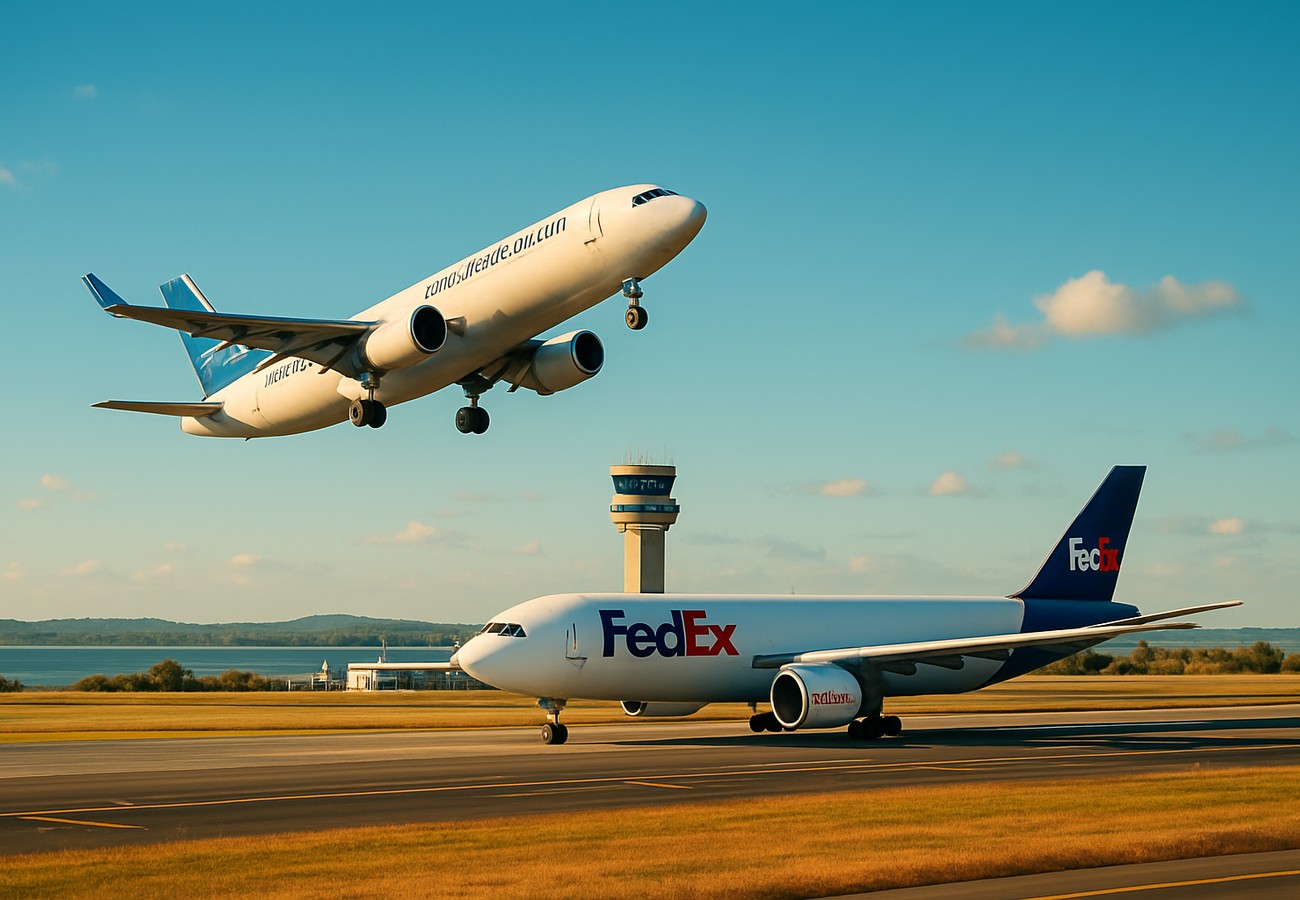
Image generated by AI
```
A Tale of Two Airlines: How the US Aviation Sector Lost 2,250 Jobs Despite Record Travel Demand
The U.S. airline industry delivered a paradoxical employment report in February 2026—one that simultaneously reflects booming passenger travel and a catastrophic collapse in cargo operations. According to the Bureau of Transportation Statistics, the combined U.S. airline workforce contracted by a net 2,250 jobs last month, bringing total employment to 1,026,583 workers—a modest 0.22% decline from January figures. Yet beneath this headline number lies a starkly divided industry: passenger carriers are aggressively hiring to meet surging travel demand, while cargo airlines are in freefall, with FedEx single-handedly responsible for nearly all sector losses.
This employment divergence tells the real story of aviation in 2026—a year marked by robust leisure and business travel recovery, yet haunted by the structural aftershocks of FedEx's transformative 2024 merger and the ongoing normalization of global air freight markets.
The Passenger Airline Hiring Boom: Delta, United, and American Lead Recovery
While headlines focus on overall job losses, the passenger airline segment painted an entirely different picture in February 2026. Major U.S. carriers added a combined 2,729 employees during the month, signaling aggressive expansion to capture surging travel demand. Delta Air Lines, United Airlines, and American Airlines—the "Big Three" of U.S. aviation—spearheaded this hiring surge, reflecting confidence in sustained passenger traffic growth throughout 2026.
Passenger airlines now employ 555,411 workers, representing 54% of the entire U.S. airline industry workforce. This commanding majority underscores the sector's fundamental shift toward passenger operations as the primary revenue driver. The hiring momentum reflects multiple tailwinds: spring and summer travel season bookings remain robust, business travel has stabilized at elevated post-pandemic levels, and international route expansion continues to accelerate as transatlantic and transpacific demand remains strong.
The Big Three's hiring initiatives extend across multiple operational categories. Beyond traditional pilot and flight attendant positions, airlines are aggressively recruiting ground crew, customer service representatives, and maintenance technicians to support expanded flight schedules. This comprehensive hiring approach suggests carriers are preparing for sustained high-capacity operations rather than temporary seasonal adjustments.
The Cargo Apocalypse: FedEx's 4,915-Job Bloodbath Decimates Air Freight Sector
The employment story's dark underbelly emerges in cargo operations, where airlines shed 4,941 jobs in February 2026—nearly wiping out all gains from passenger hiring. The culprit is unmistakable: FedEx, which alone eliminated 4,915 positions, accounting for 99.4% of cargo sector job losses. This staggering reduction reflects a fundamental recalibration in global air freight demand and FedEx's ongoing structural transformation.
Cargo airlines collectively employ 466,965 workers, representing 46% of the U.S. airline industry workforce. The February contraction marks the latest chapter in a broader cargo market normalization that began in late 2024. After pandemic-era air freight demand reached unsustainable peaks—when e-commerce surges and supply chain disruptions created artificial cargo capacity shortages—the market has gradually stabilized at more sustainable levels. Ocean freight has recaptured market share from air cargo, and e-commerce growth, while still robust, no longer justifies the premium pricing and capacity that characterized 2021-2023.
FedEx's employment reductions must be contextualized within the company's seismic June 2024 merger of FedEx Ground and FedEx Services into Federal Express Corporation. This consolidation inflated FedEx's reported airline workforce to over 432,000 employees post-merger, creating a structural anomaly in industry employment data. The subsequent workforce reductions represent both genuine operational adjustments and a normalization of reporting categories as the company integrates its ground and air operations. Nevertheless, the 4,915-job reduction in a single month underscores the magnitude of FedEx's restructuring and the broader cargo sector's contraction.
The Full-Time Equivalent Reality: A Deeper Look at Employment Quality
While headline job counts capture attention, the full-time equivalent (FTE) employment data reveals nuances about employment quality and operational capacity. In February 2026, total FTE employment declined by 830 positions—a 0.09% drop—bringing the total FTE workforce to 890,337 workers. This figure comprises 754,091 full-time employees and 272,492 part-time workers.
The FTE breakdown illuminates how airlines are restructuring their workforces. Passenger airlines increased FTEs by 2,440 positions, indicating that hiring in this segment predominantly involves full-time roles with consistent operational requirements. Conversely, cargo airlines reduced FTEs by 3,228 positions—a steeper decline than the headline 4,941 job loss figure suggests. This discrepancy indicates that cargo sector reductions disproportionately affected full-time positions, with part-time and contract roles absorbing a smaller share of cuts.
The 754,091 full-time employees represent the industry's core operational backbone—pilots, flight attendants, maintenance technicians, and essential ground crew. The 272,492 part-time workers provide flexibility for seasonal demand fluctuations and specialized functions. The passenger airline expansion's emphasis on full-time hiring reflects confidence in sustained demand, while cargo's full-time reduction suggests permanent capacity contraction rather than temporary furloughs.
Industry Structure and the 54-46 Split: A Passenger-Dominated Future
The February 2026 employment data crystallizes a fundamental industry rebalancing. Passenger airlines' 54% workforce share versus cargo's 46% represents a decisive shift toward passenger operations as the industry's primary focus. This ratio would have been unthinkable during the pandemic's cargo boom, when air freight premiums reached $8-10 per kilogram and cargo-only charter flights commanded premium pricing.
Today's 54-46 split reflects a mature, normalized market where passenger operations generate consistent, predictable revenue streams while cargo serves as a supplementary profit center. The Big Three carriers—Delta, United, and American—have optimized their networks for passenger profitability, leveraging cargo capacity in aircraft bellies rather than operating dedicated freighters. This approach maximizes revenue per available seat-mile while minimizing fixed cargo infrastructure costs.
Smaller cargo specialists and all-cargo operators face structural headwinds. As passenger airlines recapture cargo capacity and ocean freight regains competitiveness, dedicated cargo carriers must operate at lower utilization rates or exit markets entirely. FedEx's aggressive workforce reductions reflect this competitive reality, as the company right-sizes its air operations to match normalized freight demand.
The Broader Context: Travel Demand Resilience Amid Cargo Normalization
The February 2026 employment figures must be interpreted within the broader context of travel demand dynamics. Passenger airline hiring accelerates precisely because travel demand remains robust. Spring break bookings, Easter holiday travel, and early summer vacation planning all drove strong February bookings. International travel continues to recover, with transatlantic and transpacific routes showing particular strength as business travel and leisure tourism both remain elevated.
Business travel, in particular, has stabilized at levels 15-20% above pre-pandemic norms, defying predictions that remote work would permanently suppress corporate travel. High-value business travelers continue to prioritize in-person meetings, conferences, and client visits, supporting premium cabin demand and driving profitability for major carriers.
Simultaneously, cargo normalization reflects e-commerce maturation rather than demand collapse. Online retail growth continues, but at sustainable single-digit annual rates rather than the pandemic-era double-digit surges. Retailers have optimized inventory management, reducing reliance on emergency air freight. Supply chains have stabilized, eliminating the disruption-driven premium freight demand that characterized 2021-2023. Ocean freight capacity has expanded, offering cost-effective alternatives to air cargo for non-urgent shipments.
Forward Outlook: Structural Shifts and Employment Implications
The February 2026 employment data signals structural shifts that will shape aviation employment for years ahead. Passenger airline hiring will likely continue as carriers capitalize on sustained travel demand and expand international networks. However, growth rates may moderate as carriers approach optimal staffing levels for current capacity. Cargo sector employment will stabilize at lower levels, with dedicated freighter operations remaining challenged unless freight rates recover or e-commerce demand accelerates unexpectedly.
FedEx's restructuring will continue influencing industry employment statistics through 2026 and potentially beyond. As the company completes its Ground-Services integration, workforce adjustments may continue, though likely at more moderate monthly rates than February's dramatic 4,915-job reduction. Other cargo carriers will face ongoing pressure to right-size operations, potentially triggering additional employment reductions across the sector.
The divergence between passenger and cargo employment growth reflects fundamental market dynamics that favor passenger operations. Airlines will increasingly optimize for passenger profitability while treating cargo as a supplementary revenue stream. This strategic reorientation will reshape workforce composition, with greater emphasis on customer-facing roles, flight crew, and passenger services, and reduced investment in cargo-specific infrastructure and personnel.
Key Takeaways
-
Net Employment Loss: U.S. airline industry lost 2,250 jobs in February 2026, declining to 1,026,583 total employees (0.22% monthly decline)
-
Passenger Airline Strength: Major carriers Delta, United, and American added 2,729 combined employees, reflecting robust travel demand and network expansion
-
Cargo Sector Collapse: Cargo airlines shed 4,941 jobs, with FedEx accounting for 4,915 cuts (99.4% of sector losses)
-
Workforce Composition: Passenger airlines employ 555,411 workers (54% of industry); cargo airlines employ 466,965 (46% of industry)
-
FTE Adjustments: Full-time equivalent employment declined 830 positions (0.09%), with passenger FTEs up 2,440 and cargo FTEs down 3,228
-
FedEx Context: June 2024 merger of FedEx Ground and Services into Federal Express Corporation inflated post-merger workforce to over 432,000, with subsequent reductions reflecting structural integration
-
Employment Quality: 754,091 full-time employees and 272,492 part-time workers comprise the 890,337 total FTE workforce
-
Market Dynamics: Passenger travel demand remains resilient while cargo normalizes post-pandemic, creating divergent employment trajectories across airline segments
Related Travel Guides
- Aviation Updates: Curfew-Free Western Sydney International Airport Opens to Combat Severe Capacity Limits and Massive Travel Chaos
- Breaking Airline News: Emirates Deploys Massive APEX-Winning Comfort Upgrades, Shielding Passengers from Terrifying Middle East Travel Chaos
- LOT Polish Airlines Expands Krakow Routes to Rome, Barcelona, and Madrid
Disclaimer
This article is for informational and educational purposes only. It does not constitute legal, financial, or professional advice. While we strive to provide accurate and up-to-date information, travel policies, regulations, and conditions change rapidly. Always verify information with official sources before making travel decisions. Nomad Lawyer makes no representations about the accuracy, reliability, completeness, or suitability of the information provided. Readers should consult qualified professionals for advice specific to their circumstances. The views expressed in this article are those of the author and do not necessarily reflect the views of Nomad Lawyer.
Kunal K Choudhary
Co-Founder & Contributor
A passionate traveller and tech enthusiast. Kunal contributes to the vision and growth of Nomad Lawyer, bringing fresh perspectives and driving the community forward.
Learn more about our team →