
Philippine Connects With United, American and More Airlines as Airlines Review Lounge Quality and Passenger Comfort Standards
Philippine Airlines, United, and American face intense passenger scrutiny as global carriers overhaul airport lounges, terminal transfers, and ground comfort standards.

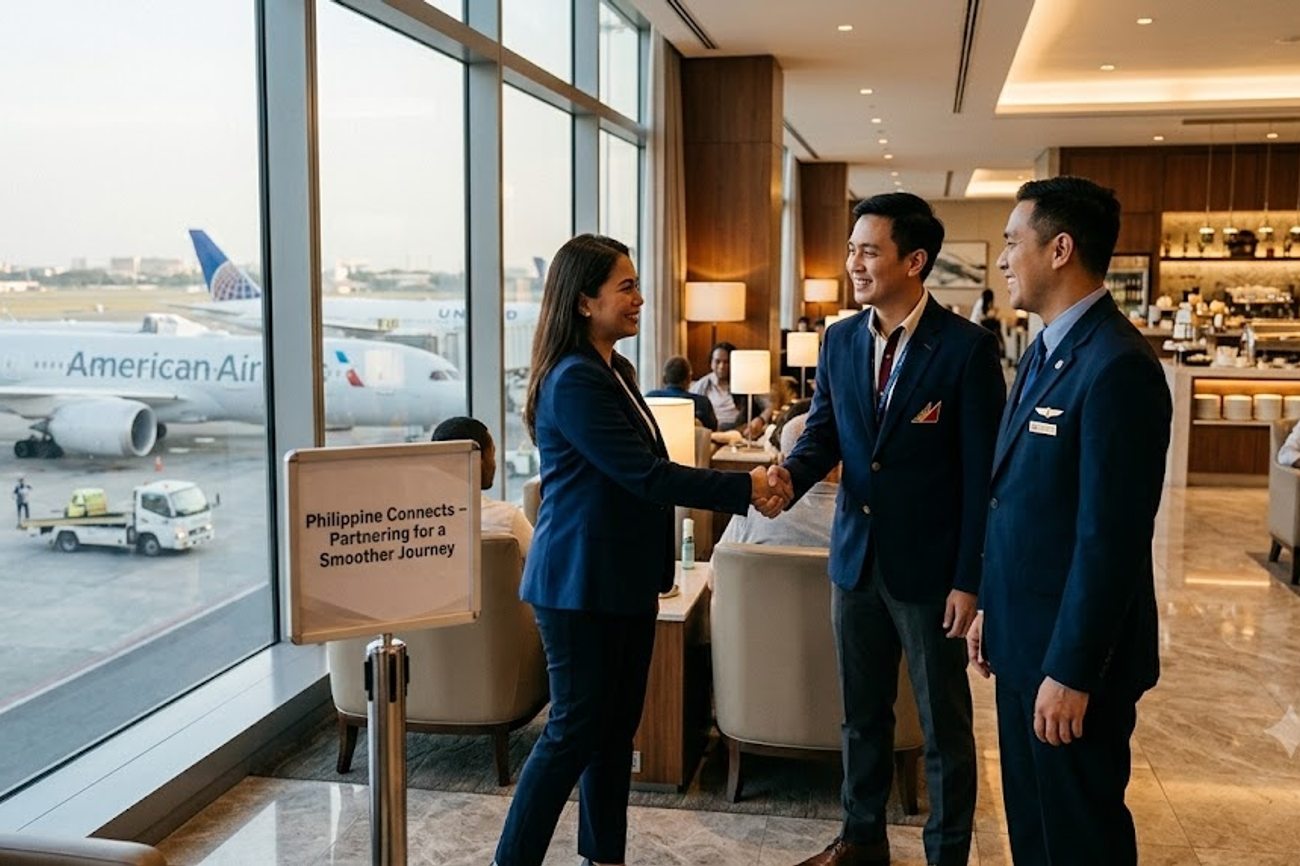
Image generated by AI
A persistent quality divide separating modernized Terminal 1 international lounges from aging Terminal 2 regional facilities at Manila’s Ninoy Aquino International Airport has ignited widespread passenger scrutiny, placing Philippine Airlines alongside global carriers like United and American in an industry-wide review of premium ground comfort standards. As business-class passengers and elite frequent flyers increasingly evaluate full-fare tickets based on pre-flight amenities rather than in-flight seat dimensions alone, the ground experience has become a primary arena of competitive brand vulnerability. For Philippine Airlines, which links major North American gateways including Los Angeles and New York with domestic and Southeast Asian routes, substandard terminal facilities threaten to undermine the international reputation earned by its acclaimed onboard Filipino cabin hospitality.
This commercial friction reflects a wider transition in international air transport. Passengers who invest thousands of dollars in premium tickets now view airport terminal efficiency, quiet working lounges, chef-driven dining, and private shower suites as non-negotiable components of their travel purchase. When network carriers fail to maintain parity with Asian benchmark gateways in Singapore, Tokyo, and Hong Kong, brand loyalty erodes rapidly. By examining passenger critiques across Philippine Airlines, United Airlines, American Airlines, and other legacy national operators, aviation analysts are documenting how ground infrastructure now dictates the financial viability of long-haul premium cabins.
The Terminal Dilemma: Reconciling Manila's Fragmented Gateway Architecture
The central challenge confronting Philippine Airlines lies in the decentralized architecture of its primary operational base at Manila’s Ninoy Aquino International Airport (MNL). Unlike seamlessly integrated transfer hubs such as Singapore Changi (SIN), Seoul Incheon (ICN), or Tokyo Haneda (HND), where automated people movers and airside transit secure swift transfers, Manila operates four physically separated terminals. Connecting between domestic island destinations and long-haul international flights often requires travelers to exit security, secure landside vehicle transport through dense urban traffic, and re-clear screening checkpoints.
Within this disjointed framework, the airline’s flagship lounge product—the Mabuhay Lounge—delivers an uneven passenger journey:
- Terminal 2 Disparities: Passengers utilizing the aging Terminal 2 lounge routinely voice dissatisfaction over crowded seating layouts, dated furniture, limited electrical charging ports, and basic buffet catering that pales in comparison to international business standards.
- Terminal 1 Modernization: Conversely, the carrier's international lounge in Terminal 1 has garnered praise for contemporary interior aesthetics, comfortable ergonomic seating zones, and upgraded refreshments, proving the airline's capacity for premium hospitality when modern floor space is available.
- Inconsistent Brand Perception: This terminal dichotomy forces travelers onto a two-tier product experience, where customer satisfaction is determined entirely by an assigned gate rather than ticket class.
These ground-level frictions contrast sharply with the carrier's strong operational fundamentals. As the flag carrier of the Philippines, PAL maintains comprehensive domestic connectivity across the archipelago while operating vital transpacific trunk routes connecting Manila to Los Angeles, San Francisco, New York, and Honolulu. While international passenger surveys consistently commend the warmth, attentiveness, and cultural authenticity of PAL cabin crews, travelers increasingly identify the Manila ground transit as the weakest link in their total journey.
Global Airline Lounge Audit: Congestion, Facility Disparities, and Passenger Friction
Lounge quality deficits and airport transfer strains are not isolated to Southeast Asia. Legacy carriers worldwide are encountering intense passenger backlash as terminal crowding, aging furnishings, and diluted lounge access rules strain airport hospitality networks.
| Airline Operator | Primary Global Hubs | Reported Passenger Lounge & Comfort Concerns | Strategic Competitive Implication |
|---|---|---|---|
| Philippine Airlines | Manila (MNL) | Severe Terminal 2 crowding, dated furnishings, basic catering vs modern T1 | Contrasts sharply with premium cabin service; vulnerable to Asian hub rivals |
| United Airlines | Newark (EWR), Chicago (ORD), San Francisco (SFO) | Chronic United Club peak-hour overcrowding, seating deficits, uneven food quality | Partner airline transfer friction; pressure from premium credit card lounge networks |
| American Airlines | Dallas/Fort Worth (DFW), Miami (MIA), Charlotte (CLT) | Admirals Club capacity strains, basic culinary bars, stark gap vs Flagship Lounges | Corporate frequent flyer dissatisfaction across major North American hubs |
| Thai Airways | Bangkok Suvarnabhumi (BKK) | Royal Orchid Lounge wear and tear, inconsistent hot dining, peak congestion | Legacy prestige undermined by competition from regional super-connectors |
| Garuda Indonesia | Jakarta Soekarno-Hatta (CGK) | Capacity compression in Executive Lounges, aging furniture sections | Dilutes high-end national hospitality image across international routes |
| Malaysia Airlines | Kuala Lumpur (KUL) | Golden Lounge overcrowding during evening banks, inconsistent dining varieties | Regional competition against Singapore Airlines and Gulf mega-carriers |
| Vietnam Airlines | Hanoi (HAN), Ho Chi Minh City (SGN) | Lotus Lounge space limitations during compressed international departures | High passenger growth outpacing current terminal real estate allocations |
| Lufthansa | Frankfurt (FRA), Munich (MUC) | Senator and Business Lounge congestion, repetitive dining, long terminal walks | European transit passenger fatigue and diluted premium exclusivity |
| British Airways | London Heathrow (LHR) | Club Lounge capacity crunches, maintenance inconsistencies, beverage delays | High-yield corporate churn toward competing European and transatlantic carriers |
| Qantas | Sydney (SYD), Melbourne (MEL) | Domestic and international Qantas Club crowding, slow table clearance | Elite frequent flyer pushback over degraded premium club value |
| Pakistan International | Islamabad (ISB), Karachi (KHI), Lahore (LHE) | Outdated terminal spaces, absent modern business amenities, erratic upkeep | Loss of high-spending business traffic to Middle Eastern network carriers |
| EgyptAir | Cairo International (CAI) | Basic seating, limited culinary selections, sparse private relaxation amenities | Severe disadvantage against Gulf competitors offering five-star ground hubs |
The performance breakdown between Philippine Airlines' Manila lounges and leading Asian flagships highlights the concrete amenities modern business travelers expect:
| Premium Facility Benchmark | Philippine Airlines (Manila T2) | Philippine Airlines (Manila T1) | Regional Asian Benchmark (Singapore / Haneda) |
|---|---|---|---|
| Dining Quality | Basic hot chafing dishes & pre-packaged snacks | Upgraded warm entrees & barista coffee service | Made-to-order a la carte dining & live chef stations |
| Seating & Space Ratio | Dense seating, high noise levels during peaks | Zoned conversational and quiet work seating | Spacious private pods, acoustic booths, executive desks |
| Relaxation Amenities | Open chairs with minimal recline options | Dedicated quiet recline corners | Private sleeping cabanas, day beds, dim-lit rest zones |
| Shower Facilities | Limited availability, basic amenities | Modern private shower suites | Luxury private shower rooms with premium toiletries |
| Terminal Transfer Flow | Landside vehicle transfer required between T2/T1 | Integrated international gate access | Seamless airside automated train transit under 10 minutes |
The North American Capacity Crunch: United and American
In the United States, carriers such as United Airlines and American Airlines face severe lounge saturation. The explosion of co-branded credit cards offering automatic lounge privileges has flooded United Club and Admirals Club facilities with record passenger volumes. At major gateways like Newark Liberty, Chicago O'Hare, Dallas/Fort Worth, and Charlotte Douglas, travelers paying thousands for premium transcontinental or transpacific tickets routinely encounter physical queues outside lounges and overcrowded interiors devoid of open seating. While both carriers have introduced elevated tiers—such as United Polaris and American Flagship Lounges—for long-haul business passengers, standard domestic and international club access remains a frequent flashpoint for elite travelers.
Southeast Asian Competitiveness: The Gulf and Changi Challenge
Throughout Southeast Asia, national carriers including Thai Airways, Garuda Indonesia, Malaysia Airlines, and Vietnam Airlines face aggressive competitive encirclement. Travelers departing Manila, Bangkok, Jakarta, or Kuala Lumpur can easily connect through Singapore Changi, Doha Hamad International, or Dubai International. In those megahubs, airports and airlines co-invest billions to deliver sprawling indoor rainforests, private sleeping suites, and Michelin-inspired dining. Against this opulent standard, legacy lounges featuring basic chafing dishes and crowded armchairs appear severely outdated, prompting high-yield corporate accounts to book alternative routing through superior transit hubs.
Expert Analysis: The High-Stakes Economics of Ground Experience Parity
For travelers booking this route, the direct consequence of Manila's fragmented terminal ecosystem is an unavoidable operational friction that demands extra transfer buffers. Business-class passengers flying Philippine Airlines from North America into Manila with onwards domestic connections to beach resort corridors like Cebu, Boracay, or Palawan cannot experience a seamless gateway transition. The requirement to transfer between Terminal 1 and Terminal 2 across public roadways introduces transfer vulnerabilities, potential baggage misplacement risks, and exposure to urban traffic delays. For corporate journey planners, this logistical friction often tips purchasing decisions toward foreign competitors that offer single-terminal connections.
The pricing pressure this creates means that airlines operating outdated ground facilities cannot command full premium pricing power. In the international premium aviation sector, business-class fares are supported by three pillars: lie-flat in-flight seating, frequent flyer program liquidity, and luxury ground handling. When ground handling falters, carriers must rely on aggressive discount discounting to fill premium cabins. Philippine Airlines routinely prices transpacific business-class itineraries hundreds of dollars below non-stop competitors, effectively compensating travelers for the known inconvenience of Manila's airport infrastructure.
From an operational perspective, the alignment between international alliance partnerships and ground standards represents a major strategic barrier. While PAL maintains cooperative interline ties with major American carriers, entering formal joint ventures or global alliances like Star Alliance or oneworld requires strict consistency in ground hospitality across all hub terminals. United and American Airlines passengers connecting through Manila expect the same standard of priority check-in, fast-track security clearance, and luxurious lounge comfort they experience in San Francisco or Dallas. Bridging the quality gap between Terminal 1 and Terminal 2 is therefore not merely a cosmetic enhancement—it is an essential prerequisite for deep commercial integration with global airline partners.
In parallel, customer satisfaction surveys curated under International Air Transport Association (IATA) standards indicate that traveler perceptions of inflight cabin service are heavily influenced by the pre-flight ground experience. A passenger who endures chaotic terminal transfers, noisy waiting rooms, and mediocre food enters the aircraft cabin in a state of heightened fatigue. Conversely, a guest who enjoys serene lounge hospitality, private shower facilities, and calm boarding processes boards the aircraft refreshed. As Philippine aviation authorities advance long-term airport rehabilitation initiatives across Manila, Philippine Airlines' ability to deliver standardized, world-class ground hospitality will dictate its long-term competitiveness in the lucrative Pacific aviation corridor.
Key Takeaways
- Philippine Airlines faces passenger criticism over stark quality discrepancies between its modernized Terminal 1 international lounge and aging, crowded Terminal 2 facilities at Manila.
- Disjointed airport terminal design in Manila requires connecting passengers to transfer landside across public roadways, creating severe friction compared to integrated hubs like Singapore Changi and Tokyo Haneda.
- Ground experience challenges are widespread across global aviation, with United Airlines, American Airlines, Lufthansa, and British Airways facing severe lounge crowding and inconsistent amenities.
- High-yield corporate and leisure travelers increasingly benchmark business-class fares against door-to-door comfort, penalizing carriers that fail to provide premium dining, private showers, and quiet work spaces.
- Resolving lounge and terminal deficiencies is critical for Philippine Airlines to protect premium ticket yields and expand commercial partnerships with United and American Airlines.
FAQ: Airline Lounge Standards and Manila Airport 2026
Why are Philippine Airlines' Manila lounges receiving passenger criticism? Criticism focuses on the uneven experience between terminals. While Terminal 1 features modern international lounge amenities, the Terminal 2 Mabuhay Lounge suffers from dated interiors, crowded seating, and basic food selections that lag behind Asian competitors.
How does Manila’s airport layout affect connecting international passengers? Manila’s Ninoy Aquino International Airport operates separate, non-contiguous terminals. Connecting between domestic and international flights often requires exiting security and taking landside vehicle transport through street traffic, adding significant transit time and stress.
Are major United States airlines experiencing similar lounge complaints? Yes. Both United Airlines and American Airlines face chronic crowding across United Club and Admirals Club lounges at major hubs like Newark, Chicago, and Dallas, driven by high passenger volumes and widespread credit card lounge access.
How does Philippine Airlines perform overall despite ground facility criticisms? Philippine Airlines maintains an extensive domestic network and vital transpacific routes to North America. Passenger reviews consistently praise its cabin crew hospitality and onboard service, viewing ground terminal infrastructure as the primary area needing improvement.
True premium travel is not defined at thirty thousand feet, but in the seamless dignity of the journey on the ground.
Related Travel Guides
- Mexico Joins Guatemala and More as Air Canada Adds New Winter Routes Across Key International Markets in December 2026: Here Are All the Details You Should Know
- Hundreds of Travelers Impacted Throughout Asia as 177 Cancelled and 3,487 Delayed Flights at Hong Kong, Abu Dhabi and More Airports
- Turkish Airlines Bangladesh Marks 15 Years With Dhaka Half Marathon Boosting Tourism and Global Connections
Disclaimer
This article is for informational and educational purposes only. It does not constitute legal, financial, or professional advice. While we strive to provide accurate and up-to-date information, travel policies, regulations, and conditions change rapidly. Always verify information with official sources before making travel decisions. Nomad Lawyer makes no representations about the accuracy, reliability, completeness, or suitability of the information provided. Readers should consult qualified professionals for advice specific to their circumstances. The views expressed in this article are those of the author and do not necessarily reflect the views of Nomad Lawyer.
Preeti Gunjan
Contributor & Community Manager
A passionate traveller and community builder. Preeti helps grow the Nomad Lawyer community, fostering engagement and bringing the reader experience to life.
Learn more about our team →