
Ending the Rolling Delay: American Airlines Tests Inbound Tracking Tech at Charlotte Hub

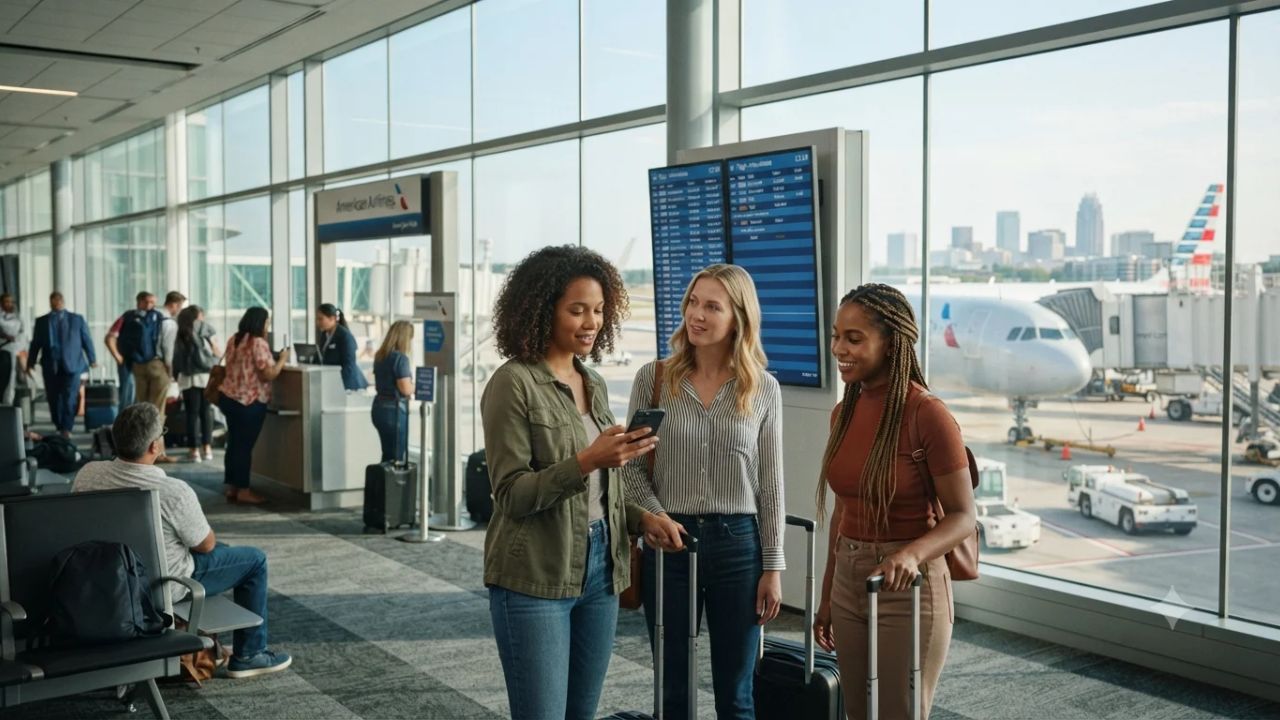
With 2025 federal aviation data revealing that American Airlines logged a 73.52 percent on-time arrival rate—placing it eighth among major United States carriers behind industry-leader Hawaiian Airlines at 81.95 percent—the Fort Worth-based carrier has launched an aggressive technological countermeasure. At Charlotte Douglas International Airport (CLT), its primary East Coast connecting fortress, American is piloting a predictive delay notification system designed to eliminate the dreaded "rolling delay." Rather than posting optimistic 15-minute gate pushes while incoming planes remain hundreds of miles away, the new algorithm binds boarding estimates directly to real-time inbound aircraft positions.
This technological pivot targets one of the most pervasive passenger frustrations in modern commercial aviation. Enabled by satellite aircraft tracking and air traffic telemetry through the U.S. Department of Transportation, the platform reconciles public departure screens with actual airspace movements. If successful in Charlotte, American plans to expand the disruption management engine across its entire global hub network, including Dallas/Fort Worth, Miami, Chicago O'Hare, and Philadelphia.
The Science of Disruption: Taming Charlotte's Hub Dynamics
As American Airlines' second-largest hub, Charlotte Douglas International Airport handles hundreds of daily regional and mainline departures, funneling passengers between the Northeast, the American South, and the Caribbean. In high-density hub environments, rolling delays typically occur when gate agents post departure estimates based on ideal scheduled turnaround times rather than acknowledging airspace holds, taxiway queues, or late-arriving aircraft from previous legs.
The new system bridges this data disconnect by automating boarding projections through several core operational inputs:
- Live Inbound Telemetry Tracking: The system monitors the exact GPS coordinates, altitude, and descent vector of the incoming aircraft assigned to the flight rotation.
- Dynamic Turn-Time Calculations: Rather than assuming a generic 35-minute turnaround, the algorithm calculates realistic deplaning, cleaning, fueling, and catering windows based on aircraft size and baggage volume.
- Predictive Ground Hold Integration: Federal Aviation Administration (FAA) ground stop advisories and Charlotte ramp congestion metrics are factored into public boarding alerts.
- Automated Mobile Rebooking Triggers: When an incoming delay renders an onward connection impossible, the American Airlines mobile application proactively delivers verified rebooking options and digital meal vouchers before the passenger reaches the departure gate.
What Makes Charlotte's Connecting Experience Distinct
Charlotte Douglas International Airport occupies a unique niche in the American aviation network. Unlike decentralized mega-airports with disconnected terminals linked by train networks, Charlotte operates a centralized terminal structure where five concourses (A, B, C, D, and E) branch outward from a single central atrium.
This compact physical layout allows for tight minimum connecting times—often as short as 35 to 45 minutes. However, when an inbound regional jet on Concourse E arrives 20 minutes behind schedule, sprint connections across the central atrium to Concourse B or international Concourse D become high-stress gambles.
By delivering accurate, realistic departure updates rather than false promises of on-time boarding, American's new system allows transiting passengers to make informed choices. Instead of sprinting to a gate only to wait an unexpected hour on the jet bridge, travelers can comfortably stop for North Carolina pulled-pork barbecue, utilize quiet seating areas in the central atrium's famous white rocking chairs, or rebook onto a later connection through the American Airlines App.
Visitor Insider Tips
Navigating connecting flights through Charlotte Douglas International Airport during weather disruptions requires savvy terminal tactics:
- Track Inbound Aircraft Tail Numbers Directly: Open your flight details inside the American Airlines app and tap "Where is my plane coming from?" Cross-reference the inbound flight number with independent tracking tools to verify whether your incoming aircraft has even departed its previous city.
- Master Concourse E Regional Navigation: If your connection arrives or departs on Concourse E (handling regional American Eagle flights), allow at least 15 to 20 minutes of walking time to reach Concourses A, B, or C. Take advantage of moving walkways in the main connector corridors.
- Relax in Charlotte's Historic Rocking Chairs: The light-filled central atrium features dozens of traditional white wooden rocking chairs. If your flight faces an honest, verified delay, this is the most peaceful spot in the terminal to charge devices and enjoy live piano performances.
- Utilize Self-Service Mobile Rebooking: When a delay threatens your connection, avoid standing in 100-person customer service lines at gate podiums. The mobile app allows you to claim open seats on alternative flights, standby lists, or switch to partner connections with a single tap.
- Sample Regional Carolina Flavors: Turn unexpected layover time into a culinary discovery. Visit Midwood Smokehouse in Concourse B for authentic hickory-smoked brisket and mac-and-cheese, or grab fresh buttermilk biscuits from Bojangles in the central food court.
Cultural and Environmental Context
Predictive delay management is not merely an exercise in customer service; it represents a significant environmental efficiency upgrade for modern airport operations. When airlines provide realistic boarding timelines, auxiliary power units (APUs) on parked aircraft can remain switched off longer, significantly reducing jet fuel burn and ramp carbon emissions.
Furthermore, accurate turnaround forecasting prevents unnecessary aircraft taxiing and engine idling on crowded tarmac taxiways. By holding departures at the gate until clear departure runways and airspace corridors are guaranteed, hub airports reduce local air pollution and ground noise across adjacent residential communities.
From a passenger rights perspective, transparent flight communication empowers consumers. As aviation regulatory bodies worldwide scrutinize airline reliability and transparency, adopting data-driven systems restores passenger trust and treats travelers as valued partners rather than uninformed bystanders during irregular operations.
FAQ: Flying Through Charlotte Hub 2026
Why is American Airlines testing its delay technology specifically at Charlotte (CLT)?
Charlotte is American's second-largest hub and one of the busiest connecting facilities in the world, providing an ideal high-volume testing ground for predictive boarding systems.
How does this technology stop rolling flight delays?
The system automatically calculates boarding times based on the actual GPS location and realistic turnaround time of the incoming aircraft, rather than optimistic manual estimates.
What is the minimum connection time recommended at Charlotte Airport?
While published minimum connecting times can be 35 to 45 minutes, allowing a buffer of at least 60 to 75 minutes is recommended when connecting between regional Concourse E and mainline gates.
What should I do if my American Airlines flight is delayed at Charlotte?
Check the mobile app for automatic rebooking options, track the incoming aircraft's flight status, and access digital vouchers without waiting in customer service queues.
In the fast-moving currents of modern flight, the greatest luxury an airline can offer is not just speed, but the quiet peace of absolute truth.
Related Travel Guides
Disclaimer
This article is for informational and educational purposes only. It does not constitute legal, financial, or professional advice. While we strive to provide accurate and up-to-date information, travel policies, regulations, and conditions change rapidly. Always verify information with official sources before making travel decisions. Nomad Lawyer makes no representations about the accuracy, reliability, completeness, or suitability of the information provided. Readers should consult qualified professionals for advice specific to their circumstances. The views expressed in this article are those of the author and do not necessarily reflect the views of Nomad Lawyer.
Raushan Kumar
Founder & Lead Developer
Full-stack developer with 11+ years of experience and a passionate traveller. Raushan built Nomad Lawyer from the ground up with a vision to create the best travel and law experience on the web.
Learn more about our team →