Pennsylvania, Michigan, and Kentucky Tourism Boom: 2026 Economic Impact and Canadian Travel Influx


Pennsylvania, Michigan, and Kentucky demonstrate the rising economic power of American regional tourism, propelled by heritage landmarks, Great Lakes shorelines, and bourbon trails.
HARRISBURG, November 2, 2026 — American tourism is undergoing a major geographic decentralization as traveler spending shifts toward high-yield heritage corridors, freshwater coastlines, and culinary craft trails, with Pennsylvania, Michigan, and Kentucky generating an unprecedented $156.6 billion in combined economic impact across 2025. The record-breaking performance across the three states highlights an accelerating national trend: international and domestic travelers are increasingly dispersing beyond traditional coastal gateway metropolises, seeking authentic cultural encounters, major sports spectacles, and expansive outdoor recreation across the American heartland and Mid-Atlantic.
[!NOTE] Certified econometric filings from the Pennsylvania Department of Community and Economic Development (DCED / Visit PA), Pure Michigan, and the Kentucky Department of Tourism demonstrate that Canadian drive-market travelers represent the primary international source of overnight stays, joined by transatlantic visitors from the United Kingdom and Germany, as well as high-yield sports and business travelers from Japan.
TRI-STATE TOURISM ECONOMIC PERFORMANCE TELEMETRY (2025 BENCHMARKS)
| Column 1 |
|---|
| State Inbound Visitors Direct Traveler Spend Total Economic Impact |
| Pennsylvania 206.2 Million $51.6 Billion $87.2 Billion |
| Michigan 125.4 Million $28.2 Billion $54.8 Billion |
| Kentucky 81.1 Million $10.4 Billion $14.6 Billion |
Tri-State Macroeconomic Landscape: Decentralizing the American Visitor Economy
The evolution of the United States visitor economy between 2021 and 2026 demonstrates a profound geographic broadening of traveler behavior. In earlier decades, inbound international travelers concentrated heavily along coastal gateways such as New York City, Orlando, Miami, Los Angeles, and Las Vegas. However, evolving traveler preferences—accelerated by post-pandemic inclinations toward open-air landscapes, regional heritage immersion, and self-drive exploration—have unlocked substantial capital investment and visitor traffic across regional destinations.
Pennsylvania, Michigan, and Kentucky collectively represent the vanguard of this structural transformation. Together, these three states hosted 412.7 million inbound visitors in 2025, generating $90.2 billion in direct retail, hospitality, and transportation expenditures, which translated into $156.6 billion in total economic activity. This economic engine supported nearly 970,000 direct hospitality and tourism jobs across urban centers, suburban hubs, and rural communities.
This momentum is sustained by deliberate destination marketing realignments and state-backed infrastructure investments. State tourism offices have moved past generic promotional slogans, establishing targeted, multi-season campaigns that showcase unique regional assets: Pennsylvania's living revolutionary history and sporting events; Michigan's expansive Great Lakes freshwater coastlines and automotive cultural assets; and Kentucky's globally recognized bourbon heritage and equestrian traditions. Concurrently, modernization across regional highway networks and international airport facilities has made transit through these corridors faster and more reliable for domestic and international vacationers alike.
Pennsylvania Tourism Performance: America250 Milestone and High-Yield Heritage Growth
Pennsylvania's visitor economy accelerated across 2025 and 2026, transitioning from regional drive-market leisure into high-yield heritage travel, international event staging, and nationwide historic tourism. In 2025, the Commonwealth welcomed 206.2 million visitors, representing a 2.3% year-over-year increase, which generated $51.6 billion in direct traveler spending, an expansion of 3.5% over the previous year.
The broader macroeconomic ripple effect of this visitor spending delivered $87.2 billion in total economic impact throughout the Commonwealth, sustaining 521,021 jobs across accommodation, food service, entertainment, and transportation sectors. Certified econometric modeling conducted by Tourism Economics and filed with the Pennsylvania Department of Community and Economic Development (DCED / Visit PA) establishes that traveler-generated tax revenues yielded $5.2 billion in state and local receipts, directly saving each Commonwealth household approximately $984 in annual state and local tax obligations.
Moving through 2026, direct expenditures are tracking toward $53.5 to $54.5 billion across roughly 210 million visits, representing continued expansion across the state's 67 counties. A primary growth driver is Philadelphia serving as an epicenter for the United States Semiquincentennial (America250) commemorations, celebrating 250 years since the signing of the Declaration of Independence in 1776. The historical spotlight is reinforced by an extraordinary concentration of premier sports fixtures, including matches for the 2026 FIFA World Cup, the Major League Baseball All-Star Game, and the PGA Championship, alongside the state's comprehensive "Great American Getaway" promotional campaign.
To accommodate this sustained surge in traveler volume, Commonwealth authorities and regional transportation agencies have directed substantial capital into intermodal transit infrastructure. Philadelphia International Airport (PHL) has initiated terminal modernization programs and expanded transatlantic customs processing capabilities, while Pittsburgh International Airport (PIT) advances its landmark terminal modernization project, introducing advanced passenger processing technologies and sustainable architectural designs tailored to handle rising domestic and international flight frequencies. Concurrently, Amtrak passenger rail frequencies along the Keystone Corridor linking Philadelphia, Lancaster, and Harrisburg have been expanded to provide seamless, low-carbon transit options for visitors traveling between metropolitan centers and historic rural counties.
A fundamental objective of the Commonwealth's tourism strategy is geographic dispersion. The "Great American Getaway" initiative is explicitly engineered to channel international and out-of-state visitor spending beyond urban commercial corridors into Pennsylvania's 67 counties. Rural heritage communities across the Pennsylvania Wilds, the Pocono Mountains, and the Endless Mountains have registered measurable upticks in bed-and-breakfast reservations, outdoor outfitter revenues, and farm-to-table dining patronage. By connecting marquee global events in Philadelphia with scenic driving routes, heritage railroads in Strasburg and Jim Thorpe, and historic covered bridges in Bucks County, state planners ensure that the economic benefits of major cultural celebrations are distributed equitably across local communities.
| Metric / Indicator | 2025 Recorded Benchmark | 2026 Projections & Trends | Reporting Agency / Methodology |
|---|---|---|---|
| Total Inbound Visitors | 206.2 million (+2.3% YoY) | ~209.5–211.0 million | PA DCED / Tourism Economics |
| Direct Traveler Spending | $51.6 billion (+3.5% YoY) | ~$53.5–$54.5 billion | Comprehensive traveler expenditure filings |
| Total Economic Impact | $87.2 billion | ~$90.0–$92.0 billion | Direct, indirect, and induced economic multiplier |
| State & Local Tax Revenues | $5.2 billion ($984 offset/household) | ~$5.45–$5.60 billion | Commonwealth revenue filings |
| Tourism-Supported Employment | 521,021 jobs | ~528,000+ jobs | Certified labor market statistics |
International Feeder Influx: Canadian Cross-Border Leisure and Transatlantic Cultural Travel in Pennsylvania
While domestic travelers from adjacent Mid-Atlantic and Northeastern states account for more than 85% of total inbound visitation—heavily anchored by New York, New Jersey, Maryland, Ohio, and Virginia—inbound international tourism generates disproportionately high per-trip economic yield. Overseas and cross-border guests stay longer, reserve higher-tier hotel inventory, and disperse spending across regional dining and cultural venues.
Canada represents Pennsylvania's largest international feeder market by a substantial margin. Canadian travelers primarily enter via key cross-border highway corridors, including Interstate 90 from Ontario along Lake Erie, Interstate 79 from western New York, and Interstate 81 connecting eastern Canadian provinces with central Pennsylvania. These self-drive families and seasonal vacationers patronize lakeside resorts in Erie, outdoor recreation centers in the Pocono Mountains, and historic districts in Philadelphia.
Transatlantic demand is led by the United Kingdom and Germany. British travelers display an exceptional affinity for early American revolutionary history, focusing itineraries on Independence Hall and the Liberty Bell in Philadelphia, the hallowed grounds of Gettysburg National Military Park, and scenic driving loops through the Pennsylvania Dutch Country in Lancaster County. German travelers exhibit high interest in rural heritage touring, ancestral cultural links with the Pennsylvania Dutch community, architectural milestones such as Frank Lloyd Wright's Fallingwater in the Laurel Highlands, and extended hiking throughout the Appalachian wilderness. In addition, Japan represents a vital Asia-Pacific market, characterized by corporate delegations visiting regional technology parks, passionate sports fans attending the annual Little League Baseball World Series in Williamsport, and horticultural enthusiasts touring Longwood Gardens in Kennett Square.
| Country / Origin Market | Inbound Traveler Profile & Share | Key Travel Motivations & Draws | Economic & Spending Impact |
|---|---|---|---|
| Canada | Largest international feeder market; cross-border self-drive families and seasonal vacationers. | Proximity interstate corridors (I-90/I-79/I-81), Lake Erie coastal recreation, Pocono mountain resorts, and Philadelphia living history. | High accommodation volume; extended family-style vacation stays and regional shopping. |
| United Kingdom | Leading transatlantic long-haul market; independent cultural travelers and history enthusiasts. | Revolutionary War heritage in Philadelphia, Gettysburg National Military Park, and scenic road trips through the Pennsylvania Dutch Country. | High per-capita daily expenditure on boutique lodging, curated historic tours, and premium dining. |
| Germany | Top continental European origin; heritage and outdoor touring travelers. | Ancestral Pennsylvania Dutch heritage in Lancaster County, Frank Lloyd Wright architecture (Fallingwater), and Appalachian hiking. | Extended multi-destination itineraries, elevated vehicle rental volume, and dispersed rural spending. |
| Japan | Key Asia-Pacific cultural and sports market; corporate delegates and sports fans. | Little League Baseball World Series in Williamsport, urban sports venues, and world-renowned botanical attractions like Longwood Gardens. | Premium Average Daily Rate (ADR) hotel stays and strong cultural institution retail spend. |
Pure Michigan Expansion: Great Lakes Coastlines, Cross-Border Gateways, and Four-Season Dispersion
Michigan's visitor economy achieved historic expansion across 2025 and 2026, transitioning from regional lakeshore getaways toward high-yield culinary heritage, four-season outdoor dispersion, and international border connectivity. In 2025, Michigan generated $54.8 billion in total economic impact, supported by over 125 million visitors, more than $28 billion in direct traveler spending, and 351,292 hospitality jobs.
Direct traveler expenditures across the Great Lakes State reached approximately $28.2 billion in 2025, yielding $3.4 billion in state and local tax receipts that funded critical public services, road maintenance, and municipal development. Moving through 2026, direct expenditures are tracking toward $29.2 to $29.8 billion across roughly 128 million inbound visits. This robust commercial performance coincides with the 20th anniversary of the globally recognized "Pure Michigan" advertising campaign, which has positioned the state as an elite destination for freshwater shoreline recreation, cultural discovery, and winter sports.
A major structural catalyst strengthening Michigan's international connectivity is the opening of the Gordie Howe International Bridge spanning the Detroit River between Windsor, Ontario, and Detroit, Michigan. This state-of-the-art border crossing significantly expands vehicular and commercial capacity, reducing transit wait times and facilitating frictionless cross-border weekend excursions. Concurrently, sustained downtown revitalization across Detroit—exemplified by historic building rehabilitations, new boutique hotels, and expanding cultural quarters—complements the renowned craft beverage and culinary scene of Grand Rapids, creating dynamic urban anchors that balance the state's rural outdoor assets.
The architectural and operational scale of the Gordie Howe International Bridge marks a generational breakthrough for cross-border North American tourism. Featuring a six-lane cable-stayed roadway alongside a dedicated multi-use path for pedestrians and cyclists, the new international crossing integrates cutting-edge inspection technologies, automated tolling systems, and expanded commercial lanes. By diverting heavy commercial freight away from local municipal roads and offering direct highway-to-highway connections between Ontario's Highway 401 and Interstate 75 in Michigan, the facility reduces transit delays and eliminates historic travel friction for Canadian vacationers visiting Detroit cultural venues, sporting stadiums, and Great Lakes coastal destinations.
Beyond urban revitalization, Michigan's four-season tourism strategy effectively balances peak summer lakeside travel with robust winter recreation economies. While freshwater coastlines along Lake Michigan—anchored by resort communities such as Saugatuck, Grand Haven, and Traverse City—generate substantial summer hotel occupancy and watersport revenues, the state's Upper Peninsula sustains vibrant shoulder and winter seasons. Spanning more than 3,000 miles of groomed snowmobile routes, world-class ice climbing along the sandstone bluffs of Lake Superior, and extensive cross-country skiing systems, the northern wilderness draws outdoor recreationists from across the Midwest, ensuring that regional hospitality providers maintain steady cash flows throughout the winter months.
| Metric / Indicator | 2025 Recorded Benchmark | 2026 Projections & Trends | Strategic Drivers & Telemetry |
|---|---|---|---|
| Total Inbound Visitors | ~125.4 million | ~127.5–128.5 million | 20th Anniversary Pure Michigan campaign, four-season marketing |
| Direct Traveler Spending | ~$28.2 billion | ~$29.2–$29.8 billion | Expanded lakeside hospitality assets, culinary tourism spending |
| Total Economic Impact | $54.8 billion (Record benchmark) | ~$56.5–$57.2 billion | Direct, indirect, and induced economic output |
| State & Local Tax Revenues | ~$3.4 billion | ~$3.55–$3.65 billion | Vital state revenue offsetting residential tax burdens |
| Tourism-Supported Employment | 351,292 jobs | ~355,000+ jobs | Hospitality, transit, retail, and outdoor guiding positions |
Michigan Inbound Feeders: Canadian Cross-Border Trade and European Adventure Travelers
Domestically, Michigan draws over 80% of its visitor volume from neighboring Great Lakes and Midwestern drive corridors, heavily led by Illinois (specifically the greater Chicago metropolitan area), Ohio, Indiana, and Wisconsin. These regional travelers supply dependable, high-frequency weekend and holiday traffic to southwest Michigan beach towns, Traverse City wine country, and northern resort enclaves.
Internationally, Canada stands as the dominant origin market, driven by deep familial, cultural, and commercial ties across the shared border. Crossings via the Detroit-Windsor Tunnel, the Ambassador Bridge, the Blue Water Bridge in Port Huron-Sarnia, and the newly operational Gordie Howe International Bridge channel millions of Canadian vacationers into Michigan each year. Canadian visitors demonstrate high utilization of vacation cottage rentals along Lake Huron and Lake Michigan, extended stays on car-free Mackinac Island, and significant retail expenditures in suburban shopping destinations.
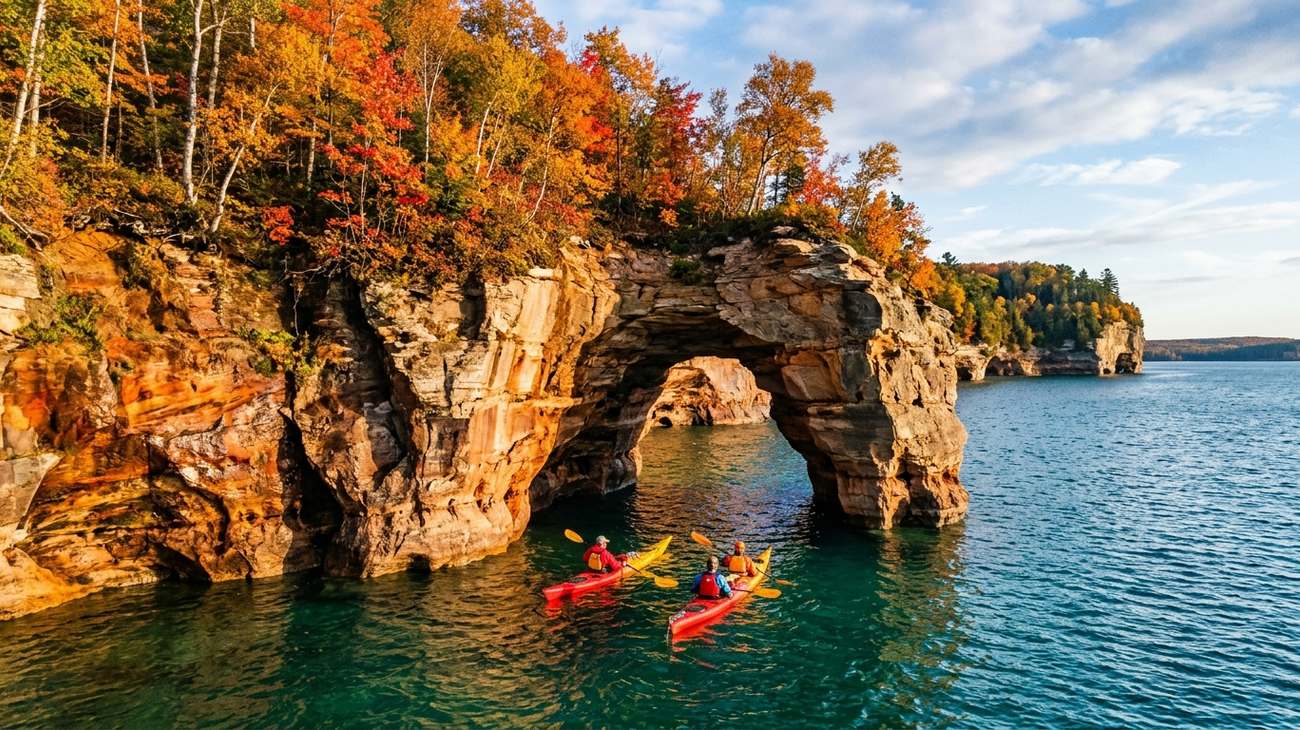
Long-haul international travel to Michigan is anchored by the United Kingdom, Germany, and Japan. British visitors gravitate toward Detroit's celebrated musical history—centered on the Motown Museum—alongside the expansive industrial collections of The Henry Ford Museum of American Innovation in Dearborn and the towering coastal bluffs of Sleeping Bear Dunes National Lakeshore. German tourists, by contrast, prioritize wilderness adventures across the Upper Peninsula, undertaking multi-day sea kayaking expeditions along the colored sandstone cliffs of Pictured Rocks National Lakeshore, hiking the remote Porcupine Mountains, and touring dramatic autumn foliage corridors around Tahquamenon Falls. Japanese arrivals represent an essential corporate and leisure segment, linking automotive research campuses in Metro Detroit with university visits in Ann Arbor and premier golf resorts across northern Michigan.
| Country / Origin Market | Inbound Traveler Profile & Share | Key Travel Motivations & Draws | Economic & Spending Impact |
|---|---|---|---|
| Canada | Dominant cross-border origin; drive-market vacationers and shopping travelers from Ontario. | Proximity border crossings via Windsor/Detroit and Sarnia/Port Huron, Mackinac Island, and Great Lakes coastal getaways. | Highest international accommodation volume, cross-border retail, and extended summer cottage rentals. |
| United Kingdom | Leading transatlantic long-haul market; cultural road-trippers and automotive enthusiasts. | Detroit’s Motown sound, Henry Ford museum complexes, Sleeping Bear Dunes, and craft beverage corridors. | High Average Daily Rate (ADR) hotel stays and discretionary expenditure on fine dining and cultural tours. |
| Germany | Top continental European origin; outdoor adventurers and scenic touring travelers. | Upper Peninsula wilderness, Pictured Rocks National Lakeshore, Great Lakes kayaking, and fall foliage tours. | Extended multi-day itineraries, high vehicle rental volume, and dispersed rural community spending. |
| Japan | Key Asia-Pacific business and cultural market; corporate delegates and heritage tourists. | Automotive corridor business travel (Metro Detroit tech hubs), university visits (Ann Arbor), and golf resorts. | Premium business-class lodging, executive conference dining, and luxury resort stays. |
Kentucky Bourbon and Equine Economy: 81.1 Million Visitors and Record-Breaking Rural Dispersion
Kentucky's visitor economy achieved historic expansion across 2025 and 2026, transitioning from regional drive recovery toward high-yield culinary heritage, equine luxury, and outdoor dispersion. In 2025, Kentucky recorded an all-time high of 81.1 million visitors, generating $10.4 billion in direct traveler spending, $14.6 billion in total economic impact, and sustaining nearly 97,000 jobs.
This landmark performance marks Kentucky's fourth consecutive year of record-breaking economic output from tourism. State and local tax collections generated by traveler expenditures totaled approximately $1.05 billion in 2025, providing vital municipal revenue to school districts, emergency services, and community parks across the Commonwealth. Moving through 2026, direct expenditures are tracking toward $10.8 to $11.1 billion across roughly 82.5 million inbound visitors, demonstrating remarkable resilience and expanding market share.
Growth across the Commonwealth is propelled by the global phenomenon of the Kentucky Bourbon Trail and its expanding craft distillery network. Millions of spirits enthusiasts travel to central and northern Kentucky to tour historic rickhouses, participate in single-barrel selections, and experience James Beard-recognized culinary offerings rooted in traditional Southern foodways. This culinary draw is complemented by elite equestrian tourism, anchored by the iconic Kentucky Derby at Churchill Downs in Louisville, thoroughbred spring and autumn meets at Keeneland in Lexington, and guided farm tours throughout the historic Bluegrass horse region. Concurrently, investments in rural eco-trails, scenic blueways, and outdoor adventure infrastructure across eastern Kentucky are channeling economic benefits directly into rural Appalachian communities.
The explosive commercial growth of the Kentucky Bourbon Trail reflects a multi-billion-dollar transformation in craft beverage hospitality. Distilleries throughout Bardstown, Frankfort, Lawrenceburg, and Louisville have invested over $5.4 billion in experiential infrastructure, developing state-of-the-art visitor centers, luxury private tasting salons, interactive educational museums, and on-site fine dining establishments helmed by award-winning Southern culinary chefs. This expansive investment wave generates extensive upstream economic benefits, creating sustained demand for regional agriculture through locally sourced non-GMO corn and wheat, alongside specialized manufacturing demand for handcrafted charred white oak barrels produced by Kentucky cooperages.
Equally prominent is Kentucky's thoroughbred horse racing and breeding industry, which commands elite international appeal. Working horse farms spanning Fayette, Woodford, and Bourbon counties offer highly sought-after guided tours that allow travelers to observe champion racehorses and historic equine nursery operations. Events like the annual Keeneland Yearling Sales draw affluent international buyers and visitors who contribute significant discretionary revenue to regional luxury boutique hotels, private jet facilities, and executive dining rooms. At the same time, regional initiatives promoting rock climbing in the Red River Gorge and subterranean exploration in Mammoth Cave ensure that outdoor adventure tourism thrives alongside traditional equine and culinary pursuits.
| Metric / Indicator | 2025 Recorded Benchmark | 2026 Projections & Trends | Performance Milestones |
|---|---|---|---|
| Total Inbound Visitors | 81.1 million (All-time high) | ~82.0–82.5 million | Continuous post-pandemic expansion |
| Direct Traveler Spending | $10.4 billion | ~$10.8–$11.1 billion | Surpassed ten-billion-dollar milestone |
| Total Economic Impact | $14.6 billion (4th straight record year) | ~$15.1–$15.3 billion | Record contribution to gross state product |
| State & Local Tax Revenue | ~$1.05 billion | ~$1.10–$1.15 billion | Exceeded one billion dollars in public fiscal receipts |
| Tourism-Supported Employment | 96,993 jobs | ~98,000+ jobs | Sustains nearly 97,000 direct and indirect positions |
Kentucky Inbound Feeders: Bourbon Trail Aficionados and Outdoor Recreationists
Domestically, Midwestern and Southern interstate drive corridors generate over 80% of Kentucky's total visitor volume, heavily led by Ohio, Indiana, Tennessee, Illinois, and Georgia. These drive markets take advantage of major arterial routes—including Interstate 75, Interstate 65, and Interstate 64—which converge in Kentucky, creating exceptional accessibility for weekend getaways, culinary tours, and sporting competitions held in Louisville and Lexington.
Canada represents the Commonwealth's leading international feeder country. Canadian road-trippers utilize Interstate 75 as a primary south-bound holiday corridor, frequently staging multi-night stopovers to explore Mammoth Cave National Park—the world's longest known cave system, spanning more than 420 surveyed miles of subterranean passageways—alongside Kentucky's network of state resort parks and scenic boating facilities on Lake Cumberland.
Overseas visitor demand is led by the United Kingdom, Germany, and Japan. British tourists, drawn by Kentucky's equestrian traditions and authentic American spirits culture, account for high discretionary spending on VIP distillery experiences, luxury boutique hotels in downtown Louisville, and private thoroughbred farm excursions. German visitors display a pronounced preference for active outdoor touring, tackling world-class rock climbing and hiking routes through the towering sandstone cliffs of the Red River Gorge Geological Area, descending into underground caverns, and exploring Americana driving routes through the Daniel Boone National Forest. Japanese visitation remains strong, supported by deep corporate relationships tied to major automotive assembly facilities in Georgetown and northern Kentucky, with business executives extending stays to explore the Louisville Slugger Museum & Factory and regional distillery attractions.
| Country / Origin Market | Inbound Traveler Profile & Share | Key Travel Motivations & Draws | Economic & Spending Impact |
|---|---|---|---|
| Canada | Largest cross-border origin; self-drive road-trippers and seasonal vacationers. | Scenic Interstate 75/65 transit corridors, Mammoth Cave National Park, and state resort parks. | High accommodation volume; extended family-style stays and campground utilization. |
| United Kingdom | Leading transatlantic long-haul market; affluent cultural and equestrian travelers. | Kentucky Bourbon Trail distilleries, historic Bluegrass thoroughbred horse farms, and music heritage. | High per-capita discretionary spend on premium dining, distillery tours, and boutique lodging. |
| Germany | Top continental European origin; outdoor recreationists and motoring tourists. | Hiking in the Red River Gorge, subterranean cave exploration, and Americana road-trip circuits. | Extended multi-day itineraries, high vehicle rental volume, and dispersed rural spending. |
| Japan | Key Asia-Pacific business and cultural market; corporate delegates and heritage tourists. | Automotive corridor business travel (Toyota hubs), Louisville Slugger heritage, and bourbon tasting. | Premium Average Daily Rate (ADR) hotel stays and executive corporate spending. |
Cross-Border Transportation Logistics and Intermodal Corridor Connectivity
The remarkable surge in visitor volumes across Pennsylvania, Michigan, and Kentucky is inextricably linked to robust transportation networks and streamlined cross-border transit logistics. Operating as regional geographic hubs, each state relies on major interstate highway arteries to facilitate frictionless passenger vehicle movement. Interstate 90, Interstate 80, and Interstate 76 serve as foundational east-west corridors channeling travelers between the East Coast, the Great Lakes basin, and the Midwest, while north-south arteries including Interstate 75, Interstate 79, and Interstate 65 provide direct pathways connecting Canadian metropolitan areas in Ontario and Quebec with southern holiday destinations.
Cross-border travel between Canada and the United States has experienced considerable operational modernization. The implementation of expanded NEXUS dedicated inspection lanes, mobile passport control platforms, and enhanced biometric screening protocols at land border ports has significantly reduced border checkpoint delays. For Canadian self-drive families, these logistical advancements transform multi-hour border crossings into seamless transit experiences, encouraging spontaneous weekend getaways and extended road trips. Regional airports, including Grand Rapids' Gerald R. Ford International Airport, Louisville Muhammad Ali International Airport, and Lehigh Valley International Airport, have concurrently expanded domestic non-stop routes and upgraded facilities, ensuring reliable point-to-point air connectivity for travelers residing outside regional driving radii.
Comparative Regional Dynamics: What Tri-State Growth Means for Travelers and the Hospitality Sector
The coordinated expansion of tourism across Pennsylvania, Michigan, and Kentucky offers vital insights into the shifting dynamics of North American travel. Rather than competing directly for identical demographics, the three states provide complementary regional experiences that illustrate how heritage, nature, sports, and culinary traditions can drive sustainable visitor economies.
TRI-STATE STRATEGIC VALUE COMPARISON MATRIX
| Column 1 |
|---|
| Strategic Dimension Pennsylvania Michigan Kentucky |
| Core Historical Draw American Revolution Automotive Heritage Bourbon & |
| & America250 Milestone & Motown Sound Equestrian |
| Signature Landscape Appalachian Mountains & Great Lakes Shores Mammoth Cave |
| Pocono Alpine Valleys & Upper Peninsula & Red River |
| Major Inbound Gateway Philadelphia Int'l (PHL) Detroit Metro (DTW) Louisville |
| & Pittsburgh Int'l (PIT) & Gordie Howe Bridge& Lexington |
| Primary Lodging Mix Historic Boutique Inns, Lakeside Cottages, Distillery |
| Urban Convention Hotels B&Bs, City Suites Boutiques |
| Key Economic Multiplier Large Tax Offset ($984) Coastal Summer Run Record Run |
| Per Commonwealth Home Over 20 Years 4th Yr High |
For the independent traveler, this geographic expansion delivers significant practical benefits. By choosing regional travel circuits across Pennsylvania, Michigan, or Kentucky instead of hyper-congested coastal mega-destinations, visitors enjoy superior price-to-value ratios across lodging, dining, and admission costs. Average Daily Rates (ADR) across regional boutique hotels and bed-and-breakfast properties remain competitive, while authentic culinary experiences—from farm-to-table Amish dining in Lancaster County to fresh whitefish along Lake Superior and heritage barbecue along the Bourbon Trail—offer distinct local character without inflated resort premiums.
From an infrastructure and destination management perspective, the primary challenge facing all three states involves managing capacity and encouraging geographic dispersion. While marquee destinations such as Independence National Historical Park, Mackinac Island, and Churchill Downs command immense name recognition, regional tourism boards are actively investing in rural wayfinding, electric vehicle fast-charging corridors, and scenic byway marketing to ensure visitor spending reaches rural artisans, local guides, and family-owned hospitality businesses.
As the United States prepares for historic international arrivals surrounding the America250 celebrations and the 2026 FIFA World Cup, the foundational strength established by Pennsylvania, Michigan, and Kentucky proves that the heart of American tourism increasingly resides in its diverse, resilient, and welcoming regional communities.
Related Travel Guides
This article is for informational purposes. Flight routes, passenger regulations, visa rules, and transit advisories are subject to change by airlines and aviation authorities. Readers are advised to verify schedules and travel documentation with relevant carriers and border agencies before departure.
Related Stories

Pennsylvania Measles Outbreak 2026: Health Risks and Travel Logistics for Visitors