
Penn Station Standstill After Intense Trackside Brush Fire Erupts in Secaucus Near the Hudson River Tunnels, Suspending NJ Transit Rail Services: New Travel Alert
A severe brush fire near the rail tracks in Secaucus, New Jersey, has forced an immediate Penn Station standstill, suspending NJ Transit services.

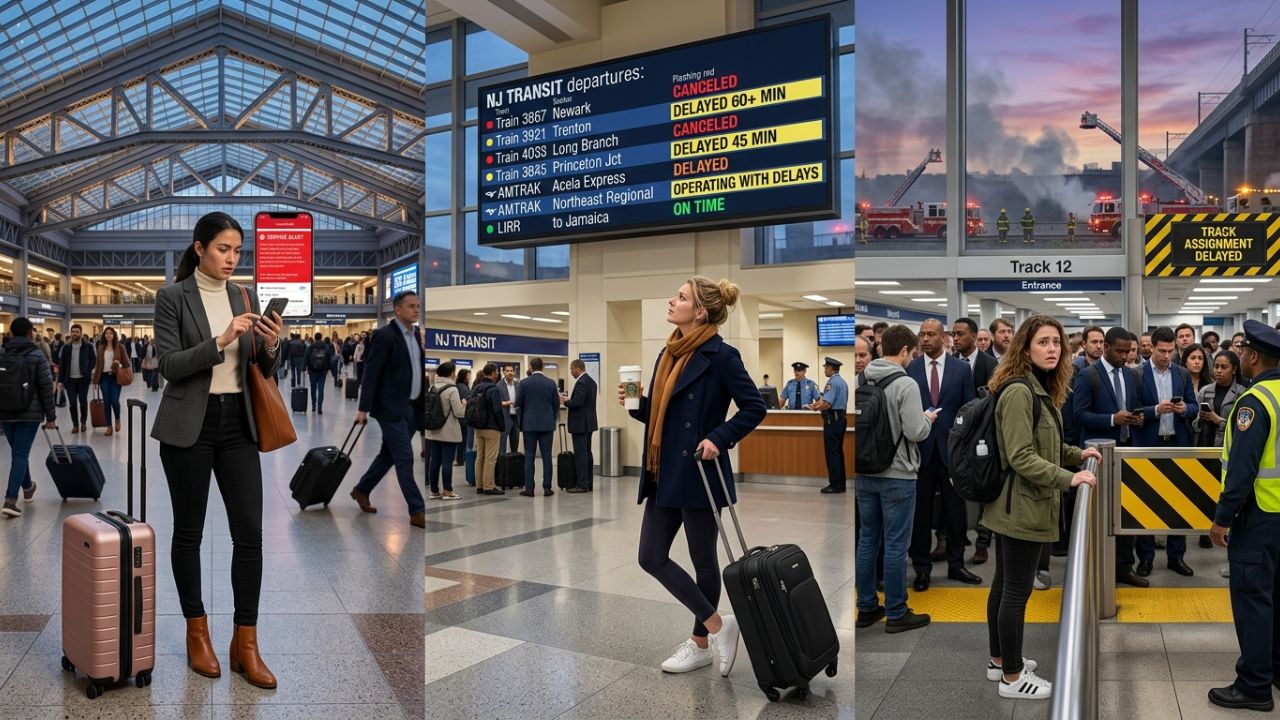
Image generated by AI
A major infrastructure emergency has paralyzed the Northeast Corridor as an intense trackside brush fire erupted in Secaucus, New Jersey, triggering a complete Penn Station standstill for all NJ Transit rail services. The incident, which unfolded on Wednesday, May 21, 2026, occurred near the critical approach to the Hudson River Tunnels, forcing transit safety crews to suspend inbound and outbound train traffic. Thousands of daily commuters and international tourists were caught in regional travel chaos during both the morning and evening travel periods, exposing the extreme sensitivity of the metropolitan region's core transit links.
With visible flames burning alongside the railway lines and thick smoke obstructing operations, NJ Transit suspended rail operations into Manhattan to guarantee passenger safety and allow emergency crews to contain the fire. Transit authorities have implemented cross-honoring policies across regional bus lines, ferries, and PATH networks while engineering teams systematically inspect the electrical systems and track structures. Residual delays are continuing to ripple across multiple lines, prompting urgent recommendations for travelers to bypass major transit hubs and verify their route options.
Quick Summary
- Paralyzing Trackside Fire: A brush fire in Secaucus, New Jersey, has brought rail transit to a complete Penn Station standstill, halting NJ Transit services.
- Precautionary Suspension: All incoming and outgoing rail operations were suspended to protect commuters, train crews, and responding firefighters from heavy smoke and trackside heat.
- Commute Schedule Chaos: The service halt severely disrupted both the morning and evening peak travel windows, causing crowds to overflow at alternative regional stations.
- Transit Ticket Cross-Honoring: Tickets and passes are being temporarily honored on PATH services, ferries, and municipal bus routes to assist stranded passengers.
- Renewed Scrutiny on Infrastructure: The incident highlights the vulnerability of the Hudson River Tunnels and the broader Northeast Corridor transit network to unexpected operational hazards.
Context: Geopolitical and Local Vulnerabilities Behind the Penn Station Standstill
The occurrence of this trackside brush fire near the primary gateway into Manhattan highlights the ongoing fragility of North America's most heavily traveled rail corridor. The Secaucus rail tracks serve as the singular entry point for NJ Transit trains approaching the Hudson River Tunnels, meaning any disruption here immediately translates into a regional emergency.
To help travelers find alternative routes, tickets are being cross-honored across multiple partner networks. Passengers should consult the official NJ Transit mobile app or website for real-time schedule modifications and live service alerts before commuting.
Incident Details: Trackside Brush Fire in Secaucus Triggers Penn Station Standstill
The safety incident erupted close to the active rail lines in Secaucus, New Jersey, which serves as the primary municipal junction for trains entering Manhattan. As the fire spread along the trackside brush, heavy smoke and rising heat triggered immediate safety protocols, forcing a complete halt to all train movements into and out of Penn Station New York.
To illustrate the severity of the incident, NJ Transit released video footage showing heavy, dark smoke billow‑rising from the rail corridor while flames burned directly alongside the electrical catenary supports. Emergency response teams and railway personnel were dispatched immediately to contain the fire, but the lack of immediate access to the tracks required a full, precautionary shutdown of the system.
Critical Risks and Sector-Wide Travel Disruptions
The trackside fire introduced several significant operational risks and network disruptions:
- Morning and Evening Commute Disruptions: The service suspension spanned both peak travel windows, stranding thousands of passengers and putting immense pressure on secondary travel options.
- Alternative Hub Congestion: Severe passenger crowding was reported at secondary transit nodes as commuters rushed to secure seats on ferries, PATH trains, and municipal buses.
- Infrastructure Risks: Trackside brush fires pose severe hazards to sensitive signaling networks, communication cabling, electrical catenary lines, and steel track stability.
- Unclear Origin: The cause of the Secaucus brush fire remains unknown, with investigations considering several factors including dry trackside vegetation, electrical malfunctions, discarded materials, and wheel‑generated sparks.
- Cascading Delays: Delays at Penn Station New York quickly triggered ripple effects across the entire NJ Transit rail network, leading to delayed departures on distant regional lines.
What Authorities Are Saying
Safety remains the highest priority for regional transit managers and first responders when trackside emergencies occur near major tunnels. Emergency crews remained on site for several hours to extinguish the brush fire and ensure that no lingering hotspots threatened the nearby Hudson River Tunnels.
Transit representatives emphasized the following operational guidelines:
- Precautionary Measures: Safety-first shutdowns are standard procedure whenever trackside smoke or heat threatens to interfere with passenger comfort or locomotive electrical systems.
- Structural Inspections: Specialized engineering crews must conduct comprehensive physical inspections of the rail lines and overhead wires before allowing heavy passenger trains to resume service.
- Strategic Planning Advice: Travelers are advised to avoid congested metropolitan terminals if possible and seek alternative routes through the PATH (Port Authority Trans-Hudson) system during the recovery phase.
What This Means for Travelers: Practical Traveler Advice
If you are traveling through the New Jersey and New York transit corridors, transportation safety experts recommend taking these actions:
- Monitor Live Service Alerts: Keep a close watch on real-time transit alerts via official mobile applications and social media feeds before leaving your home.
- Leverage Cross-Honored Ticketing: Present your rail passes to ticket agents at Hoboken Terminal or Newark Penn Station to utilize bus and PATH alternatives at no additional fee.
- Expect Alternative Routing: Prepare to adjust your itinerary by utilizing regional water ferries or trans-Hudson buses from key transport terminals.
- Allow Significant Travel Buffers: If you are heading to a flight connection or an important business appointment, allow at least ninety minutes of extra travel time.
- Maintain Situational Awareness: Stay alert for rapid gate changes and rescheduling announcements, as train schedules are adjusting frequently as operations normalize.
Broader Context: Why the Hudson River Rail Corridor Matters
The Hudson River Tunnels play an irreplaceable role in maintaining daily commuter movement and economic productivity within the densely populated tri-state metropolitan region. Millions of international visitors and local workers rely on this shared rail corridor every week, making its structural health and security a matter of national economic significance. This trackside fire has renewed public discussion and political scrutiny regarding the age, resilience, and modernization of the Northeast Corridor's rail infrastructure. Transportation advocates emphasize that incidents like the Secaucus brush fire highlight the urgent need for dedicated funding, emergency preparedness planning, and long‑term capital investment in secondary tunnel corridors.
Looking Ahead: Safety Investigations and Schedule Normalization
As emergency crews complete their trackside dampening operations, the primary focus of transit officials is shifting toward a comprehensive investigation into the fire's origin. Safety inspectors will continue to analyze trackside electrical systems and weather data to establish a definitive timeline of the event.
In the coming days, commuter rail schedules are expected to stabilize, though residual delays may affect peak departures as train sets are returned to their proper storage yards. Commuters are encouraged to remain patient, keep their travel options flexible, and continue to monitor official communication channels for updates.
Conclusion: Community Resilience and Commuter Vigilance
The sudden Penn Station standstill caused by the Secaucus brush fire serves as a powerful reminder of the importance of community resilience and personal travel preparation. By utilizing alternative transit options, cooperating with emergency crew instructions, and staying informed through real-time alerts, travelers can successfully navigate sudden metropolitan transit disruptions. Commuter vigilance and proactive route planning remain the most effective tools for ensuring safe, reliable regional travel.
Frequently Asked Questions (FAQ)
What caused the Penn Station standstill on May 21, 2026?
The service suspension was caused by an intense trackside brush fire in Secaucus, New Jersey, which produced heavy smoke and forced a precautionary halt of NJ Transit rail services.
How did the Secaucus fire affect commuter schedules?
The fire severely disrupted both the morning and evening peak travel periods, leading to canceled trains, reroutings, and massive passenger congestion across the regional network.
What alternative transit options were available to passengers?
NJ Transit rail tickets were cross-honored on regional buses, cross-Hudson water ferries, and PATH services at Hoboken Terminal, Newark Penn Station, and Manhattan.
Why was a full train suspension necessary for a trackside fire?
Precautionary suspensions are implemented to protect passengers and crews from heavy smoke, and to prevent potential damage to critical overhead catenary lines, signaling systems, and track stability.
What is being done to address the vulnerability of the Hudson River Tunnels?
The incident has intensified regional discussions regarding infrastructure modernization, emergency preparedness, and long‑term investments to improve the corridor's resilience.
Related Travel Guides
- Egypt Issues Urgent Travel Advisory as Cairo International Airport Grapples with Kuwait Airways, Buraq Air, and Air Arabia Cancellations: Latest Travel Alert
- Germany Issues Urgent Economic Travel Warning as Soaring Fuel Prices Force European Tourists to Abandon Expensive Mediterranean Hotspots for Budget-Friendly Croatia: New Travel Alert
- Tour Boat Fire Near Fethiye Prompts Maritime Safety Review in Turkey
Disclaimer
This article is for informational and educational purposes only. It does not constitute legal, financial, or professional advice. While we strive to provide accurate and up-to-date information, travel policies, regulations, and conditions change rapidly. Always verify information with official sources before making travel decisions. Nomad Lawyer makes no representations about the accuracy, reliability, completeness, or suitability of the information provided. Readers should consult qualified professionals for advice specific to their circumstances. The views expressed in this article are those of the author and do not necessarily reflect the views of Nomad Lawyer.
Kunal K Choudhary
Co-Founder & Contributor
A passionate traveller and tech enthusiast. Kunal contributes to the vision and growth of Nomad Lawyer, bringing fresh perspectives and driving the community forward.
Learn more about our team →