
Paris and Other Cities Transform Luxury Hotels with Acoustic Place-Making as Guests Reconnect with Authentic Travel
Paris and Other Cities Transform Luxury Hotels with Acoustic Place-Making as Guests Reconnect with Authentic Travel

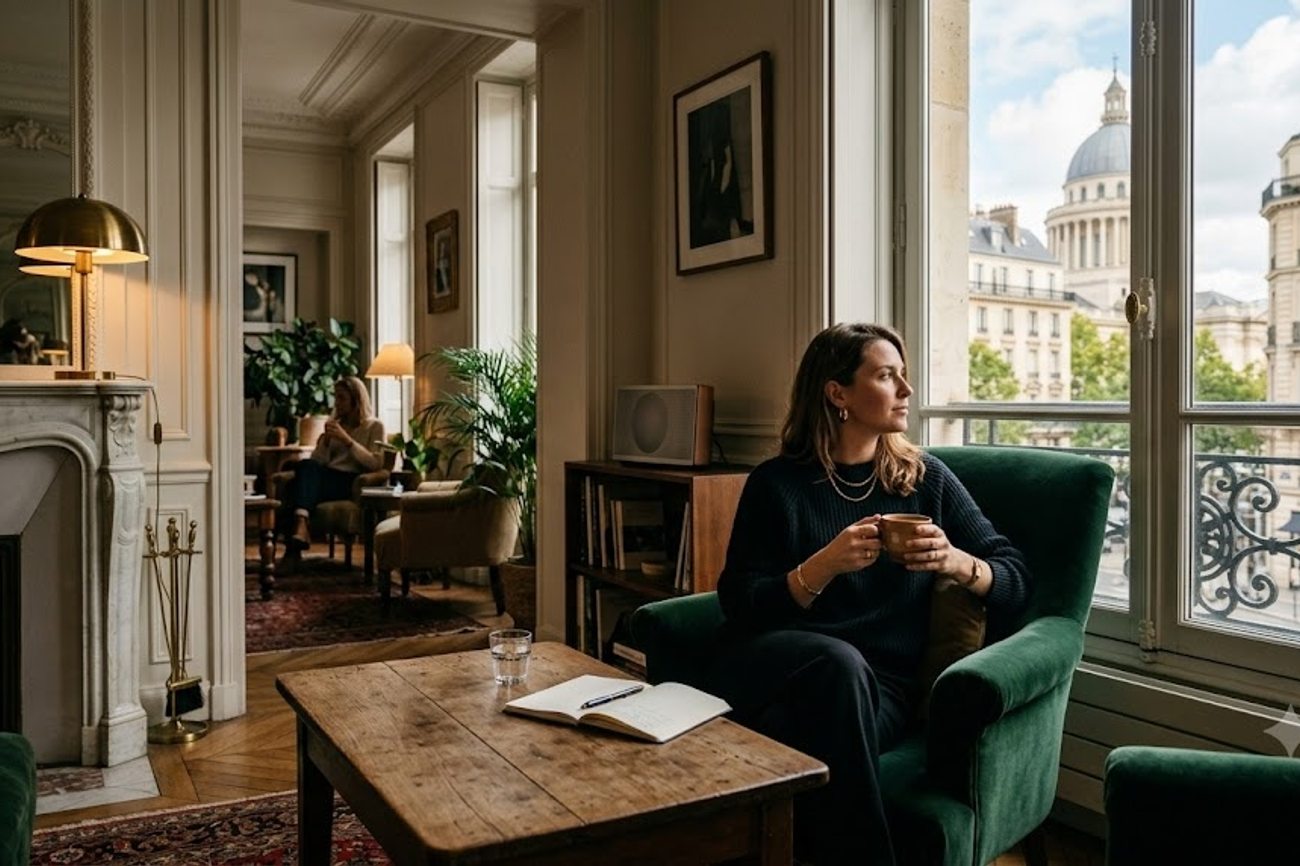
Image generated by AI
A 30% decrease in lounge dwell time among luxury hotel guests represents a critical failure in the experiential economy, as high-net-worth travelers increasingly retreat into the artificial silence of active noise cancellation (ANC) hardware. This behavioral shift transforms opulent communal spaces—once the heart of destination immersion—into mere transitory corridors. By sealing themselves behind digital barriers, guests are not merely avoiding noise; they are inadvertently severing the sensory feedback loops that connect the human brain to its physical surroundings, leading to accelerated cognitive fatigue and a profound state of spatial detachment.
The Psychoacoustic Barrier in Luxury Hospitality
The current crisis in Southwestern European luxury hospitality is not one of aesthetics, but of acoustics. While the visual grandeur of Mediterranean retreats and Parisian palaces remains a primary marketing draw, a cognitive wall has emerged. Guests are physically present in cocktail bars and garden verandas but remain mentally sequestered within the inverted phase waveforms of their headphones.
Active Noise Cancellation functions by utilizing miniature external microphones to neutralize incoming ambient sound waves. While this is an essential utility for mitigating the low-frequency roar of a jet engine—a necessity for those navigating the global networks managed by the International Air Transport Association (IATA)—its continuous application in a destination environment creates a "spatial dwell deficit." The human brain relies on subtle ambient reflections and spatial reverberations to map its environment. When ANC algorithms strip these cues, the auditory cortex loses its perceptual frame. The result is a paradox: the traveler seeks peace but finds a sterile, disorienting void that prompts them to retreat to their private suites faster than ever before.
The Mathematics of Ambient Sound and Guest Behavior
For hotel operators, the financial impact of this sensory detachment is quantifiable. When guests treat public rooms as thoroughfares rather than destinations, the secondary spend on aperitifs, lounge services, and incidental dining plummets. The challenge for management is that traditional noise mitigation—simply dampening a room—often exacerbates the problem.
In "hypo-acoustic" environments (below 40 dB), a psychological phenomenon occurs where the absence of background resonance makes minor sounds, such as a distant whisper or a clattering fork, feel intrusive. This "acoustic paradox" creates an atmosphere of eavesdropping anxiety, which actually encourages guests to put their headphones on to secure a sense of privacy. Conversely, environments exceeding 70 dB trigger the "Lombard effect," where guests subconsciously raise their voices to be heard, creating a spiral of noise that leads to autonomic stress and rapid space abandonment.
The following data outlines the operational impact of decibel calibration on guest psychology and commercial outcomes:
| Operational State | Ambient Sound Level | Psychoacoustic Perception | Commercial Outcome |
|---|---|---|---|
| Severe Hypo-Acoustic | Below 40 dB(A) | Clinical sterility; vulnerability | High ANC deployment for privacy |
| Calibrated Equilibrium | 45 to 55 dB(A) | Restorative calm; cognitive ease | +20% to +35% dwell time; increased spend |
| Acoustic Discomfort | 58 to 68 dB(A) | Cognitive friction; vocal strain | Increased vocal volumes (Lombard effect) |
| Chaotic Clatter | Exceeding 70 dB(A) | Auditory exhaustion; stress | Rapid abandonment of public spaces |
Expert Analysis: The Shift Toward Acoustic Place-Making
The transition from "noise control" to "acoustic place-making" marks a fundamental shift in how luxury hospitality is engineered. For the modern traveler, the direct consequence of this shift is a move away from the generic, sterile silence of a corporate lobby toward a curated auditory experience.
The pricing pressure created by declining dwell times is forcing hoteliers to invest in bio-acoustic engineering. By maintaining a calibrated window of 45 to 55 dB(A), properties can mask mechanical HVAC hums and service noise without requiring guests to strain their voices. This range, aligned with ISO 12913-1 and ISO 12913-2 standards, creates a "natural privacy mask." When a guest feels their conversation is naturally shielded by a curated soundscape—perhaps incorporating regional nature sounds or directional audio—the psychological need for ANC hardware diminishes.
For those booking stays in historic European properties, this means the "luxury" of the room is no longer just about the thread count of the linens or the view from the balcony, but the invisible architecture of the air. The integration of directional sound systems in heritage sites—such as Tuscan castellos or Portuguese quintas—allows hotels to combat the reflective nature of marble and stone. By managing reverberation time, these properties are effectively "hacking" the guest's nervous system to lower cortisol levels and encourage social interaction.
Key Takeaways
- The Dwell Deficit: ANC headphone usage is linked to a 30% reduction in the time guests spend in hotel public spaces, eroding the "destination immersion" luxury brands promise.
- The 50 dB Sweet Spot: Maximum social engagement and commercial spend occur when ambient noise is maintained between 45 and 55 dB(A), providing enough masking for privacy without causing vocal strain.
- The Acoustic Paradox: Over-dampening a room (below 40 dB) creates a clinical environment that increases guest anxiety and paradoxically drives higher headphone usage.
- Bio-Acoustic Engineering: Leading European hotels are moving toward "acoustic place-making," using regional sounds and architectural remediation to replace digital isolation with environmental connection.
- Physiological Impact: Environments exceeding 70 dB trigger autonomic nervous system stress, as recognized by the World Health Organization (WHO), leading to immediate guest retreat.
FAQ: Luxury Hotel Acoustics 2024
Why do I feel more stressed in some luxury hotel lobbies than others? It is likely due to the "Lombard effect" or "chaotic clatter." If ambient noise exceeds 70 dB, your body triggers a stress response, increasing your heart rate and cortisol levels, which makes the space feel exhausting rather than relaxing.
Does noise-canceling technology actually hinder my travel experience? While useful for flights, continuous ANC use in destination environments can cause "spatial detachment." By removing ambient cues, it accelerates cognitive fatigue and reduces your emotional connection to the location you are visiting.
What is "acoustic place-making" in a hotel context? It is the intentional design of a soundscape—using architectural materials and curated audio—to create a specific mood. Instead of just removing noise, hotels add "pleasant" sounds to encourage guests to remove headphones and socialize.
How can I tell if a hotel has a well-designed acoustic environment? Look for a "calibrated equilibrium." You should be able to hold a private conversation without raising your voice, and you shouldn't feel the need to wear headphones to block out the "clinical silence" or "mechanical hum" of the building.
The future of luxury is not found in the silence we create for ourselves, but in the sounds we are finally willing to hear.
Tags: #LuxuryHospitality2024 #AcousticPlaceMaking #SouthwestEuropeTourism #Psychoacoustics #ANCImpact #ISO12913
Related Travel Guides
- Asia’s Adults-Only Hotels Expand As Falling Birth Rates Reshape Luxury Travel And Resort Design
- Hunaaan Bengaluru Celebrates 19 Years Of Pan Asian Excellence With A Special Mid Autumn Festival Feast Filled With Authentic Flavours
- Jaipur Luxury Tourism Gets Major Boost As Fine Acers’ Wyndham Grand Resort Becomes India’s First RERA Registered Resort
Disclaimer
This article is for informational and educational purposes only. It does not constitute legal, financial, or professional advice. While we strive to provide accurate and up-to-date information, travel policies, regulations, and conditions change rapidly. Always verify information with official sources before making travel decisions. Nomad Lawyer makes no representations about the accuracy, reliability, completeness, or suitability of the information provided. Readers should consult qualified professionals for advice specific to their circumstances. The views expressed in this article are those of the author and do not necessarily reflect the views of Nomad Lawyer.
Kunal K Choudhary
Co-Founder & Contributor
A passionate traveller and tech enthusiast. Kunal contributes to the vision and growth of Nomad Lawyer, bringing fresh perspectives and driving the community forward.
Learn more about our team →