
Papua New Guinea Highlands Travel Guide 2026: Kainantu Earthquake Safety and Cultural Journeys

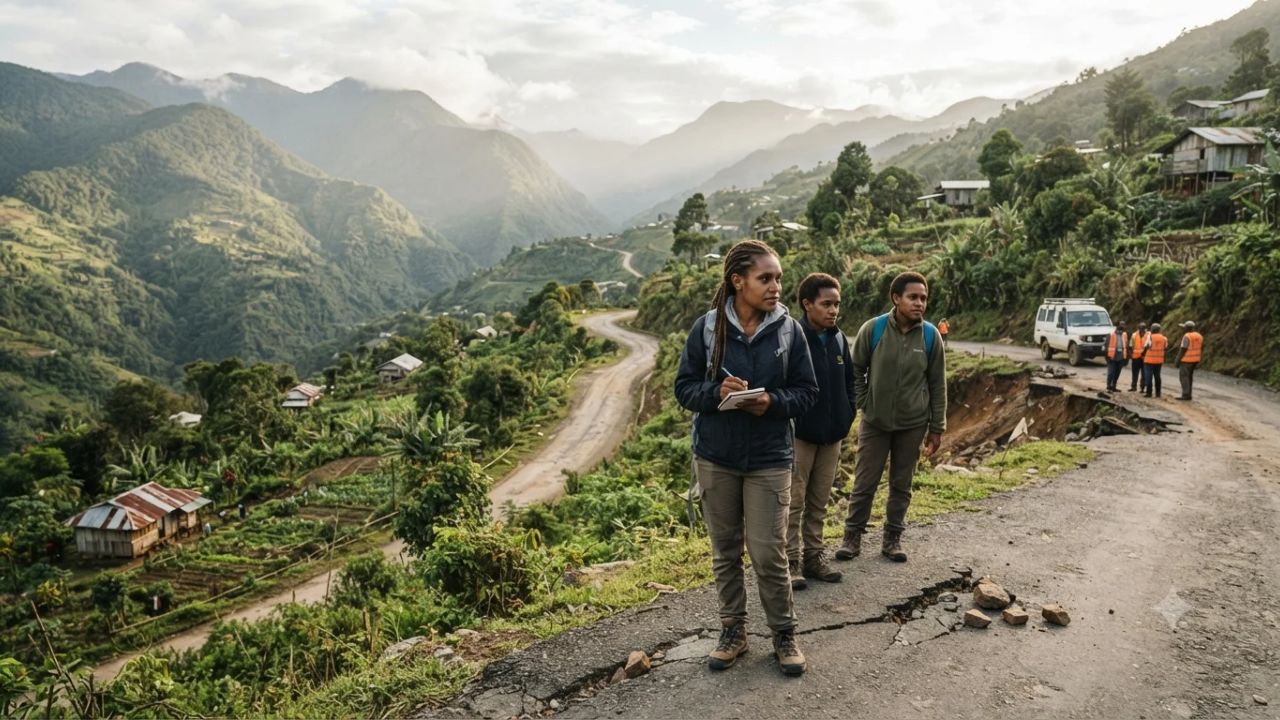
Striking at an intermediate depth of 104.3 kilometers beneath the rugged Eastern Highlands, a magnitude 6.4 earthquake rattled Papua New Guinea roughly 49 kilometers north-northeast of Kainantu on September 20, 2026. Because the seismic rupture occurred more than 64 miles underground, the United States Geological Survey issued a green PAGER alert with no structural destruction or significant casualties reported, leaving Highlands transport networks operational during one of the country's most important cultural festival weekends.
The seismic event coincided directly with the historic Goroka Show, held from September 18 to 20, 2026, which gathered more than 100 indigenous tribes across the Highlands for ritual sing-sings, feather displays, and traditional drumming. For adventurous travelers journeying through the interior of Papua New Guinea, understanding how tectonic geography intersects with mountain road passes, regional airstrips, and local tribal customs is essential for safe expedition planning.
Tectonic Forces and Highlands Logistics
The earthquake struck at 09:17:36 UTC (approximately 7:17 PM local time) along the active Australia-Pacific tectonic boundary, a massive fault system that extends for more than 2,000 kilometers across New Guinea and Indonesia. The European Union's RAPID-N hazard platform and international monitoring stations independently confirmed the magnitude 6.4 tremor at a depth of 104.33 kilometers. Because intermediate-depth quakes dissipate energy across a wide radius rather than focusing extreme shear forces on surface soil, towns like Kainantu, Goroka, and Madang experienced moderate ground shaking without catastrophic structural collapse.
However, in the steep mountain terrain of Papua New Guinea, secondary geological risks often present greater operational hurdles than initial tremors. Heavy tropical rainfall combined with seismic shaking can trigger localized mudslides and rockfalls along the Highlands Highway, the single overland artery connecting coastal ports like Lae and Madang with interior provincial centers.
Aviation remains the indispensable lifeline across the country’s fragmented geography. National carrier PNG Air, whose published schedules extend through December 2026, connects major gateways including Port Moresby with regional mountain airfields. When mountain roads face temporary clearance checks, short-takeoff turboprop aircraft provide reliable transit between coastal hubs and remote river valleys. Up-to-date seismic data and tectonic context can be tracked directly through the U.S. Geological Survey.
What Makes the Papua New Guinea Highlands Different
Papua New Guinea is one of the most culturally diverse and geologically dramatic frontiers on earth. Over 800 distinct languages are spoken across mist-shrouded valleys that remained largely unmapped by outsiders until the 1930s. The same tectonic forces that place the nation squarely on the Pacific Ring of Fire have pushed jagged limestone ridges above 14,000 feet, creating fertile volcanic valleys where sustainable agriculture has flourished for over 9,000 years.
The Highlands region represents the cultural core of the nation. During major tribal gatherings like the Goroka Show, travelers witness living anthropological heritage where Huli Wigmen, Asaro Mudmen, and Simbu skeleton dancers perform ancestral rituals passed down through millennia. These gatherings are not commercial stage shows; they are vital diplomatic assemblies where clan elders celebrate cultural pride and maintain regional peace.
The physical environment requires a mindset of self-reliance. Traveling between villages involves navigating dense cloud forests, traversing suspension bridges over roaring whitewater gorges, and staying in community-run guesthouses constructed from woven bamboo and thatch. Visitors can plan verified cultural itineraries through the Papua New Guinea Tourism Promotion Authority.
Visitor Insider Tips
Exploring the interior of Papua New Guinea requires methodical preparation and deep cultural sensitivity:
- Build Generous Schedule Buffers: Never schedule a tight same-day connection between a Highlands overland drive and an international flight departing Port Moresby's Jacksons International Airport. Allow at least one full buffer day in the capital to absorb weather-related flight delays or road maintenance holds.
- Master Regional Aviation Protocols: Arrive at domestic airport terminals at least two hours before departure. PNG Air closes domestic check-in 30 minutes before takeoff (and 60 minutes for international services). When connecting from an international flight, you must collect your checked baggage and recheck it through domestic baggage screening.
- Engage Local Community Guides: Never hike into rural valleys or enter clan territory without an accredited local guide from the resident community. Land in Papua New Guinea is held under customary clan ownership, and local guides ensure proper cultural permissions and safety.
- Prepare for Digital Isolation: Mobile cellular coverage drops quickly outside provincial urban centers like Goroka and Mount Hagen. Keep printed copies of your passport, itinerary vouchers, emergency medical evacuation policy numbers, and satellite communication devices like Garmin inReach.
- Pack Waterproof and Thermal Layers: Although near the equator, the Highlands sit between 5,000 and 8,000 feet above sea level. Evening temperatures routinely drop below 12°C (54°F). Pack quick-drying trekking boots, rain ponchos, thermal base layers, and dry bags for electronics.
Cultural and Environmental Context
Papua New Guinea’s geological volatility has shaped the resilience of its rural populations for centuries. The region has witnessed 13 major earthquakes of magnitude 7.5 or greater since 1900, alongside historic events like the 1998 tsunami that struck near Aitape. Rather than relying solely on centralized infrastructure, rural villagers maintain traditional timber-and-thatch architectural designs that flex naturally during earth tremors, minimizing structural hazards.
Tourism in the Highlands operates as a vital economic counterbalance to extractive resource industries like gold mining and logging. When travelers visit clan-managed conservation areas, trek the Kokoda Track, or attend cultural sing-sings, tourism dollars flow directly to village families, paying for local school fees, medical supplies, and solar lighting.
Environmental conservation is deeply intertwined with customary land rights. Local tribes are increasingly establishing community wildlife reserves to protect endangered Birds of Paradise, tree kangaroos, and ancient orchid forests from commercial clear-cutting. By traveling with registered, ethical tour operators who respect customary protocols, international visitors actively support the preservation of both indigenous cultural sovereignty and irreplaceable tropical ecosystems.
FAQ: Traveling in Papua New Guinea Highlands 2026
What was the impact of the September 20, 2026 Kainantu earthquake?
The magnitude 6.4 earthquake occurred at a deep 104.3 km depth; USGS issued a green PAGER alert with no significant structural damage or casualties reported.
When does the Goroka Show take place?
The annual Goroka Show was held from September 18 to 20, 2026, bringing together more than 100 Highlands tribes for cultural sing-sings and dances.
How do travelers get around the Highlands?
Travelers rely primarily on domestic flights operated by PNG Air connecting Port Moresby with Goroka and Mount Hagen, paired with chartered four-wheel-drive vehicles.
Is travel insurance necessary for Papua New Guinea?
Comprehensive travel insurance that includes emergency helicopter evacuation coverage is strictly necessary due to rugged terrain and remote medical facilities.
Against the towering peaks of the Pacific Ring of Fire, Papua New Guinea reveals a world of ancient cultural strength that thrives in harmony with the restless earth.
Related Travel Guides
Disclaimer
This article is for informational and educational purposes only. It does not constitute legal, financial, or professional advice. While we strive to provide accurate and up-to-date information, travel policies, regulations, and conditions change rapidly. Always verify information with official sources before making travel decisions. Nomad Lawyer makes no representations about the accuracy, reliability, completeness, or suitability of the information provided. Readers should consult qualified professionals for advice specific to their circumstances. The views expressed in this article are those of the author and do not necessarily reflect the views of Nomad Lawyer.
Preeti Gunjan
Contributor & Community Manager
A passionate traveller and community builder. Preeti helps grow the Nomad Lawyer community, fostering engagement and bringing the reader experience to life.
Learn more about our team →