
Overnight Thunderstorms Disrupt North American Flights and Road Travel August 2026
Severe overnight thunderstorms across North America have triggered widespread flight cancellations and road hazards, impacting major hubs from Vancouver to Atlanta during the peak late-summer travel window.
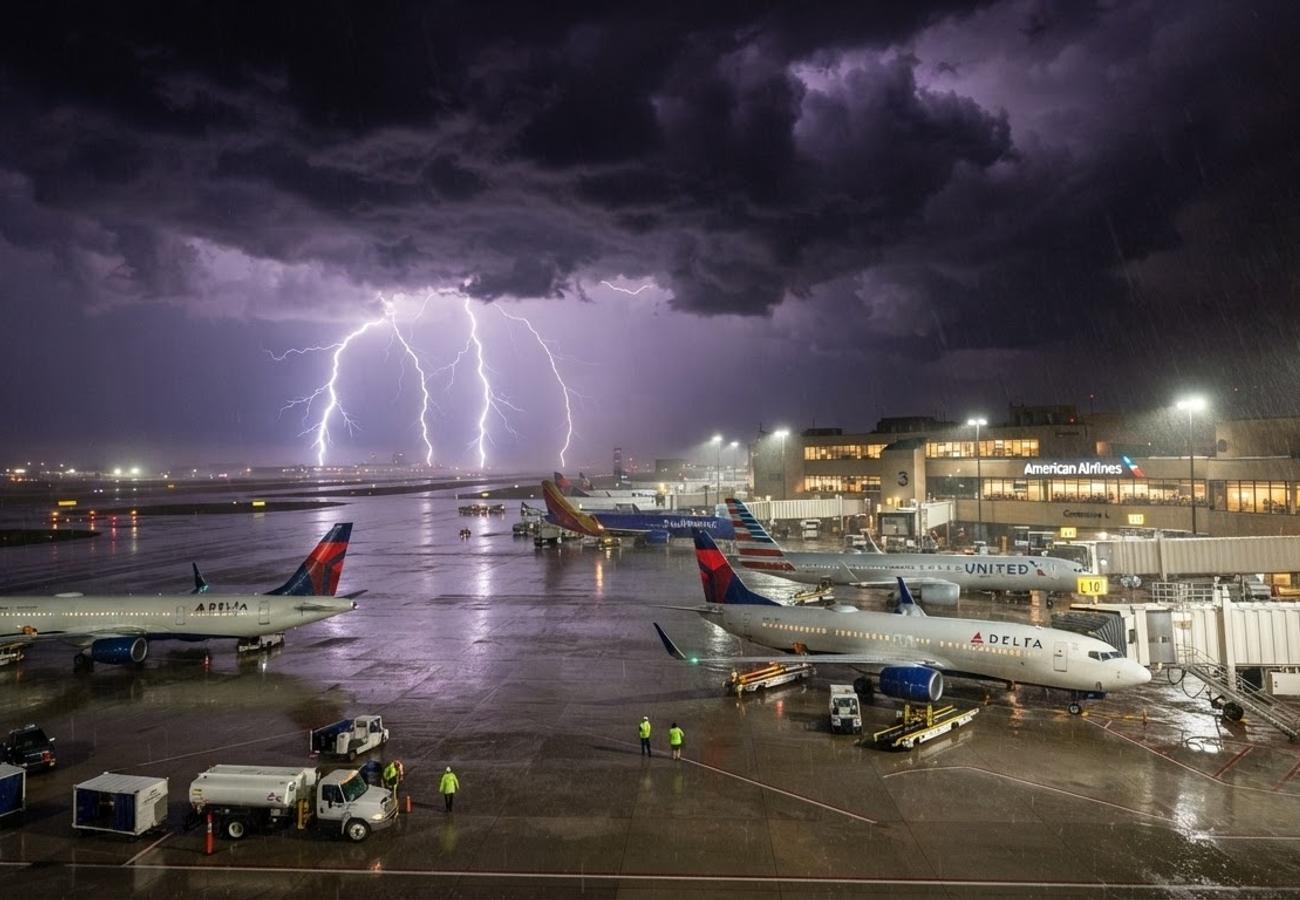
Image generated by AI
Severe nocturnal storm cells have paralyzed key transit corridors across North America, leaving thousands of passengers stranded and motorists facing dangerous road conditions. These disruptions, occurring from Saturday into Sunday, hit during one of the busiest late-summer travel windows, amplifying the operational strain on aviation hubs and highway networks.
Aviation Hubs Struggle with Recovery Operations
The impact on air travel was immediate and widespread, with several primary hubs reporting significant operational bottlenecks. The nature of these storms—hitting overnight—created a "domino effect" that persisted well into Sunday.
At Vancouver International Airport, overnight thunderstorms triggered a cascade of delays. Even as weather cleared on Sunday, the airport struggled with aircraft and crew displacements, forcing airlines to rebalance their schedules.
In the United States, the disruption was centered on central and eastern hubs:
- Hartsfield-Jackson Atlanta International Airport: Data from late Friday indicated severe ground delays. Lightning and heavy rain forced gate holds and taxi waits exceeding one hour.
- Charlotte: Local reports confirmed a weather-related ground stop. Flight-tracking data revealed hundreds of delayed departures and numerous cancellations by late afternoon.
To mitigate these impacts, several carriers implemented flexible-travel waivers for central and eastern corridors. These policies allowed passengers to modify itineraries without incurring change fees, providing a critical escape valve for those attempting to avoid peak storm windows.
Regional Road Hazards: From Flash Floods to Dust Storms
While airports dealt with scheduling collapses, ground transportation faced diverse environmental threats depending on the geography.
In the Mid-Atlantic and interior Northeast, the National Weather Service warned of heavy rain and poor-drainage flooding. These conditions slowed morning commutes in the New York City metropolitan area, where overnight downpours created slick surfaces and localized ponding.
The challenges shifted significantly in the Western regions:
- Central Rockies: Heavy rain and sudden wind shifts reduced visibility on high-elevation passes and highways connecting Colorado population centers.
- Desert Southwest: An active monsoon pattern produced strong outflow winds. The Phoenix forecast office noted that these winds triggered blowing dust and flash flooding, abruptly reducing visibility on major interstates.
The "Residual Effect" on Sunday Transit
The most significant travel impacts often occur after the storm has passed. On Sunday, transportation infrastructure continued to absorb the stress of the previous night's weather.
For airlines, the primary issue was "out-of-position" aircraft. When planes are diverted or grounded overnight, the subsequent day's schedule is compromised regardless of current weather. This was particularly evident at Vancouver International, where recovery operations lagged behind the actual weather improvement.
Rail and transit networks also faced setbacks. Heavy rain and lightning frequently trigger "slow orders" and safety checks, particularly in metropolitan areas where drainage systems or power grids are vulnerable to saturation.
Short-Term Forecast and Travel Outlook
Weather patterns suggest that convective activity will remain a factor through early next week. The Storm Prediction Center indicates continued thunderstorm development across the following regions:
- Central Plains and Midwest: Potential for strong or marginally severe storms.
- Southeast and Interior West: Recurring instability likely to cause intermittent disruptions.
- Mid-Atlantic: Lingering boundaries may produce pockets of gusty winds and heavy rain along the East Coast.
In the Southwest, the monsoon pattern is expected to persist, with evening storms in higher terrain continuing to send dust and outflow winds toward lower desert highways.
Summary of Regional Weather Impacts
| Region | Primary Hazard | Primary Impact | Affected Hubs/Areas |
|---|---|---|---|
| Pacific Northwest | Thunderstorms | Flight Delays/Crew Displacement | Vancouver International |
| US Southeast | Lightning/Heavy Rain | Ground Stops/Gate Holds | Atlanta, Charlotte |
| Northeast/Mid-Atlantic | Heavy Rain | Urban Flooding/Commute Delays | New York City Area |
| Central Rockies | Wind/Rain | Reduced Visibility on Passes | Colorado Highways |
| Desert Southwest | Monsoons/Outflow Winds | Blowing Dust/Flash Floods | Phoenix/Desert Interstates |
Key Takeaways
- Aviation Lag: Storms hitting overnight create residual delays the following day due to crew and aircraft displacement.
- Regional Variance: Travel risks vary by zone—hydroplaning in the East versus dust-blindness in the Southwest.
- Proactive Planning: Airline flexible-travel waivers are the most effective tool for passengers during these patterns.
- Infrastructure Stress: Post-storm recovery includes managing debris and signal failures on rail and road networks.
Frequently Asked Questions
Why are flights still delayed after the rain has stopped? Airlines operate on a tight "hub-and-spoke" system. If a plane is delayed overnight in one city, it cannot perform its scheduled flight in another city the next morning, creating a ripple effect.
What is a "flexible-travel waiver"? It is a temporary policy issued by airlines during severe weather that allows passengers to change their flight dates or destinations without paying the standard change fee.
How do monsoon winds affect driving in the Southwest? Strong "outflow winds" can push massive walls of dust across highways, reducing visibility to near zero in seconds, which often leads to multi-vehicle accidents.
Travelers are advised to monitor real-time aviation planning resources and regional weather outlooks before departing.
Related Travel Guides
Disclaimer
This article is for informational and educational purposes only. It does not constitute legal, financial, or professional advice. While we strive to provide accurate and up-to-date information, travel policies, regulations, and conditions change rapidly. Always verify information with official sources before making travel decisions. Nomad Lawyer makes no representations about the accuracy, reliability, completeness, or suitability of the information provided. Readers should consult qualified professionals for advice specific to their circumstances. The views expressed in this article are those of the author and do not necessarily reflect the views of Nomad Lawyer.